
The First World War, spanning from 1914 to 1918, represents one of the most significant periods of technological disruption in human history. It was the first “industrialized” war, a conflict where the traditional tactics of the 19th century—cavalry charges and bright uniforms—collided violently with the cold, mechanical precision of the 20th century. This era saw the birth of modern military technology, moving from steam-powered concepts to the early iterations of internal combustion, chemical engineering, and aerospace dynamics.
To understand the weapons used in World War I is to understand the rapid iteration of hardware and software (in the form of strategic logic). This article explores the core technological advancements that redefined the battlefield, transitioning from traditional weaponry to the complex mechanical systems that laid the groundwork for modern digital and tactical tech.
The Birth of Modern Mechanized Warfare: The Rise of the Tank
Before 1916, the Western Front was defined by a lethal stalemate. Trenches, barbed wire, and machine-gun nests made infantry advancement nearly impossible. The technological solution to this “deadlock” was the development of the tank—a mobile, armored platform capable of traversing broken terrain and crushing defensive obstacles.
The British Mark I: A Prototype for Future Mobility
The British Mark I was the first tank to see combat, debuting at the Battle of the Somme. From a technical perspective, it was a marvel of early 20th-century engineering. It utilized a rhomboid shape to climb over wide trenches and featured a low center of gravity to remain stable on cratered landscapes. While slow—moving at a mere 3.7 miles per hour—it represented a shift toward armored logistics. The Mark I was divided into “Males” (armed with 6-pounder guns) and “Females” (armed with Vickers machine guns), showcasing an early military focus on specialized hardware configurations for specific tactical roles.
Landships and the Engineering Challenges of the Trenches
The concept of the tank was initially managed by the “Landships Committee” under the Admiralty. The engineering hurdles were immense: how to provide enough horsepower to move tons of steel while ensuring the engine didn’t asphyxiate the crew with carbon monoxide. These early machines were prone to mechanical failure, overheating, and getting stuck in the mud. However, they introduced the concept of “caterpillar tracks,” a technology that would eventually influence not just military hardware but agricultural and construction machinery globally.
Aerospace Innovation: From Scouting to Air Combat
At the start of the war, aviation was in its infancy. Aircraft were primarily wooden frames covered in fabric, used for reconnaissance. However, the four years of conflict accelerated aerospace technology by decades, turning flimsy gliders into sophisticated killing machines.
The Integration of Synchronized Machine Guns
One of the most pivotal tech “patches” in WWI aviation was the synchronization gear. Initially, pilots tried to fire pistols at each other or mount machine guns on the top wing to avoid hitting their own propeller. The development of the interrupter gear—most famously perfected by Anthony Fokker for the German Air Force—allowed a machine gun to fire through the spinning propeller blades without hitting them. This mechanical synchronization turned the airplane into a dedicated weapon system, leading to the era of the “dogfight.”
Strategic Bombing and the Rise of Reconnaissance Tech
Beyond air-to-air combat, technology evolved to handle logistics and intelligence. Heavy bombers like the German Gotha G.IV and the British Handley Page Type O were developed to carry massive payloads over long distances. Simultaneously, the integration of high-resolution (for the time) cameras allowed for aerial photography. This was the precursor to modern satellite imagery and drone surveillance, providing commanders with a “God’s eye view” of the battlefield that changed the nature of military intelligence forever.
Chemical Engineering and the Ethics of Tactical Innovation
World War I is often called “The Chemists’ War.” It marked the first time that large-scale industrial chemistry was weaponized, creating a terrifying new dimension of conflict that targeted the very air soldiers breathed.

The Chemistry of Chlorine, Phosgene, and Mustard Gas
The progression of chemical weapons followed a clear path of increasing lethality and persistence. Chlorine gas, first used on a large scale at the Second Battle of Ypres in 1915, acted as a powerful irritant that decimated the lungs. This was followed by Phosgene, which was more difficult to detect and deadlier in smaller concentrations. Finally, Mustard Gas (a vesicant) was introduced; it did not just attack the respiratory system but caused severe blisters on any exposed skin. The production of these chemicals required a massive scaling of industrial infrastructure, bridging the gap between civilian chemical manufacturing and military application.
Defensive Tech: The Rapid Iteration of Gas Masks
In response to chemical threats, defensive technology had to evolve at an even faster rate. The first “gas masks” were little more than cotton pads soaked in bicarbonate of soda or even urine. By 1916, the British “Small Box Respirator” (SBR) was introduced. It featured a canister filled with charcoal and chemical neutralizers connected to a facepiece by a rubber hose. This was a classic example of “iterative design”—testing a product in the harshest possible environment and refining it based on survival data. The SBR saved countless lives and remains the foundational design for modern HAZMAT and tactical gas masks.
Naval Technology: The Rise of the Submersible
The war at sea was transformed by the U-boat (Unterseeboot). While submarines had existed in primitive forms for decades, WWI saw them become a dominant strategic force capable of strangling international trade.
Hydrophone Tech and Early Sonar Development
The stealth of the U-boat created a demand for new detection technologies. This led to the development of the hydrophone—an underwater microphone that allowed surface ships to “hear” the engines of a submerged submarine. By the end of the war, the Allied forces were experimenting with “ASDIC” (an early form of Sonar), which sent out sound pulses to locate underwater objects. This transition from passive listening to active detection represents a massive leap in sensor technology and data processing that still dictates naval warfare today.
The Tactical Impact of the U-Boat Blockade
The U-boat was not just a weapon; it was a tool of economic warfare. By targeting merchant vessels, Germany aimed to starve Britain into submission. This forced the Allies to innovate in “systemic” technology—the development of the convoy system and the use of depth charges. Depth charges were essentially underwater bombs triggered by hydrostatic pressure. The engineering required to ensure a bomb would explode at a specific depth changed the way navies thought about 3D space in a combat zone.
Small Arms and Artillery: Precision and Mass Production
While tanks and planes captured the imagination, the bulk of the killing was done by artillery and small arms. These technologies were refined through the lens of mass production and mechanical reliability.
Machine Gun Proliferation: The Maxim and Vickers Guns
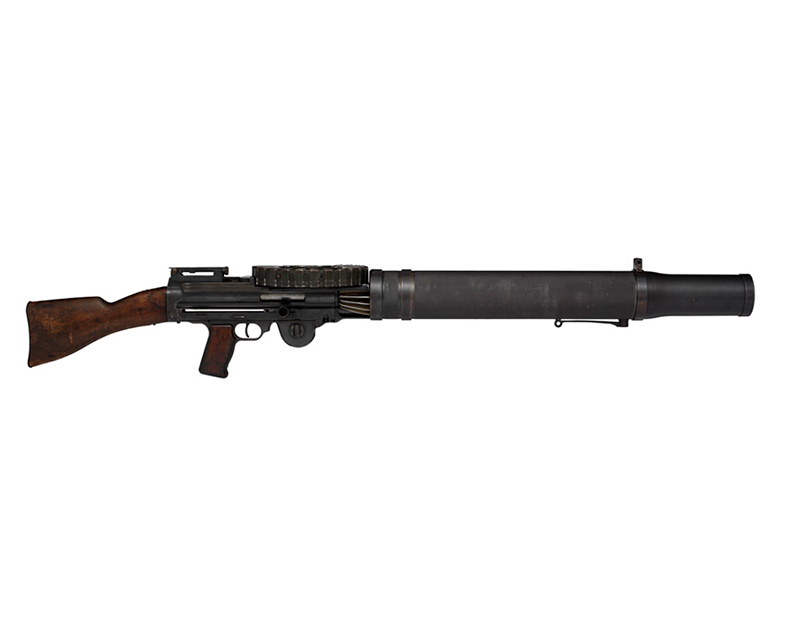
The machine gun was perhaps the most influential piece of tech on the Western Front. The Maxim gun, and its British derivative, the Vickers, utilized the energy of the gun’s recoil to eject the spent cartridge and load the next one. This allowed for a sustained rate of fire of over 500 rounds per minute. The cooling systems—usually water jackets surrounding the barrel—were essential to prevent the metal from melting. The logistical need to supply millions of rounds of ammunition to these “bullet hoses” spurred advancements in factory automation and supply chain management.
Heavy Artillery and the Science of Ballistics
Artillery caused approximately 70% of all casualties in WWI. The technology moved from direct-fire cannons to massive howitzers like the “Big Bertha,” which could hurl shells weighing over 1,700 pounds across distances of several miles. The math involved—calculating windage, elevation, and Earth’s curvature—led to the development of complex firing tables. This was, in essence, the “software” of the artillery world, requiring specialized teams to process data before a shot was ever fired. The introduction of “creeping barrages” required precise timing and communication, leading to early experiments with field telephones and wireless telegraphy.

Conclusion: The Legacy of WWI Technology
World War I served as a violent laboratory for the technologies of the future. The shift from manual labor to mechanical power, from visual scouting to electronic sensor data, and from local skirmishes to global industrial output defined the 20th century.
The weapons of WWI were not merely tools of destruction; they were the first iterations of the complex technological systems we use today. The tank led to modern automotive engineering; the airplane led to global travel and satellite tech; and the chemical mask led to modern personal protective equipment. By examining these weapons through a tech-focused lens, we see a clear trajectory: human conflict has always been a primary driver of rapid technological innovation, forcing engineers to solve impossible problems under the most dire circumstances. In many ways, the digital age we live in today was forged in the mud and steel of the 1914–1918 battlefields.
aViewFromTheCave is a participant in the Amazon Services LLC Associates Program, an affiliate advertising program designed to provide a means for sites to earn advertising fees by advertising and linking to Amazon.com. Amazon, the Amazon logo, AmazonSupply, and the AmazonSupply logo are trademarks of Amazon.com, Inc. or its affiliates. As an Amazon Associate we earn affiliate commissions from qualifying purchases.