
The intersection of supernatural comedy and the mockumentary format presents a unique set of technical challenges that traditional sitcoms rarely encounter. What We Do in the Shadows, the critically acclaimed series on FX, serves as a masterclass in how high-end visual effects (VFX) technology can be seamlessly integrated into a handheld, “lo-fi” aesthetic. By bridging the gap between sophisticated digital pipelines and the gritty realism of a documentary crew’s lens, the production team has redefined the technical boundaries of episodic television.
To understand the technological backbone of the show, one must look past the humor and into the complex software ecosystems, advanced camera sensors, and innovative post-production workflows that allow vampires to fly, transform, and combust without breaking the viewer’s immersion.
The Evolution of Supernatural Visual Effects (VFX) Technology
At the heart of the series’ success is a sophisticated VFX pipeline that prioritizes “invisible” technology. Unlike big-budget superhero films where the effects are meant to be the spectacle, the tech behind this FX production is designed to feel accidental, as if caught by a low-budget camera crew.
Blending Practical Rigging with Digital Enhancement
The production utilizes a “practical-first” philosophy, which is then augmented through digital tools. For character transformations—such as Laszlo or Nandor turning into bats—the tech involves a hybrid approach. While traditional wirework and physical props provide the initial spatial data, the heavy lifting is done in post-production using advanced compositing software.
The transition from a human actor to a digital asset requires precise motion tracking. Using tools like Boris FX Mocha and Foundry’s Nuke, VFX artists track the skeletal movement of the actors in low-light environments. This data is then used to bridge the physical performance with a high-poly 3D model created in Autodesk Maya. The result is a seamless metamorphosis that maintains the “shaky cam” realism of the mockumentary format.
High-Frame Rate Compositing and Motion Tracking
One of the most significant technical hurdles is maintaining the illusion of a documentary when dealing with supernatural elements. This requires a unique approach to motion blur and frame rates. Most digital effects are rendered with a clean, cinematic motion blur, but What We Do in the Shadows requires a specific kind of “digital jitter” that mimics the shutter speed of a handheld news camera.
To achieve this, the tech team employs specialized plugins within Adobe After Effects and Nuke that simulate CMOS sensor artifacts. By adding artificial digital noise and rolling shutter distortion to perfectly rendered 3D assets, the VFX team ensures that a CGI dragon or a floating ghost looks as if it were captured on a standard 1080p digital sensor rather than a high-end cinema camera.
Cinematography and Lighting Tech in Low-Light Environments
The aesthetic of the show is defined by its darkness. Lighting a comedy set usually requires high-key lighting to ensure every joke lands visually. However, this series operates in a world of shadows, necessitating the use of cutting-edge camera sensors and “invisible” lighting technology.
Sensor Sensitivity and the Mockumentary Aesthetic
The production relies heavily on high-dynamic-range (HDR) sensors, specifically those found in the Arri Alexa and Sony Venice lines. These cameras are renowned for their “dual base ISO” capabilities, which allow the crew to film in near-total darkness while retaining detail in the shadows without excessive electronic noise.
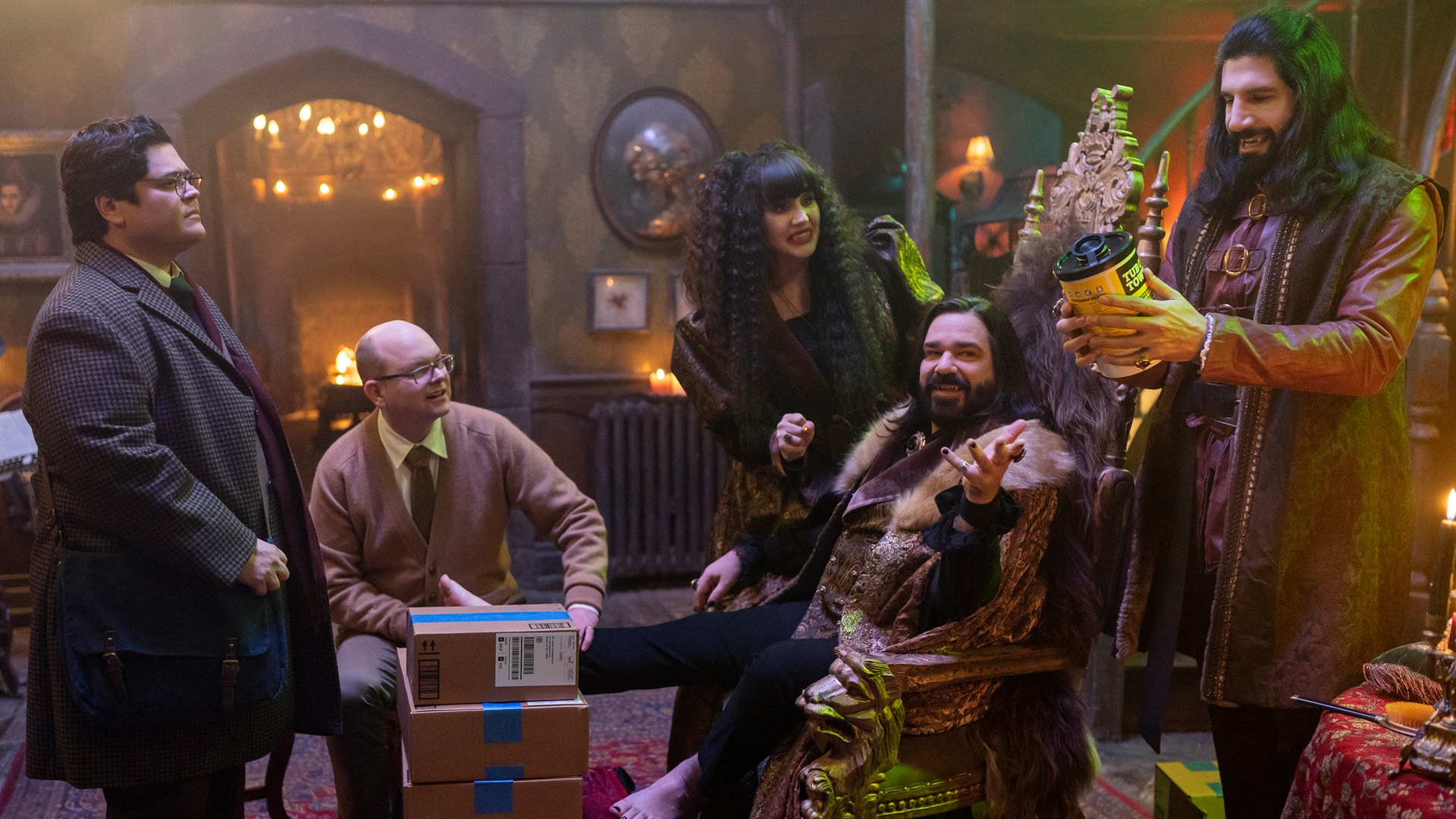
From a technical standpoint, the ability to film at ISO 2500 or higher is what allows the “documentary crew” to move through the vampires’ mansion using only “natural” light sources like candles or dim lamps. The tech allows for a shallow depth of field that keeps the focus on the characters’ expressions while the background remains a rich, textured void—a hallmark of the show’s visual branding on the FX network.
Innovations in Invisible Lighting
To supplement the dark environment without ruining the mockumentary feel, the tech team uses LED panels with highly customizable color science. Brands like Litegear and Quasar Science provide ultra-thin LED tubes that can be hidden behind curtains or under furniture. These are controlled via DMX (Digital Multiplex) protocols, often from a tablet or a centralized console, allowing the lighting technicians to make micro-adjustments to the color temperature in real-time as the actors improvise.
This wireless control tech is essential for a show that relies on improvisation. If an actor moves to a different part of the room unexpectedly, the lighting can be adjusted digitally to ensure the digital sensors capture enough data for the VFX team to work with later, all without traditional bulky film lights being visible in the wide, handheld shots.
Post-Production Workflows and Cloud-Based Collaboration
As episodic television becomes more complex, the digital infrastructure required to manage it has shifted toward cloud-based solutions. The production of a show like What We Do in the Shadows involves multiple VFX houses across different time zones, making data synchronization and version control a primary tech concern.
Digital Asset Management for Episodic Horror-Comedy
The sheer volume of digital assets—from 3D models of “The Guide’s” wraiths to digital matte paintings of the Staten Island skyline—requires robust Digital Asset Management (DAM) systems. Platforms like ShotGrid (formerly Shotgun) are used to track every single frame of a VFX shot from initial concept to final render.
This software allows producers at FX and the creative leads to provide frame-specific feedback digitally. If a particular glow on an “energy vampire” (Colin Robinson) is too bright, the note is timestamped and synced to the compositor’s workstation instantly. This high-speed data pipeline is what allows the show to maintain a high volume of complex shots within the tight turnaround times of a weekly television schedule.
Rendering the Unseen: Software Pipelines in Use
Rendering supernatural entities requires significant computational power. The production utilizes “render farms”—clusters of high-performance servers—to process the complex light calculations needed for transparent objects like ghosts or the shimmering effects of a portal.
The software pipeline often involves:
- ZBrush: For high-detail digital sculpting of creature prosthetics.
- Substance Painter: For creating realistic textures that react to the “handheld” lighting of the virtual environment.
- Houdini: For fluid and particle simulations, such as the dust clouds when a vampire is “staked” or the smoke during a transformation.
By using Houdini’s procedural generation tools, the tech team can create randomized, realistic debris that obeys the laws of physics, ensuring that even the most fantastical elements of the show have a grounded, tactile feel.
The Digital Distribution Pipeline: FX on Hulu and Streaming Optimization
Beyond the production itself, the technology of how What We Do in the Shadows reaches its audience is a feat of modern software engineering. As a flagship title for “FX on Hulu,” the series is at the forefront of the shift from linear broadcasting to digital-first distribution.
Multi-Platform Encoding and HDR Delivery
When a final episode is “locked,” it isn’t just sent to a transmitter. It is uploaded to a digital distribution hub where it is encoded into dozens of different formats. This tech ensures that whether a viewer is watching on a 4K OLED television, a tablet, or a smartphone with a 5G connection, the “shadows” remain deep and the “FX” remain sharp.
Advanced codecs like HEVC (High-Efficiency Video Coding) are used to compress the high-resolution files without losing the intentional grain and texture that the filmmakers worked so hard to achieve. This is particularly important for this show, as low-bitrate streaming can often turn dark scenes into a pixelated mess (known as “macroblocking”). The technical teams work specifically on “de-banding” algorithms to ensure the dark gradients of the vampires’ lair remain smooth on all devices.
Data-Driven Content Curation
The tech behind the “FX on Hulu” platform also utilizes machine learning algorithms to analyze viewer engagement. By tracking where users pause, rewind, or re-watch, the network gains data-driven insights into which visual gags or characters are resonating. This feedback loop, powered by Big Data, informs the technical direction of future seasons—identifying, for example, if high-action VFX sequences lead to higher “social shareability” or if the audience prefers the more intimate, low-tech character moments.
In conclusion, What We Do in the Shadows is more than a comedy; it is a sophisticated marriage of cinematic tech and digital innovation. From the high-ISO sensors that see in the dark to the cloud-based render farms that bring the supernatural to life, the show represents the cutting edge of how technology is used to enhance storytelling in the digital age. By hiding its complexity behind a veneer of documentary simplicity, it achieves the ultimate goal of production technology: making the impossible look entirely mundane.
aViewFromTheCave is a participant in the Amazon Services LLC Associates Program, an affiliate advertising program designed to provide a means for sites to earn advertising fees by advertising and linking to Amazon.com. Amazon, the Amazon logo, AmazonSupply, and the AmazonSupply logo are trademarks of Amazon.com, Inc. or its affiliates. As an Amazon Associate we earn affiliate commissions from qualifying purchases.