
The quest to pinpoint the Qibla, the sacred direction of the Kaaba in Mecca, has captivated humanity for centuries. Historically, this endeavor relied on celestial navigation, complex mathematics, and geographical understanding. Today, the technological landscape has dramatically transformed this ancient pursuit, offering unprecedented accuracy and accessibility to billions worldwide. Modern digital tools leverage sophisticated algorithms, global positioning systems, and an array of sensors to provide an instant, precise answer to “what way is the Qibla?” This evolution represents a fascinating intersection of faith, geography, and cutting-edge technology.
The Historical Quest for Direction and Modern Solutions
For over a millennium, determining the Qibla was a significant intellectual and scientific challenge, spurring advancements in astronomy, cartography, and mathematics. Early methods were ingenious yet often localized, making global consistency difficult. The advent of modern technology has not only simplified this task but also introduced a new paradigm of precision and convenience.
Traditional Methods: From Celestial Navigation to Compasses
Before the digital age, scholars and travelers employed various techniques to ascertain the Qibla. Astronomical observations, particularly the position of the sun and stars, were fundamental. Knowing the sun’s azimuth at specific times or observing Polaris could provide a general north-south axis, from which the Qibla could be estimated. Early Islamic astronomers developed sophisticated instruments like astrolabes and quadrants to measure celestial altitudes and derive geographical coordinates, thereby calculating the direction to Mecca. Mapmakers created specialized Qibla maps that visually depicted the direction from various locations. Later, the magnetic compass, though not inherently pointing to the Qibla, became an indispensable tool. Users would first determine their location’s latitude and longitude, then calculate the angular deviation from true north to the Qibla, and finally orient their compass accordingly. While effective, these methods required specialized knowledge, access to charts, and considerable effort, often resulting in varying degrees of accuracy depending on the user’s skill and available resources.
The Digital Revolution in Qibla Detection
The late 20th and early 21st centuries ushered in a digital revolution that dramatically simplified Qibla determination. The proliferation of personal computing devices, the advent of GPS technology, and the development of miniature sensors like accelerometers and gyroscopes transformed complex calculations into instantaneous digital outputs. No longer limited by printed charts or arduous celestial observations, individuals can now access highly accurate Qibla directions with the tap of a screen. This shift has not only democratized access to this vital information but also significantly enhanced the precision with which it can be found from virtually any point on Earth.
Essential Tech Tools for Qibla Identification
The market is now replete with diverse technological solutions designed to help individuals find the Qibla. These tools range from ubiquitous smartphone applications to specialized smart devices, each leveraging different technologies to achieve accuracy and user convenience.
Smartphone Apps: Your Pocket Navigator
Smartphone applications stand as the most popular and accessible tools for Qibla detection. Nearly every modern smartphone integrates GPS, a digital compass (magnetometer), and an accelerometer, providing a robust platform for these apps. Users simply download an application, grant location permissions, and the app instantly calculates and displays the Qibla direction. Many advanced apps offer:
- Augmented Reality (AR) Overlay: This feature uses the phone’s camera to display a virtual arrow pointing towards the Qibla directly within the live camera feed, making it incredibly intuitive.
- Map Integration: Qibla lines are often superimposed on detailed maps, showing the shortest path (great circle route) from the user’s current location to Mecca.
- Offline Functionality: Many apps can store geographical data, allowing them to function even without an internet connection, relying solely on the device’s built-in sensors.
- Prayer Time Integration: Beyond direction, many apps also provide precise prayer times based on the user’s location and selected calculation methods, making them comprehensive digital companions.
The ease of use and the high degree of integration with existing smartphone hardware make these apps indispensable for travelers and daily users alike. However, their accuracy can sometimes be influenced by environmental factors or device calibration.
Smart Devices and Wearables
Beyond smartphones, a growing category of smart devices and wearables are offering dedicated Qibla functionalities. Smartwatches can display Qibla direction directly on the wrist, often integrating with existing smartphone apps or having standalone capabilities. Some manufacturers have even developed specialized digital compasses and smart prayer mats embedded with sensors that automatically orient themselves or indicate the direction upon activation. These devices often prioritize convenience and integration into daily routines, offering subtle notifications or visual cues without requiring a user to pull out a phone. While niche, they cater to a desire for seamless, always-on access to the Qibla.
Web-Based Qibla Finders
For users without smartphone apps or those preferring a larger screen, numerous web-based Qibla finders are available. These online tools typically use browser-based location services (requiring user permission) or allow manual entry of an address or coordinates. They then display the Qibla direction on a map, often accompanied by the precise bearing in degrees from true north. These platforms are particularly useful for planning or for use on desktop computers, providing a quick and easy way to check the Qibla from any internet-connected device. Many also offer additional features like calculating distances to Mecca and providing prayer times for the entered location.
Under the Hood: How Qibla Tech Works
The seemingly simple act of a digital arrow pointing to the Qibla involves a complex interplay of several sophisticated technologies. Understanding these underlying mechanisms reveals the power and precision of modern Qibla finders.
GPS and Location Services
The foundational element of any accurate digital Qibla finder is precise location data. Global Positioning System (GPS) technology, complemented by Wi-Fi and cellular network triangulation (collectively known as location services), determines the user’s exact latitude and longitude on the Earth’s surface. Without accurate positioning, any subsequent calculation for the Qibla direction would be flawed. Modern smartphones and devices integrate highly sensitive GPS receivers that can pinpoint a user’s location within a few meters, providing the crucial starting point for direction calculations.
Digital Compasses (Magnetometers)
Once the user’s location is known, the device needs to establish its orientation relative to North. This is where the digital compass, or magnetometer, comes into play. A magnetometer detects the Earth’s magnetic field and determines the device’s orientation relative to magnetic North. Sophisticated algorithms then convert this magnetic North reading to true North (accounting for magnetic declination, the difference between magnetic North and geographical true North) and subsequently calculate the angle to the Qibla based on the shortest path to Mecca from the user’s exact coordinates.

Gyroscopes and Accelerometers
For enhanced accuracy, especially in AR applications, devices also utilize gyroscopes and accelerometers. An accelerometer measures linear acceleration and can determine the device’s orientation relative to gravity (e.g., whether it’s held flat or tilted). A gyroscope measures angular velocity and detects changes in the device’s orientation. Together, these sensors help stabilize the compass reading, correct for minor movements or tilting, and provide a smooth, reliable directional display, particularly important for augmented reality features where the virtual Qibla arrow needs to remain stable and aligned with the physical world.
Algorithmic Precision: Great Circle Distance
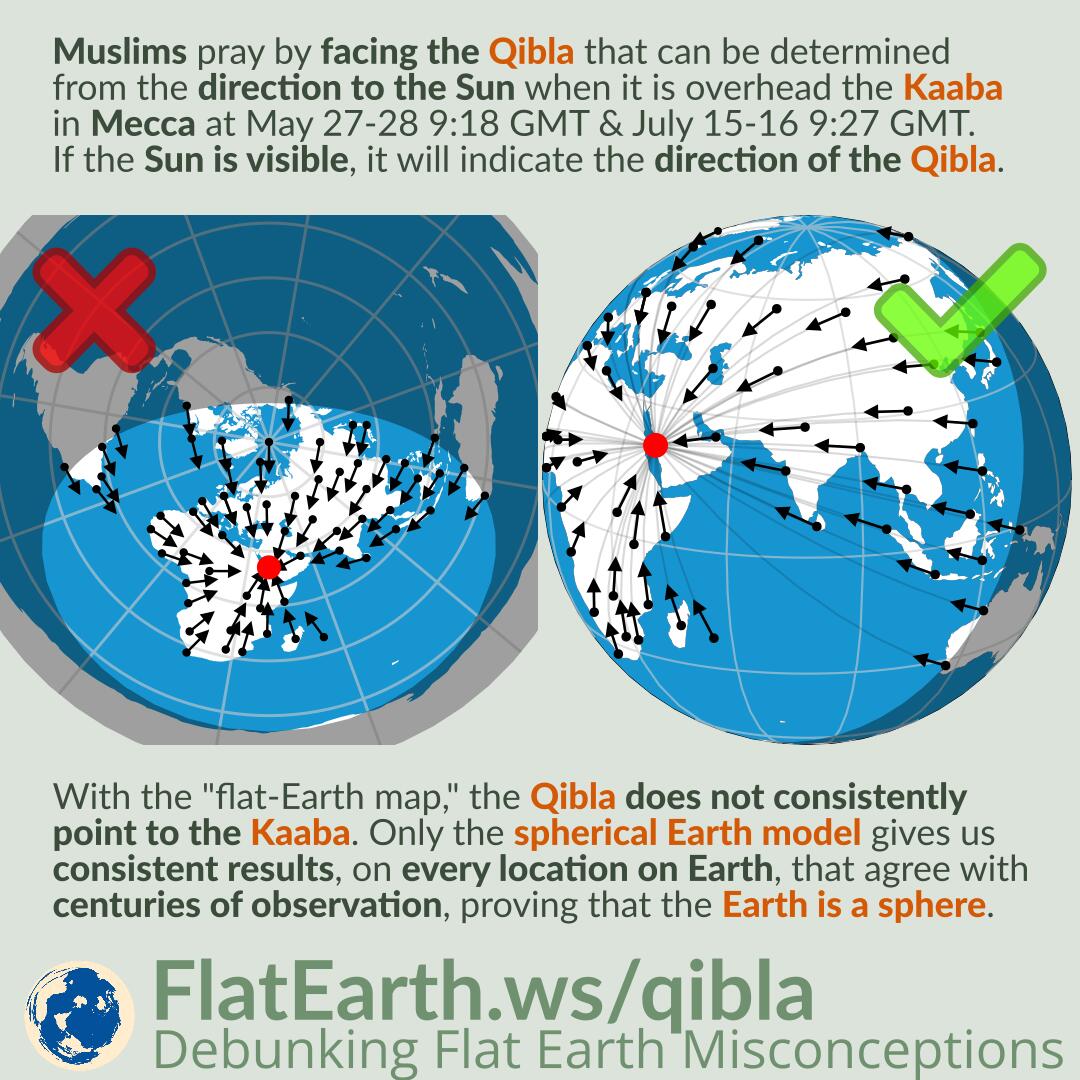
The true “way” to the Qibla is not a straight line on a flat map but a “great circle” route on the spherical Earth. A great circle is the shortest path between two points on the surface of a sphere. Qibla applications employ sophisticated spherical trigonometry algorithms to calculate this great circle bearing from the user’s current location to the Kaaba in Mecca. This calculation takes into account the precise latitude and longitude of both the user and Mecca, ensuring that the direction provided is the most accurate and direct path across the globe, not just an approximation on a 2D projection.
Maximizing Accuracy and Avoiding Pitfalls
While Qibla technology is remarkably advanced, users can take steps to maximize accuracy and avoid common issues that might lead to misdirection.
Calibration and Interference
Digital compasses, being magnetometers, are susceptible to magnetic interference. Nearby electronic devices (laptops, speakers), large metal objects, or even strong magnets in phone cases can distort readings. Most smartphone apps include a calibration routine (often involving waving the phone in a figure-eight pattern) that should be performed regularly, especially in new environments or if accuracy is in doubt. Ensuring the device is held away from potential interference sources is also crucial.
Understanding True North vs. Magnetic North
While most modern Qibla apps automatically account for the difference between magnetic North (where a physical compass needle points) and true North (geographical North Pole), it’s a valuable distinction to understand, especially if relying on simpler, non-GPS-enabled compasses. Magnetic declination varies geographically and can be significant in certain regions. Advanced Qibla apps typically use algorithms to convert magnetic North readings to true North, ensuring the Qibla direction is always relative to the true geographical bearings.
Geographic Considerations
For the vast majority of the Earth’s surface, Qibla calculations are straightforward. However, extreme northern or southern latitudes (polar regions) present unique challenges. Near the poles, lines of longitude converge rapidly, and the concept of “direction” becomes ambiguous, leading to potential inaccuracies in standard Qibla calculations. In such rare scenarios, alternative methods or specialized polar-region algorithms might be necessary.
Software Updates and Reliability
Keeping Qibla applications updated is essential. Developers frequently release updates that improve algorithms, enhance sensor integration, fix bugs, and refine user interfaces. Using reputable applications from established developers also ensures a higher degree of reliability and adherence to accurate calculation methods. Downloading apps from official app stores mitigates risks associated with malicious software or inaccurate tools.
The Future of Qibla Technology
The journey of Qibla determination is far from over. As technology continues its relentless march forward, we can anticipate even more sophisticated and integrated solutions.
Enhanced Augmented Reality
Future AR applications for Qibla finding could become even more immersive and context-aware. Imagine wearing AR glasses that seamlessly overlay the Qibla direction onto your field of vision, dynamically adjusting as you move, or providing haptic feedback when you are perfectly aligned. The integration of 3D environmental mapping could allow for Qibla arrows that appear to pierce through walls, guiding users through complex indoor spaces.
AI Integration
Artificial intelligence could play a role in personalizing Qibla finding. AI-powered apps might learn user preferences, environmental conditions, and even predict the most reliable Qibla calculation method based on location history. AI could also help in detecting and correcting for magnetic interference more effectively or provide guidance on optimal prayer locations based on room layouts and compass integrity.
Smart City Integration and IoT
In smart cities of the future, public spaces, airports, and even individual buildings could integrate Qibla direction into their infrastructure. Imagine smart mosque domes that glow subtly in the direction of the Qibla, or smart hotel rooms where the Qibla is indicated by an unobtrusive light on the ceiling or wall. The Internet of Things (IoT) could connect various devices to ensure a consistent and always-present Qibla reference.

Global Accessibility and Localization
Further efforts will likely focus on making Qibla technology even more universally accessible. This includes developing solutions for regions with limited internet access, enhancing language support, and ensuring that diverse cultural contexts are respected in application design. As global travel becomes more common, the demand for precise, reliable, and easily accessible Qibla direction will only grow, driving further innovation in this fascinating technological niche.
aViewFromTheCave is a participant in the Amazon Services LLC Associates Program, an affiliate advertising program designed to provide a means for sites to earn advertising fees by advertising and linking to Amazon.com. Amazon, the Amazon logo, AmazonSupply, and the AmazonSupply logo are trademarks of Amazon.com, Inc. or its affiliates. As an Amazon Associate we earn affiliate commissions from qualifying purchases.