
In an increasingly digital and interconnected world, the understanding of fundamental physical phenomena often underpins the most groundbreaking technological advancements. Among these, the nature of sound waves stands as a cornerstone, influencing everything from the clarity of our smartphone calls to the immersive experiences of virtual reality, and even critical medical diagnostics. Far from being a mere academic curiosity, knowing “what waves are sound waves” is essential for engineers, developers, and innovators shaping our auditory future. This article delves into the core mechanics of sound, its critical characteristics, its transformation in the digital realm, and its ubiquitous applications across various technological domains.
The Fundamental Nature of Sound: A Mechanical Perspective
At its heart, sound is a mechanical wave – a form of energy propagation that requires a medium (like air, water, or solids) to travel. Unlike electromagnetic waves (such as light or radio waves) which can traverse the vacuum of space, sound fundamentally relies on the vibration and interaction of particles within a material substance. This mechanical dependency dictates many of sound’s most crucial properties and how technology manipulates it.
Vibrations, Mediums, and Propagation
The journey of a sound wave begins with a vibration. When an object vibrates – be it a guitar string, a speaker cone, or a human vocal cord – it disturbs the surrounding medium. Imagine a single particle in the air being pushed by a vibrating surface. This particle, in turn, pushes its neighbor, which then pushes the next, and so on. This chain reaction of displacement creates a disturbance that travels outwards from the source. Crucially, while the energy of the sound wave propagates, the individual particles of the medium oscillate back and forth around their equilibrium positions; they do not travel with the wave itself. It’s akin to a “Mexican wave” in a stadium, where people stand and sit, but the wave travels around the arena. The type, density, and elasticity of the medium profoundly impact how efficiently and quickly sound travels, a factor critical in acoustic design and material science.
Understanding Compression and Rarefaction
Sound waves are specifically longitudinal waves. This means that the particles of the medium oscillate parallel to the direction of the wave’s propagation. As a vibrating object moves forward, it compresses the adjacent particles, creating a region of higher pressure and density known as a compression. When the object moves backward, it creates a region where particles are spread further apart, resulting in lower pressure and density – this is a rarefaction. These alternating regions of compression and rarefaction are what constitute a sound wave. The sequence of these pressure variations, propagating through the medium, is what our ears (and microphones) detect and interpret as sound. The rhythmic succession of these high and low-pressure zones is what gives sound its waveform and enables us to perceive its various characteristics.
The Speed of Sound: A Medium-Dependent Phenomenon
The speed at which sound travels is not constant; it varies significantly based on the medium it’s passing through and its temperature. In general, sound travels fastest through solids, slower through liquids, and slowest through gases. This is because the particles in solids are packed much more tightly and are more rigidly linked, allowing vibrations to be transmitted more quickly. For instance, sound travels approximately 343 meters per second (767 mph) in dry air at 20°C, about 1,480 m/s in water, and around 5,100 m/s in steel. This variability is a vital consideration in many technological applications, such as sonar systems (which calculate distance based on sound’s speed in water) or in designing concert halls where materials are chosen for their acoustic properties and how they interact with sound propagation. Understanding this allows engineers to predict and manipulate how sound will behave in different environments.
Key Characteristics of Sound Waves in Technology
While the fundamental nature of sound waves is about mechanical propagation, their utility in technology comes from manipulating and measuring their specific characteristics. These properties dictate everything from the perceived loudness of a song to the clarity of a diagnostic image.
Amplitude and Volume: Measuring Intensity
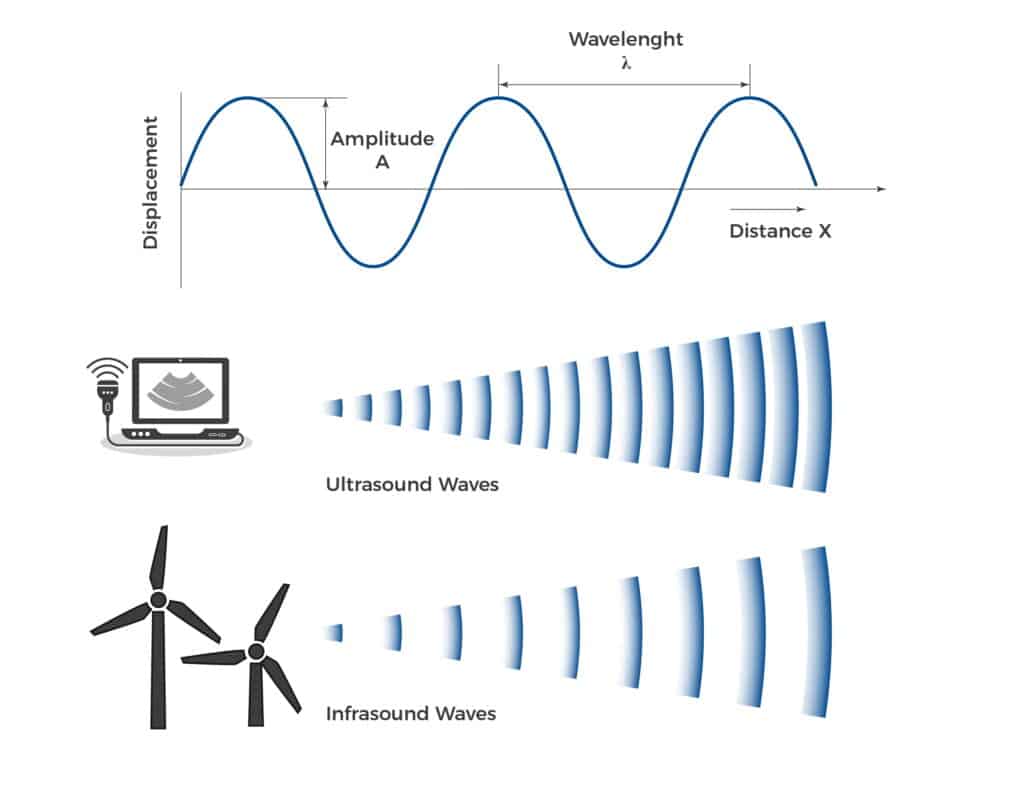
The amplitude of a sound wave refers to the maximum displacement or distance moved by a point on a vibrating body or wave measured from its equilibrium position. In the context of sound, amplitude is directly related to the pressure variations within the medium. A larger amplitude means a greater change in pressure between the compressions and rarefactions. Perceptually, we experience amplitude as volume or loudness. Technologically, amplitude is measured in decibels (dB), a logarithmic scale that effectively captures the vast range of sound intensities the human ear can perceive. Audio engineers meticulously manage amplitude levels to prevent distortion, achieve dynamic range, and ensure optimal signal-to-noise ratios in recording, mixing, and playback systems. From the gain stages in a microphone preamp to the output power of an amplifier, amplitude control is central to audio technology.
Frequency and Pitch: The Auditory Spectrum
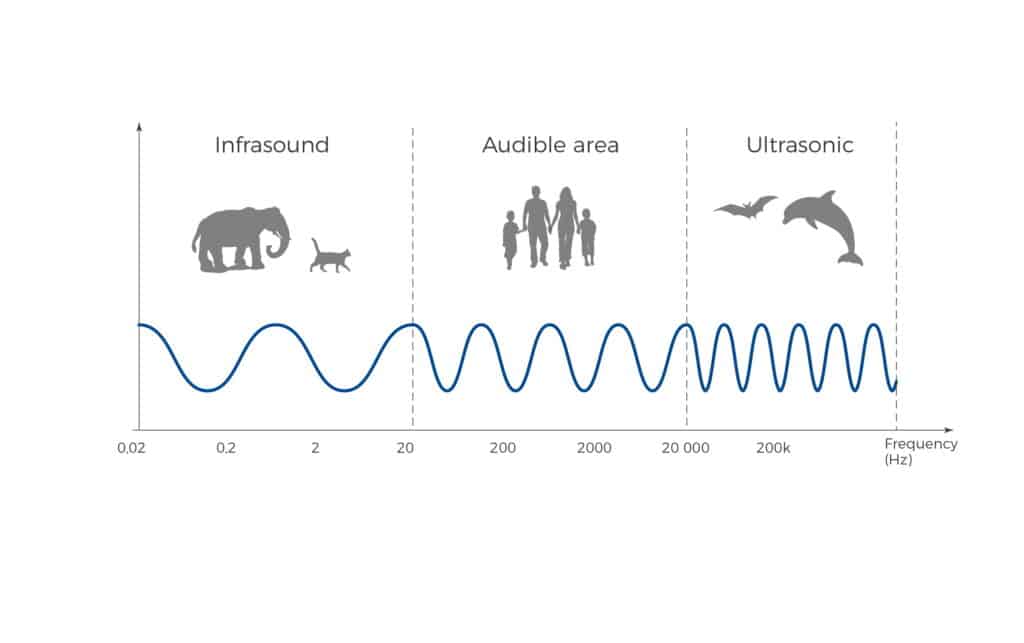
Frequency is the number of complete cycles of compression and rarefaction that pass a given point per second. It is measured in Hertz (Hz). One Hz equals one cycle per second. The human ear can typically perceive frequencies ranging from about 20 Hz (very low pitch) to 20,000 Hz (very high pitch), though this range diminishes with age. Perceptually, frequency is associated with pitch. A higher frequency corresponds to a higher pitch, and a lower frequency to a lower pitch. In technology, frequency is fundamental. Audio equipment specifies its frequency response, indicating the range of frequencies it can accurately reproduce. Equalizers allow us to boost or cut specific frequency bands, shaping the timbre of instruments or voices. Beyond human hearing, ultrasonic (above 20 kHz) and infrasonic (below 20 Hz) frequencies are exploited in technologies like medical ultrasound imaging, animal communication studies, and structural integrity testing.
Wavelength and Timbre: Shaping Sonic Identity
The wavelength of a sound wave is the spatial period of the wave – the distance over which the wave’s shape repeats. It is inversely proportional to frequency (wavelength = speed of sound / frequency). A high-frequency sound has a short wavelength, while a low-frequency sound has a long wavelength. Wavelength plays a crucial role in phenomena like diffraction (how sound bends around obstacles) and resonance (how objects vibrate at specific frequencies). For example, the physical dimensions of musical instruments or speaker cabinets are often designed with respect to the wavelengths of the frequencies they are intended to produce or reproduce. Timbre, often described as the “color” or “texture” of a sound, is what allows us to distinguish between different instruments playing the same note (same pitch). It’s determined by the complex interplay of a sound’s fundamental frequency and its overtones (harmonics), which are whole-number multiples of the fundamental frequency, along with the sound’s envelope (attack, decay, sustain, release). In audio synthesis and processing, engineers manipulate these elements to create unique sounds and sonic textures, fundamentally shaping the character of digital audio.
From Analog to Digital: Sound Wave Transformation in Tech
The modern world largely experiences sound through digital means. The journey from a continuous, physical sound wave to a discrete, digital signal and back again is a marvel of engineering, enabling unparalleled flexibility, storage, and manipulation.
Capturing Sound: Microphones and Transducers
The first step in digitizing sound is its capture, which is performed by a transducer, most commonly a microphone. A microphone converts mechanical sound energy (pressure variations in the air) into electrical energy. Different microphone types (dynamic, condenser, ribbon) achieve this through various physical principles, but the core idea remains the same: the sound wave causes a diaphragm to vibrate, and this vibration is then converted into a fluctuating electrical voltage that mirrors the original sound wave’s amplitude and frequency. This electrical signal is an analog representation of the sound wave – a continuous, varying voltage waveform that directly corresponds to the pressure variations.

Digitization: Sampling, Quantization, and Bit Depth
Once sound is an analog electrical signal, it needs to be converted into digital data that computers can understand and process. This process involves two main steps:
- Sampling: The analog waveform is measured at regular intervals, creating a series of discrete snapshots. The sampling rate (measured in Hz) determines how many samples are taken per second. A higher sampling rate captures more detail, allowing for the accurate reproduction of higher frequencies. The Nyquist-Shannon sampling theorem states that to perfectly reconstruct a signal, the sampling rate must be at least twice the highest frequency present in the original signal. For human hearing (up to 20 kHz), a common sampling rate like 44.1 kHz (used for CDs) or 48 kHz (common in professional audio) is sufficient.
- Quantization: Each sampled amplitude value is then assigned a numerical value from a finite set of possibilities. The number of possibilities is determined by the bit depth. For example, 16-bit audio allows for 65,536 distinct amplitude levels, while 24-bit audio provides over 16 million. A higher bit depth allows for a finer resolution of amplitude, resulting in a wider dynamic range and less quantization noise, contributing to a cleaner, more faithful digital representation of the original sound wave.
Reconstruction: DACs and Audio Output
Once sound is digitized, it can be stored, transmitted, edited, and processed with incredible precision and flexibility. However, for us to hear it, it must be converted back into an analog electrical signal, which can then drive loudspeakers. This is the job of a Digital-to-Analog Converter (DAC). A DAC takes the stream of digital samples and reconstructs an analog waveform, effectively “filling in the gaps” between the samples. This analog signal is then sent to an amplifier, which boosts its power, and finally to speakers or headphones. These devices act as reverse transducers, converting the electrical signal back into mechanical vibrations (sound waves) that travel through the air to our ears. The quality of a DAC is paramount to the fidelity of reproduced audio, as it determines how accurately the original continuous wave is recreated from its digital representation.
Applications of Sound Wave Understanding in Modern Technology
The principles governing sound waves are not just theoretical constructs; they are the bedrock upon which numerous vital technologies are built. From entertainment to critical safety systems, the manipulation and analysis of sound are ubiquitous.
Audio Engineering and Music Production
Perhaps the most obvious application is in the realm of audio engineering and music production. Every aspect of creating, recording, mixing, and mastering music relies on a deep understanding of sound waves. Microphones are selected based on their frequency response and polar patterns to capture specific sounds. Digital Audio Workstations (DAWs) provide tools like equalizers, compressors, reverbs, and synthesizers that manipulate the amplitude, frequency, and timbre of sound waves. Speaker design, acoustic treatment of studios, and live sound reinforcement all leverage knowledge of how sound propagates, reflects, absorbs, and diffuses to create optimal listening experiences. Modern immersive audio formats like Dolby Atmos utilize complex algorithms to spatially render sound waves, placing them precisely in a 3D environment for the listener.
Communication Systems: From Telephony to 5G
Sound waves are the very essence of human communication, and technology has extended our ability to communicate across vast distances. Telephony, radio, and now digital communication networks like 4G and 5G all depend on converting sound waves (speech) into electrical or electromagnetic signals for transmission, and then back into sound waves at the receiving end. Advanced algorithms in these systems compress audio data (reducing file size without significant perceived quality loss), perform noise reduction (filtering out unwanted frequencies), and implement echo cancellation, all by precisely analyzing and manipulating the frequency and amplitude components of the sound waves. Voice over IP (VoIP) and real-time communication platforms owe their existence to the efficient digital encoding and decoding of speech sound waves.
Medical Imaging and Non-Destructive Testing (e.g., Ultrasound)
Beyond audible sound, the use of ultrasonic waves (frequencies above human hearing) has revolutionized medicine and industry. Ultrasound imaging is a prime example. High-frequency sound waves are emitted into the body, and the echoes that bounce back from tissues and organs are captured and converted into real-time images. The different speeds and reflections of these sound waves reveal the density and structure of internal body parts, allowing for prenatal imaging, diagnostic scans for various conditions, and guiding surgical procedures, all without invasive radiation. In industry, similar principles are applied in non-destructive testing (NDT) to detect flaws or cracks in materials like metals and composites, ensuring the safety and integrity of structures ranging from aircraft to pipelines.
AI and Machine Learning in Audio Processing (e.g., Speech Recognition)
The advent of Artificial Intelligence and Machine Learning has opened new frontiers in sound wave analysis. Speech recognition systems, like those powering virtual assistants (Siri, Alexa, Google Assistant), analyze the complex frequency patterns (spectrograms) of spoken words to convert them into text or commands. These AI models are trained on vast datasets of human speech, learning to identify phonemes and words even with varying accents, pitches, and background noise. Similarly, AI is used in music recommendation systems, automatic transcription, sound event detection (e.g., identifying a glass breaking or a fire alarm), and advanced noise cancellation techniques that can differentiate between desired speech and environmental noise, dynamically filtering out the latter for clearer communication.
The Future of Sound Waves in Tech Innovation
The journey of understanding and harnessing sound waves is far from over. As technology continues to advance, so too does our ability to manipulate and interact with the auditory world, promising even more immersive and intelligent experiences.
Spatial Audio and Immersive Experiences
The evolution towards truly immersive digital experiences heavily relies on advanced spatial audio. Beyond traditional stereo, spatial audio technologies aim to recreate a 3D soundfield, allowing listeners to perceive sounds coming from specific directions and distances, mirroring real-world acoustics. Technologies like object-based audio (e.g., Dolby Atmos, DTS:X) define sound objects and their positions in a virtual space, letting playback systems render these sounds dynamically for different speaker configurations or headphones. This is crucial for virtual reality (VR), augmented reality (AR), and advanced gaming, where realistic soundscapes are essential for presence and immersion, leveraging our psychoacoustic understanding of how we localize sounds based on interaural time and level differences of sound waves.
Advanced Noise Cancellation and Acoustic Control
Traditional noise cancellation often relies on destructive interference, where an anti-phase sound wave is generated to cancel out unwanted noise. Future innovations will likely involve more intelligent and adaptive systems, potentially using AI to identify and selectively cancel specific types of noise while preserving desired sounds, or even creating personalized “sound bubbles.” Active acoustic control could extend beyond headphones to entire rooms, allowing for dynamic manipulation of reverberation and sound isolation, transforming spaces on demand for different activities without physical alteration. This involves real-time analysis of incident sound waves and the generation of precisely calibrated counter-waves or controlled reflections.
Bioacoustics and Environmental Monitoring
The study of sound produced by or affected by living organisms, known as bioacoustics, is gaining traction with technological advancements. Remote monitoring stations equipped with sensitive microphones and AI algorithms can analyze natural soundscapes to identify species (e.g., tracking endangered animals via their calls), monitor ecosystem health, and detect illegal activities like poaching or logging. This non-invasive approach to environmental monitoring relies on sophisticated sound wave analysis to differentiate between myriad natural sounds, offering powerful insights into biodiversity and conservation efforts.
In conclusion, the seemingly simple question “what waves are sound waves” unravels a complex yet fascinating physical phenomenon that is indispensable to the modern technological landscape. From the fundamental physics of vibrations and pressure changes to their intricate digital transformations and pervasive applications in communication, entertainment, medicine, and environmental science, sound waves continue to be a fertile ground for innovation, constantly reshaping how we perceive, interact with, and understand the world around us. As we push the boundaries of AI, VR, and intelligent systems, a deeper mastery of sound wave principles will remain at the forefront of technological advancement.
aViewFromTheCave is a participant in the Amazon Services LLC Associates Program, an affiliate advertising program designed to provide a means for sites to earn advertising fees by advertising and linking to Amazon.com. Amazon, the Amazon logo, AmazonSupply, and the AmazonSupply logo are trademarks of Amazon.com, Inc. or its affiliates. As an Amazon Associate we earn affiliate commissions from qualifying purchases.