
In the world of finance, understanding how to measure growth, change, and performance is paramount. Whether you’re tracking your investments, analyzing business revenue, or simply monitoring the inflation rate, the ability to calculate a percentage increase between two numbers is an indispensable skill. It provides a standardized, relative measure of change, allowing for meaningful comparisons that absolute figures alone often obscure. This isn’t just a mathematical exercise; it’s a fundamental financial literacy tool that empowers better decision-making for individuals and businesses alike.
The Fundamental Formula: Understanding Percentage Increase
At its core, calculating a percentage increase is about quantifying the relative change from an initial value to a new, larger value. It tells us how much something has grown in relation to its starting point, expressed as a fraction of 100. This calculation is a cornerstone of financial analysis because it normalizes changes, making them comparable across different scales and contexts.
Why Percentage Increase Matters in Finance
Imagine an investment portfolio that grew from $10,000 to $11,000. An increase of $1,000 might seem significant. Now consider a different portfolio that grew from $100,000 to $101,000, also an increase of $1,000. While the absolute dollar gain is identical, the percentage increase tells a vastly different story about performance. The first portfolio grew by 10% ($1,000 / $10,000), while the second grew by only 1% ($1,000 / $100,000). Without percentage increase, we miss the crucial context of proportional growth.
In personal finance, it helps you track the performance of your savings, assess the impact of salary raises, or understand how much your living expenses have increased. For businesses, it’s vital for measuring sales growth, profit margin expansion, or the escalation of operational costs. In investing, it’s the primary metric for evaluating returns on assets, comparing fund performance, or understanding market trends.
Deconstructing the Formula
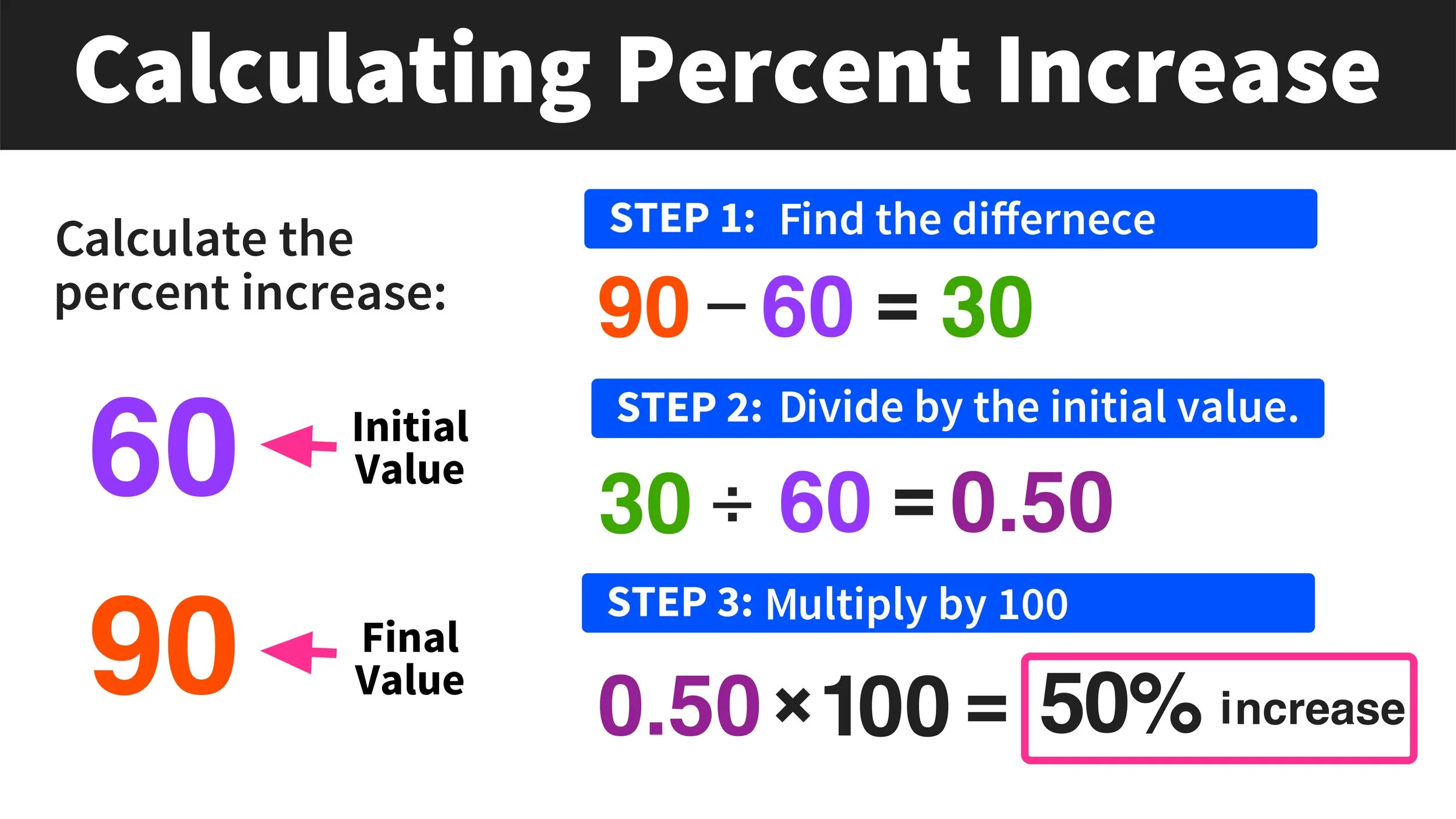
The formula for calculating a percentage increase is straightforward:
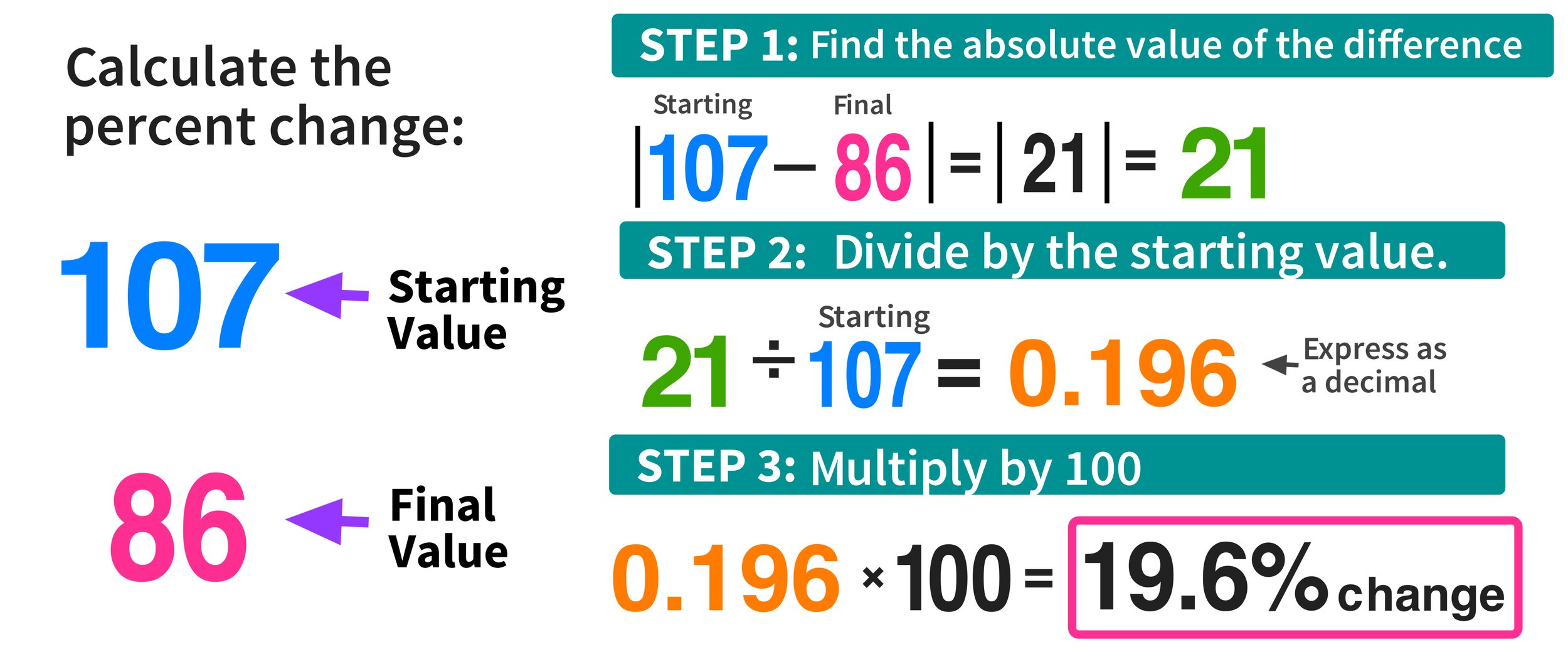
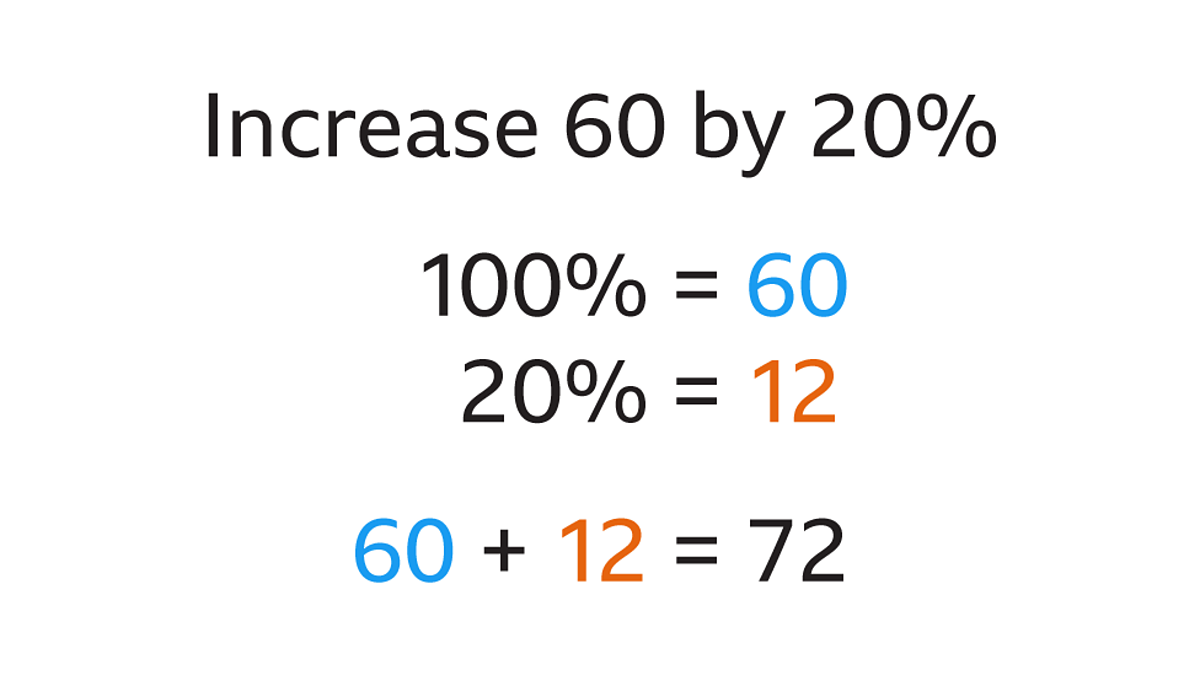
Percentage Increase = ((New Value – Original Value) / Original Value) * 100
Let’s break down each component:
- New Value: This is the larger, subsequent number after the increase has occurred.
- Original Value: This is the initial, smaller number from which the increase is measured.
- Difference (New Value – Original Value): This calculates the absolute amount of the increase.
- Dividing by Original Value: This step normalizes the absolute increase by expressing it as a proportion of the starting point. This result will be a decimal.
- Multiplying by 100: This converts the decimal proportion into a percentage, making it easier to interpret and compare.
Step-by-Step Calculation Guide
Let’s walk through an example: You invested $5,000 in a stock, and it grew to $6,250. What is the percentage increase?
- Identify the Original Value: $5,000
- Identify the New Value: $6,250
- Calculate the Difference: $6,250 – $5,000 = $1,250 (This is the absolute increase)
- Divide the Difference by the Original Value: $1,250 / $5,000 = 0.25
- Multiply by 100 to get the Percentage: 0.25 * 100 = 25%
So, your investment saw a 25% increase. This simple, methodical approach ensures accuracy and clarity in financial analysis.
Practical Applications in Personal Finance
For individuals, mastering the percentage increase calculation transforms raw financial data into actionable insights, fostering better personal financial management.
Tracking Investment Growth and Returns
One of the most common applications for percentage increase in personal finance is evaluating investment performance. Whether it’s your retirement account, a brokerage portfolio, or even a savings account, understanding the percentage gain allows you to:
- Compare different investments: A 7% return on one mutual fund is directly comparable to a 5% return on another, regardless of the principal amount invested.
- Assess overall portfolio health: You can calculate the percentage increase of your entire investment portfolio over various periods (monthly, quarterly, annually) to gauge its overall growth trajectory.
- Measure against financial goals: If you aim for a specific annual return, calculating the percentage increase helps you determine if you’re on track.
- Understand real returns: By adjusting for inflation (which itself is often expressed as a percentage increase), you can calculate your real purchasing power growth.
Analyzing Budget Changes and Spending Habits
Percentage increase is also invaluable for personal budgeting.
- Monitor expense creep: If your utility bill went from $100 to $115, that’s a 15% increase. This insight prompts you to investigate the cause and potentially adjust your habits.
- Evaluate income changes: A salary raise from $50,000 to $53,000 is a 6% increase. This allows you to understand the proportional boost to your purchasing power.
- Track spending categories: By comparing monthly or yearly spending in categories like groceries or entertainment, you can identify where your expenses are increasing the most and make informed decisions about where to cut back.
Monitoring Debt Reduction and Net Worth Progression
For those focused on building wealth and reducing debt, percentage increase provides motivating progress markers.
- Debt reduction: If you reduce a credit card balance from $5,000 to $4,000, that’s a 20% reduction (a percentage decrease, but the principle is the same). Tracking this helps maintain momentum.
- Net worth growth: Your net worth (assets minus liabilities) is a crucial indicator of financial health. Calculating its percentage increase year-over-year offers a powerful snapshot of your wealth-building progress. A consistent 10% annual increase in net worth is a far more impactful metric than just seeing an absolute dollar amount change.
Essential for Business Finance and Investment Analysis
Beyond personal finances, percentage increase is a bedrock concept in business and investment analysis, guiding strategic decisions and performance evaluations.
Evaluating Revenue Growth and Profitability
Businesses live and die by their numbers, and percentage increase is critical for assessing financial health.
- Sales growth: Comparing current period sales to previous period sales using percentage increase provides a clear picture of market penetration and product success. A 15% year-over-year revenue increase is a strong indicator of business expansion.
- Profit margin analysis: Tracking the percentage increase or decrease in gross profit margin or net profit margin helps businesses understand the efficiency of their operations and pricing strategies.
- Cost control: Monitoring the percentage increase in operational costs, raw material prices, or labor expenses allows management to identify areas for cost reduction and improve efficiency.
Assessing Market Share and Competitive Performance
In a competitive landscape, understanding your proportional standing is key.
- Market share: If a company’s sales increase by 10% while the overall market grows by only 5%, it indicates a gain in market share, a crucial competitive advantage.
- Benchmarking: Businesses often compare their percentage growth rates (revenue, profit, customer acquisition) against industry averages or direct competitors to gauge their relative performance and identify areas for improvement or competitive advantage.
Making Informed Investment Decisions
Investors rely heavily on percentage increase to evaluate the attractiveness of potential investments and monitor existing ones.
- Stock performance: The daily, monthly, and yearly percentage change of a stock’s price is a primary metric for investors.
- Return on Investment (ROI): Calculated as (Net Profit / Cost of Investment) * 100, ROI is fundamentally a percentage increase that measures the efficiency of an investment.
- Portfolio rebalancing: Understanding the percentage increase of different asset classes within a portfolio helps investors decide when to rebalance to maintain desired allocation targets.
- Dividend growth: Tracking the percentage increase in dividend payouts over time indicates a company’s commitment to returning value to shareholders and its financial stability.
Common Pitfalls and Nuances in Financial Calculations
While the percentage increase formula is simple, its application in finance can involve subtleties that, if overlooked, can lead to misinterpretations.
The Difference Between Percentage Point and Percentage Change
This is a frequent source of confusion.
- Percentage Change (or Percentage Increase/Decrease): This is what we’ve been discussing – the relative change of a value compared to its original amount. Example: A stock went from $10 to $12, a 20% increase.
- Percentage Point Change: This refers to the absolute difference between two percentages. Example: If a company’s profit margin increased from 10% to 12%, that’s a 2 percentage point increase, not a 20% increase in the margin itself. To calculate the percentage change of the margin, it would be ((12-10)/10)*100 = 20% increase. Understanding this distinction is crucial, particularly when discussing financial ratios and rates.
Understanding Compounding Effects
Many financial calculations involve compounding, where an initial percentage increase itself becomes part of the new base for subsequent increases. For example, if an investment grows by 10% one year and then by another 10% the next, the total increase isn’t 20%. It’s 10% on the original amount, plus 10% on the already increased amount. This is why multi-period calculations need careful consideration of compound annual growth rate (CAGR) rather than simple sum of annual percentage increases. CAGR calculates the mean annual growth rate of an investment over a specified period longer than one year, assuming the profits are reinvested at the end of each period.
The Importance of Context and Timeframes
A percentage increase is only meaningful when considered within its proper context and timeframe.
- Timeframes: A 50% increase in a stock price over one month is spectacular; a 50% increase over 20 years is less so. Always specify the period over which the increase occurred (e.g., year-over-year, quarter-over-quarter, decade-to-date).
- Absolute vs. Relative: While percentage increase normalizes data, sometimes the absolute change is also important. A 100% increase on a $1 investment (to $2) is less impactful than a 1% increase on a $1,000,000 investment (to $1,010,000). Both metrics offer different but complementary perspectives.
- Base Effect: A large percentage increase from a very small original number can be misleading. Growing from $1 to $10 is a 900% increase, but the absolute change is small. Conversely, a small percentage increase on a large base can represent a huge absolute change.
Leveraging Financial Tools for Accuracy and Efficiency
While manual calculation is fundamental, modern financial management benefits immensely from readily available tools that streamline the process and minimize error.
Spreadsheets: Your Go-To Financial Calculator
Microsoft Excel, Google Sheets, and similar spreadsheet programs are indispensable for financial calculations. They allow you to:
- Automate calculations: Input the original and new values, and a simple formula (
=(B2-A2)/A2) will instantly provide the percentage increase. - Track changes over time: You can easily set up columns for multiple periods and calculate percentage increases for each, creating dashboards for continuous monitoring.
- Visualize data: Spreadsheet charts can graphically represent percentage increases, making trends and performance easier to digest.
Online Calculators and Financial Software
For quick, one-off calculations or specialized financial analyses, a host of online tools and dedicated financial software can be invaluable.
- Online percentage calculators: Numerous websites offer simple interfaces where you plug in two numbers to get the percentage increase.
- Investment platforms: Brokerage accounts and investment apps often display percentage increases for your holdings automatically.
- Budgeting software: Personal finance management tools like Mint or YNAB track income and expenses, often showing percentage changes over time for different budget categories.
- Business accounting software: Programs like QuickBooks or Xero automate the calculation of revenue growth, profit margin changes, and other key performance indicators.
When to Consult a Financial Professional
While calculating a percentage increase is straightforward, interpreting its financial implications, especially in complex scenarios, can be challenging.
- Complex financial planning: For retirement planning, estate planning, or significant investment decisions, a financial advisor can help interpret percentage changes in the context of your overall financial goals.
- Business strategy: Business consultants or CFOs can provide expert analysis on how percentage increases in sales, costs, or market share should influence strategic decisions.
- Tax implications: Understanding how percentage gains (e.g., from investments) translate into taxable income often requires professional guidance.
In conclusion, the ability to calculate a percentage increase is more than just arithmetic; it’s a powerful lens through which to view and understand financial performance. From managing your personal budget and tracking investment growth to analyzing business profitability and making strategic decisions, this fundamental calculation provides the clarity and context necessary for informed financial action. Master it, and you unlock a deeper understanding of the numbers that drive your financial world.
aViewFromTheCave is a participant in the Amazon Services LLC Associates Program, an affiliate advertising program designed to provide a means for sites to earn advertising fees by advertising and linking to Amazon.com. Amazon, the Amazon logo, AmazonSupply, and the AmazonSupply logo are trademarks of Amazon.com, Inc. or its affiliates. As an Amazon Associate we earn affiliate commissions from qualifying purchases.