
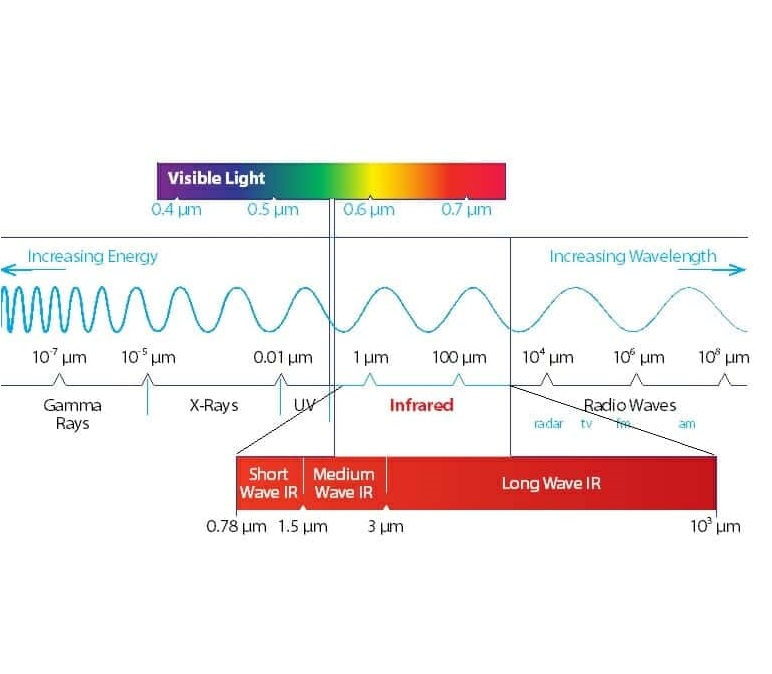
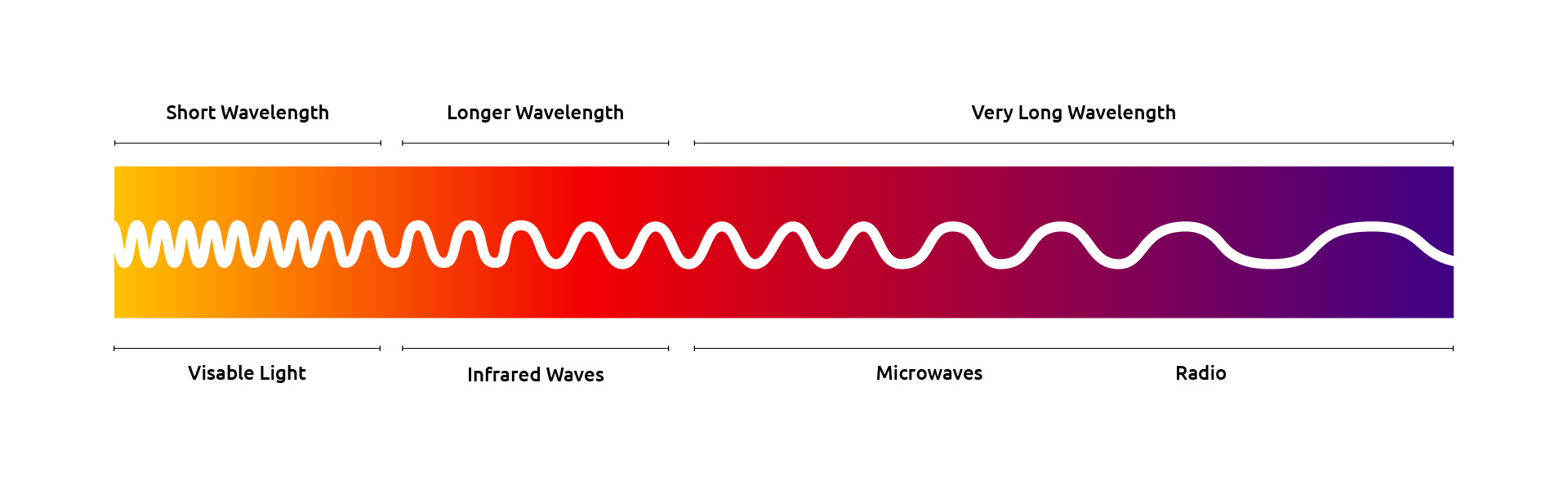
Infrared (IR) radiation occupies a unique and vital position in the electromagnetic spectrum, bridging the gap between visible light and microwave radio waves. While invisible to the human eye, infrared energy is foundational to a vast array of modern technologies, from the fiber optic cables that power the internet to the sophisticated sensors in autonomous vehicles. To understand what wavelength infrared is, one must look beyond a single number. The infrared spectrum is a broad range of wavelengths typically defined as spanning from 700 nanometers (nm) to 1 millimeter (mm).
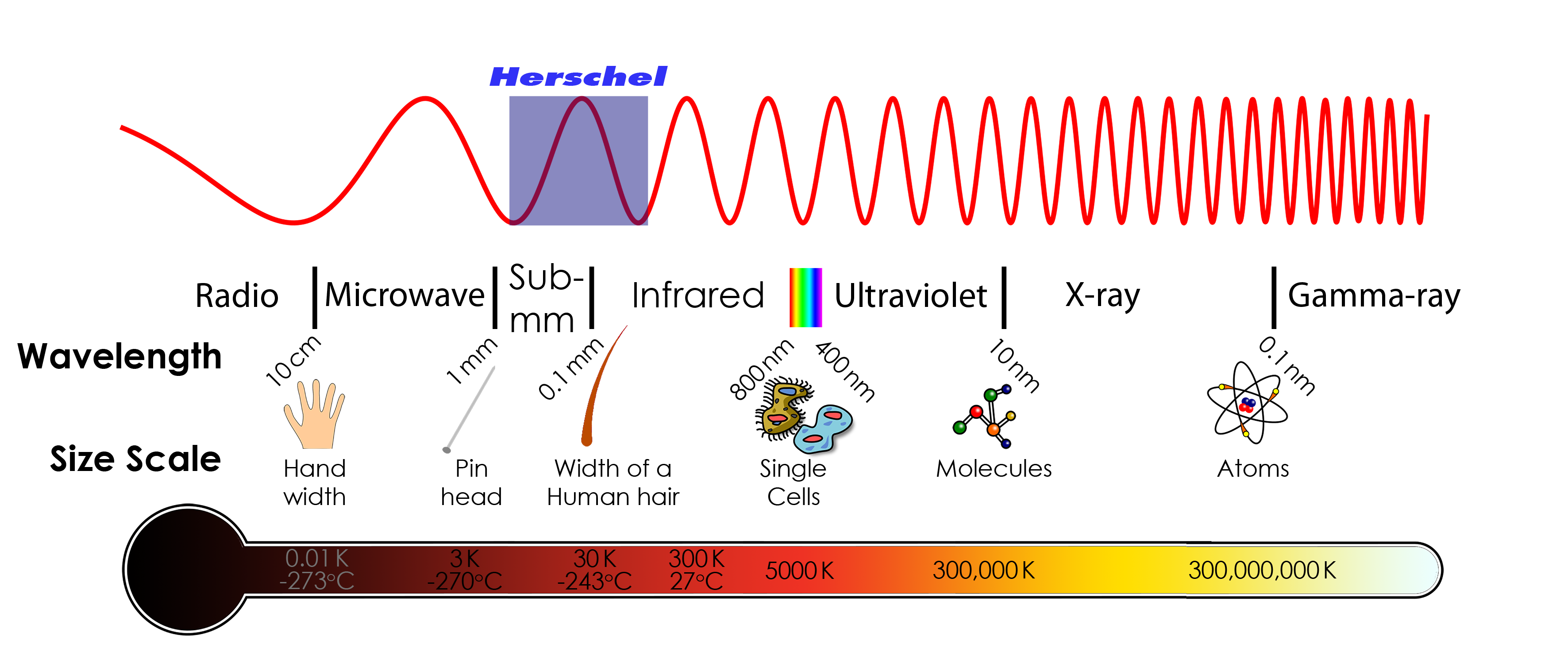
In the world of technology, this spectrum is not treated as a monolith. Instead, engineers and developers divide it into sub-categories based on how the light interacts with matter. These divisions—Near-Infrared, Mid-Infrared, and Far-Infrared—define the capabilities of the gadgets and systems we use every day. As we move deeper into the era of AI-driven sensing and high-speed data transfer, understanding these wavelengths becomes essential for anyone tracking technology trends.
The Infrared Taxonomy: Decoding the Bands of the Spectrum
The infrared spectrum is primarily categorized by wavelength, and in the tech industry, these segments determine the specific application of a hardware component. Because different wavelengths carry different energy levels and interact with the atmosphere in unique ways, choosing the right band is a critical engineering decision.
Near-Infrared (NIR) and Short-Wave Infrared (SWIR)
Near-infrared wavelengths sit closest to the visible spectrum, ranging approximately from 700 nm to 1,400 nm. This is perhaps the most “active” band for consumer technology. Because NIR behaves similarly to visible light—it can be reflected and focused by standard glass lenses—it is widely used in photography and remote sensing. Short-wave infrared (SWIR), spanning from 1,400 nm to 3,000 nm, is particularly valuable in industrial tech because it can “see” through certain materials that are opaque to visible light, such as silicon or dense fog.
Mid-Wave (MWIR) and Long-Wave Infrared (LWIR)
As we move further from visible light, we encounter Mid-Wave Infrared (3,000 nm to 8,000 nm) and Long-Wave Infrared (8,000 nm to 15,000 nm). These bands are often referred to as the “thermal infrared” region. Unlike NIR, which relies on reflected light, MWIR and LWIR detect the heat emitted directly by objects. This is the realm of thermal imaging cameras used in digital security, predictive maintenance for electrical grids, and search-and-rescue operations.
Far-Infrared (FIR)
The Far-Infrared band extends from 15,000 nm to the edge of the microwave spectrum at 1 mm. While less common in consumer electronics, FIR is a frontier in medical technology and high-end scientific research. It is used in specialized imaging and is currently being explored for its potential in ultra-high-frequency wireless communications, potentially playing a role in the “Beyond 5G” or 6G era.
Infrared in Communication: The Backbone of Global Data
When we discuss the “speed of the internet,” we are largely discussing the efficiency of infrared wavelengths. While we often think of the internet as “the cloud,” it is physically grounded in thousands of miles of fiber optic cables. These cables do not transmit visible light; they transmit infrared signals.
Fiber Optics and the 1550 nm Standard
The tech industry has converged on specific infrared wavelengths for data transmission, most notably the 1550 nm band. The reason is purely physical: at this specific wavelength, silica-based fiber optic cables exhibit the lowest “attenuation,” meaning the light signal loses the least amount of strength over long distances. By using infrared instead of visible light, telecommunications companies can send data across oceans with fewer signal boosters, reducing latency and infrastructure costs.
Wireless Data and Li-Fi
Beyond cables, infrared is a key player in the emerging field of Light Fidelity (Li-Fi). While Wi-Fi uses radio waves, Li-Fi uses light—often in the infrared spectrum—to transmit data wirelessly. Because infrared wavelengths do not pass through walls, they offer a layer of digital security that radio waves cannot provide, making them an attractive tech trend for secure office environments and military applications.
LiDAR and Autonomous Systems
In the automotive tech sector, Light Detection and Ranging (LiDAR) has become a buzzword. LiDAR systems typically operate at 905 nm or 1550 nm. By pulsing infrared laser light and measuring how long it takes to bounce back, these sensors create high-resolution 3D maps of a vehicle’s surroundings. This use of infrared is what allows self-driving cars to “see” in the dark and navigate complex urban environments with centimeter-level precision.
The Intersection of AI and Infrared Sensing
One of the most significant technology trends today is the integration of Artificial Intelligence with infrared sensing hardware. By feeding infrared data into machine learning models, developers are creating “super-human” vision systems that can identify objects and patterns invisible to the naked eye.
Biometrics and Facial Recognition
If you use a modern smartphone with facial recognition, you are interacting with infrared technology every time you unlock your device. Systems like Apple’s FaceID use an infrared projector to cast over 30,000 invisible dots onto the user’s face. An infrared camera reads this pattern, and AI algorithms compare it to the stored biometric data. Infrared is used here because it works in total darkness and is much harder to spoof with a 2D photograph than a standard visible-light camera.
Digital Security and Thermal Analytics
In the realm of digital security and surveillance, infrared is evolving from simple “night vision” to “intelligent thermal analytics.” Modern security AI can analyze the heat signatures (LWIR wavelengths) of objects to distinguish between a human, an animal, or a vehicle, even in heavy rain or smoke. This reduces false alarms and allows for sophisticated perimeter security in critical infrastructure sites like data centers and power plants.
Industrial AI and Predictive Maintenance
In manufacturing and IoT (Internet of Things), infrared sensors monitor the wavelengths emitted by machinery. AI tools analyze these thermal patterns to detect anomalies. If a bearing in a factory robot begins to overheat, it emits a specific infrared wavelength profile. AI systems can flag this for maintenance before the part fails, saving companies millions in downtime. This “predictive maintenance” is a cornerstone of the Industry 4.0 movement.
Future Frontiers: From Deep Space to Molecular Computing
As technology advances, our ability to manipulate infrared wavelengths is opening doors to discoveries that were previously thought impossible. The future of infrared tech lies in its ability to reveal the hidden components of our universe and our own biology.
The James Webb Space Telescope (JWST)
The JWST is perhaps the most advanced piece of infrared technology ever built. Because the universe is expanding, light from the earliest stars has been “redshifted” out of the visible spectrum and into the infrared. By operating primarily in the 600 nm to 28,000 nm range, the JWST can look through cosmic dust clouds to see the birth of stars and galaxies. This represents the pinnacle of infrared sensor technology and has driven significant innovations in cryogenically cooled detectors that will eventually trickle down to terrestrial tech.
Non-Invasive Medical Diagnostics
The tech and health sectors are converging through the use of Short-Wave Infrared (SWIR) for non-invasive monitoring. Researchers are developing wearable sensors that use infrared light to measure blood glucose levels or oxygen saturation without the need for needles. Because specific molecules absorb infrared light at specific wavelengths, these devices can “scan” the blood through the skin, representing a massive shift in personal health tech and AI-driven wellness monitoring.
Quantum Sensing and IR
Looking even further ahead, the field of quantum sensing is beginning to utilize infrared photons to achieve unprecedented levels of measurement sensitivity. Infrared quantum sensors could lead to GPS-independent navigation systems and new forms of secure quantum communication. As we learn to control infrared light at the single-photon level, the line between physics and computing will continue to blur.
Conclusion
Understanding “what wavelength is infrared” is more than a physics exercise; it is a roadmap of modern technological capability. From the 700 nm waves that unlock our phones to the 15,000 nm waves that monitor the health of our planet and our machinery, infrared is the invisible engine of the digital age. As AI continues to provide the “brain” for our devices, infrared sensors provide the “eyes,” allowing technology to perceive a world of heat, data, and depth that exists just beyond the limits of human perception. For tech professionals and enthusiasts alike, the mastery of this spectrum remains one of the most exciting frontiers in hardware and software innovation.
aViewFromTheCave is a participant in the Amazon Services LLC Associates Program, an affiliate advertising program designed to provide a means for sites to earn advertising fees by advertising and linking to Amazon.com. Amazon, the Amazon logo, AmazonSupply, and the AmazonSupply logo are trademarks of Amazon.com, Inc. or its affiliates. As an Amazon Associate we earn affiliate commissions from qualifying purchases.