
In the early months of 2022, a simple grid of grey, yellow, and green squares began to dominate social media feeds across the globe. For millions of users, the question “What was the Wordle?” became a daily ritual, a shared linguistic puzzle that bridged the gap between casual gaming and social connectivity. While the game’s premise was deceptively simple—guess a five-letter word in six attempts—the technology, software design, and digital philosophy behind Wordle represent a significant milestone in the evolution of modern web-based applications.
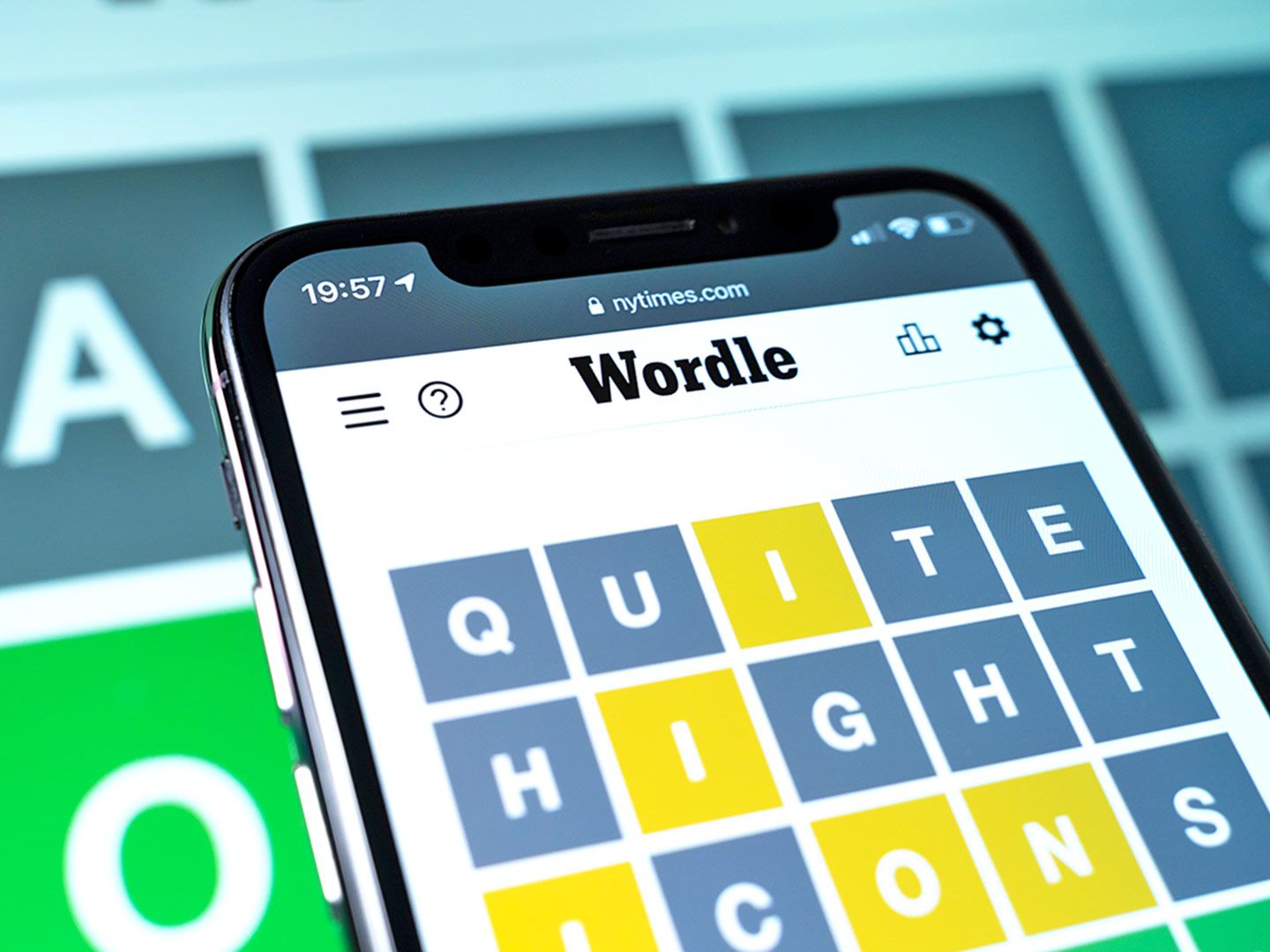
Wordle was not just a game; it was a masterclass in minimalist software engineering. Originally developed by Josh Wardle, a Brooklyn-based software engineer, the game was built as a gift for his partner. Its transition from a private project to a global sensation acquired by The New York Times (NYT) serves as a compelling case study in tech scalability, user interface (UI) psychology, and the enduring power of the “less is more” approach in an era of over-engineered apps.
The Architecture of Simplicity: How Wordle Redefined Web-Based Gaming
At its core, the original Wordle was a marvel of lightweight web development. Unlike modern “Triple-A” mobile games that require multi-gigabyte downloads and high-speed processors, Wordle was built using standard web technologies: HTML, CSS, and vanilla JavaScript. This choice was foundational to its viral success, as it allowed the game to be played on any device with a browser, regardless of hardware specifications.
From Prototype to Viral Success
The initial version of Wordle was notable for what it lacked. There were no advertisements, no notification pings, no data-tracking cookies, and no account requirements. In the world of tech, this is known as a frictionless user experience (UX). By removing the barriers to entry, Wardle created a product that could be shared and accessed instantly. The “tech stack” was so lean that the entire game, including the logic for checking words and the library of daily solutions, was contained within a single JavaScript file.
The Technology Stack Behind the Grid
The technical brilliance of Wordle lay in its client-side execution. In most modern web apps, the “answers” to a puzzle would be stored on a secure server and fetched via an API call to prevent users from cheating. However, the original Wordle kept the entire list of past and future words within the browser’s local storage and the source code itself.
While this made the game vulnerable to tech-savvy users who could simply inspect the page’s source code to find the daily answer, it also meant the game was incredibly fast and could even be played offline once the page was loaded. This decentralized approach harkened back to an earlier era of the internet, emphasizing portability and efficiency over complex server-side validation.
The Algorithm of Daily Play: Understanding the Word List and Selection Logic
To understand “what the Wordle was” on any given day, one must understand the curated algorithm that governed the game’s vocabulary. The game did not draw from a random dictionary; instead, it utilized a carefully selected list of approximately 2,300 five-letter words.
The Curated Dictionary vs. The Random Seed
The English language contains over 12,000 five-letter words, but many are obscure, archaic, or technical terms that would frustrate the average player. The “Wordle list” was narrowed down to words that were generally recognizable to a wide audience. This list was then indexed, and a simple mathematical function linked the current date to a specific index in the array.
This meant that every player in the world was solving the same puzzle at the same time. This synchronization was the “killer feature” of the software. From a technical perspective, it created a unified global state without the need for complex database syncing. The “Wordle of the day” was determined by the user’s local clock, making the game a synchronized global event driven by local hardware.
Hard Mode and the Logic of Constraints
For advanced users, Wordle introduced “Hard Mode,” a toggle in the settings that altered the game’s internal logic. In this mode, any revealed hints (green or yellow letters) must be used in subsequent guesses. From a programming standpoint, this required the software to maintain a state of “required characters” and validate each new input against the results of the previous attempt. This added a layer of complexity to the input validation script without sacrificing the game’s performance.
Wordle and the New York Times: A Case Study in Software Integration

When The New York Times purchased Wordle for an undisclosed seven-figure sum in early 2022, the tech world watched closely. The challenge was not just a business transaction; it was a massive software migration project. The goal was to move millions of daily active users from a standalone domain (powerlanguage.co.uk) to the NYT’s integrated games ecosystem without losing player data or disrupting the user experience.
Migrating Millions of Users Without Breaking the Experience
The migration of Wordle is often cited as a success in digital transition. To preserve user “streaks”—the count of consecutive days a player had won—the NYT tech team had to leverage the browser’s LocalStorage. When users were redirected to the new URL, the NYT’s scripts had to read the existing data from the old domain’s storage and port it into the new infrastructure.
This process highlighted a critical aspect of web security and data persistence: the difficulty of moving data between different domains. The engineering team had to ensure that the migration scripts were robust enough to handle various browser configurations and privacy settings that might block cross-domain data transfers.
Data Tracking and the Shift to the NYT Games Ecosystem
Post-acquisition, the Wordle “stack” became more sophisticated. The New York Times integrated the game into its proprietary data and analytics pipeline. This allowed for more detailed tracking of player behavior, such as which words were the most difficult and how many guesses, on average, a player took. While this added more “weight” to the game’s code—including tracking pixels and more complex CSS for brand alignment—the core gameplay remained remarkably faithful to Wardle’s original vision.
The Ripple Effect: How Wordle Influenced Modern Software Design and AI Integration
The success of Wordle sparked a revolution in “micro-gaming,” a software trend characterized by short, daily, browser-based interactions. It proved that in an age of infinite scrolling and attention-sink apps, there was a massive market for “appointment gaming”—content that is limited, intentional, and finite.
The Rise of the “Daily Micro-Game” Genre
Developers quickly sought to replicate the Wordle formula. Games like Heardle (music), Worldle (geography), and Framed (cinema) emerged, all utilizing the same “once-per-day” logic and social sharing mechanics. From a software engineering perspective, these clones often utilized the same foundational JavaScript patterns: a daily index, local storage for state management, and a sharing function that converted the game state into a grid of emojis for the clipboard.
The “Share” button was perhaps the most brilliant piece of UI design in Wordle. Instead of sharing a link or a screenshot, it generated a symbolic representation of the player’s journey. This utilized the system’s clipboard API to create a lightweight, text-based viral loop that bypassed the need for traditional social media API integrations.
Wordle as a Training Ground for Natural Language Processing (NLP)
The sudden explosion of Wordle also caught the attention of the AI and data science communities. Large Language Models (LLMs) and NLP algorithms were tested against the game to see how efficiently they could solve puzzles based on letter frequency and positional probability.
Developers built “Wordle Solvers” using Python and R, employing information theory (specifically the concept of entropy) to determine the statistically optimal starting words (such as “CRANE” or “ADIEU”). This intersection of casual gaming and advanced computational linguistics provided a sandbox for testing how algorithms handle constrained sets of data.
The Future of Wordle and Digital Puzzle Security
As Wordle matures within the NYT ecosystem, its technological footprint continues to evolve. The focus has shifted from simple execution to long-term sustainability and security.
Protecting the Solution: Client-Side vs. Server-Side Security
To prevent spoilers and ensure the integrity of the daily puzzle, the NYT moved the solution logic further toward the server side. While the original game had the entire year’s worth of answers accessible in the source code, the modern version is more guarded. This shift reflects a broader trend in web development: moving from “fat clients” (where the browser does all the work) to more balanced architectures that protect intellectual property and user experience through server-side validation.

The Evolution of the Wordle API and Social Sharing Tech
Today, Wordle is part of a broader suite of digital tools. The technology now supports account-based syncing, allowing a user to start a game on a desktop and finish it on a mobile app—a feature that requires a robust back-end database and authentication system. Furthermore, the integration with “WordleBot,” an AI-driven tool that analyzes a player’s choices post-game, demonstrates how machine learning can be used to enhance even the simplest digital experiences.
In conclusion, “What was the Wordle?” is a question with two answers. Culturally, it was a moment of global unity during a digital age. Technically, it was a reminder that excellent software does not need to be complex. By leveraging basic web standards, prioritizing user experience, and utilizing clever algorithmic constraints, Wordle became more than just a game—it became a blueprint for the next generation of digital engagement. As software continues to grow more bloated and data-heavy, the legacy of Wordle stands as a testament to the power of clean code and elegant design.
aViewFromTheCave is a participant in the Amazon Services LLC Associates Program, an affiliate advertising program designed to provide a means for sites to earn advertising fees by advertising and linking to Amazon.com. Amazon, the Amazon logo, AmazonSupply, and the AmazonSupply logo are trademarks of Amazon.com, Inc. or its affiliates. As an Amazon Associate we earn affiliate commissions from qualifying purchases.