
The landscape of digital entertainment has undergone a seismic shift over the last decade, transitioning from a model of premium exclusivity to a more nuanced, tiered ecosystem. For users of the Amazon Prime Video application, the distinction between “included with Prime,” “rent/buy,” and “free with ads” can often feel like a complex software interface puzzle. However, understanding the technical infrastructure and the content delivery systems behind Amazon’s platform reveals a wealth of high-quality media available at no additional cost.
As streaming technology matures, the “Free to Me” section of Amazon Prime has become a cornerstone of the platform’s user experience (UX) strategy. By leveraging the Freevee brand—formerly IMDb TV—Amazon has integrated a robust Ad-Supported Video on Demand (AVOD) service directly into its primary streaming architecture. This allows users to access premium television series, blockbuster films, and original programming without an active Prime subscription or an additional monthly fee, provided they are willing to interact with an ad-supported digital delivery model.
The Evolution of Free Content within the Amazon Video App
The integration of free content into the Amazon Prime Video interface is a masterclass in software ecosystem expansion. Originally, Amazon’s video efforts were bifurcated between a retail-style storefront and a subscription-based library. Today, the platform serves as a unified hub for various digital distribution models.
Understanding the Integration of Freevee
Freevee represents Amazon’s major play in the AVOD sector. Technically, Freevee functions as a standalone app on many smart TV platforms, but its deepest integration exists within the Prime Video software environment. For the user, this means that search queries and recommendation algorithms seamlessly blend paid content with ad-supported “free” content.
This integration is not merely aesthetic; it is backed by a sophisticated backend that manages dynamic ad insertion (DAI). Unlike traditional broadcast television, where commercials are baked into the signal, the Freevee content delivered through Prime Video uses DAI to serve personalized advertisements based on user data, viewing habits, and geographic location. This technical capability ensures that the “free” tier remains financially viable while providing a smoother, more relevant experience for the viewer.
The Shift Toward Ad-Supported Digital Media
The digital media industry is currently pivoting away from the “subscription fatigue” that characterized the late 2010s. Market data suggests that a significant percentage of users prefer “freemium” models over high-cost monthly renewals. Amazon has responded by shifting high-profile original content, such as Bosch: Legacy and the breakout hit Jury Duty, specifically to the free tier.
From a technical standpoint, this moves the goalposts for content discovery. Instead of hiding free content behind menus, Amazon’s UI designers have prioritized “Free with Ads” carousels. This strategy increases the “Time on App” metric, a key performance indicator for software platforms, by reducing the friction between a user opening the app and starting a video stream.
Essential Free Software Features and Content Categories
Navigating the vast library of Amazon’s free offerings requires an understanding of how the software categorizes its assets. The platform utilizes a sophisticated metadata tagging system to help users filter through thousands of titles.
Curated Channels and Live TV Integration
One of the most overlooked technical features of the Prime Video app is its “Live TV” tab. This section functions similarly to a traditional Electronic Programming Guide (EPG) found on cable boxes but is powered entirely by over-the-top (OTT) streaming protocols.
Within this interface, users can access “FAST” channels (Free Ad-supported Streaming TV). These are linear streams that run 24/7, offering everything from local news and weather to dedicated channels for specific franchises like Unsolved Mysteries or Baywatch. The technology behind these channels involves automated playout software that mimics the experience of live television, providing a “lean-back” experience that many users find more relaxing than the “active scroll” required by on-demand libraries.
Hidden Gems in the “Free to Me” Filter
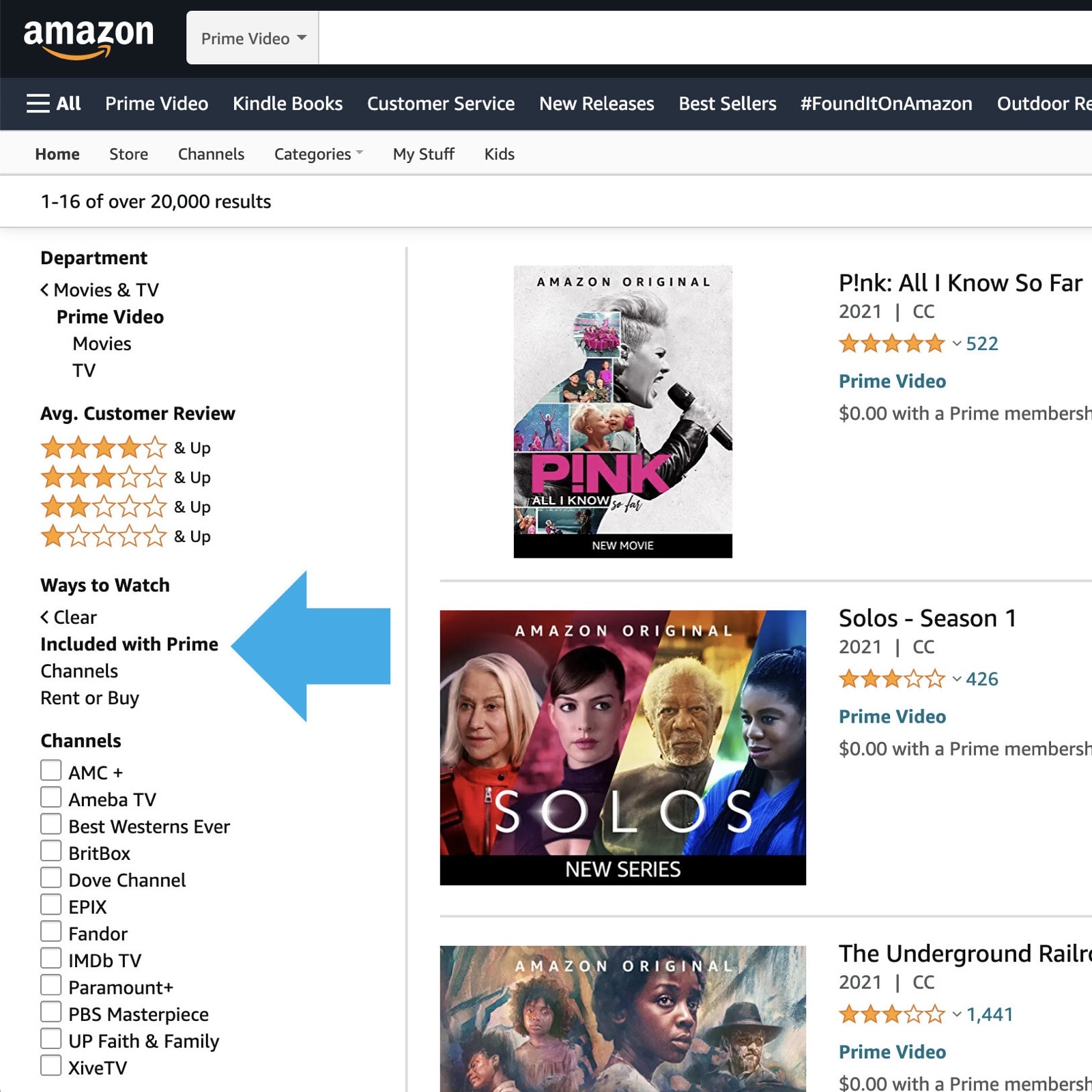
For users who want to bypass the rental and purchase options entirely, the “Free to Me” toggle is the most critical software tool in the Prime Video arsenal. On mobile devices and web browsers, this filter resides at the top of the navigation bar. On smart TV interfaces, it is often a dedicated row or a filter within the “My Stuff” or “Store” sections.
By activating this filter, the software’s algorithm hides any content that requires a transactional video-on-demand (TVOD) payment. This reveals a massive library of high-definition content, including:
- Original Series: Shows like Jury Duty, which utilized a unique “staged reality” format that became a viral sensation, showcasing that free content does not equate to low production value.
- Classic Cinema: A rotating selection of licensed films from major studios like Sony, Disney, and Warner Bros. Discovery often find their way onto the free tier as part of broader licensing agreements.
- Documentaries: Amazon has heavily invested in the “Freevee Originals” documentary space, utilizing high-bitrate streaming to ensure that visual-heavy nature and science programs look premium even on 4K displays.
Tech-Driven Content Discovery: Algorithms and UI Optimization

The experience of “watching for free” is heavily dictated by the underlying recommendation engine. Amazon’s machine learning models are designed to predict what a user wants to watch next by analyzing millions of data points.
Personalization Engines in the Prime Video Interface
When a user engages with free content, the platform’s personalization engine begins to map their preferences. This is a complex software process involving collaborative filtering and content-based filtering. If you watch a free, ad-supported action movie, the UI will not only suggest more free action movies but will also strategically place relevant Prime-inclusive or “for purchase” titles in adjacent rows.
This “cross-pollination” of content types is a deliberate design choice. It allows the platform to act as a funnel, moving users from free content into the broader Amazon Prime ecosystem. The speed and accuracy of these recommendations are facilitated by Amazon Web Services (AWS), which provides the low-latency cloud infrastructure necessary to update user recommendations in near real-time.
Cross-Platform Compatibility and Streaming Quality
A major technical advantage of Amazon’s free content is its cross-platform availability. The Prime Video app is optimized for a staggering array of hardware, including ARM-based tablets, x86-based PCs, and various proprietary smart TV operating systems (Tizen, WebOS, Roku OS).
Regardless of whether content is free or paid, Amazon utilizes adaptive bitrate streaming (ABR). This technology detects the user’s internet bandwidth in real-time and adjusts the video quality accordingly. If your connection drops, the software dynamically switches to a lower-resolution stream to prevent buffering. For free viewers, this means a consistent experience that rivals the technical quality of premium platforms like Netflix or Apple TV+.
Security and Privacy in Ad-Supported Streaming
As users move toward free, ad-supported tiers, digital security and data privacy become paramount. Streaming apps are high-value targets for data harvesting, and Amazon’s platform includes several technical safeguards.
Leveraging Security Protocols
Amazon Prime Video utilizes industry-standard encryption for both the stream itself (Digital Rights Management or DRM) and the user’s personal data. When watching free content, the app employs Widevine or PlayReady DRM to ensure that the content cannot be easily pirated or intercepted.
From a privacy perspective, users have control over how their data is used for ad targeting. Within the “Account & Settings” menu of the web interface, or the “Privacy” section of the mobile app, users can opt-out of interest-based ads. While this doesn’t remove the advertisements from the free content, it limits the software’s ability to track browsing behavior across different apps and websites to build a marketing profile.
Account Management and Parental Controls
The “free” ecosystem also integrates with Amazon’s robust parental control software. Even though the content is free, it still carries industry-standard ratings (TV-MA, PG-13, etc.). Parents can set PIN-based restrictions that apply to the entire Prime Video app, ensuring that younger users cannot access mature-rated free content without authorization. This centralized security management is a significant advantage over using multiple, disparate free streaming apps.
The Future of Ad-Supported Video on Demand (AVOD)
The trajectory of Amazon’s free offerings points toward a future where the line between “paid” and “free” software continues to blur. As AI and machine learning become more integrated into the streaming stack, the way we find and watch free content will evolve.
Impact of AI on Content Recommendations
Generative AI is set to revolutionize the “What to Watch” experience. We are moving toward a natural language search interface where a user can ask, “Find me a free sci-fi movie from the 90s with a female lead,” and the software will instantly curate a custom playlist. Amazon is already experimenting with AI-generated summaries and “X-Ray” features (powered by IMDb) that provide real-time technical data about the actors, music, and trivia on screen. This enhances the value of the free tier by providing a “premium” layer of metadata that other free services lack.

The Competitive Landscape of Free Streaming Tech
As more tech giants enter the FAST and AVOD space (such as Google with YouTube’s free movies and Apple’s potential future tiers), Amazon’s advantage lies in its hardware integration. By owning the Fire TV ecosystem, Amazon can bake its free content directly into the television’s operating system.
When you turn on a Fire TV, the “free” suggestions are integrated into the home screen at a system level, not just an app level. This deep software integration makes the barrier to entry for free entertainment almost zero. As the hardware becomes more powerful, we can expect to see even more sophisticated features—such as interactive ads or gamified viewing experiences—integrated into the free content streams.
Ultimately, “what to watch for free” on Amazon Prime is not just a list of titles; it is an exploration of a highly optimized digital delivery platform. By understanding the tools—the “Free to Me” filters, the Live TV EPG, and the Freevee integration—users can maximize their digital entertainment value through one of the most technologically advanced software ecosystems available today.
aViewFromTheCave is a participant in the Amazon Services LLC Associates Program, an affiliate advertising program designed to provide a means for sites to earn advertising fees by advertising and linking to Amazon.com. Amazon, the Amazon logo, AmazonSupply, and the AmazonSupply logo are trademarks of Amazon.com, Inc. or its affiliates. As an Amazon Associate we earn affiliate commissions from qualifying purchases.