
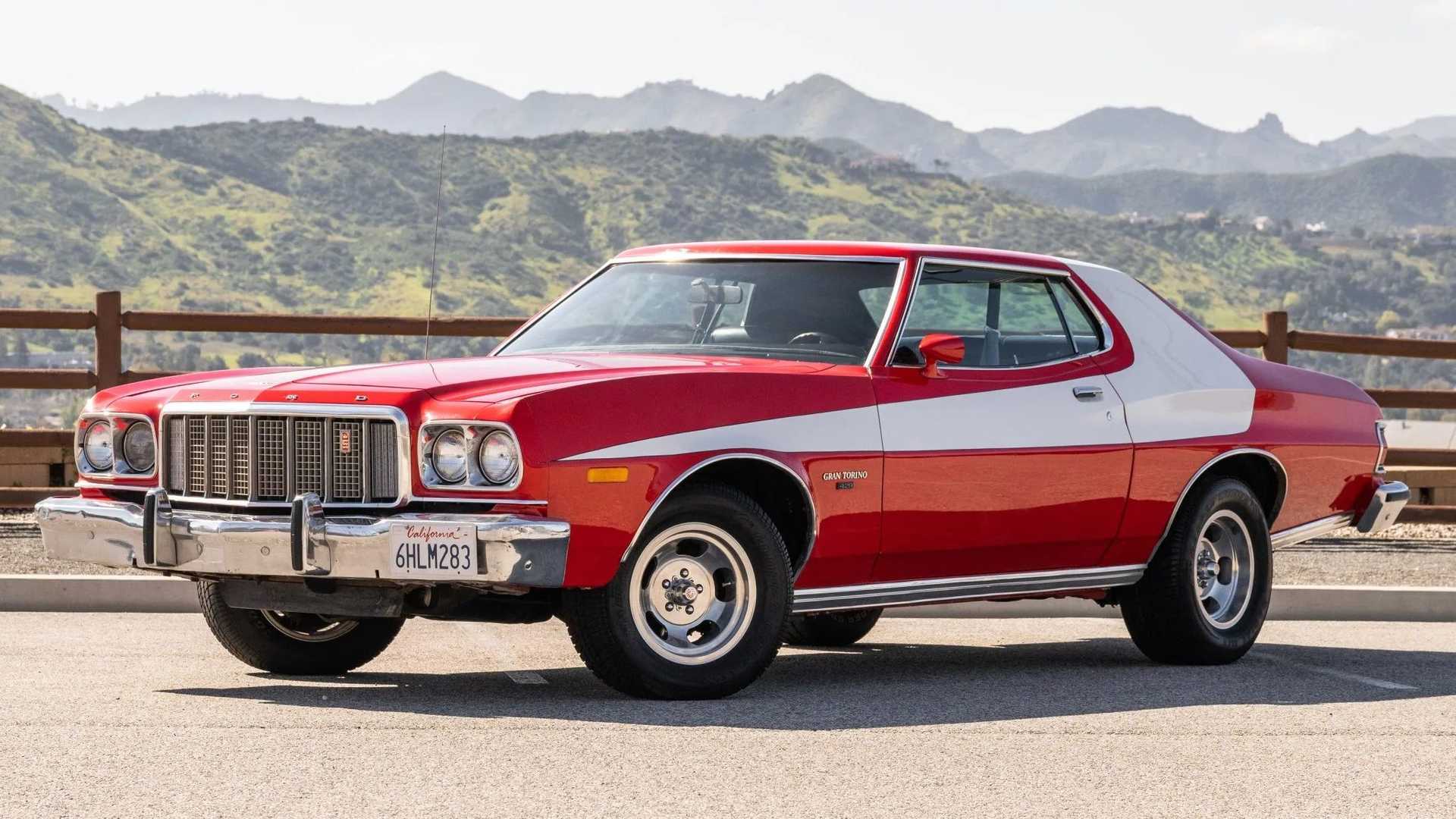
When we discuss the most successful brand collaborations in television history, we often look toward modern examples like Apple’s ubiquitous presence in Ted Lasso or the seamless integration of luxury fashion in Succession. However, the blueprint for turning a functional object into an enduring brand icon was arguably perfected in 1975. The “Starsky and Hutch car”—a bright red 1975 Ford Gran Torino with a distinctive white vector stripe—transcended its role as a prop to become a masterclass in visual branding, product placement, and cultural equity.

To understand why this specific vehicle remains a touchstone for marketers and brand strategists today, one must look beyond the engine specifications and focus on how the “Striped Tomato” (a nickname famously coined by Paul Michael Glaser) became a case study in creating a distinctive visual asset that persists nearly half a century later.
The Visual DNA of the “Striped Tomato”
In the world of brand strategy, a “Distinctive Visual Asset” (DVA) is a non-copyable element—be it a color, a logo, or a shape—that triggers immediate brand recall. For Starsky & Hutch, the Gran Torino served as the show’s most potent DVA. It was not merely a vehicle for transportation; it was a visual shorthand for the show’s energy, rebellious spirit, and urban grit.
The Power of a Distinctive Visual Asset
The 1975 Ford Gran Torino was, by most accounts of the era, a somewhat bulky and unrefined mid-size car. In its standard factory colors, it lacked the aerodynamic elegance of a Corvette or the raw muscle of a Charger. However, the addition of the “Vector” stripe transformed the car’s brand identity.
From a design perspective, the white stripe served two functions: it created a sense of forward motion even when the car was stationary, and it provided a high-contrast visual that was unmistakable on the low-resolution television screens of the 1970s. This is a fundamental lesson in brand design: simplicity and contrast drive recognition. By choosing a design that was “loud” and easily replicable, the production team created a visual hook that consumers could identify from a distance, much like the golden arches of McDonald’s or the silhouette of a Coca-Cola bottle.
Breaking the “Hero Car” Mold
Before Starsky & Hutch, most television cars were either sophisticated (think the Aston Martin DB5) or rugged (the Jeep CJ-5). The Gran Torino occupied a unique niche in the brand landscape: the “Relatable Rebel.” It was a mass-market Ford, yet it was customized to feel elite and specialized.
This tension between “accessible” and “exclusive” is a hallmark of successful lifestyle branding. The car suggested that the protagonists were part of the system (law enforcement) but operated by their own rules. For Ford, this was marketing gold. It positioned their utilitarian brand as something that could be edgy, fast, and culturally relevant to a younger demographic that was beginning to move away from the traditional sedan.
Product Placement and the Ford Marketing Synergy
The relationship between the producers of Starsky & Hutch and the Ford Motor Company represents one of the earliest and most successful examples of high-stakes product placement. This wasn’t just about showing a logo; it was about integrating a product into the narrative fabric of the brand experience.
The 1975 Ford Gran Torino as a Lifestyle Statement
In the mid-70s, Ford was looking to pivot the Gran Torino’s image. Originally marketed as a comfortable family car, the association with Starsky & Hutch allowed Ford to tap into “attitudinal marketing.” Through the show, the car was rebranded as a high-performance pursuit vehicle capable of high-speed chases and dramatic stunts.
The car became a “lifestyle statement” for the viewer. If you drove a Gran Torino, you weren’t just a commuter; you were aligned with the bravery, camaraderie, and street-smart coolness of David Starsky and Ken “Hutch” Hutchinson. This is a classic example of brand transference, where the attributes of a character or celebrity are transferred onto the product they use.
How Television Transformed Automotive Sales Funnels
Recognizing the massive popularity of the “Striped Tomato,” Ford took the unprecedented step of releasing a limited edition “Starsky & Hutch” Gran Torino in 1976. They produced approximately 1,300 units, painted in “2B” Bright Red with the signature white vector stripe factory-applied.

This move transformed a fictional brand asset into a tangible retail product. It bridged the gap between the “awareness” stage of the marketing funnel (watching the show) and the “conversion” stage (buying the car). For Ford, the Gran Torino was no longer competing solely on fuel economy or price point; it was competing on identity. Owners weren’t just buying a Ford; they were buying a piece of the show’s intellectual property.
Cultural Equity and the Longevity of Iconic IP
Brand equity is often measured by how long a brand remains relevant after its primary marketing push has ended. The Starsky and Hutch car has achieved a level of cultural equity that few modern products can match. Decades after the show went off the air, the car remains a staple of toy aisles, car shows, and pop-culture references.
Emotional Branding through Nostalgia
The longevity of the Gran Torino brand is rooted in emotional branding. For the generation that grew up in the 1970s, the car is a “memory marker.” It represents a specific era of television and a specific feeling of excitement.
In modern marketing, nostalgia is a powerful tool for building brand loyalty. When a brand can successfully tap into the positive emotions of a consumer’s past, it bypasses the rational, skeptical part of the brain. This is why we see the Starsky and Hutch car appearing in 21st-century reboots and cameos; its presence acts as an emotional bridge, instantly validating the “cool factor” of the production for an older audience while providing a retro-chic aesthetic for a newer one.
The Car as a Character: Beyond Functional Utility
One of the most profound branding lessons from Starsky & Hutch is the concept of the “Product as a Character.” The Gran Torino was rarely referred to as just “the car.” It was an extension of the protagonists—treated with care, involved in the plot, and often the subject of dialogue.
In corporate branding, this is known as “Anthropomorphism.” When consumers begin to attribute human characteristics or personality traits to a product, their loyalty to that product increases exponentially. The “Striped Tomato” had a personality: it was loud, it was tough, and it was slightly flamboyant. By giving the car a “soul,” the show’s creators ensured that it would be remembered long after the plotlines of individual episodes were forgotten.
Strategic Lessons for Modern Brand Management
The story of the Starsky and Hutch car offers several vital takeaways for today’s brand managers, marketers, and designers who are navigating a cluttered digital landscape.
Lessons in Consistency and Boldness
In a world of “bland-ing”—where many tech and lifestyle brands are moving toward minimalist, indistinguishable logos—the Gran Torino stands as a testament to the power of being bold. The white stripe was polarizing; even the actors had mixed feelings about it. However, from a branding perspective, being polarizing is often better than being invisible.
A brand that tries to appeal to everyone often ends up appealing to no one. The “Striped Tomato” took a stand. It was unapologetically bright and distinct. Modern brands can learn that having a “signature” element—something that is uniquely yours and consistently applied—is the most effective way to build long-term recognition.
Managing Legacy Brands in a Digital Era
Today, the Starsky and Hutch car lives on through digital media, gaming (such as the Driver or Forza series), and social media fan communities. The brand has successfully transitioned from a physical asset to a digital icon.
For modern businesses, the lesson is to create assets that are “trans-media.” Whether your brand exists on a billboard, a smartphone screen, or a physical product, its core identity must remain unmistakable. The “Striped Tomato” design is so robust that it can be recognized even when reduced to a 16-bit sprite in a video game or a tiny thumbnail on a streaming service.
Conclusion: The Lasting Legacy of the Red Torino
What was the Starsky and Hutch car? It was a 1975 Ford Gran Torino, yes. But in the context of brand strategy, it was a revolution. It proved that a product could be more than a tool; it could be a symbol of an entire cultural movement.
By leveraging the principles of distinctive visual assets, strategic product placement, and emotional branding, the creators of Starsky & Hutch and the marketing team at Ford created an icon that has outlived the very show that birthed it. For those looking to build the next great brand, the “Striped Tomato” remains a vivid reminder that when you combine bold design with a strong narrative, you don’t just create a product—you create a legend.
aViewFromTheCave is a participant in the Amazon Services LLC Associates Program, an affiliate advertising program designed to provide a means for sites to earn advertising fees by advertising and linking to Amazon.com. Amazon, the Amazon logo, AmazonSupply, and the AmazonSupply logo are trademarks of Amazon.com, Inc. or its affiliates. As an Amazon Associate we earn affiliate commissions from qualifying purchases.