
The fiscal landscape of 2021 was defined by a unique convergence of unprecedented government spending, a rebounding economy, and the lingering financial shadow of a global pandemic. To understand what the national debt was in 2021, one must look beyond a single number and examine the mechanics of federal borrowing, the legislative catalysts that drove spending, and the macroeconomic environment that made such a debt load possible. By the end of the 2021 fiscal year, the United States national debt reached approximately $28.4 trillion, a figure that sparked intense debate among economists, policymakers, and the public regarding the long-term sustainability of the nation’s balance sheet.
The Numerical Reality: Breaking Down the 2021 Totals
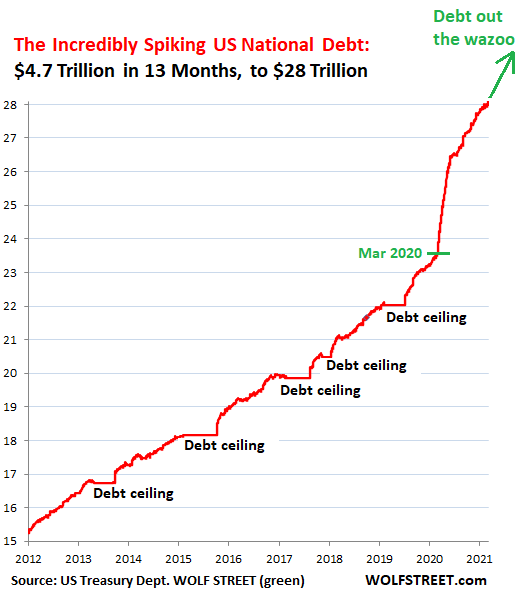
In 2021, the national debt did not just grow; it accelerated. At the start of the year, the debt stood at roughly $27.7 trillion. By the close of the calendar year, it had climbed toward the $30 trillion mark, eventually settling near $29.6 trillion by December 31. However, in the context of the federal fiscal year (which ends September 30), the official tally was approximately $28.4 trillion.
To grasp the magnitude of this figure, it is essential to distinguish between the two primary components of the national debt: debt held by the public and intragovernmental holdings.
Debt Held by the Public
In 2021, debt held by the public accounted for the vast majority of the total, hovering around $22.3 trillion. This category includes all federal debt held by individuals, corporations, state or local governments, Federal Reserve Banks, and foreign governments. This is the debt that is traded in global markets through Treasury bills, notes, and bonds. Because this debt involves real-world cash flows and interest payments to external entities, economists often view it as the most critical metric for assessing the immediate economic impact of government borrowing.
Intragovernmental Holdings
The remaining portion, roughly $6.1 trillion in 2021, consisted of intragovernmental holdings. This represents debt the government owes to itself—specifically, to various government trust funds such as Social Security and Medicare. While this doesn’t impact the open market in the same way as public debt, it represents a legal obligation for the Treasury to pay back these funds in the future, highlighting the long-term structural challenges of the American welfare state.
The Debt-to-GDP Ratio
Perhaps more significant than the nominal dollar amount was the debt-to-GDP ratio. In 2021, this ratio surpassed 120%, a level not seen since the aftermath of World War II. While the economy grew significantly in 2021 as businesses reopened, the rate of debt accumulation outpaced the rate of economic expansion. For financial analysts, this ratio is a key indicator of a country’s ability to manage its obligations.
Legislative Catalysts: The Policies That Fueled the Surge
The dramatic increase in debt throughout 2021 was not accidental; it was the result of deliberate legislative action intended to stabilize the economy and provide a “bridge” to post-pandemic normalcy. Several key pieces of legislation and economic factors played pivotal roles.
The American Rescue Plan Act of 2021
The most significant contributor to the 2021 debt increase was the American Rescue Plan (ARP), signed into law in March 2021. This $1.9 trillion stimulus package was designed to provide direct relief to Americans and stimulate demand. It included $1,400 direct payments to individuals, an extension of supplemental unemployment benefits, and massive infusions of capital for state and local governments. While the ARP was credited with reducing poverty and boosting consumer spending, it necessitated a massive issuance of new Treasury securities, adding directly to the national ledger.
Lingering Effects of 2020 Legislation
It is also important to note that much of the spending in 2021 was the result of the “long tail” of 2020 legislation, such as the CARES Act. Programs like the Paycheck Protection Program (PPP) continued to see funds disbursed and loans forgiven well into 2021. The cumulative effect of these multi-trillion-dollar packages created a fiscal environment where trillion-dollar deficits became the temporary norm rather than the exception.
Infrastructure Investment and Jobs Act
In late 2021, the Infrastructure Investment and Jobs Act was signed, authorizing roughly $1.2 trillion in spending over several years. While much of this spending was slated for future fiscal years, its passage signaled to the markets that the era of aggressive fiscal expansion was not yet over. This contributed to long-term projections of debt growth, influencing how investors valued U.S. debt instruments.
The Debt Ceiling Crisis of 2021: A Political and Economic Standoff

The year 2021 was also marked by a significant political confrontation regarding the “debt ceiling”—the legal limit on how much the U.S. Treasury can borrow. As the debt climbed toward the limit established in previous years, the U.S. faced a potential default that could have sent shockwaves through the global financial system.
Extraordinary Measures
In August 2021, the debt limit was officially reinstated after a two-year suspension. The Treasury Department, led by Secretary Janet Yellen, began utilizing “extraordinary measures” to prevent the government from defaulting on its obligations. These measures included suspending investments in certain government pension funds to free up cash.
The Resolution
After months of partisan gridlock, Congress eventually passed a short-term increase in October, followed by a more substantial $2.5 trillion increase in December 2021. This move was intended to ensure that the Treasury could meet its obligations through at least 2023. The 2021 debt ceiling crisis served as a stark reminder of the volatility inherent in the U.S. fiscal system, where the legal authority to spend and the legal authority to borrow are often at odds.
Macroeconomic Implications: Inflation, Interest, and the Global Market
The sheer volume of debt in 2021 had immediate and profound effects on the broader economy. For years, economists had debated the “tipping point” at which high debt would lead to negative consequences. In 2021, some of those consequences began to manifest in real-time.
The Return of Inflation
One of the most heated debates in 2021 centered on whether the massive fiscal stimulus was contributing to the rising inflation rates seen in the latter half of the year. By December 2021, the Consumer Price Index (CPI) had risen by 7%, the highest in decades. Critics argued that the government’s debt-funded spending had “overheated” the economy by injecting too much liquidity into a market struggling with supply chain disruptions. Proponents, however, argued that the debt was a necessary evil to prevent a total economic collapse.
The Role of the Federal Reserve
Throughout 2021, the Federal Reserve played a crucial role in managing the impact of the national debt. Through a process known as Quantitative Easing (QE), the Fed purchased billions of dollars in Treasury securities every month. By doing so, the Fed effectively kept interest rates artificially low, which in turn kept the government’s cost of servicing its debt manageable. However, as inflation climbed, the Fed began to signal a “tapering” of these purchases, a move that would eventually lead to higher interest rates and more expensive debt servicing in the years to follow.
The U.S. Dollar as a Reserve Currency
Despite the rising debt, the U.S. dollar remained the world’s primary reserve currency in 2021. The global demand for “safe haven” assets, such as U.S. Treasuries, allowed the United States to continue borrowing at rates that would be unavailable to most other nations. This “exorbitant privilege” provided a cushion, but it also raised questions about how long the global market would remain tolerant of an ever-expanding U.S. balance sheet.
The Long-Term Outlook: Lessons from the 2021 Fiscal Landscape
Looking back at 2021, the state of the national debt offers several critical lessons for the future of business finance and personal wealth management. The year proved that the U.S. government is capable of mobilizing massive amounts of capital in a crisis, but it also highlighted the structural vulnerabilities of a debt-dependent economy.
The Crowding Out Effect
A primary concern for the future is the “crowding out” effect. As the government continues to borrow heavily to service existing debt and fund new programs, there is a risk that it will soak up capital that would otherwise be invested in the private sector. This can lead to slower long-term economic growth and reduced innovation, as the cost of capital for businesses potentially rises.
Future Tax Implications
The 2021 debt levels also carry significant implications for future tax policy. At some point, the gap between spending and revenue must be addressed. For investors and businesses, this suggests a high probability of future tax increases or a reduction in government services. Planning for a “higher-tax environment” became a central theme for financial advisors and corporate strategists as they analyzed the 2021 fiscal data.

The Importance of Fiscal Literacy
For the average citizen, the 2021 national debt figures underscore the importance of fiscal literacy. Understanding how government debt impacts inflation, interest rates, and the value of the dollar is no longer just for economists; it is essential for anyone trying to navigate the modern financial world. The events of 2021 demonstrated that the national debt is not just a line item in a budget—it is a powerful economic force that shapes the cost of housing, the returns on retirement accounts, and the overall stability of the global economy.
In conclusion, the national debt in 2021 was a reflection of a nation in transition. It was a year of massive intervention, significant risk-taking, and the beginning of a new economic era characterized by higher price levels and shifting monetary policies. While the $28.4 trillion figure was a milestone, the real story lies in the policy choices that created it and the long-term economic shifts it has set in motion.
aViewFromTheCave is a participant in the Amazon Services LLC Associates Program, an affiliate advertising program designed to provide a means for sites to earn advertising fees by advertising and linking to Amazon.com. Amazon, the Amazon logo, AmazonSupply, and the AmazonSupply logo are trademarks of Amazon.com, Inc. or its affiliates. As an Amazon Associate we earn affiliate commissions from qualifying purchases.