
The National Football League, a colossus of American sports, is a league steeped in history, drama, and breathtaking athletic achievement. While defensive stands often decide championships, it’s the offensive fireworks, the explosive plays, and the relentless march to the endzone that truly captivate audiences. Fans clamor for touchdowns, for field goals, for any display of gridiron brilliance that lights up the scoreboard. And in the vast tapestry of NFL history, one game stands out above all others for its sheer, unbelievable point total: a monumental 72 points scored by the Washington Redskins against the New York Giants on November 27, 1966, in a game that ended with a final score of 72-41. This incredible contest, which saw a combined 113 points, remains an indelible mark in the annals of professional football, a testament to an era and a style of play that, while perhaps less refined by modern standards, could nonetheless produce an offensive spectacle unlike any other.
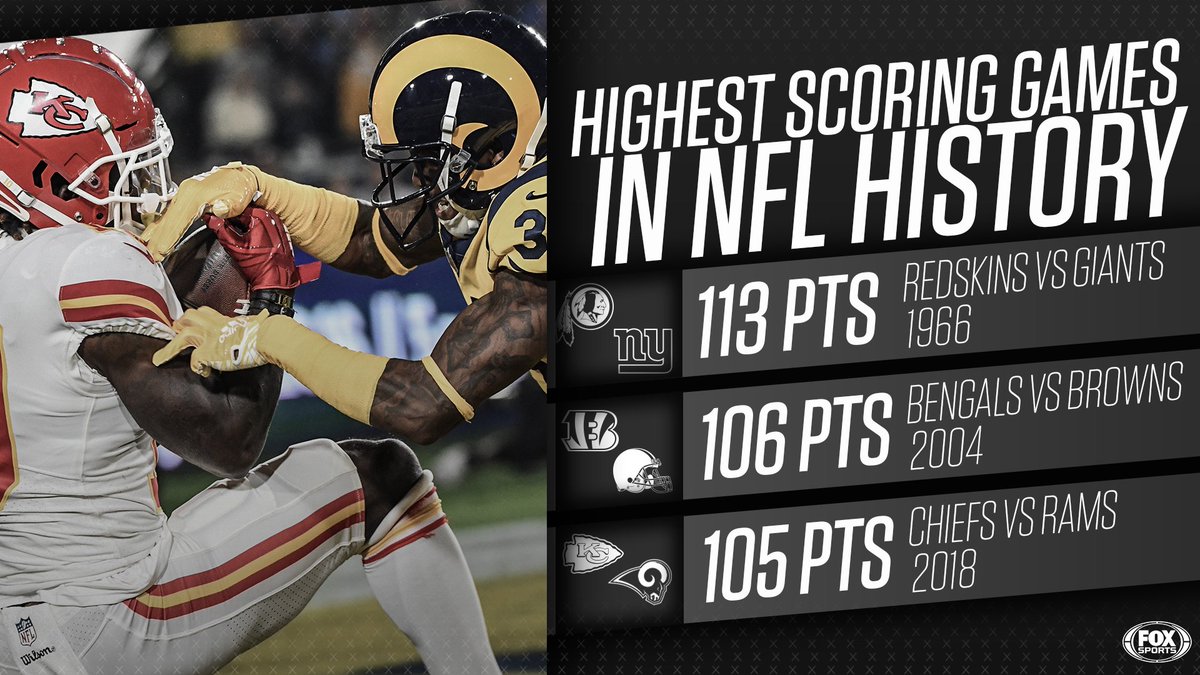
In an age where advanced analytics, predictive AI, and sophisticated brand strategies dominate professional sports, looking back at such a record-setting game offers more than just historical nostalgia. It provides a fascinating lens through which to examine the evolution of the game itself, the burgeoning influence of technology in understanding and optimizing performance, the intricate strategies behind building powerful sports brands, and the immense financial ecosystem that underpins the entire NFL enterprise.
A Gridiron Explosion: Unpacking the Historic Score (72-41)
The 1966 season saw an NFL quite different from the polished, globally recognized entity we know today. Yet, even in that era, a 72-point outburst was extraordinary. On that chilly November day at D.C. Stadium (now Robert F. Kennedy Memorial Stadium), the Washington Redskins, under legendary coach Otto Graham, faced off against their NFC East rivals, the New York Giants. The Redskins were a decent offensive team that year, led by quarterback Sonny Jurgensen, but few could have predicted the avalanche of scoring that was about to unfold.
The Game of Records: Washington’s Dominance and Giants’ Surprise Performance
The game was an offensive clinic for Washington, and surprisingly, a strong offensive showing from the struggling Giants as well. Washington amassed a staggering 10 touchdowns – five passing touchdowns from Jurgensen and two from backup quarterback Dick Shiner, plus two rushing touchdowns, and a punt return for a score. Adding to their tally were nine extra points and a safety. The Giants, despite their poor record, contributed a significant 41 points of their own, including five touchdowns, underscoring that this was not merely a one-sided offensive explosion but a true shootout. Turnovers, especially those leading to short fields or defensive/special teams scores, played a significant role, accelerating the already rapid pace of scoring. The game was an anomaly, a perfect storm of offensive efficiency, defensive lapses, and perhaps, a touch of chaotic brilliance. It wasn’t just a win for Washington; it was a statement etched in the record books.
Today, such a game would be instantly dissected by an array of tech tools. Imagine the real-time analytics dashboards, tracking every player movement, every pass completion, every turnover’s impact on win probability. In 1966, analysis was largely manual, relying on coaching film and handwritten notes. Now, thanks to vast digital databases and sophisticated sports analytics software, every historic play, every player’s contribution, and the context of every record-breaking game can be called up, modeled, and re-evaluated with unprecedented precision. From stat-tracking applications used by casual fantasy football players to high-end AI-driven systems employed by professional teams, technology has fundamentally changed how we understand and appreciate historical sporting achievements, turning raw data into actionable insights and compelling narratives.
Beyond the Scoreboard: The Digital Echoes of NFL History
The record-setting 72-41 game serves as a perfect historical anchor to explore how modern sports, particularly the NFL, are inextricably linked with the technological advancements, the strategic art of branding, and the intricate financial considerations that define the 21st century.
Tech and the Touchdown: Modern Analytics in Football
Today’s NFL is a data-driven league. The idea of a coach relying solely on gut instinct feels almost anachronistic. Instead, teams leverage an arsenal of technology to gain a competitive edge. From player wearables that track everything from heart rate to acceleration, to sophisticated video analysis software that breaks down opponent tendencies with minute detail, tech is at the heart of modern football. AI and machine learning algorithms are increasingly used to scout talent, predict player performance, optimize game plans, and even manage player health to prevent injuries.
Consider a game today with a similar offensive output. The immediate aftermath would see analysts poring over “Next Gen Stats” – real-time data tracking player speed, route efficiency, and defensive coverage patterns. These tools provide granular insights into how points are scored, not just that they were scored. For fans, this translates into richer broadcast experiences, with augmented reality graphics overlaying statistics directly onto the field. For fantasy football enthusiasts, these data streams are the lifeblood of their weekly competitions, transforming game watching into an interactive, analytical experience. This digital ecosystem, from official NFL apps to third-party sports analytics platforms, exemplifies how technology has moved from the periphery to the very core of how we consume, analyze, and engage with the sport.
Building a Legacy: Branding in the NFL Era
A record like the 72-41 game isn’t just a statistic; it becomes a part of a team’s narrative, contributing to its brand. For the Washington franchise, it’s a piece of their storied history, a moment of offensive supremacy that can be revisited and celebrated. Powerful performances, especially those that break records, are crucial elements in cultivating a team’s or player’s brand identity. Think of legendary quarterbacks whose brands are built on comeback wins, or teams known for their “Greatest Show on Turf” offenses. These indelible moments forge emotional connections with fans, which are the bedrock of strong branding.
The NFL itself is a masterclass in corporate identity and brand strategy. It meticulously curates its image, leveraging its rich history, iconic rivalries, and record-breaking performances to maintain its position as a cultural behemoth. Through expertly crafted marketing campaigns, engaging social media content, and a constant stream of high-quality digital media (think NFL Films or viral highlight reels), the league amplifies these historic moments. A historic game isn’t just talked about in sports bars; it’s replayed on YouTube, discussed on podcasts, and referenced in documentaries, all contributing to the league’s formidable brand equity. Personal branding for players is also heavily influenced by their on-field achievements, directly impacting endorsement deals and their post-playing careers. A record-setting performance can elevate a player from good to iconic, forever cementing their place in the collective consciousness and boosting their marketability.

The Business of Big Scores: Money in Professional Football
Ultimately, the excitement generated by high-scoring games and record-breaking performances translates directly into money. The NFL is a multi-billion dollar industry, and fan engagement is its primary currency. Games with abundant scoring are generally more appealing to viewers, leading to higher television ratings, which in turn drive up advertising revenue and the value of broadcasting rights – the league’s most significant income stream. A thrilling, high-scoring affair like the 72-41 game, if it were to happen today, would send ratings soaring and ignite social media conversations, all of which contribute to the league’s bottom line.
Beyond broadcasting, record-breaking moments fuel merchandise sales, ticket demand, and even the booming sports betting market. A team known for its explosive offense sells more jerseys and fills more seats. Players who achieve records command higher salaries and more lucrative endorsement deals, reflecting their increased value to both their team and external brands. The financial ecosystem around the NFL is vast, encompassing everything from stadium sponsorships and fantasy sports platforms to advanced data providers and sports media empires. Every touchdown, every record, every moment of gridiron brilliance feeds this massive economic engine, proving that while passion for the game is paramount, the financial stakes are incredibly high.
The Evolution of Offense: Strategies and Scorching Trends
While the 1966 game was an outlier, it foreshadowed a trend toward more explosive offenses that would truly take hold in subsequent decades, driven by strategic shifts and critical rule changes.
From Grind to Gridiron Glory: A Look at Offensive Philosophy
The NFL’s offensive philosophy has undergone a profound transformation since the mid-20th century. Early football was often a run-heavy, defensive struggle, a grind-it-out affair where field position and ball control were king. The advent of more sophisticated passing schemes, epitomized by quarterbacks like Joe Namath and later Dan Marino and Peyton Manning, gradually shifted the balance. Coaches realized the offensive potential of the air game, and rule changes further encouraged this evolution.
Modern offenses are characterized by speed, precision, and an emphasis on creating mismatches. The “spread offense,” “RPO” (run-pass option), and various forms of “air raid” offenses aim to stretch defenses horizontally and vertically, exploiting every inch of the field. This strategic evolution has led to a consistent increase in scoring averages across the league over the past few decades. Teams are now far more efficient in the red zone, and the sheer volume of passing attempts per game has skyrocketed.
Crucially, tech plays a vital role here. Offensive coordinators use advanced software to design plays, simulate scenarios, and analyze defensive schemes. AI-powered scouting tools help identify players who fit specific offensive systems, from lightning-fast wide receivers to quarterbacks with pinpoint accuracy. The ability to quickly process vast amounts of game film and statistical data allows coaches to adapt strategies in real-time, making offenses more dynamic and unpredictable, directly contributing to higher point totals.
The Future of Scoring: AI, Predictive Analytics, and Fan Engagement
Looking ahead, the interplay of tech, brand, and money promises to continue shaping the future of scoring in the NFL. Will the 72-point barrier ever be broken? It’s certainly possible. As player training becomes even more optimized through biometrics and AI-driven personalized regimens, and as coaching staffs gain even deeper insights from predictive analytics, offensive efficiency could reach unprecedented levels.
Imagine AI models dictating play calls in real-time based on defensive alignment, down and distance, and even player fatigue data. This could lead to hyper-optimized offensive drives, maximizing scoring opportunities. For the fans, this will translate into an even more thrilling product, enhanced by sophisticated interactive experiences. Augmented reality overlays during live games could allow viewers to “see” the probability of a specific play succeeding or visualize a player’s historical success rate in a given situation. This level of immersive tech integration deepens fan engagement, which in turn strengthens the NFL brand and generates more money through premium subscriptions, targeted advertising, and advanced betting platforms that leverage these very same analytical tools.
The business model of professional sports is constantly evolving, driven by the insatiable demand for engaging content and the relentless pursuit of competitive advantage. Teams that embrace cutting-edge technology to optimize their on-field performance, coupled with robust brand strategies to connect with their fan base, are the ones most likely to succeed both athletically and financially.
Conclusion
The record of 72 points scored by the Washington Redskins in 1966 against the New York Giants stands as a unique testament to the unpredictable, explosive nature of NFL football. It’s a score that conjures images of an era past, yet its very existence resonates powerfully in our contemporary, digitally-driven world. This historic outburst is more than just a numerical record; it’s a touchstone for understanding the multifaceted evolution of the game itself.
Today, such a performance would be dissected by an array of technological tools, from AI-powered analytics to real-time player tracking, all aimed at extracting every conceivable insight. This data-driven approach not only enhances performance on the field but also enriches the fan experience, making the sport more engaging and interactive than ever before. Simultaneously, these record-setting moments are invaluable assets in building and reinforcing the brand identity of teams, players, and the NFL as a whole. They are the stories that captivate audiences, foster loyalty, and contribute to the league’s iconic status. And underlying it all is the massive current of money, flowing through broadcasting rights, sponsorships, merchandise, and the burgeoning sports betting market, all fueled by the drama, the spectacle, and the record-breaking achievements that make the NFL an unparalleled global phenomenon. The 72-point game reminds us that while the tools and strategies evolve, the thrill of offensive explosion remains a timeless and central pillar of the gridiron spectacle.
aViewFromTheCave is a participant in the Amazon Services LLC Associates Program, an affiliate advertising program designed to provide a means for sites to earn advertising fees by advertising and linking to Amazon.com. Amazon, the Amazon logo, AmazonSupply, and the AmazonSupply logo are trademarks of Amazon.com, Inc. or its affiliates. As an Amazon Associate we earn affiliate commissions from qualifying purchases.