
When we look back at the origins of American governance, the Articles of Confederation are often dismissed as a historical stepping stone—a “rough draft” that failed to meet the needs of a fledgling nation. However, for the modern investor, economist, or business strategist, the Articles represent much more than a historical artifact. They serve as one of the most significant case studies in fiscal failure and the dangers of decentralized financial authority.
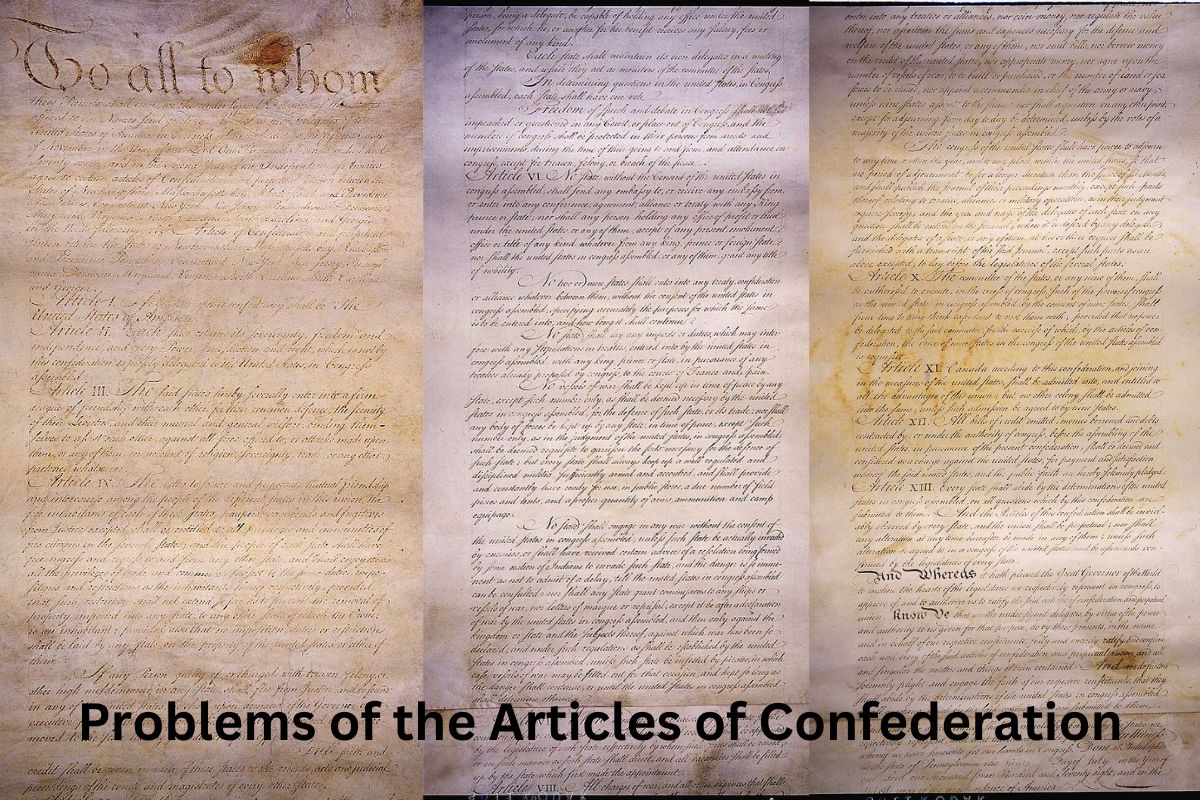
The main problem with the Articles of Confederation was not just a lack of political unity; it was a fundamental financial design flaw. By creating a system that lacked the power to tax, regulate interstate commerce, or manage a unified currency, the Articles doomed the new nation to a state of insolvency. Understanding these failures provides vital insights into modern fiscal policy, the necessity of central banking, and the risks inherent in decentralized financial structures.
The Core Problem: A Lack of Revenue Generation and Fiscal Authority
In any financial system, whether it is a multinational corporation or a sovereign nation, the ability to generate revenue is the cornerstone of stability. The Articles of Confederation failed this basic test of “Money 101.” The central government was essentially a “firm” without an income stream, relying entirely on the voluntary contributions of its “subsidiaries”—the thirteen states.
The Powerless Taxing Clause
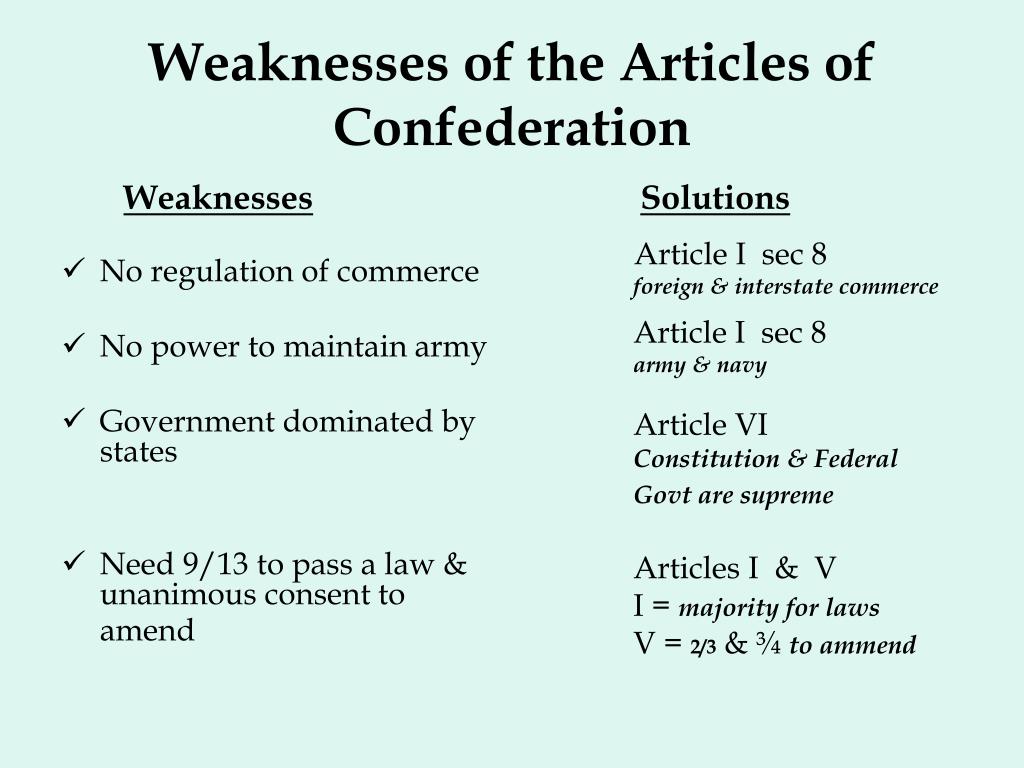
Under the Articles, the Continental Congress had the authority to declare war and manage foreign affairs, but it lacked the most critical tool of governance: the power to levy taxes. Instead, it operated under a “requisition” system. Congress would determine a budget and request that states provide their fair share. In practice, states frequently ignored these requests or provided only a fraction of the needed funds.
From a business perspective, this is akin to a headquarters asking its regional branches to voluntarily donate profits to cover the company’s global debt. Without a mandate, the branches will inevitably prioritize their local interests, leading to a collapse of the parent company’s creditworthiness. By 1786, the national government was effectively bankrupt, unable to pay the soldiers who had won the Revolution or the foreign creditors who had funded it.
Debt Servicing and International Credibility
The inability to tax had a direct impact on the nation’s “credit score.” After the Revolutionary War, the United States owed millions to France, the Netherlands, and domestic bondholders. Without a guaranteed revenue stream, the government could not make interest payments.
In the world of finance, if you cannot service your debt, you lose access to capital. The United States found itself unable to secure new loans, and its existing debt traded at pennies on the dollar. This financial paralysis prevented the country from investing in infrastructure, defending its borders, or expanding its economy. The Articles proved that a government without the “power of the purse” is a government that cannot survive the demands of a global market.
Fragmented Markets: The Absence of Unified Commerce Regulation
Beyond the inability to collect revenue, the Articles of Confederation created an environment of “economic tribalism.” Because there was no central authority to regulate commerce, each state acted as its own sovereign economic entity, often at the expense of its neighbors.
Inter-State Trade Barriers
Imagine trying to run an e-commerce business today if every state you shipped to imposed its own custom tariffs and trade restrictions. This was the reality under the Articles. New York might tax goods coming in from New Jersey, while Virginia and Maryland bickered over navigation rights on the Potomac River.
These internal trade wars stifled economic growth. High transaction costs and unpredictable regulatory environments are the enemies of investment. The lack of a “common market” meant that the United States could not achieve economies of scale, making it impossible to compete with the unified economic power of the British Empire. This fragmentation serves as a cautionary tale for modern trade blocs: without synchronized regulations, internal friction will eventually erode the collective wealth.
The Chaos of Multiple Currencies
Perhaps the most visible sign of financial dysfunction was the currency crisis. While the Continental Congress issued “Continentals,” the currency quickly became worthless due to hyperinflation and a lack of backing. In response, individual states began printing their own money.
By the mid-1780s, the “United States” was a patchwork of competing currencies, all fluctuating in value and rarely accepted across state lines. For merchants and lenders, this created an impossible environment for long-term planning. Contract enforcement became a nightmare because a debt contracted in one currency might be paid back in another, devalued currency. This historical mess highlights why a stable, unified medium of exchange is non-negotiable for a functional economy.
Modern Parallels: From the 1780s to Today’s Financial Systems
While the Articles of Confederation are nearly 250 years old, the financial principles at play are remarkably relevant today. We see the ghost of the Articles in modern debates regarding decentralized finance (DeFi), the Eurozone’s fiscal challenges, and corporate governance structures.
Central Banking vs. Decentralized Finance (DeFi)
The Articles of Confederation were, in a sense, an early experiment in extreme decentralization. Today, the rise of Decentralized Finance (DeFi) and Autonomous Organizations (DAOs) seeks to remove central authorities from financial transactions. While DeFi offers transparency and efficiency, the Articles remind us of the “governance risk” inherent in these systems.
Without a mechanism to resolve disputes, provide liquidity during a crisis, or enforce collective contributions to the “common good” (like security and protocol maintenance), decentralized systems can become fragile. The failure of the Articles suggests that while decentralized execution is valuable, a lack of centralized fiscal coordination can lead to systemic collapse during times of economic stress.
Corporate Governance and Scaling a Business
In the business world, the “Articles of Confederation” model is often seen in startups that scale too quickly without consolidating their financial controls. When different departments or regional offices operate with too much autonomy—controlling their own budgets and setting their own “trade policies” without oversight—the result is often a “leaky” balance sheet.
Professional financial management requires a balance between decentralized innovation and centralized fiscal accountability. Just as the U.S. eventually realized it needed a federal treasury to manage national interests, a growing company must eventually move from fragmented “silo” accounting to a unified financial strategy to remain competitive.
The Pivot to Stability: How the Constitution Solved the “Money Problem”
The realization that the Articles were a financial dead end led directly to the Constitutional Convention of 1787. The resulting U.S. Constitution was, at its heart, a financial recovery plan designed to restore the nation’s credit and create a pro-business environment.
Establishing Federal Credit and the Power of the Purse
The Constitution directly addressed the failures of the Articles by granting Congress the power to “lay and collect Taxes, Duties, Imposts and Excises.” This change was transformative. With a reliable source of income, the new federal government could finally assume and service the national debt.
Alexander Hamilton, the first Secretary of the Treasury, leveraged this power to implement his “Assumption Plan,” where the federal government took over state debts. This move not only stabilized the economy but also turned creditors into stakeholders in the success of the national government. By creating a funded debt, Hamilton essentially created the first American capital market, allowing the nation to borrow at lower rates and invest in its future.
The Economic Boom of Unified Governance
By granting the federal government the exclusive right to coin money and regulate interstate commerce, the Constitution eliminated the “trade friction” that had plagued the 1780s. The United States became the largest free-trade zone in the world.
This shift created an explosion of entrepreneurial activity. With a single currency and a predictable legal framework for contracts, investors gained the confidence to move capital across state lines. The transition from the Articles to the Constitution is one of history’s greatest examples of how sound financial architecture can take a failing organization from the brink of bankruptcy to unprecedented prosperity.
Why Financial Centralization Matters for Modern Investors
The story of the Articles of Confederation is a reminder that the “macro” environment—the rules of the game—matters just as much as “micro” performance. As an investor or business leader, understanding the structural integrity of the financial systems you operate in is crucial.
- Fiscal Strength is Security: A system that cannot tax or generate revenue is a system that cannot protect its assets. Whether evaluating a government bond or a corporate entity, always look at the reliability of the revenue stream.
- Unity Reduces Friction: Fragmented markets and competing regulations are “hidden taxes” on growth. The failure of the Articles shows that economic efficiency requires a level of standardization and central coordination.
- Credit is Trust: The main problem with the Articles was a total loss of trust from the international community. In the modern economy, your creditworthiness is your most valuable asset. Once the “link” of trust is broken due to poor governance, it is incredibly difficult and expensive to rebuild.
In conclusion, the Articles of Confederation failed because they attempted to run a nation on the “honor system” of finance. They lacked the central fiscal authority necessary to manage debt, regulate trade, and provide a stable currency. For anyone interested in the intersection of money, power, and history, the Articles serve as a permanent warning: without a solid financial foundation and a unified economic strategy, even the noblest of ventures is destined to fail.
aViewFromTheCave is a participant in the Amazon Services LLC Associates Program, an affiliate advertising program designed to provide a means for sites to earn advertising fees by advertising and linking to Amazon.com. Amazon, the Amazon logo, AmazonSupply, and the AmazonSupply logo are trademarks of Amazon.com, Inc. or its affiliates. As an Amazon Associate we earn affiliate commissions from qualifying purchases.