
The General Agreement on Tariffs and Trade (GATT), a landmark agreement that shaped the international economic landscape for nearly half a century, was born out of the ashes of World War II. Its primary objective was remarkably straightforward yet profoundly impactful: to foster global economic growth through the reduction of barriers to international trade. This ambitious undertaking aimed to create a more stable, predictable, and prosperous world economy by dismantling protectionist policies and encouraging a freer flow of goods and services across national borders.
The genesis of GATT lay in the recognition by post-war policymakers that economic nationalism and trade wars had been significant contributing factors to the global conflicts of the 20th century. The Bretton Woods Conference of 1944, which established the International Monetary Fund (IMF) and the World Bank, also envisioned an International Trade Organization (ITO). However, the ITO charter, with its broad scope, ultimately failed to be ratified by some key nations. In its stead, a more focused agreement on trade in goods, the GATT, was established in 1948. Its fundamental principle was the promotion of multilateralism and non-discrimination, encapsulated in the most-favored-nation (MFN) clause, which ensured that any trade concession granted to one signatory nation would be extended to all others.
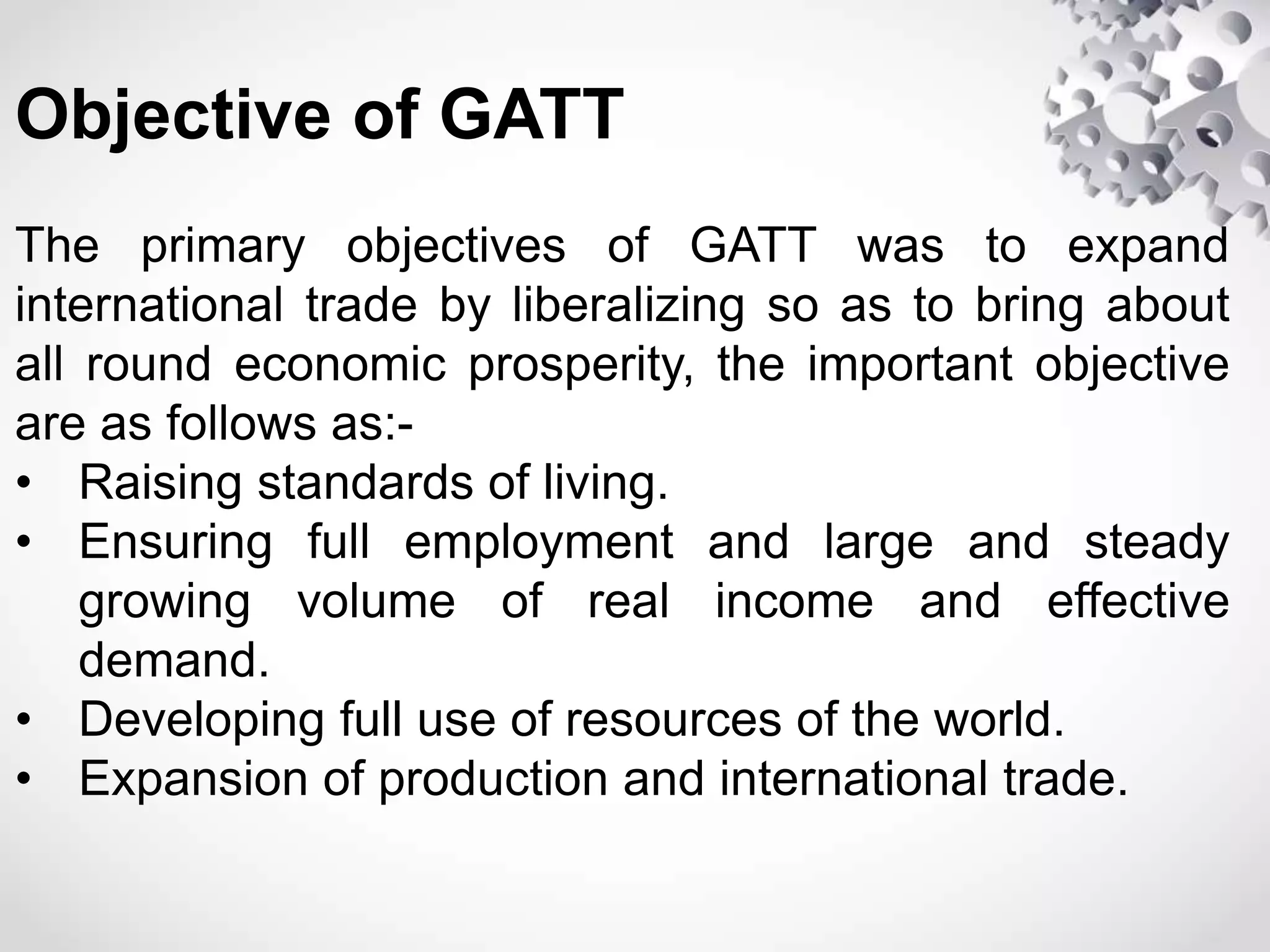
The Core Objective: Liberalizing Global Trade
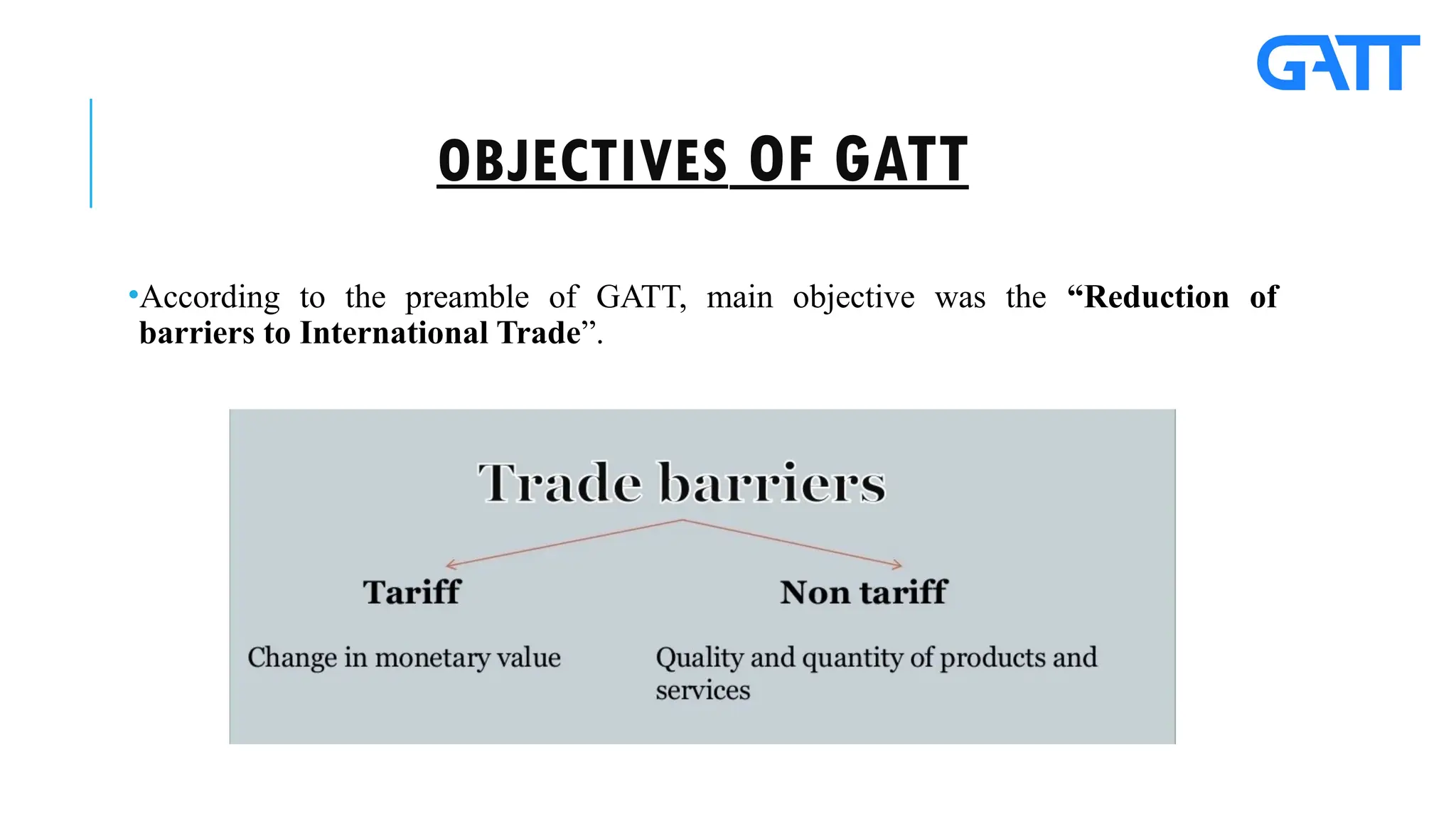
The central aim of GATT was to systematically reduce the tariffs and other trade restrictions that had proliferated during the interwar period and the war itself. These barriers, while often implemented with the intention of protecting domestic industries, ultimately led to inefficient production, higher prices for consumers, and a contraction of global trade. GATT sought to reverse this trend by creating a framework for regular negotiations aimed at lowering these impediments.
Reducing Tariffs: The Primary Lever
Tariffs, or taxes on imported goods, were the most direct and visible barrier to trade that GATT sought to address. Historically, countries had used tariffs as a significant source of revenue and as a tool to protect nascent or struggling domestic industries from foreign competition. However, high tariffs led to retaliatory measures, trade wars, and ultimately, a less efficient allocation of global resources. GATT’s negotiation rounds, such as the Dillon Round, Kennedy Round, and Tokyo Round, were specifically designed to achieve substantial, reciprocal reductions in tariff rates across a wide range of goods. These multilateral negotiations allowed countries to address trade barriers collectively, fostering a sense of shared responsibility and mutual benefit. The success of these rounds was measured in the significant decline of average tariff levels on manufactured goods entering developed countries, which fell from over 40% in the early post-war period to single digits by the time the Uruguay Round concluded.
Addressing Non-Tariff Barriers (NTBs)
While tariffs were a primary focus, GATT also recognized the importance of addressing other obstacles to free trade, collectively known as non-tariff barriers (NTBs). These included a wide array of measures such as import quotas, subsidies to domestic producers, arbitrary customs valuation practices, overly complex regulations, and discriminatory standards. NTBs could be just as, if not more, restrictive than tariffs, and their often less transparent nature made them particularly challenging to negotiate. GATT’s later rounds increasingly tackled these NTBs, leading to agreements on issues like customs valuation, import licensing procedures, and technical barriers to trade. The recognition and subsequent efforts to harmonize or eliminate these barriers were crucial in moving towards a more truly liberalized trading environment.
Promoting Predictability and Stability in Trade Relations
Beyond the direct reduction of trade barriers, a crucial goal of GATT was to imbue the international trading system with greater predictability and stability. In the absence of clear rules and a dispute settlement mechanism, trade relations could easily devolve into uncertainty, with countries constantly fearing sudden policy changes or arbitrary restrictions. GATT aimed to create a more secure and transparent environment for businesses to engage in international trade.

The Most-Favored-Nation (MFN) Principle
At the heart of GATT’s framework for predictability was the Most-Favored-Nation (MFN) principle. This fundamental rule stipulated that any advantage, favor, privilege, or immunity granted by a contracting party to any product originating in or destined for any other country shall be accorded immediately and unconditionally to the like product originating in or destined for all other contracting parties. In essence, MFN meant that all signatory countries were to be treated equally. This prevented bilateral deals that could disadvantage third countries and fostered a sense of inclusivity. By committing to MFN, countries signaled their intention to create a level playing field and reduce the risk of discriminatory trade practices.
Dispute Settlement Mechanism
To ensure that the rules and commitments of GATT were adhered to, a dispute settlement mechanism was established. While initially rudimentary and often reliant on consensus, this mechanism provided a forum for member countries to resolve trade disputes peacefully and according to agreed-upon rules. When a country believed another member was violating its GATT obligations, it could bring the matter to the GATT Council for consultation and, if necessary, panel review. The panel’s findings, once adopted by the Council, offered a basis for resolving the dispute, often through the removal of the offending measure or, in some cases, the authorization of compensatory trade measures. This process, though evolving over time, was vital in building confidence in the multilateral trading system and deterring unilateral actions.
Fostering Economic Development and Interdependence
The ultimate aspiration behind GATT’s trade liberalization efforts was to foster sustainable economic development and interdependence among nations. By facilitating greater access to foreign markets, GATT aimed to provide developing countries with opportunities to export their products, earn foreign exchange, and stimulate domestic economic growth. Simultaneously, it allowed all countries to benefit from lower import costs, increased competition, and access to a wider variety of goods and services, leading to greater consumer welfare and more efficient resource allocation.
Opportunities for Developing Economies
While GATT was initially dominated by industrialized nations, its framework gradually recognized the specific needs and challenges of developing countries. Special provisions, such as Part IV of the GATT Agreement introduced in 1965, aimed to encourage developed countries to provide trade preferences and assistance to developing countries. The aim was to enable these nations to participate more equitably in the global trading system, diversify their economies, and achieve higher standards of living. The Generalized System of Preferences (GSP), a system of non-reciprocal, non-discriminatory tariff preferences granted by developed countries to developing countries, was a significant outcome of this focus.
The Creation of a Multilateral Trading System
Perhaps the most profound and lasting legacy of GATT was its role in establishing and nurturing a multilateral trading system. Before GATT, international trade was often characterized by bilateral agreements, protectionist policies, and a general lack of overarching rules. GATT provided a foundational set of principles and a forum for ongoing negotiation and cooperation. This system, though imperfect and evolving, created a degree of order and predictability that was essential for the unprecedented growth of global trade in the latter half of the 20th century. The success of GATT paved the way for its eventual transformation into the World Trade Organization (WTO) in 1995, which expanded its scope to cover trade in services and intellectual property rights, further solidifying the architecture of global commerce.
In conclusion, the main goal of GATT was the liberalization of international trade through the progressive reduction of tariffs and other barriers. This objective was pursued with the overarching aim of fostering economic growth, promoting stability and predictability in trade relations, and ultimately contributing to the economic development and interdependence of nations worldwide. Its enduring influence can be seen in the robust global trading system that continues to shape the economic destinies of countries across the globe.
aViewFromTheCave is a participant in the Amazon Services LLC Associates Program, an affiliate advertising program designed to provide a means for sites to earn advertising fees by advertising and linking to Amazon.com. Amazon, the Amazon logo, AmazonSupply, and the AmazonSupply logo are trademarks of Amazon.com, Inc. or its affiliates. As an Amazon Associate we earn affiliate commissions from qualifying purchases.