
The year 2020 stands as one of the most volatile and transformative periods in modern economic history. While the world grappled with a global health crisis, the financial landscape underwent a seismic shift that redefined the cost of borrowing, the value of savings, and the strategy of investors. Central to this transformation was the dramatic movement of interest rates. To understand what the interest rate was in 2020, one must look beyond a single number and examine the aggressive intervention of the Federal Reserve, the collapse of mortgage rates to historic lows, and the profound impact these changes had on personal finance and global markets.
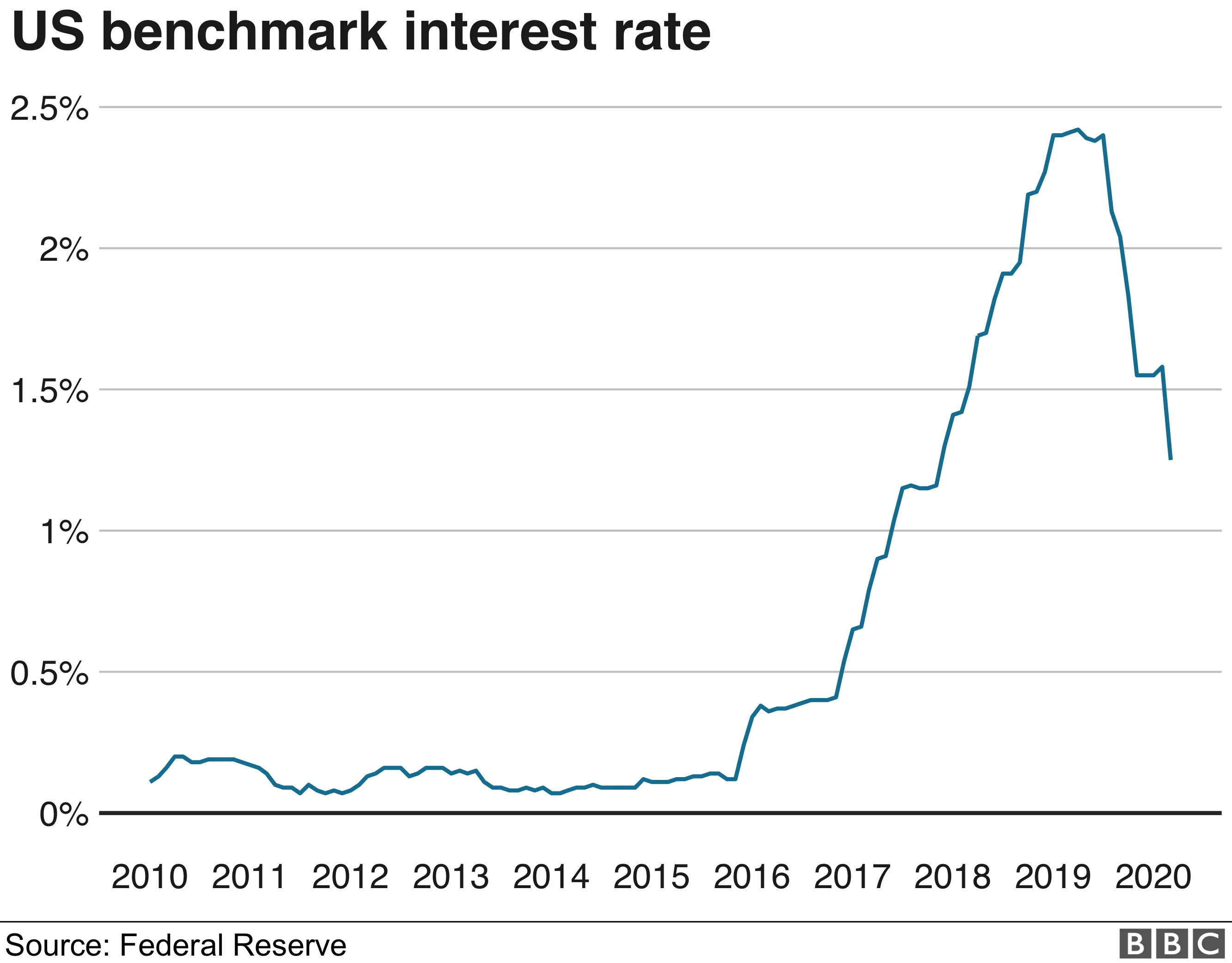
At the start of 2020, the economic outlook was relatively stable, with the federal funds rate hovering between 1.50% and 1.75%. However, as the pandemic induced a sudden and total shutdown of economic activity, the Federal Reserve took unprecedented steps to prevent a complete financial collapse. The resulting low-interest-rate environment created a “cheap money” era that fueled a housing boom, a stock market recovery, and a fundamental shift in how consumers managed their debt.
The Federal Reserve’s Unprecedented Response: The Zero-Interest Rate Policy (ZIRP)
In March 2020, the Federal Reserve executed two emergency rate cuts that signaled the gravity of the economic threat posed by the pandemic. In a matter of weeks, the target range for the federal funds rate was slashed to 0.00% to 0.25%. This “Zero-Interest Rate Policy” (ZIRP) was designed to lower the cost of borrowing for businesses and households, encouraging spending and investment at a time when the economy was in a freefall.
The Emergency Meetings of March 2020
The Federal Open Market Committee (FOMC) usually meets on a scheduled basis, but the speed of the economic contraction required immediate action. On March 3, 2020, the Fed issued a surprise 50-basis-point cut. Realizing this was insufficient as market liquidity dried up, they followed up on March 15 with a massive 100-basis-point cut, effectively bringing the benchmark rate to zero. This move was reminiscent of the 2008 financial crisis response, but it was implemented with significantly greater speed.
Quantitative Easing and Market Liquidity
Beyond lowering the federal funds rate, the Fed engaged in massive asset purchases, often referred to as Quantitative Easing (QE). By purchasing trillions of dollars in U.S. Treasury securities and mortgage-backed securities, the Fed applied downward pressure on long-term interest rates. This ensured that credit remained available to the average consumer and that the financial system remained liquid even as uncertainty reached its peak.
The Prime Rate and Consumer Lending
The federal funds rate directly influences the “Prime Rate”—the base interest rate that commercial banks charge their most creditworthy corporate customers. In 2020, the Prime Rate dropped from 4.75% in early March to 3.25% by mid-month, where it remained for the rest of the year. Because many consumer products, such as credit cards and home equity lines of credit (HELOCs), are tied to the Prime Rate, this shift provided immediate relief for many debtors, though it simultaneously reduced the income generated by lenders.
The Mortgage Market: A Historic Window for Homeowners
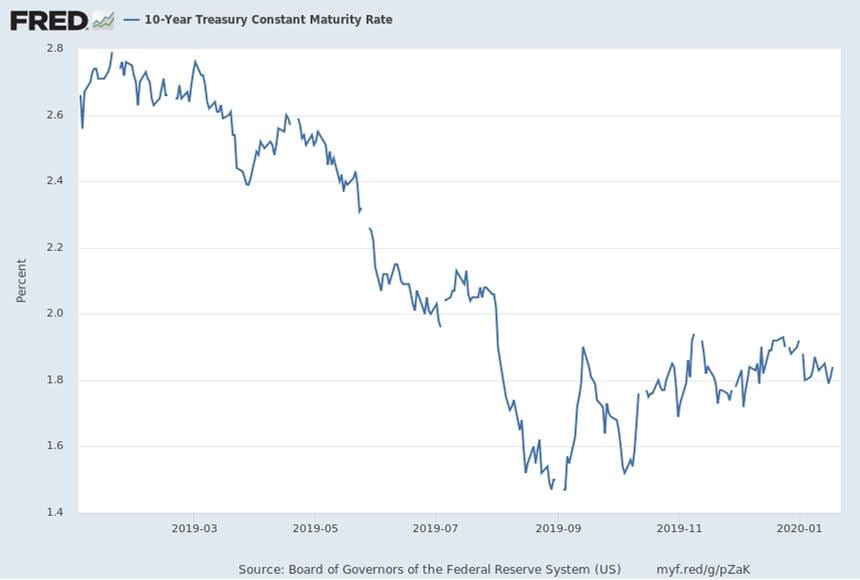
Perhaps the most visible impact of the 2020 interest rate environment was the collapse of mortgage rates. As the 10-year Treasury yield—the primary benchmark for 30-year fixed mortgages—plunged to record lows, the housing market experienced an unexpected and frantic boom.
The Sub-3% Era
For the first time in history, the average interest rate on a 30-year fixed-rate mortgage dropped below 3%. According to Freddie Mac data, the year began with rates around 3.72%. By July 2020, the average had fallen to 2.98%, eventually hitting an all-time low of 2.67% in December 2020. This created a massive incentive for current homeowners to refinance their existing loans and for new buyers to enter the market.
The Refinancing Wave
The plummeting rates triggered a refinancing boom that allowed millions of American households to lower their monthly housing costs. By locking in rates in the mid-to-low 2% range, homeowners were able to increase their disposable income, which acted as an informal stimulus for the broader economy. This surge in demand, however, put immense pressure on the mortgage industry, leading to long processing times and a tightening of credit standards as lenders managed the sheer volume of applications.
Real Estate Appreciation and Low Inventory
While low rates made borrowing cheaper, they also contributed to a rapid increase in home prices. The increased purchasing power of buyers led to bidding wars, and because many prospective sellers were hesitant to move during a pandemic, inventory levels plummeted. Consequently, the “savings” gained from a lower interest rate were often offset by the higher principal prices of the homes themselves, a trend that began in 2020 and accelerated into the following years.

The Impact on Savings and Fixed-Income Investing
While borrowers celebrated the low-rate environment of 2020, savers and fixed-income investors faced a challenging landscape. The traditional “safe” havens for money, such as savings accounts and government bonds, saw their yields evaporate almost overnight.
The Decline of High-Yield Savings Accounts (HYSA)
In 2019, it was common to find high-yield savings accounts offering interest rates between 2.00% and 2.50%. By the end of 2020, those same accounts were often offering 0.50% or less. For individuals who relied on interest income for their living expenses—particularly retirees—this was a significant blow. The “safe” return on cash virtually disappeared, forcing many to move their capital further out on the risk spectrum to find any meaningful yield.
Certificates of Deposit (CDs) and Treasury Bonds
The yield on Certificates of Deposit followed a similar downward trajectory. Short-term CDs often paid less than 0.20%, making them a less-than-ideal vehicle for wealth preservation when factoring in even modest inflation. Furthermore, the 10-year Treasury note, which started 2020 at a yield of roughly 1.90%, dipped as low as 0.52% in August 2020. This environment of “lower for longer” forced a re-evaluation of the traditional 60/40 portfolio (60% stocks and 40% bonds), as the bond portion of the portfolio provided very little income.
The “TINA” Phenomenon
The lack of attractive interest rates in the fixed-income market gave rise to the acronym “TINA”—There Is No Alternative (to stocks). With bond yields and savings rates near zero, investors poured capital into the equity markets. This influx of liquidity contributed to the rapid “V-shaped” recovery of the stock market, where indices like the S&P 500 and Nasdaq reached record highs despite the underlying economic challenges.
Corporate Finance and Small Business Relief
Beyond individual consumers, the interest rate environment of 2020 fundamentally altered the landscape of business finance. The availability of low-cost capital became a lifeline for struggling enterprises and a growth engine for others.
Corporate Debt Issuance
Large corporations took advantage of the low rates to issue massive amounts of debt. Companies used this capital to shore up their balance sheets, fund acquisitions, or buy back shares. For many tech firms and growth-oriented companies, the ability to borrow at historically low rates meant they could invest in digital transformation projects that capitalized on the shift toward remote work and e-commerce.
Small Business Administration (SBA) Rates
For small businesses, the interest rate environment was defined not just by market rates but by government intervention. The Paycheck Protection Program (PPP), introduced via the CARES Act, offered loans with a fixed interest rate of just 1.00%. Additionally, Economic Injury Disaster Loans (EIDL) provided long-term financing at 3.75% for small businesses and 2.75% for private non-profits. These fixed, low rates were essential in keeping the small business sector afloat during the lockdowns.
The Rise of Zombie Companies
One of the more critical perspectives on the 2020 interest rates concerns the rise of “zombie companies”—firms that do not produce enough profit to cover their debt-servicing costs and survive only by refinancing their debt at lower rates. The ultra-low interest rates of 2020 arguably allowed many inefficient businesses to stay in operation longer than they would have in a normal rate environment, creating potential risks for future market corrections.
The Long-Term Legacy: From 2020 to the Present
Looking back, the interest rate environment of 2020 was a double-edged sword. It provided the necessary liquidity to prevent a depression and offered a once-in-a-lifetime opportunity for debt restructuring. However, it also set the stage for the inflationary pressures that emerged in 2021 and 2022.
The “easy money” policies of 2020, combined with supply chain disruptions and significant fiscal stimulus, eventually forced the Federal Reserve to reverse course aggressively. The transition from 0% rates in 2020 to the much higher rates seen in subsequent years has been a difficult adjustment for the global economy.
The year 2020 taught investors and consumers that interest rates are the most powerful lever in the financial world. Whether it was a homeowner locking in a 2.75% mortgage or a tech giant issuing billions in low-cost bonds, the rates of 2020 facilitated a massive transfer of wealth and a restructuring of debt that continues to influence the economy today. Understanding that 2020 was the “floor” for interest rates helps explain the market volatility and the shifting strategies of personal finance that have dominated the years since.
aViewFromTheCave is a participant in the Amazon Services LLC Associates Program, an affiliate advertising program designed to provide a means for sites to earn advertising fees by advertising and linking to Amazon.com. Amazon, the Amazon logo, AmazonSupply, and the AmazonSupply logo are trademarks of Amazon.com, Inc. or its affiliates. As an Amazon Associate we earn affiliate commissions from qualifying purchases.