
The hippie movement of the 1960s is often remembered through a haze of psychedelic rock, tie-dye aesthetics, and anti-war protests. However, beneath the surface of the “Summer of Love” lay a radical intellectual framework that would eventually become the blueprint for the modern digital age. To understand “what was the hippie movement” in a contemporary context, one must look beyond the cultural tropes and examine its profound impact on the evolution of technology. The movement was not just a social rebellion; it was a fundamental shift in how humans interact with information, tools, and each other.
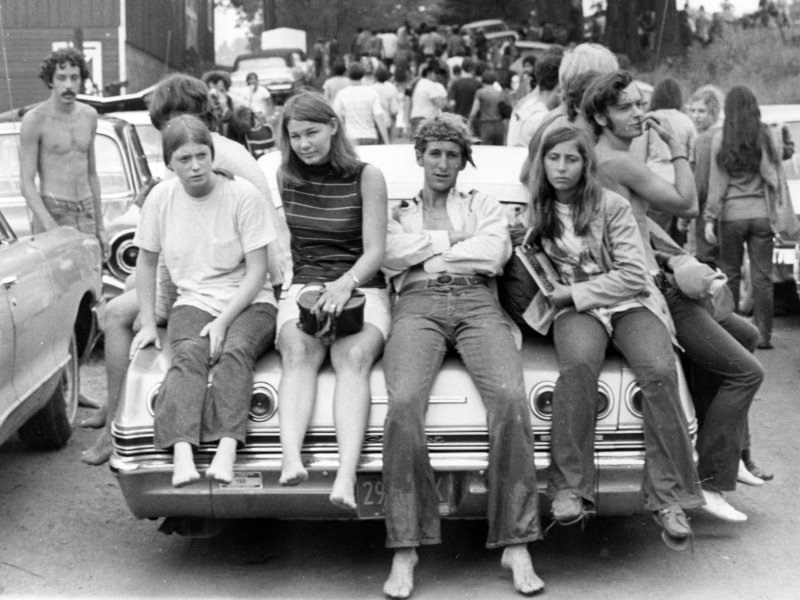
The transition from the communal meadows of San Francisco to the silicon-paved streets of Palo Alto was not an accident. It was an evolution. The hippie movement’s core tenets—decentralization, personal empowerment, and the free exchange of ideas—are the very pillars upon which the internet, personal computing, and the current AI revolution were built.
From Communes to Computers: The Counterculture Roots of Silicon Valley
The popular image of the 1960s hippie is often at odds with the high-tech engineer of the 1980s and 90s. Yet, the two groups shared a common enemy: centralized authority. In the mid-20th century, computers were “Mainframes”—massive, room-sized machines owned exclusively by governments and giant corporations like IBM. To the hippie movement, these machines represented the ultimate tool of “The Man” used for surveillance and bureaucratic control.
The Whole Earth Catalog: The Analog Google
Before there was a search engine, there was the Whole Earth Catalog. Founded by Stewart Brand, a figure who bridged the gap between the Merry Pranksters and the computer elite, the catalog was a compendium of tools, books, and resources designed to help individuals lead self-sufficient lives. Steve Jobs famously referred to the catalog as “one of the bibles of my generation… it was like Google in paperback form, 35 years before Google came along.” The catalog’s philosophy—”Access to Tools”—became the rallying cry for the first generation of personal computer hobbyists.
Steve Jobs and the Zen of Design
Perhaps no individual embodies the intersection of the hippie movement and technology better than Steve Jobs. His experiences with Eastern philosophy, communal living, and experimentation with LSD were not mere youthful distractions; they were foundational to the design philosophy of Apple. Jobs viewed the computer not as a cold calculating machine, but as a “bicycle for the mind.” This perspective shifted the tech industry’s focus from corporate utility to personal expression and aesthetic elegance, proving that the counterculture’s values could be translated into world-changing hardware.
Decentralization: The Hippie Ethos in Modern Blockchain and Web3
A central theme of the hippie movement was the rejection of top-down hierarchies in favor of horizontal, peer-to-peer structures. This desire for “power to the people” has found its most sophisticated technological expression in the rise of blockchain technology and the decentralized web (Web3).
Breaking the Corporate Monopoly
The 1960s activists protested the “Military-Industrial Complex.” Today’s tech visionaries are building systems to bypass the “Big Tech” silos. The fundamental architecture of Bitcoin and Ethereum is a direct descendant of the hippie dream of a system where no single entity holds control. By using distributed ledgers, developers are attempting to create a digital version of the communal “gift economy,” where trust is baked into the code rather than dictated by a central bank or a social media conglomerate.
Peer-to-Peer Networks as Digital Communes
The early internet was envisioned as a digital utopia, a place where geography didn’t matter and information was shared freely—much like the physical communes of the 1960s. While the commercialization of the web has centralized much of our data, the spirit of the hippie movement lives on in peer-to-peer (P2P) protocols. Technologies like IPFS (InterPlanetary File System) and decentralized autonomous organizations (DAOs) represent a modern attempt to realize the hippie vision of self-governing, transparent, and non-hierarchical communities.

The Open Source Movement: A Digital Summer of Love
In the 1960s, “free love” and communal sharing were radical social statements against the proprietary and puritanical nature of post-war society. In the world of software, this spirit manifested as the Open Source movement. The idea that code should be “free” (not necessarily in price, but in liberty) is a direct technological translation of the communal sharing practiced at festivals like Woodstock.
Collaboration Over Competition
The development of Linux is perhaps the greatest example of the hippie ethos applied to software engineering. Instead of a closed, proprietary product hidden behind corporate walls, Linux was built by a global community of volunteers sharing their work for the common good. This model of radical transparency and collective ownership disrupted the traditional software industry and today powers everything from Android phones to the world’s most powerful supercomputers.
Wikipedia and the Creative Commons
The hippie movement’s belief in the democratization of knowledge is the driving force behind Wikipedia. It operates on the radical assumption that a decentralized crowd of volunteers can curate the sum of human knowledge more effectively than a centralized board of experts. Similarly, the Creative Commons movement provides a legal framework for sharing intellectual property, echoing the “Whole Earth” sentiment that information wants to be free. These tools have ensured that the internet remains, at least in part, a public common rather than a series of walled gardens.
AI and Ethics: Inheriting the Humanist Values of the 60s
As we enter the era of Artificial Intelligence, the questions being asked by tech leaders are remarkably similar to those posed by the thinkers of the hippie movement. How do we ensure technology serves humanity rather than enslaving it? How do we prevent tools from becoming instruments of mass surveillance and dehumanization?
Ensuring Tech Serves Humanity
The hippie movement was deeply rooted in humanism—the belief in the inherent value and agency of the individual. As AI models become increasingly powerful, there is a growing movement within the tech community to focus on “Alignment” and “Ethical AI.” This involves programming machines with human-centric values to prevent the “HAL 9000” scenarios that 1960s science fiction warned us about. The goal is to create AI that acts as a co-pilot for human creativity, echoing the 60s ideal of using technology to enhance human potential rather than replace it.
The Rise of “Tech for Good”
Environmentalism was a cornerstone of the hippie movement, leading to the first Earth Day in 1970. Today, this has evolved into the “Green Tech” and “Climate Tech” sectors. Engineers are no longer just focused on processing speed; they are focused on sustainability. From developing algorithms that optimize energy grids to creating carbon-capture technologies, the modern tech industry is finally tackling the environmental concerns that were first popularized by the counterculture.
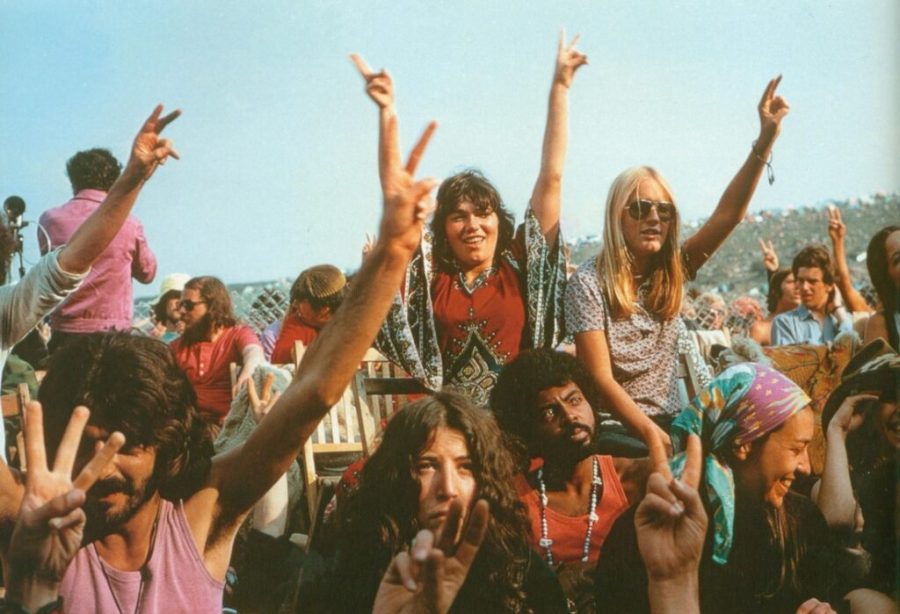
Conclusion: The Digital Legacy of the Counterculture
When we ask “what was the hippie movement,” we must recognize that it was the catalyst for the information age. The movement provided the philosophical framework that allowed us to see computers not as weapons of war or tools of accounting, but as instruments of liberation. It taught us that the most powerful technology is that which is decentralized, accessible, and human-centric.
The long hair and bell-bottoms may have faded, but the spirit of the hippie movement is encoded into the very fiber of our digital world. Every time someone contributes to an open-source project, encrypts their data to protect their privacy, or uses a decentralized app to bypass a middleman, they are carrying forward the legacy of the 1960s. The revolution didn’t end; it just evolved into a series of ones and zeros, proving that the most enduring “Summer of Love” is the one currently powering our screens.
aViewFromTheCave is a participant in the Amazon Services LLC Associates Program, an affiliate advertising program designed to provide a means for sites to earn advertising fees by advertising and linking to Amazon.com. Amazon, the Amazon logo, AmazonSupply, and the AmazonSupply logo are trademarks of Amazon.com, Inc. or its affiliates. As an Amazon Associate we earn affiliate commissions from qualifying purchases.