
The Dow Jones Industrial Average (DJIA), often simply referred to as “the Dow,” stands as one of the most widely recognized and oldest stock market indices in the world. For investors, economists, and the general public alike, its movements are a daily barometer of the U.S. stock market’s health and, by extension, the broader economy. While market indices are dynamic and constantly setting new records, understanding the significance of the Dow’s highest points requires delving into its history, the forces that propel it, and what these peaks mean for financial strategy.

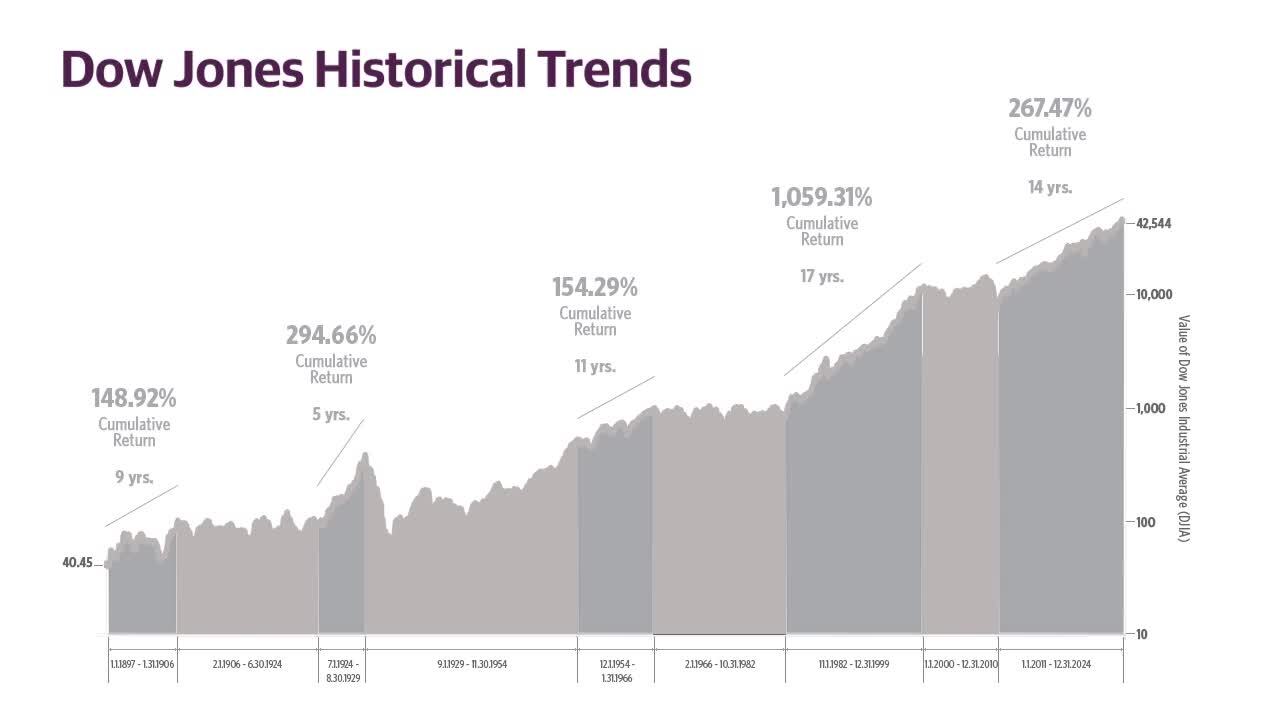
The Dow’s journey has been one of remarkable resilience and growth. As of recent history, the Dow Jones Industrial Average has consistently pushed into uncharted territory, frequently achieving new all-time highs. For instance, in late 2023 and early 2024, the index surged past significant milestones, first exceeding 37,000 points in December 2023 and then breaking above 38,000 points in January 2024, followed by breaching 39,000 points in February 2024. These figures represent the culmination of sustained economic activity, corporate earnings growth, and investor confidence over extended periods. It is crucial to remember that “the highest ever” is a moving target, continually redefined as markets evolve. Each new peak signifies a period where the collective value of the 30 constituent companies has reached an unprecedented level, reflecting robust performance and an optimistic outlook among investors.
A Brief History of the Dow Jones Industrial Average (DJIA)
To fully appreciate the significance of current record highs, a look back at the Dow’s origins provides essential context. The index has weathered countless economic storms, technological revolutions, and global events, consistently reflecting the enduring nature of American enterprise.
Origins and Purpose
The Dow Jones Industrial Average was first calculated on May 26, 1896, by Charles Dow, a co-founder of Dow Jones & Company. Initially comprising just 12 industrial stocks, its primary purpose was to serve as a proxy for the health of the nascent industrial sector in the United States. Early components included companies like General Electric (the only original component still in the index until its removal in 2018), U.S. Leather, and American Tobacco. These companies represented the backbone of the American economy at the turn of the 20th century. Over time, the number of components increased to 30, and the selection criteria evolved to ensure the index remained representative of broad sectors of the U.S. economy, including technology, finance, healthcare, and consumer goods, far beyond its original “industrial” mandate.
Evolution as an Economic Barometer
From its humble beginnings, the DJIA quickly became a critical benchmark. Its movements were meticulously tracked by investors and the press, offering a simple yet powerful gauge of market sentiment and economic trends. During periods of economic expansion, the Dow typically rises, reflecting optimism about corporate profits and future growth. Conversely, during recessions or crises, the index tends to fall, signaling widespread economic concerns. Notable historical periods like the Roaring Twenties, the Great Depression crash of 1929, the post-World War II boom, the dot-com bubble, the 2008 financial crisis, and the COVID-19 pandemic have all left indelible marks on the Dow’s chart, illustrating its role as a historical ledger of economic peaks and valleys. Each record high achieved over these decades built upon previous gains, demonstrating the long-term upward trend inherent in equity markets, despite intermittent corrections and bear markets.
Understanding What Drives the Dow’s Ascent
The Dow’s ability to repeatedly hit new highs is not accidental; it is the result of a complex interplay of fundamental economic factors, corporate performance, and investor psychology.
Corporate Performance and Earnings
At its core, the Dow’s value is derived from the performance of its 30 constituent companies. Strong corporate earnings, robust revenue growth, and effective management directly translate into higher stock prices for these firms. When a significant number of Dow components report impressive financial results, it collectively lifts the index. Factors such as technological innovation leading to increased productivity, strategic mergers and acquisitions, and successful expansion into new markets all contribute to this underlying corporate strength. Companies that consistently deliver value to shareholders are more likely to see their stock prices appreciate, pulling the index higher.
Economic Indicators and Monetary Policy
Broader economic conditions play a crucial role. A healthy economy, characterized by low unemployment, stable inflation, and strong consumer spending, provides a fertile ground for corporate profitability. Government policies, particularly fiscal stimulus and infrastructure spending, can also inject capital and confidence into the economy, benefiting businesses. Monetary policy, set by central banks like the Federal Reserve, is another powerful driver. Low interest rates tend to make borrowing cheaper for companies (stimulating investment) and make equities more attractive relative to bonds (driving demand for stocks). Quantitative easing, where central banks purchase assets to increase the money supply, can also lead to higher asset prices, including stocks. Conversely, rising interest rates or tighter monetary policy can dampen enthusiasm and exert downward pressure.
Investor Sentiment and Market Psychology
Beyond fundamentals, investor sentiment—the overall attitude of investors towards a particular market or asset—can significantly influence the Dow’s movements. Periods of optimism, often fueled by positive news cycles, technological breakthroughs, or a perception of sustained economic growth, can lead to increased buying activity, pushing prices up. This can sometimes create positive feedback loops, where rising prices attract more buyers, leading to further price increases, sometimes described as “momentum” investing. Conversely, fear, uncertainty, and doubt can trigger selling waves, regardless of underlying fundamentals. Geopolitical stability, consumer confidence surveys, and media narratives all contribute to this often-irrational, yet powerful, force in the market.
Geopolitical Factors and Global Events
While the Dow is primarily a U.S. index, global events cast a long shadow. International trade agreements, geopolitical conflicts, commodity price fluctuations (especially oil), and economic conditions in major trading partners can all impact the earnings and outlook of multinational Dow components. For example, stability in global supply chains, favorable currency exchange rates, or growth in emerging markets can enhance the profitability of American companies operating globally, thereby contributing to the Dow’s upward trajectory. Conversely, trade wars or international crises can introduce volatility and uncertainty.
The Significance of Highs (and Lows) for Investors
Understanding the Dow’s record highs is more than just appreciating historical milestones; it has tangible implications for personal finance and investment strategy.
Not Just a Number: Implications for Portfolios
For investors holding diversified portfolios, particularly those with exposure to large-cap U.S. equities, a rising Dow typically signifies an increase in their portfolio value. Retirement accounts, mutual funds, and exchange-traded funds (ETFs) that track the broad market or specific sectors represented in the Dow often benefit directly. While the Dow itself only comprises 30 stocks, its movements are generally indicative of broader market trends. A new high suggests that the economic environment is conducive to corporate growth and that investor confidence is high, factors that tend to lift other segments of the market as well. However, it’s crucial for investors to remember that index performance does not guarantee individual stock performance, and a single high-water mark does not negate the need for prudent financial planning.
Long-Term Perspective vs. Short-Term Volatility
While the Dow’s long-term trend has been undeniably upward, its journey is rarely a smooth climb. Short-term volatility is a constant feature of equity markets. There will always be pullbacks, corrections, and even bear markets. An investor solely focused on the “highest ever” might be tempted to chase returns or panic during downturns. A more effective approach emphasizes a long-term perspective. Historically, markets have recovered from every downturn and eventually surpassed previous highs. This perspective encourages investors to stay disciplined, stick to their financial plans, and avoid emotional decisions driven by daily market fluctuations.
Diversification and Risk Management in Any Market
The Dow’s highs serve as a reminder of the power of equity investing, but they also underscore the importance of diversification. Even during periods of record highs, not all stocks or sectors perform equally well. A well-diversified portfolio, extending beyond the 30 Dow components to include small-cap stocks, international equities, bonds, and other asset classes, helps mitigate risk. If one sector or company underperforms, others may compensate, leading to a more stable overall return. Risk management, including setting clear investment goals, asset allocation based on risk tolerance, and regular portfolio rebalancing, remains paramount regardless of whether the market is at a peak or in a trough.
Looking Ahead: Future Peaks and Market Dynamics
The pursuit of new highs is an inherent characteristic of healthy, growing equity markets. As economies evolve, so too will the composition and performance of indices like the Dow.
Potential Catalysts for Future Growth
Looking forward, several factors could continue to propel the Dow higher. Continued technological innovation, particularly in artificial intelligence, biotechnology, and sustainable energy, promises new avenues for corporate growth and efficiency. Demographic shifts, leading to new consumer demands and labor market dynamics, will also play a role. Furthermore, responsible fiscal policies, targeted investments in infrastructure, and continued global economic integration could provide a stable foundation for corporate expansion. The adaptability and resilience of American companies, combined with a robust capital market system, often lay the groundwork for sustained long-term growth.

Navigating Inherent Market Risks
Despite the optimism surrounding new highs, investors must remain cognizant of inherent market risks. Inflationary pressures, rising interest rates, geopolitical instability, and unforeseen “black swan” events always loom. Market corrections are a natural part of the economic cycle and should be anticipated rather than feared. Successful navigation of these risks involves a consistent investment strategy, a focus on diversification, and a commitment to long-term financial goals. While the Dow’s highest average ever is a testament to growth, a truly insightful financial approach understands that consistent progress, not just peak numbers, defines investment success.
aViewFromTheCave is a participant in the Amazon Services LLC Associates Program, an affiliate advertising program designed to provide a means for sites to earn advertising fees by advertising and linking to Amazon.com. Amazon, the Amazon logo, AmazonSupply, and the AmazonSupply logo are trademarks of Amazon.com, Inc. or its affiliates. As an Amazon Associate we earn affiliate commissions from qualifying purchases.