
In the world of corporate identity and automotive marketing, few names evoke as much nostalgia and strategic curiosity as the Dodge Dart. While enthusiasts often focus on engine displacement and chrome accents, brand strategists view the Dart as a fascinating case study in market positioning, brand equity, and the cyclical nature of product lifecycles. To understand the “what” and “why” behind this iconic nameplate, we must look back to its inception and the strategic maneuvers that defined its first year.
The first year of the Dodge Dart was 1960. Launched in a period of significant economic transition in the United States, the Dart wasn’t just a new car; it was a calculated brand experiment designed to capture a shifting demographic. By examining the 1960 debut through a modern marketing lens, we can uncover how Dodge navigated the complexities of brand dilution, competitive positioning, and the eventual struggle to maintain a cohesive corporate identity across decades.
The 1960 Launch: Defining a New Market Segment
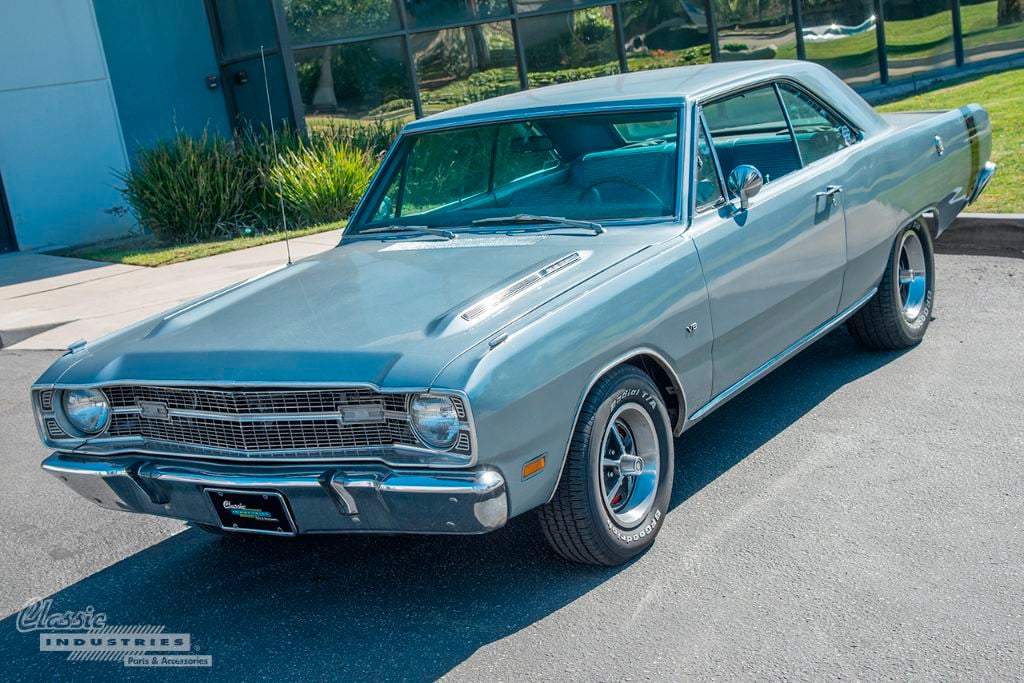
When Chrysler Corporation introduced the Dodge Dart in late 1959 for the 1960 model year, it was a response to an urgent market need. At the time, Dodge occupied a “mid-level” price bracket, sitting comfortably above the entry-level Plymouth but below the luxury-tier Chrysler and Imperial brands. However, the American consumer’s appetite was changing. People wanted the prestige of a Dodge but at the price point of a Plymouth.
The Strategic Shift to Downsized Luxury
The 1960 Dart was initially introduced as a “reduced-size” full-size car. In the brand hierarchy of the era, this was a bold move. By offering three series—the Seneca, the Pioneer, and the Phoenix—Dodge effectively created a brand within a brand. The strategy was to provide the “Dodge experience” to a wider audience, essentially lowering the barrier to entry for the brand. This is a classic example of “brand extension,” where a company uses an established name to enter a lower-priced segment.
Navigating Internal Competition and Brand Dilution
One of the most interesting aspects of the Dart’s first year was how it interacted with its sister brand, Plymouth. Because the Dart was priced so competitively, it began to cannibalize sales from Plymouth. From a brand management perspective, this was a double-edged sword. While Dodge’s total volume skyrocketed—making the Dart an overnight success—it blurred the lines of Chrysler’s corporate identity. The lesson here for modern brands is clear: when launching a new product line that targets a lower price point, one must be careful not to erode the value of other assets within the same corporate portfolio.
Strategic Pivot: Transitioning from Value to Performance
As the 1960s progressed, the Dodge Dart underwent one of the most successful brand pivots in automotive history. What began as a budget-friendly full-size car in 1960 was reimagined as a compact car by 1963. This shift wasn’t merely about physical dimensions; it was about refining the brand’s “Unique Selling Proposition” (USP).
Engineering Reliability as a Brand Pillar
By the mid-1960s, the Dart had become synonymous with “bulletproof” reliability. This reputation was anchored by the Slant-6 engine, a piece of engineering that became a cornerstone of the Dart’s brand identity. In marketing terms, the Dart successfully transitioned from being a “price-leader” to a “value-leader.” The brand promise was no longer just about the initial cost of acquisition; it was about the total cost of ownership and the peace of mind that came with a dependable vehicle. This period cemented the Dart’s place in the American psyche as a rugged, dependable companion.

Tapping into the Muscle Car Persona
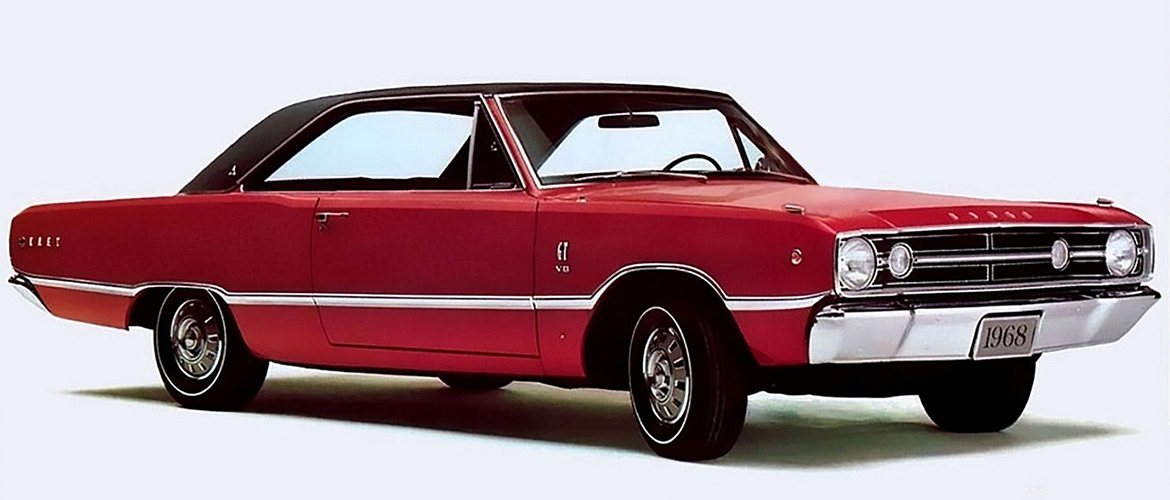
To keep the brand relevant as the “Muscle Car” era dawned, Dodge began introducing performance-oriented versions of the Dart, such as the GTS and the Swinger. This allowed the brand to appeal to two disparate demographics simultaneously: the pragmatic commuter and the youthful speed-seeker. By diversifying the Dart’s sub-branding, Dodge managed to maintain high sales volumes while adding a “halo effect” of excitement and performance to a car that was essentially a sensible compact. This multi-tiered brand strategy is still used today by tech giants and fashion houses to maintain broad market appeal.
The 2013 Revival: A Masterclass in the Risks of Brand Recycling
After the original Dart was discontinued in the mid-1970s, the nameplate lay dormant for decades. In 2013, Fiat Chrysler Automobiles (FCA) decided to revive the name for a new compact car. This move was a deliberate attempt to leverage “brand equity”—the commercial value derived from consumer perception of the brand name, rather than the product itself.
Leveraging Nostalgia vs. Modern Market Realities
The 2013 Dart was a textbook attempt at a brand “reboot.” Marketers hoped that the nostalgia associated with the name would give the new car an immediate advantage over established competitors like the Honda Civic or Toyota Corolla. The campaign focused on “Breaking the Rules” and “New Class of Compact,” attempting to bridge the gap between the 1960s legacy and 21st-century technology. However, the strategy faced a fundamental challenge: the target audience for the 2013 Dart (Millennials and Gen Z) had little to no emotional connection to a car that their grandparents drove.
The Gap Between Brand Promise and Product Experience
While the 1960 Dart was a revolutionary product for its time, the 2013 version struggled to find its footing. The brand identity was confused; it tried to be a sporty Italian-engineered sedan (based on an Alfa Romeo platform) while wearing a quintessentially American badge. This misalignment between the brand’s heritage (rugged, simple, American) and the new product’s reality (complex, European-influenced, tech-heavy) led to a lack of consumer trust. In branding, consistency is king. If the product experience does not align with the historical brand promise, even the most legendary name cannot save it.
The Psychology of Naming: Why the Dart Identity Persists
Why does the question “what was the first year of the Dodge Dart” still surface in search engines and boardrooms today? It is because the Dart represents a specific era of American corporate identity—one defined by ambition and reinvention.
The Power of a Strong Name
“Dart” is an evocative name. It suggests speed, precision, and forward momentum. In the 1960s, this aligned perfectly with the Space Age aesthetic of the time. For a brand, a name is more than just a label; it is a vessel for meaning. The longevity of the Dart name is a testament to the power of effective naming strategies. Even when the physical product changed—from a full-size car in 1960 to a compact in 1963 to a modern sedan in 2013—the name continued to carry a sense of purpose.
Lessons in Brand Longevity and Evolution
The journey of the Dodge Dart provides several vital lessons for modern brand managers and corporate strategists:
- Understand Your Entry Point: The 1960 launch succeeded because it met a specific price gap in the market.
- Adapt or Perish: The Dart’s mid-60s transition to a compact car saved the nameplate from irrelevance as the market moved away from “bloated” designs.
- Respect the Heritage: The 2013 revival serves as a cautionary tale that you cannot simply slap a nostalgic name on a product and expect it to resonate without a clear, authentic connection to the brand’s DNA.
- Protect the Portfolio: Rapid growth in one segment (as seen in 1960) should not come at the expense of your other brands’ identities.
In conclusion, the first year of the Dodge Dart—1960—marked the beginning of a complex narrative in American branding. It was a year of disruption, where a single model redefined what it meant to be a “Dodge.” Whether viewed as a budget-friendly alternative of the 60s or a performance icon of the 70s, the Dart remains a powerful example of how brand strategy can shape, sustain, and sometimes even complicate the life of a product over the span of sixty years. Understanding this history is essential for anyone looking to build a brand that stands the test of time.
aViewFromTheCave is a participant in the Amazon Services LLC Associates Program, an affiliate advertising program designed to provide a means for sites to earn advertising fees by advertising and linking to Amazon.com. Amazon, the Amazon logo, AmazonSupply, and the AmazonSupply logo are trademarks of Amazon.com, Inc. or its affiliates. As an Amazon Associate we earn affiliate commissions from qualifying purchases.