
In the landscape of global entertainment, few symbols are as instantly recognizable as the bold, boxed “R” that precedes a motion picture trailer. While audiences today view film ratings as mere age-appropriateness guidelines, the transition to the rating system in the late 1960s represented one of the most significant brand pivots in the history of American commerce. To answer the question of what the first R-rated movie was, one must look beyond the celluloid and into the strategic rebranding of the Motion Picture Association of America (MPAA).
Before 1968, the film industry operated under the Hays Code—a restrictive set of moral guidelines that acted more as a gatekeeper of “decency” than a marketing tool. The shift to the “Rated R” designation was not just a legal change; it was the birth of a new brand category that allowed studios to segment their audiences, target adult demographics with precision, and monetize mature content in a way that had previously been suppressed.
The Birth of a New Standard: The Transition from Censorship to Brand Classification
The move toward the R-rating was a response to a branding crisis. By the mid-1960s, Hollywood’s “General Audience” brand was failing. International films with more mature themes were capturing the attention of a more sophisticated public, and the rigid moralizing of the Hays Code made American films seem antiquated and out of touch.
From the Hays Code to the MPAA Rating System
Under the leadership of Jack Valenti, the MPAA (now the MPA) realized that the industry needed to move from a “thou shalt not” model to a “viewer discretion” model. This was a masterclass in corporate identity shift. Instead of the industry taking responsibility for the moral fiber of the nation, the new branding placed the responsibility on the consumer. The introduction of the G, M (later PG), R, and X ratings on November 1, 1968, allowed the industry to shed its image as a government-adjacent moral arbiter and embrace its role as a provider of diverse content choices.
Defining the “R” Identity: Restricted but Marketable
The “R” brand—standing for Restricted—was the most vital part of this new strategy. It created a middle ground between “family-friendly” and “pornographic” (the X rating). From a brand strategy perspective, the R-rating offered a Unique Selling Proposition (USP): it promised “adult realism.” It signaled to the audience that the film would contain grit, honesty, and themes that weren’t watered down for children. This allowed filmmakers to push creative boundaries while giving the studios a clear label to use in their marketing collateral.
Identifying the Pioneer: The History and Brand Impact of the First R-Rated Films
When the system officially launched on November 1, 1968, several films were caught in the transition, but one stands out as the standard-bearer for the new “R” brand identity.
The 1968 Shift: The Split and the Class of November 1st
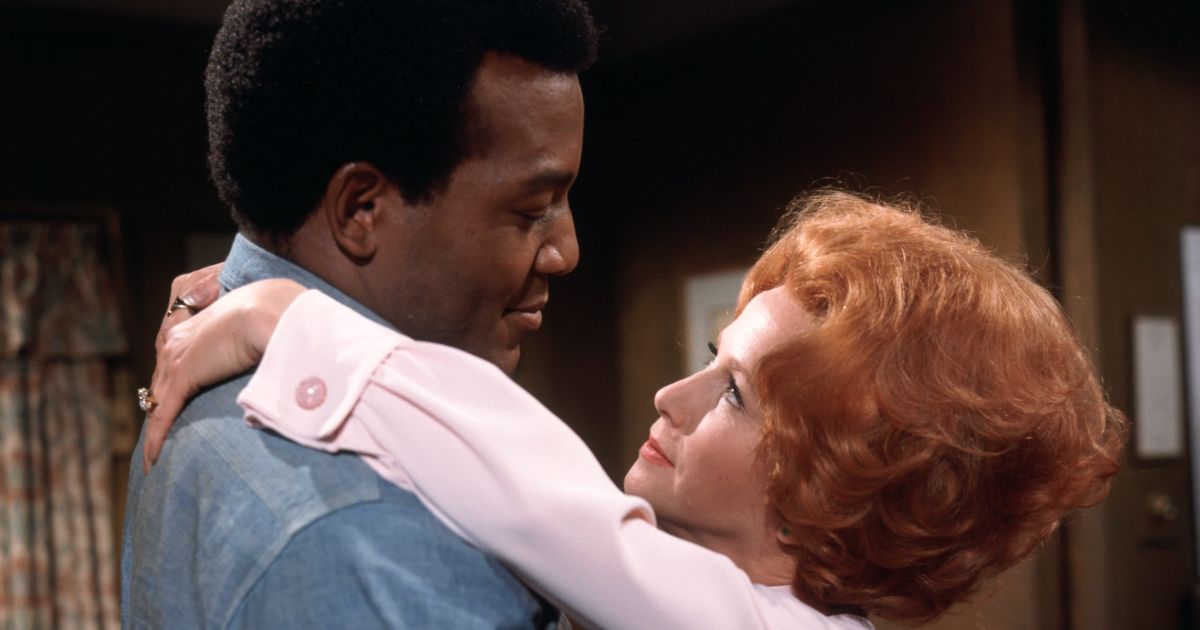
While several films were rated in the weeks leading up to the launch, the 1968 crime drama The Split, starring Jim Brown and Gene Hackman, is widely cited by film historians and brand archivists as the first film to be officially released under the “R” designation. Released by MGM, The Split became the guinea pig for this new market positioning.
The film’s marketing had to navigate uncharted waters. How do you tell a customer they are “restricted” from seeing a product without alienating them? The solution was to lean into the exclusivity. By labeling The Split as R-rated, MGM effectively told the public that this was a “grown-up” movie, a tactic that would later be refined into the “forbidden fruit” marketing strategy that helped R-rated films thrive in the 70s and 80s.
How “Rated R” Became a Badge of Authenticity
In the years immediately following 1968, the R-rating evolved from a warning into a badge of authenticity. For the New Hollywood movement—directors like Francis Ford Coppola and Martin Scorsese—the R-rating was essential to their personal brand. To be “Rated R” meant you were part of the counter-culture. It meant your brand was not beholden to the “squeaky clean” image of old Hollywood. This shift allowed films like The Godfather and The Exorcist to be marketed as high-art experiences that required maturity, significantly increasing their brand equity among the burgeoning “boomer” demographic that was looking for more substantial entertainment.
Strategic Positioning: How the R-Rating Created a New Market Segment
The creation of the R-rating was, at its core, an exercise in market segmentation. By categorizing films based on content intensity, the MPAA allowed studios to stop trying to be “everything to everyone” and start focusing on specific niche markets.
Target Audience Segmentation: Moving Beyond General Audiences
Before the R-rating, every movie was effectively marketed to “everyone,” which often meant the content was diluted. The “Restricted” brand allowed for the “Adult Drama” and “Action Thriller” to become standalone products with dedicated marketing budgets. A studio could now spend money specifically targeting men aged 18-35 for a violent action film, knowing that the “R” label would keep the “family” brand from being tarnished. This level of demographic targeting is a cornerstone of modern brand strategy, but in 1968, it was a revolutionary way to package entertainment.
The “Forbidden Fruit” Marketing Tactic
One of the most interesting psychological aspects of the R-rating brand is how it appealed to the very demographic it sought to restrict: teenagers. In branding, “scarcity” and “restriction” often increase desirability. The “Rated R” label became an aspirational brand for younger audiences. Being seen in an R-rated movie was a rite of passage. Studios learned to leverage this “restricted” status in their trailers and posters, often highlighting the very elements (violence, language, or intensity) that earned the rating to create a sense of urgency and “must-see” status.
The Evolution of the Rating Brand in the Digital Age
As the industry moved from the theater to the home and eventually to streaming, the “Rated R” brand had to adapt to new delivery systems and global markets.
Global Brand Consistency vs. Local Censorship
The MPAA rating system is uniquely American, but the “R” brand became a global shorthand for “Adult Content.” However, as Hollywood studios expanded their global footprint, they had to balance the R-rated brand with international cultural sensitivities. This led to the “International Version” of films—a fascinating case study in brand localization. A movie might be branded as R-rated in the US but edited to fit a 15+ or 18+ category in the UK or Australia to maximize its commercial reach while maintaining its core brand identity.
The Brand Equity of “Rated R” in Modern Streaming Services
In the era of Netflix, Max, and Amazon Prime, the “Rated R” designation has taken on a new role as a metadata tag. However, the prestige associated with the brand remains. Streaming services often use “TV-MA” (the television equivalent), but for a streaming original movie to be “Rated R” still carries a specific weight. It suggests a “theatrical quality” that differentiates it from standard television content.
Furthermore, we are seeing a resurgence of the “R-rated Blockbuster.” For years, the prevailing brand wisdom was that a movie needed a PG-13 rating to be financially successful. However, the success of films like Deadpool, Logan, and Oppenheimer has proven that the “Rated R” brand can still command massive market share. These films use the R-rating as a core component of their marketing strategy, promising an “unfiltered” experience that the “safe” PG-13 brands cannot offer.
Conclusion: The Lasting Legacy of the R-Rating Brand
What began with The Split in 1968 has evolved into one of the most powerful and enduring branding systems in the world. The first R-rated movie was more than just a historical trivia point; it was the catalyst for a paradigm shift in how entertainment is produced, marketed, and consumed.
The “Rated R” brand succeeded because it solved a fundamental marketing problem: how to provide clear consumer expectations in a diverse marketplace. By embracing restriction, the film industry actually found a new kind of freedom—the freedom to speak to different audiences in different voices. Today, the R-rating stands as a testament to the power of effective brand classification, proving that sometimes, the best way to grow a market is to draw a clear line in the sand and tell the audience exactly who the product is for.
aViewFromTheCave is a participant in the Amazon Services LLC Associates Program, an affiliate advertising program designed to provide a means for sites to earn advertising fees by advertising and linking to Amazon.com. Amazon, the Amazon logo, AmazonSupply, and the AmazonSupply logo are trademarks of Amazon.com, Inc. or its affiliates. As an Amazon Associate we earn affiliate commissions from qualifying purchases.