
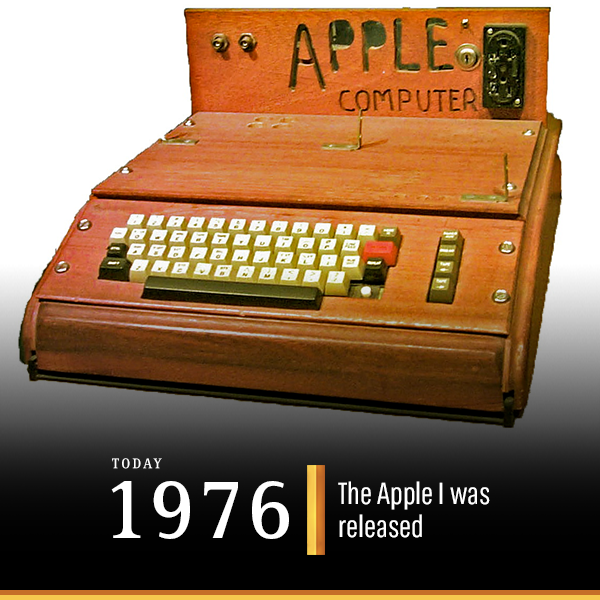
In the annals of technological innovation, few companies command the mystique and influence of Apple Inc. From its iconic iPhones and Macs to its ubiquitous software ecosystems, Apple has consistently pushed the boundaries of what’s possible, shaping the digital landscape for generations. Yet, before the sleek unibody designs, the Retina displays, and the intuitive graphical user interfaces, there was a humble beginning, a foundational product born from a garage in Los Altos, California. To truly understand Apple’s journey and its enduring impact on technology, one must journey back to 1976 and uncover its very first creation: the Apple I. This wasn’t just a circuit board; it was a testament to visionary engineering and a crucial stepping stone in the personal computer revolution.
The Genesis of a Computing Giant: Apple’s Humble Beginnings
The story of Apple’s first product is intrinsically linked to the extraordinary partnership between two Steves: Steve Wozniak and Steve Jobs. Their contrasting yet complementary talents forged the bedrock upon which one of the world’s most valuable companies would be built. Wozniak, a brilliant engineer with a passion for elegant circuit design, and Jobs, a charismatic visionary with an uncanny knack for understanding market potential, were a formidable duo.
The Visionaries: Jobs, Wozniak, and the Garage Dream
Steve Wozniak was a self-taught electronics wizard, driven by an insatiable curiosity and a desire to build things that were not only functional but also elegantly designed. He spent countless hours tinkering with integrated circuits, dreaming of creating a computer that ordinary people could own and operate. At a time when computers were massive, expensive machines reserved for corporations and universities, Wozniak’s vision of a personal computer was truly radical. He believed a computer could be small, affordable, and accessible.
Steve Jobs, on the other hand, possessed a different kind of genius. While not an engineer in the traditional sense, he had an intuitive understanding of design, user experience, and, crucially, how to turn Wozniak’s engineering marvels into commercial successes. Jobs saw the nascent potential in Wozniak’s circuit boards, recognizing that what was merely a hobbyist’s dream for Wozniak could be a product that could change the world. Their shared ambition was to democratize computing, taking it out of the labs and into homes.
The Homebrew Computer Club’s Influence
A pivotal incubator for the ideas that would become the Apple I was the Homebrew Computer Club. Founded in 1975, this informal gathering of electronics enthusiasts, hobbyists, and engineers in Menlo Park, California, became a crucible of innovation. Members would share designs, exchange ideas, and demonstrate their latest creations. It was within this vibrant community that Wozniak frequently presented his designs, receiving feedback and inspiration. The club provided an audience eager for personal computing solutions and validated Wozniak’s belief that there was a genuine demand for simpler, more integrated computer systems. Many of the early adopters and first customers of the Apple I were fellow Homebrew members, highlighting the grassroots origins of the personal computer movement.
Unveiling the Apple I: A Paradigm Shift in Personal Computing
The transition from a hobbyist’s project to a commercial product was a defining moment. It required not just engineering prowess but also business acumen and a willingness to take a significant leap of faith. The Apple I emerged from this confluence of technical brilliance and entrepreneurial spirit.
From Circuit Board to Commercial Product
Wozniak’s initial design for what would become the Apple I was conceived purely for personal use and for sharing with his friends at the Homebrew Computer Club. It was a single-board computer that, unlike other kits of the era, offered a complete video terminal interface and a built-in keyboard circuit. This was revolutionary, as most hobbyist computers required users to assemble their own video displays and input mechanisms from scratch, often a complex and frustrating endeavor.
Jobs, ever the pragmatist, immediately recognized the commercial viability of Wozniak’s elegant design. He convinced a skeptical Wozniak that they could sell these fully assembled circuit boards, rather than just giving away the designs. Their breakthrough came when Paul Terrell, the owner of The Byte Shop, one of the first personal computer retail stores, placed an order for 50 fully assembled Apple I computers. This initial order, requiring payment upon delivery, forced Jobs and Wozniak to secure a loan and, more importantly, solidified their commitment to manufacturing.
The Birth of Apple Computer, Inc.
To fulfill Terrell’s order and formalize their venture, Apple Computer, Inc. was officially founded on April 1, 1976. This moment marked the formal beginning of one of history’s most impactful technology companies. With their initial capital of around $1,300 (reportedly generated by Jobs selling his Volkswagen van and Wozniak selling his HP-65 calculator), they started assembling the Apple I in Jobs’s parents’ garage. Each Apple I was a bare circuit board, populated with chips, but lacked a case, power supply, keyboard, or monitor. Users were expected to provide these components themselves. The price tag for this bare-bones system? A memorable $666.66. The Apple I was not designed for mass production, with only about 200 units ever produced, but its impact far outweighed its limited numbers.
Key Specifications and Features of the Apple I
The Apple I, despite its rudimentary appearance by today’s standards, was a marvel of minimalist engineering for its time. Its core components included:
- Processor: The heart of the machine was a MOS Technology 6502 microprocessor, running at a brisk 1 MHz. This was a cost-effective yet powerful chip that Wozniak greatly admired for its efficiency.
- RAM: It came standard with 4 KB of Random-Access Memory (RAM), expandable up to 48 KB. While seemingly minuscule now, this was sufficient for basic programming and operations.
- Video Display: Perhaps its most significant feature was the built-in video display circuitry. This allowed users to connect a standard NTSC monitor or a modified television set directly to the board, displaying 40 columns by 24 lines of text. This eliminated the need for expensive, dedicated terminals, a major barrier for previous hobbyist systems.
- Keyboard Interface: The Apple I included a dedicated keyboard interface, meaning users could connect a standard ASCII keyboard without needing to build their own controller, another crucial simplification.
- Data Storage: It featured an interface for a cassette tape recorder, which allowed users to load and save programs (including BASIC) and data.
- Form Factor: As mentioned, it was sold as an assembled motherboard only. Buyers were responsible for sourcing a power supply, case, keyboard, and monitor, making it a true “kit” experience even in its assembled form.
The Apple I’s Technical Ingenuity and User Experience Revolution
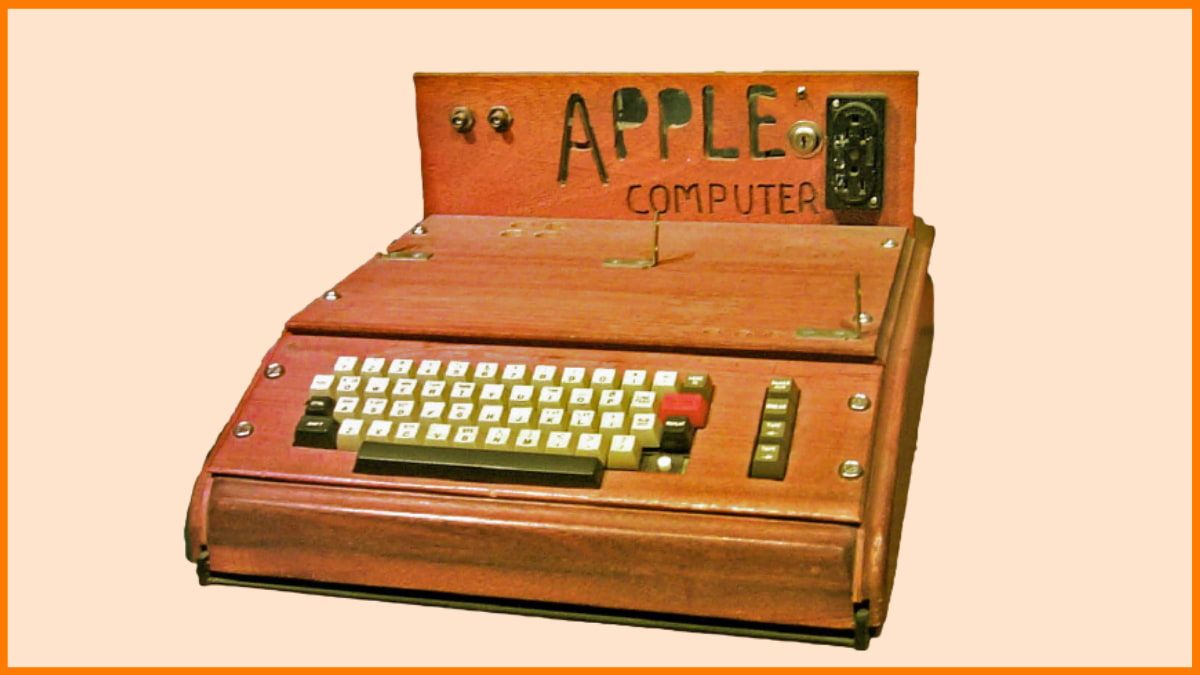
The true genius of the Apple I lay not just in its existence, but in its thoughtful design and the subtle ways it pushed the boundaries of user accessibility for early computing.
Simplifying Complexity: The Integrated Design Approach
Wozniak’s brilliance shone through in his ability to simplify complex electronic designs. The Apple I used remarkably few chips compared to competing designs of the time. This reduction in component count not only made the board more reliable and easier to assemble but also kept costs down. His integrated approach, particularly for the video display and keyboard interface, was a stark contrast to other hobbyist kits that often required users to wire up dozens of individual components for these functions. This simplification meant that more users, even those without extensive electronics backgrounds, could get a functional computer up and running. Wozniak’s design philosophy emphasized elegance and efficiency, principles that would later become hallmarks of Apple’s product development.
Bridging the Gap: From Hobbyist to Consumer
Before the Apple I, building a personal computer was largely the domain of electronics experts and engineers. It involved sourcing multiple components, understanding complex schematics, and possessing significant soldering skills. The Apple I, by providing a pre-assembled motherboard with integrated video and keyboard interfaces, drastically lowered the barrier to entry. While still requiring users to provide a power supply, case, and display, it took away the most daunting and technically challenging aspects of building a computer from scratch. This move was a crucial step in transforming the personal computer from an esoteric scientific tool into something that a broader audience could conceivably own and operate, directly accelerating the nascent personal computing revolution.
The Software Ecosystem (or Lack Thereof)
While the Apple I was technologically advanced for its hardware, its software ecosystem was, by modern standards, rudimentary. It primarily booted into a monitor program stored in ROM, allowing users to enter machine code directly. For more user-friendly programming, users could load Integer BASIC from a cassette tape. This meant that to use the Apple I, one either had to be proficient in assembly language or learn BASIC. There were no “apps” in the contemporary sense, nor was there an operating system with a graphical interface. The user experience was heavily reliant on the user’s ability to program and understand basic computer operations. However, this simplicity also fostered a deeply engaged community of early users who delighted in exploring the machine’s capabilities and writing their own software.
A Foundational Legacy: The Apple I’s Impact on the Tech Landscape
Despite its limited production run, the Apple I’s significance far exceeds its numbers. It was a pivotal moment in the history of personal computing and laid crucial groundwork for Apple’s future trajectory.
Paving the Way for the Personal Computer Revolution
The Apple I undeniably contributed to the burgeoning personal computer revolution. By demonstrating the commercial viability of a pre-assembled, integrated personal computer system, it helped to legitimize the concept of computing for the masses. Its success, albeit modest, showed investors, developers, and the public that there was a real market for personal machines that didn’t cost tens of thousands of dollars or require advanced technical degrees to operate. It was a tangible proof-of-concept for the idea that computers could be personal tools, not just industrial behemoths, inspiring a wave of innovation that quickly followed.
Setting Apple’s Trajectory: Innovation and Accessibility
Many of the core philosophies that define Apple today can be traced back to the Apple I. Wozniak’s emphasis on elegant, efficient design, and Jobs’s focus on creating products that were accessible and appealed to a broader audience, were embedded in this first machine. The Apple I foreshadowed Apple’s long-standing commitment to integrating hardware and software seamlessly, offering a complete (or nearly complete) solution out of the box. This user-centric approach, prioritizing ease of use and a holistic experience, would become the hallmark of future Apple products, from the Apple II to the Macintosh, and ultimately to the iPhone and iPad. It set a precedent for innovation that wasn’t just about raw power, but about how that power could be harnessed to empower users.
The Collectible Icon: Modern-Day Significance
Today, the Apple I is more than just a historical artifact; it is a highly coveted collector’s item. With only a handful of working units known to exist, they regularly fetch exorbitant prices at auction, often exceeding half a million dollars. This reflects not only their rarity but also their immense historical significance as the progenitor of one of the world’s most influential technology companies. Each surviving Apple I serves as a tangible link to the very dawn of personal computing and a testament to the audacious vision of its creators. Its value underscores its enduring status as an icon of technological pioneering.
From Garage to Global Empire: The Apple I as a Catalyst
The Apple I was not Apple’s most successful product in terms of sales or market penetration, but it was arguably its most important. It was the crucial first step that made everything else possible.
The Transition to the Apple II
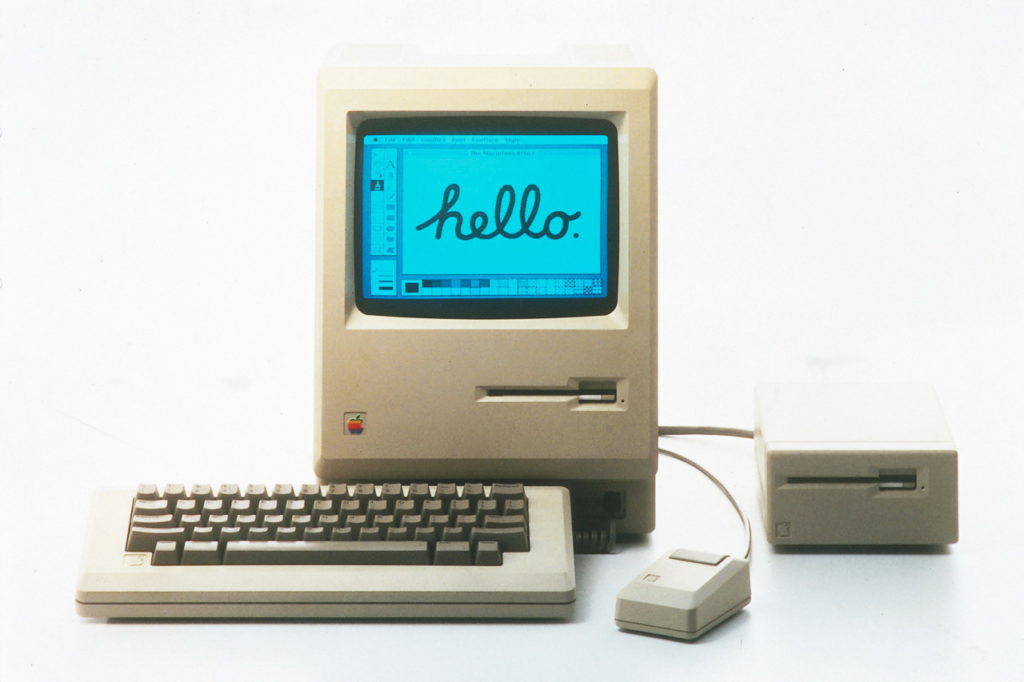
The lessons learned from designing, manufacturing, and marketing the Apple I were invaluable. Jobs and Wozniak quickly realized that while the Apple I was groundbreaking, its “build-it-yourself” nature was still too niche. They needed a more complete, user-friendly package. This realization directly led to the development of the Apple II, released in 1977. The Apple II was a fully assembled computer with a plastic case, color graphics, and expansion slots, making it vastly more accessible and appealing to mainstream consumers. Its success launched Apple into the stratosphere, establishing it as a major player in the burgeoning personal computer market. The Apple I was the prototype, the experiment that proved the concept, paving the way for the commercial triumph of its successor.
A Blueprint for Future Innovations
In conclusion, the Apple I was far more than just “Apple’s first product.” It was a bold declaration of intent, a proof of concept for a future where personal computers were not just a dream but an attainable reality. It encapsulated the spirit of innovation, the drive for accessibility, and the minimalist design philosophy that would come to define Apple Inc. for decades. From the humble circuit board of the Apple I, a vision unfolded that would lead to graphical user interfaces, portable music players, smartphones, and an ecosystem of interconnected devices that have fundamentally reshaped how we live, work, and interact with the world. The Apple I stands as a powerful reminder that even the most colossal technological empires begin with a single, audacious idea and the courage to bring it to life.
aViewFromTheCave is a participant in the Amazon Services LLC Associates Program, an affiliate advertising program designed to provide a means for sites to earn advertising fees by advertising and linking to Amazon.com. Amazon, the Amazon logo, AmazonSupply, and the AmazonSupply logo are trademarks of Amazon.com, Inc. or its affiliates. As an Amazon Associate we earn affiliate commissions from qualifying purchases.