
On Wednesday, November 27, 2024, NVIDIA Corporation (NVDA) concluded the trading session at a closing price of $135.10. This specific trading day was characterized by the unique dynamics of a pre-holiday session, as the United States markets prepared to close for the Thanksgiving holiday. For investors and financial analysts, this price point represented more than just a numerical value; it was a reflection of the market’s ongoing recalibration of the artificial intelligence (AI) narrative following NVIDIA’s blockbuster third-quarter earnings report released earlier in the month.
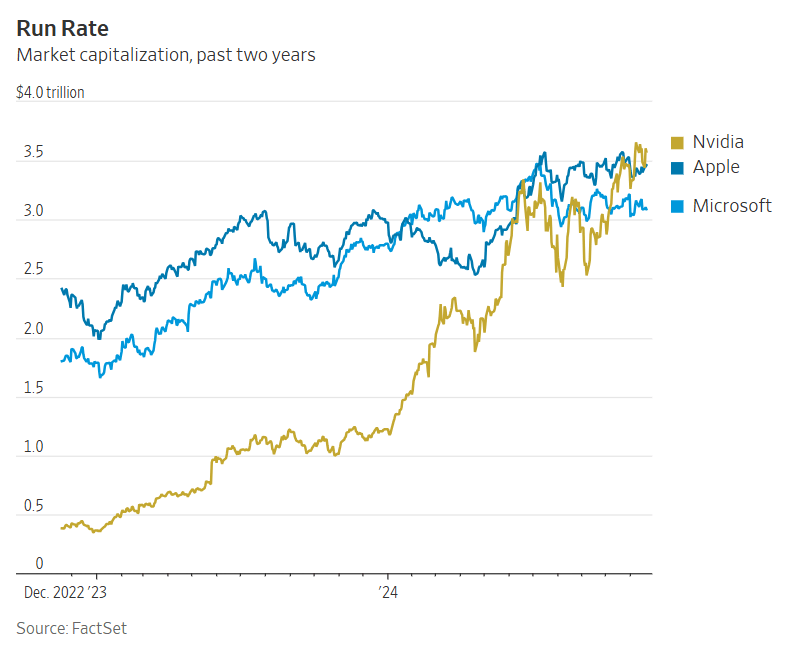
The closing price of $135.10 marked a period of consolidation for the semiconductor giant. After months of parabolic growth that saw the company briefly overtake Apple and Microsoft as the most valuable corporation in the world, the late November period served as a litmus test for investor stamina. Navigating the complexities of high-valuation growth stocks requires an understanding of the fundamental, technical, and macroeconomic factors that converged on this specific date.

Analyzing NVIDIA’s Performance on November 27, 2024
The trading day of November 27, 2024, was notable for its relatively lower trading volume, a common phenomenon on the day preceding a major federal holiday. Despite the quiet nature of the broader market, NVDA remained at the center of institutional and retail focus. The closing price of $135.10 represented a modest fluctuation within a broader trading range that had seen the stock oscillate between $133 and $150 throughout the fourth quarter.
The Market Context: A Pre-Holiday Trading Session
In the world of high-finance, the Wednesday before Thanksgiving is often characterized by “window dressing” and portfolio rebalancing. On this day, the S&P 500 and the Nasdaq Composite showed mixed signals as investors weighed positive consumer spending data against geopolitical uncertainties. NVIDIA, being a heavy weight in both indices, naturally felt the gravitational pull of these macro forces.
The $135.10 close was a signal of stability. For many tech investors, the fact that the stock held above key support levels during a low-volume session suggested that institutional conviction remained high. There was no “rush for the exits,” but rather a measured holding pattern as the market looked toward the December “Santa Claus rally” and the upcoming year-end fiscal projections.
Key Metrics and Daily Volatility
On 11/27/24, NVDA opened at approximately $136.25, hitting an intra-day high of $137.40 before settling at the $135.10 mark. The day’s range was indicative of a market that had already priced in the immediate successes of the Hopper H100 and H200 chips and was now looking for the next catalyst.
From a valuation standpoint, NVIDIA was trading at a forward price-to-earnings (P/E) ratio that, while high by traditional standards, remained supported by triple-digit revenue growth. Analysts monitoring the ticker on this day were specifically focused on the “Blackwell” transition—the shift to NVIDIA’s next-generation GPU architecture—which was rumored to be facing minor engineering hurdles related to heat dissipation in high-density server racks. The closing price suggested that the market had largely absorbed these concerns, viewing them as temporary “growing pains” rather than structural failures.
The Fundamental Drivers Behind the Valuation
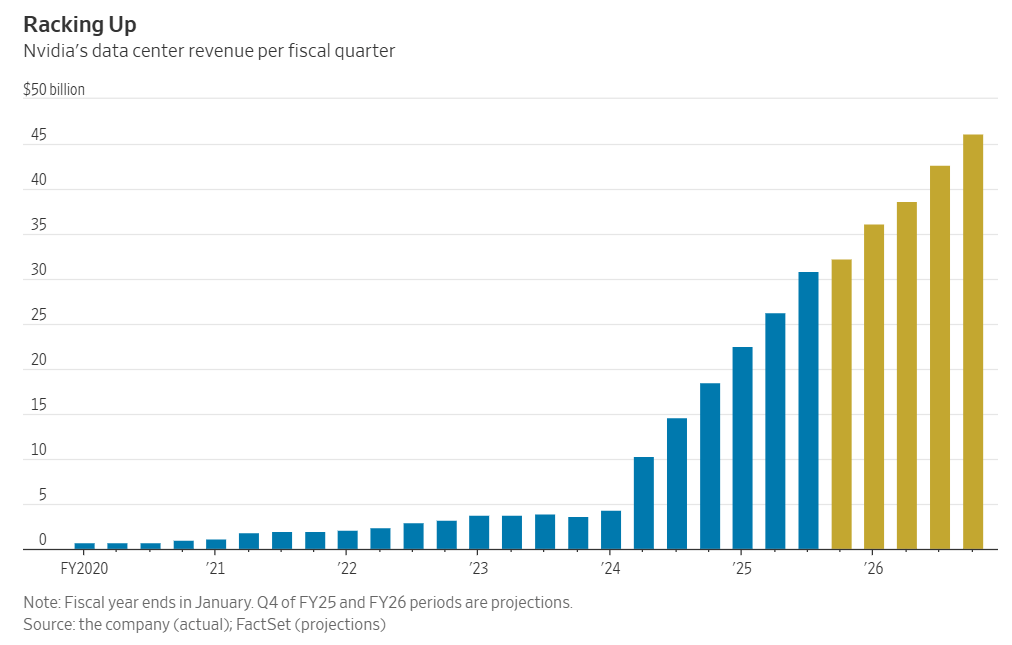
To understand why NVDA closed at $135.10 on November 27, one must look at the underlying financial engine driving the company. NVIDIA is no longer just a “chip company”; it has evolved into a full-stack data center enterprise. The revenue generated from its Data Center segment has become the primary metric by which the stock is judged.
Blackwell Architecture and Production Scaling
In late November 2024, the primary narrative surrounding NVIDIA’s stock price was the production ramp-up of the Blackwell B200 chips. CEO Jensen Huang had previously described the demand for Blackwell as “insane,” a sentiment that kept the stock’s floor relatively high even during market downturns.
By 11/27/24, investors were analyzing supply chain reports from Taiwan Semiconductor Manufacturing Company (TSMC) and cooling system providers like Vertiv. The $135.10 price point reflected a balance between the immense demand for these chips and the logistical challenges of delivering them at scale. Investors were essentially betting that NVIDIA’s supply chain mastery would allow them to hit their ambitious shipment targets for the first quarter of 2025.
Data Center Dominance and Enterprise Demand
Another fundamental driver for the stock on this date was the broadening of the AI customer base. While the “Hyperscalers”—Amazon (AWS), Google (GCP), and Microsoft (Azure)—remained the largest buyers of NVIDIA hardware, November 2024 saw a surge in “Sovereign AI” investments. Nations were beginning to invest in their own domestic AI infrastructure to ensure data security and technological autonomy.
This diversification of the revenue stream provided a safety net for the stock price. Even if one major tech titan scaled back spending, the global demand for compute power was appearing increasingly inelastic. The closing price on November 27 reflected this systemic importance of NVIDIA to the global economy; it was not just a speculative tech play, but a core infrastructure holding for modern finance.
Navigating NVDA’s Volatility in a High-Interest Rate Environment
The broader financial environment in late 2024 played a crucial role in shaping NVIDIA’s daily price action. Throughout the year, the Federal Reserve’s stance on interest rates had a direct impact on high-multiple growth stocks. On November 27, 2024, the yield on the 10-year Treasury note was a key variable for equity traders.
Comparative Analysis: NVDA vs. The “Mag 7”
On 11/27/24, NVIDIA’s performance was often contrasted with its peers in the “Magnificent Seven.” While companies like Tesla and Meta experienced high volatility due to regulatory and consumer-end shifts, NVIDIA remained the most direct play on the “picks and shovels” of the AI revolution.
Comparing the $135.10 close to the year-to-date performance, NVIDIA continued to outperform the S&P 500 by a staggering margin. However, the momentum had shifted from explosive daily gains to a more mature, cyclical pattern. Investors were no longer buying every uptick; they were looking for specific entry points near technical support levels. The $135.10 level sat comfortably above the 50-day moving average, a bullish sign for momentum traders who look for long-term trend confirmation.
Institutional Sentiment and Hedge Fund Positioning
Institutional ownership of NVIDIA remained at record highs in late 2024. Large-scale asset managers and hedge funds utilized the period around November 27 to adjust their weightings for the final month of the year. The price stability at $135.10 suggested that institutional players were not yet ready to take significant profits, likely anticipating a strong performance in the coming January “effect” or during the CES (Consumer Electronics Show) announcements in early 2025.
The options market also provided insights. Open interest for call options with strike prices at $140 and $150 remained high, indicating that the derivatives market was leaning toward an upward bias despite the sideways movement on 11/27/24. This “gamma” support often acts as a magnet for stock prices, keeping them from falling too far below key psychological thresholds.
Investment Strategies for Semiconductor Stocks in Late 2024
For the individual investor looking at the $135.10 closing price on November 27, 2024, the question was not just “what is the price,” but “what is the strategy?” The semiconductor sector is notoriously cyclical, yet AI has introduced a “super-cycle” that defies traditional boom-and-bust timing.
Dollar-Cost Averaging into Tech Leadership
A common strategy deployed by retail investors during this period was dollar-cost averaging (DCA). Given the volatility inherent in NVIDIA, attempting to time the exact bottom is a fool’s errand. An investor who saw the $135.10 price as an attractive entry point relative to the $150 highs of previous weeks would have likely added to their position, focusing on the long-term CAGR (Compound Annual Growth Rate) of the AI hardware market.
The rationale for DCA in late 2024 was grounded in the company’s “moat.” NVIDIA’s CUDA software platform creates a high switching cost for developers, making it difficult for competitors like AMD or Intel to gain significant market share in the short term. This software-hardware synergy justifies a premium valuation that might otherwise seem excessive.
Managing Risk in a Hyper-Growth Portfolio
Risk management was paramount on November 27. With a closing price of $135.10, many traders utilized stop-loss orders just below the $130 support level to protect against a potential “black swan” event. In the context of personal finance, maintaining an overweight position in a single stock—even one as dominant as NVIDIA—carries concentration risk.
Financial advisors in late 2024 often recommended balancing an NVDA holding with dividend-paying stocks or broader ETFs (like the VOO or QQQ) to mitigate the impact of semiconductor sector rotations. While NVIDIA’s growth was undeniable, the late November period was a reminder that even the strongest leaders need time to consolidate their gains before the next leg up.
In conclusion, the closing price of $135.10 for NVDA on November 27, 2024, served as a vital snapshot of a company in transition. It captured a moment of equilibrium between the massive expectations for the AI-driven future and the pragmatic realities of global supply chains and macroeconomic policy. For the disciplined investor, this price was an invitation to look beyond the daily ticker and evaluate the enduring structural changes that NVIDIA continues to lead in the global economy.
aViewFromTheCave is a participant in the Amazon Services LLC Associates Program, an affiliate advertising program designed to provide a means for sites to earn advertising fees by advertising and linking to Amazon.com. Amazon, the Amazon logo, AmazonSupply, and the AmazonSupply logo are trademarks of Amazon.com, Inc. or its affiliates. As an Amazon Associate we earn affiliate commissions from qualifying purchases.