
The Nintendo 64 (N64) remains one of the most iconic pieces of hardware in the history of consumer electronics. While the standard charcoal grey unit is familiar to millions, the console’s lifecycle was marked by numerous hardware variations and limited-edition releases that pushed the boundaries of aesthetic engineering. Among the most coveted by tech collectors and hardware historians is the ANA Nintendo 64. Released in 1999, this specific “set” was not a retail product available in standard electronics stores. Instead, it was a high-tech promotional collaboration between Nintendo and All Nippon Airways (ANA), Japan’s largest airline.
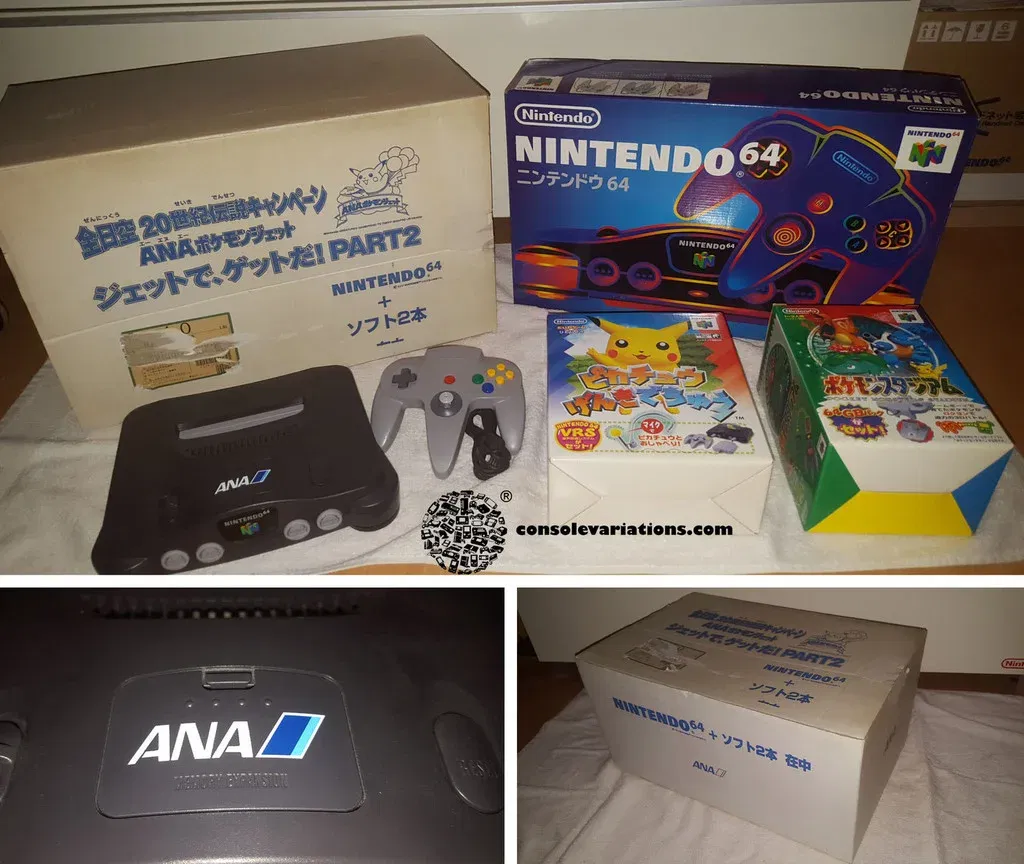
Understanding the ANA Nintendo 64 requires a look at the intersection of late-90s hardware design, the rise of the “Clear Blue” tech aesthetic, and the engineering specificities that defined the fifth generation of home consoles. This was more than a mere color swap; it was a technical artifact of a specific moment in digital history.
The Engineering and Design of the ANA Variant
During the late 1990s, the technology industry underwent a massive shift in design philosophy. Following the success of the original iMac G3, transparent and translucent plastics became the hallmark of “futuristic” tech. Nintendo embraced this trend wholeheartedly with their “Funtastic” series, but the ANA edition preceded the global rollout of many of these variants, offering a unique “Clear Blue” (often referred to as “Sky Blue”) finish that was distinct from the later retail “Ice Blue” consoles.
The Chemistry of Translucent Plastics
The production of the ANA Nintendo 64 required high-grade polycarbonate plastics. Unlike the opaque ABS plastic used in the original charcoal units, the translucent shells posed unique engineering challenges regarding structural integrity and heat dissipation. Because the internal components were visible, the interior shielding had to be meticulously manufactured. The ANA N64 features a clear blue top half and a transparent “crystal” bottom half, a dual-tone aesthetic that required precise injection molding to ensure the two halves met seamlessly without compromising the unit’s rigidity.
From a technical standpoint, the transparency of the ANA set allowed users to see the heavy RF shielding that encased the motherboard. This shielding was vital for the N64, as its high-frequency internal clocks could otherwise interfere with other household electronics. The ANA edition turned this functional necessity into a visual feature, showcasing the industrial design that made the N64 a powerhouse of its time.
The Controller and Peripheral Engineering
The ANA set included a matching Clear Blue controller, which featured the same dual-tone translucent plastic. The N64 controller was a significant piece of tech in its own right, introducing the first widely successful analog thumbstick for home consoles. In the ANA variant, the mechanical assembly of the analog stick—utilizing an optical encoding system—is partially visible through the casing. This optical system used a slotted wheel and light sensors to translate physical movement into digital signals, a sophisticated approach compared to the potentiometer-based sticks used by competitors.
Technical Specifications and Performance Metrics
Underneath its unique blue shell, the ANA Nintendo 64 housed the same groundbreaking architecture as the standard units. To understand the “what” of this set, one must look at the Silicon Graphics (SGI) technology that powered it. At the time of the ANA promotion, the N64 was technically superior to many of its contemporaries in terms of raw processing power and floating-point calculations.
The Reality Co-Processor (RCP)
The heart of the ANA N64 was the Reality Co-Processor, a 62.5 MHz chip developed by SGI. This chip was divided into two main components: the Reality Signal Processor (RSP) and the Reality Display Processor (RDP). The RSP was responsible for geometry calculations and audio processing, utilizing a MIPS-based RISC architecture that allowed for advanced functions like hardware-accelerated transform and lighting (T&L).
The RDP handled the actual rasterization of pixels, supporting advanced features for 1999, such as mipmapping, anti-aliasing, and trilinear filtering. In the context of the ANA edition, these technical capabilities allowed the console to render the high-speed 3D environments that defined the era, all while housed in a shell that reflected the “high-flying” nature of the airline partnership.
Unified Memory Architecture (UMA)
A defining technical feature of the ANA N64 set was its use of Rambus DRAM (RDRAM). Unlike the PlayStation or Saturn, which used split memory pools for video and system data, the N64 utilized a Unified Memory Architecture. The ANA edition came with 4MB of RDRAM, which could be expanded to 8MB via the Expansion Pak. This high-speed memory (clocked at 250 MHz) was essential for the console’s ability to handle high-resolution textures and complex z-buffering, though it was notoriously difficult for developers to master due to high latency.
Peripherals and the Ecosystem of the Late 90s
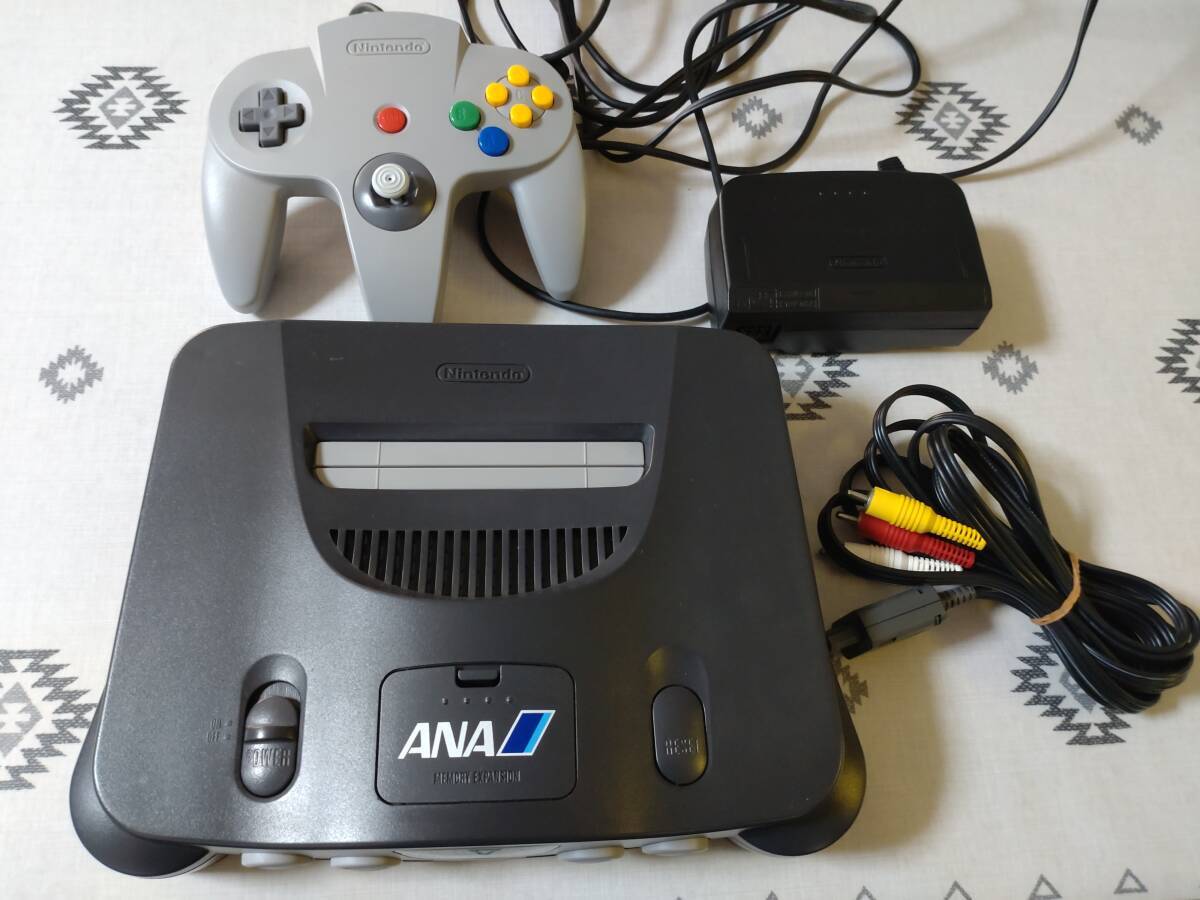
The ANA Nintendo 64 was often distributed as part of a “set” or bundle that highlighted the console’s expandable nature. By 1999, the N64 had a robust ecosystem of peripherals that added significant functionality to the base hardware.
The Expansion Pak and High-Resolution Modes
Many ANA units were eventually outfitted with the Expansion Pak, a technical upgrade that replaced the Jumper Pak in the console’s memory bay. This was a critical piece of hardware for the era, as it doubled the available system RAM. This allowed for “Hi-Res” modes in various titles, bumping the resolution from the standard 240p or 320×240 to 480i or 640×480. For a tech enthusiast in 1999, seeing these higher resolutions through the ANA’s blue-tinted shell was the pinnacle of home gaming performance.
Connectivity and the Transfer Pak
Another key component of the N64 tech suite was the Transfer Pak, which plugged into the controller’s accessory slot. This device allowed for data exchange between the N64 and Game Boy Color cartridges. This cross-platform data transfer was an early example of “ecosystem” tech, a concept that is now standard in modern computing but was revolutionary in the late 90s. The ANA sets were often used in promotional events alongside Pokémon titles, which utilized this hardware link to move data between handheld and console versions of the games.
Modern Technical Preservation and Modification
For contemporary tech collectors, the ANA Nintendo 64 represents a unique challenge in hardware preservation. Because it was a limited release—reportedly given away to passengers on domestic ANA flights or through specific lotteries—the surviving units are rare and often require technical intervention to remain functional.
HDMI Upscaling and Video Output Mods
While the ANA N64 natively outputs composite and S-Video signals, modern display technology has rendered these formats obsolete. Consequently, many ANA units have become candidates for high-end hardware modifications. The most prominent of these is the “N64 Digital” or “UltraHDMI” mod.
This involves soldering a custom FPGA (Field Programmable Gate Array) board directly to the N64’s RCP. This board intercepts the digital video signals before they are converted to analog, allowing the console to output a pure 1080p digital signal via HDMI. Modding an ANA edition is considered a high-level task for hardware technicians, as it involves preserving the rare blue shell while significantly altering the internal circuitry to meet modern digital standards.
Maintenance and Component Longevity
From a technical maintenance perspective, the ANA N64 suffers from the same “cap plague” issues as other electronics of its era. The electrolytic capacitors on the motherboard are prone to leaking over time, which can corrode the PCB (Printed Circuit Board) and lead to system failure.
Preserving an ANA set involves a process called “recapping,” where the old capacitors are de-soldered and replaced with modern, high-quality surface-mount components. Additionally, the thermal pads on the CPU and RCP often dry out, requiring replacement with modern thermal interface materials to ensure the 64-bit hardware doesn’t overheat within its translucent enclosure.
The Legacy of the ANA Hardware Collaboration
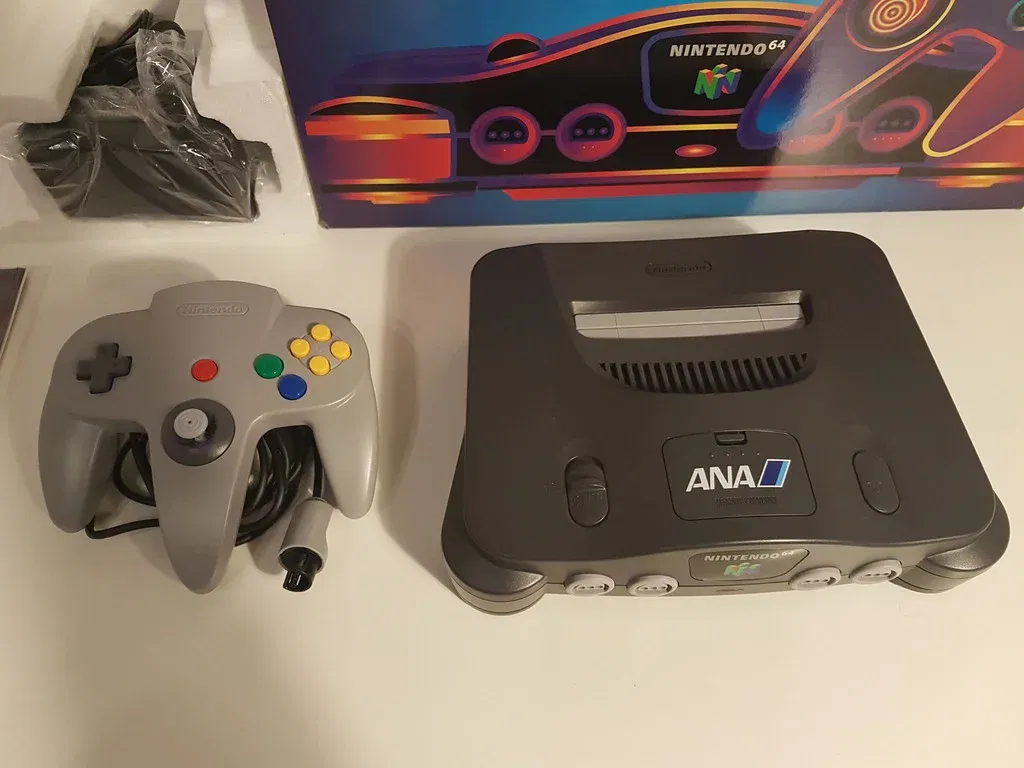
The ANA Nintendo 64 was a precursor to the modern trend of “tech-as-fashion.” It proved that high-performance computing hardware could serve as a lifestyle statement and a collector’s item. In the years following its release, we saw a surge in limited-edition hardware across all sectors, from smartphones to laptops, but the ANA N64 remains a standout for its commitment to a specific, cohesive aesthetic.
Technically, it represented the peak of the N64’s hardware maturity. By 1999, the manufacturing processes for the 64-bit chips had been refined, resulting in units that were more power-efficient and reliable than the launch-day models. For the tech historian, the ANA set is not just a “blue console”; it is a snapshot of 1990s engineering excellence, a bridge between the analog past and the digital future, and a testament to the enduring appeal of well-designed, specialized hardware.
aViewFromTheCave is a participant in the Amazon Services LLC Associates Program, an affiliate advertising program designed to provide a means for sites to earn advertising fees by advertising and linking to Amazon.com. Amazon, the Amazon logo, AmazonSupply, and the AmazonSupply logo are trademarks of Amazon.com, Inc. or its affiliates. As an Amazon Associate we earn affiliate commissions from qualifying purchases.