
The story of Sam’s Club is not merely a tale of a warehouse store; it is a masterclass in corporate evolution, brand strategy, and the persistent pursuit of market dominance. When examining the origins of this retail giant, one must first address the common misconception that Sam’s Club existed under a different name prior to its 1983 inception. In reality, the name “Sam’s Club” has been the brand’s identity from its very first location in Midwest City, Oklahoma. However, the true narrative lies in its parent company, Walmart, and the strategic positioning that birthed the warehouse club model as a defensive and offensive tool in the retail wars of the 1980s.

The Strategic Genesis: Why Sam’s Club Was Born
To understand the brand strategy behind Sam’s Club, one must look at the landscape of American retail in the early 1980s. Sam Walton, the founder of Walmart, was witnessing the rise of the warehouse club industry, led by competitors like Price Club. While Walmart was perfecting the discount retail model, the warehouse club segment represented a different psychological approach to consumerism: the promise of bulk value, limited selection, and the “treasure hunt” experience.
Positioning as a Value Disruptor
The decision to launch Sam’s Club was a tactical maneuver in corporate identity. Rather than rebranding existing Walmart locations, Walton chose to launch a distinct sub-brand. This allowed the company to cater to two different segments: the average household looking for convenient weekly discount shopping (Walmart) and the small business owner or cost-conscious consumer looking for high-volume efficiency (Sam’s Club). By keeping the brands separate, the company avoided diluting the value proposition of either. The “Sam’s” name served as a personal endorsement, capitalizing on the immense trust equity Sam Walton had already built through the primary Walmart brand.
The Influence of Price Club
The warehouse club concept was popularized by Sol Price, the founder of Price Club. Sam Walton famously visited Price Club locations to study their operational efficiency, membership structure, and inventory management. The strategy behind Sam’s Club was never to be a “rebranding” of a predecessor, but rather an evolution of the model pioneered by competitors. By adopting the membership fee structure, Sam’s Club established a high-margin revenue stream that stabilized cash flow, a sophisticated financial strategy that set it apart from traditional discount retailers.
Brand Identity and the Power of Personalization
The branding of Sam’s Club is perhaps one of the most effective examples of eponymous corporate naming in history. By naming the entity “Sam’s Club,” the organization successfully humanized a massive industrial concept. In the retail world, corporate identity is often cold and detached; by attaching the founder’s first name, the brand communicated reliability, frugality, and the “folksy” appeal that defined Walton’s leadership style.
Leveraging the Walton Legacy
When Sam’s Club launched, it was not competing with a lack of identity; it was leveraging a pre-existing aura of excellence. The branding strategy relied on the implicit trust that if Sam Walton was putting his name on it, the goods must be quality and the prices must be the lowest possible. This branding choice created a “halo effect” where the success of Walmart bolstered the rapid expansion of Sam’s Club. Marketing professionals look to this period as a case study in brand extension—using the core values of the parent company (everyday low prices) while pivoting the delivery mechanism (bulk warehousing).
Maintaining Brand Differentiation
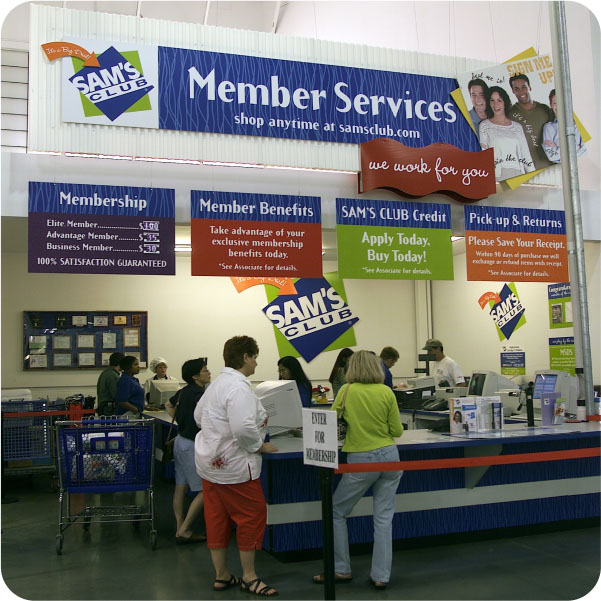
Despite the shared lineage, the brand identity of Sam’s Club was deliberately calibrated to feel more exclusive than the broad-market Walmart stores. The use of a membership card became a psychological barrier to entry, transforming the shopping experience from a necessity to an “inner circle” benefit. This branding move allowed Sam’s Club to maintain a cleaner, more industrial aesthetic compared to the high-traffic, high-clutter environment of the average Walmart supercenter.
Financial Strategy: The Membership Model as a Moat
From a business finance perspective, the launch of Sam’s Club represented a fundamental shift in how the Walmart organization captured value. The introduction of the membership fee was a brilliant financial instrument that served as both a barrier to entry for competitors and a psychological tether for the customer.
Revenue Streams and Customer Lifetime Value
By charging a fee for entry, Sam’s Club effectively turned their most loyal customers into stakeholders. Once a customer paid for a membership, they were incentivized to maximize the value of that membership by shopping exclusively at Sam’s Club for their bulk needs. This created a high degree of customer retention—a primary metric for modern subscription-based businesses. This financial strategy allowed the company to keep markups on physical goods razor-thin, as the membership fees provided a predictable, high-margin revenue stream that covered overhead and fueled growth.
Inventory Control and Capital Efficiency
The warehouse club model also revolutionized supply chain finance. By holding a limited number of Stock Keeping Units (SKUs) and requiring rapid turnover of inventory, Sam’s Club significantly reduced the capital tied up in warehouses. This efficient cash-to-cash cycle meant that the company was selling goods before it had to pay the suppliers, providing a massive boost to its liquidity. This internal efficiency allowed them to undercut competitors, cementing the brand’s reputation as the ultimate destination for “Value-Based Purchasing.”
Evolution and Future-Proofing the Brand
The longevity of the Sam’s Club brand is proof that successful corporate identity is not static. Throughout the 1990s and 2000s, the brand transitioned from a strictly utilitarian warehouse to a more tech-integrated shopping experience. The evolution of the Sam’s Club app, “Scan & Go” technology, and the introduction of premium member tiers show a brand strategy that understands the importance of digital transformation in retail.
Adapting to the Digital Era
While the name and the warehouse format remain consistent, the way the brand delivers value has evolved. The integration of mobile commerce is an extension of the original “value-seeking” promise. By reducing the time friction of checkout, Sam’s Club continues to optimize for the business owner whose time is as valuable as their money. The branding message has shifted slightly from “The Cheapest Warehouse” to “The Smartest Way to Shop,” bridging the gap between traditional brick-and-mortar loyalty and modern digital convenience.
The Role of Private Labels
A vital component of the Sam’s Club brand strategy is its private label, Member’s Mark. By curating a line of products that exclusively bears the store’s branding, they have successfully moved away from being a mere distributor of national brands to a curator of private value. This strategy increases profit margins and cements brand loyalty. When a consumer buys a Member’s Mark product, they are reinforcing their relationship with the Sam’s Club identity. It is a brilliant play of corporate marketing: the brand becomes the product.
Conclusion: The Endurance of a Name
When consumers ask what Sam’s Club was called before, they are often searching for a story of transition. The reality—that it has always been Sam’s Club—is actually the most compelling part of the story. It indicates a brand that arrived in the market with a clear mission, a defined identity, and a robust financial structure that required no rebranding or identity crisis to succeed.
The success of Sam’s Club serves as a timeless case study for businesses of all sizes. It proves that when you anchor your brand in a clear value proposition, supported by a distinct and defensible business model, you don’t need to constantly reinvent your identity to remain relevant. Whether it is through the strategic use of membership tiers, the focus on supply chain efficiency, or the humanizing effect of personal branding, Sam’s Club remains a quintessential example of how a retail concept can evolve into a lasting legacy. The brand hasn’t just survived for four decades; it has defined the warehouse club category, proving that once you establish a name synonymous with value, that identity becomes your greatest asset.
aViewFromTheCave is a participant in the Amazon Services LLC Associates Program, an affiliate advertising program designed to provide a means for sites to earn advertising fees by advertising and linking to Amazon.com. Amazon, the Amazon logo, AmazonSupply, and the AmazonSupply logo are trademarks of Amazon.com, Inc. or its affiliates. As an Amazon Associate we earn affiliate commissions from qualifying purchases.