
The name Nikola Tesla evokes images of groundbreaking innovation, electricity crackling from coils, and a mind operating on a plane far beyond the ordinary. Born in 1856, Tesla’s life story is a testament to singular genius that profoundly shaped the technological landscape of the 20th century and continues to influence our world today. Among the many fascinating aspects of his persona, a recurring question that intrigues historians, technologists, and enthusiasts alike is: what was Nikola Tesla’s IQ? While a definitive, historically verifiable number remains elusive, exploring this question offers a unique lens through which to appreciate the cognitive architecture of a man whose ideas illuminated the modern age.
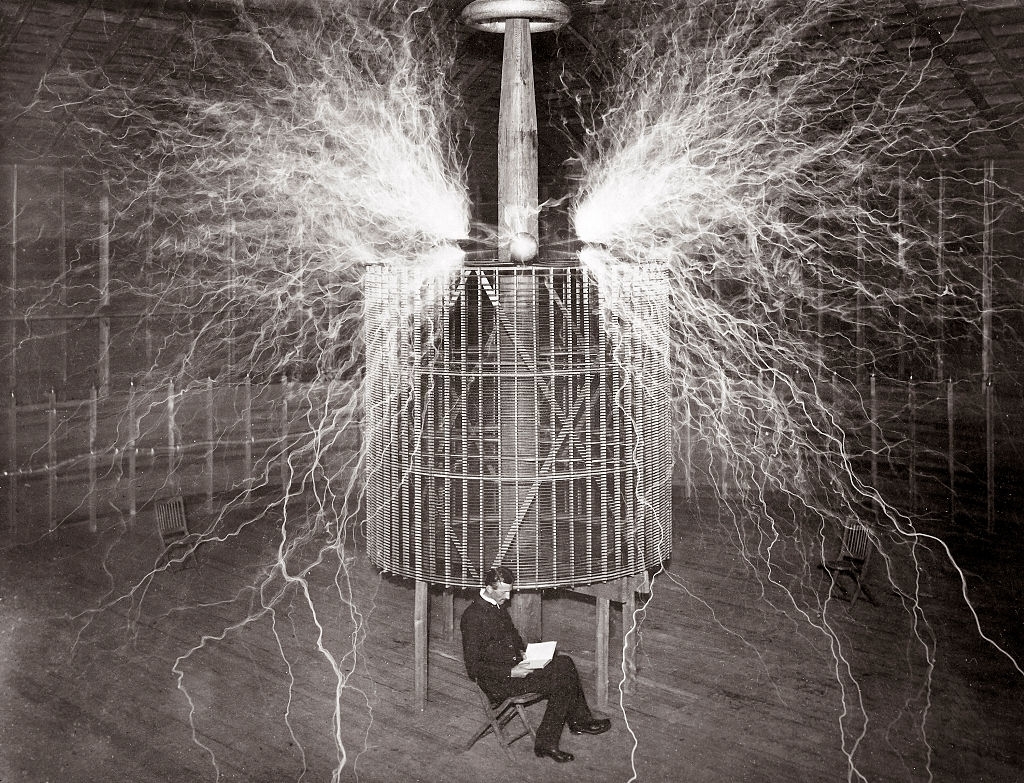
This article delves into the estimations of Tesla’s intellect, not merely to assign a score, but to understand the unique cognitive processes that allowed him to conceptualize, design, and bring forth technologies that were often decades ahead of their time. We will explore the challenges of retrospectively quantifying genius, the methodologies used to approximate his intellectual capacity based on his achievements, and most importantly, how his extraordinary mind directly contributed to foundational technological advancements that define our contemporary existence. In the realm of technology, understanding the genesis of innovation often means understanding the mind behind it, and Tesla’s is a mind worth dissecting.
The Elusive Genius: Quantifying Intelligence Across Eras
The fascination with Nikola Tesla’s intellect is deeply rooted in the sheer audacity and impact of his inventions. From the alternating current (AC) electrical system that powers our homes and industries to pioneering work in radio, remote control, and even concepts foreshadowing robotics and wireless communication, Tesla’s contributions are foundational to modern technology. Yet, trying to pin down a precise “IQ score” for such a historical figure presents significant methodological challenges.
The Anachronism of IQ Testing
Modern IQ tests, as we know them, were largely standardized in the early 20th century, well after Tesla had established himself as a prominent inventor and scientist. Applying these contemporary psychometric tools to individuals from previous centuries is inherently anachronistic. The cultural, educational, and scientific contexts in which historical figures operated were vastly different from those assumed by modern intelligence tests. For instance, the specific knowledge bases, problem-solving techniques, and societal expectations that shaped Tesla’s intellectual development bore little resemblance to those for which today’s IQ tests are designed.
Furthermore, IQ tests primarily measure certain aspects of cognitive ability, such as logical reasoning, spatial awareness, and verbal comprehension, often under timed conditions. While these are certainly components of intelligence, they do not fully encapsulate creativity, intuition, perseverance, or the ability to synthesize disparate ideas—qualities that were undeniably central to Tesla’s inventive process. Evaluating a mind like Tesla’s solely through the narrow lens of a standardized test risks overlooking the very facets that made his genius so transformative for technology. His intelligence was not just about processing information efficiently but about generating entirely new paradigms.
Contextualizing Tesla’s Brilliance
To truly appreciate Tesla’s intellectual stature, it’s crucial to contextualize his brilliance within his era. He emerged during a period of rapid scientific discovery and technological revolution, yet his ideas often pushed the boundaries of what was conceivable even by the most brilliant minds of his time. He was a polymath who excelled in mathematics, physics, and engineering, fluent in multiple languages, and possessed an encyclopedic memory. His education at the Graz University of Technology and the University of Prague laid a strong theoretical foundation, but it was his ability to transcend conventional thinking and envision practical applications for abstract scientific principles that set him apart.
His contemporaries, including figures like Thomas Edison and George Westinghouse, recognized his exceptional capabilities, even if they sometimes clashed with his temperament or methods. The “War of the Currents” famously pitted Tesla’s AC system against Edison’s direct current (DC), a battle of technological paradigms that Tesla ultimately won due to the superior efficiency and scalability of his invention. This victory wasn’t just about a better product; it was a testament to a deeper, more profound understanding of electrical principles and their practical implications, showcasing an intelligence that could foresee the future needs of an industrializing world.
Estimating the Mind of a Maverick: Methodologies and Speculations
Given the impossibility of administering a formal IQ test to Nikola Tesla, any discussion of his IQ must rely on retrospective analysis, drawing inferences from his biographical details, documented achievements, and the sheer complexity of his inventions. Psychologists and historians have attempted to estimate the IQs of historical figures by comparing their known intellectual feats against the benchmarks established by modern psychometric data.
Inferring Intellect from Innovation
The most compelling evidence for Tesla’s extraordinary intellect comes directly from his technological output. His inventions were not mere incremental improvements; they were often radical departures that required an astonishing blend of theoretical insight, practical engineering acumen, and visionary foresight.
- Alternating Current (AC) System: Designing a complete system for generating, transmitting, and utilizing AC power involved complex mathematics, a deep understanding of electromagnetism, and the ability to foresee the infrastructure challenges of electrifying a continent. This required exceptional abstract reasoning, problem-solving skills, and systems thinking.
- Tesla Coil: This resonant transformer circuit, still widely used in radio and television technology, demonstrated an advanced understanding of high-frequency electricity and wireless transmission. Its design required sophisticated knowledge of electrical resonance and wave mechanics.
- Radio and Remote Control: Tesla’s early demonstrations of wireless communication and remote-controlled vehicles (like his famous “teleautomaton” boat) predated Marconi’s and others’, showcasing an intuitive grasp of radio waves and control systems that was truly revolutionary.
- X-Ray Imaging: His early experiments with X-rays, recognizing their potential and developing safety precautions, revealed a multidisciplinary scientific curiosity and an ability to quickly grasp the implications of new phenomena.
These achievements collectively point to a mind capable of exceptional analytical power, synthetic thought, and an unparalleled ability to translate complex scientific principles into tangible, world-altering technologies. The sheer volume and diversity of his patents further underscore his inventive prolificacy.
Biographical Clues and Anecdotal Evidence
Tesla’s biographers and contemporaries provide numerous anecdotes that paint a picture of a mind far exceeding the norm.
- Photographic Memory: Tesla claimed to have a photographic memory, recalling entire books and images with perfect clarity. This extraordinary recall undoubtedly aided his learning and ability to synthesize vast amounts of information.
- Visualization Skills: Perhaps his most celebrated cognitive trait was his ability to visualize complex machinery in his mind, often without the need for drawings or physical prototypes. He could run through multiple iterations of a design, identify flaws, and perfect it entirely within his mental space. This “mental laboratory” was a key driver of his efficiency and innovative speed. For any engineer or technologist, such a capability is invaluable, streamlining the design process and reducing costly physical trials.
- Multilingualism and Education: His mastery of multiple languages and his deep immersion in classical and scientific literature speak to a robust verbal and analytical intellect.
- Intense Focus and Work Ethic: Tesla was known for his relentless dedication, often working for days with minimal sleep. While not an indicator of IQ, this extreme focus allowed his powerful intellect to be applied consistently to challenging problems.
These biographical details, when considered in the context of psychometric understanding, suggest an individual possessing extremely high scores across multiple domains of intelligence, particularly spatial reasoning, logical-mathematical intelligence, and working memory.
Expert Retrospective Analyses
While precise numbers are inherently speculative, experts who have attempted to estimate Tesla’s IQ often place it in the genius category, typically ranging from 195 to 200+. For context, an IQ of 130 is generally considered indicative of giftedness, and scores above 140 are rare, often attributed to profound genius. Placing Tesla in the 195-200+ range puts him in the company of other historical luminaries like Leonardo da Vinci and Albert Einstein, whose impacts on science and technology are similarly monumental.
It’s important to reiterate that these figures are estimations, built upon extrapolations from his known achievements and cognitive behaviors. However, they serve to underscore the consensus among those who study intelligence and technological innovation: Tesla possessed an intellect of extraordinary caliber, a mind uniquely equipped to dismantle existing paradigms and forge new technological frontiers.
Beyond the Number: Tesla’s Unique Cognitive Architecture for Technological Breakthroughs
While an estimated IQ provides a numerical approximation, it fails to fully capture the unique “how” of Tesla’s genius. His mind wasn’t just powerful; it was configured in a way that perfectly facilitated radical technological innovation. This cognitive architecture was a blend of visualization, synthesis, and intuition.
The Power of Visualization and Mental Experimentation
Tesla’s ability to conduct intricate experiments and build elaborate machines entirely within his mind was perhaps his most revolutionary cognitive tool for technological development. He described his process: “Before I put a sketch on paper, the whole mechanism is worked out in my mind. I can even make it run in my mind. The result is the same, whether I put it in the laboratory or not.”
This mental prototyping minimized physical trials, accelerated the design cycle, and allowed him to identify and correct flaws before any resources were expended. For an inventor, this capability is invaluable, offering an unprecedented efficiency in bringing complex ideas to fruition. It highlights an extreme form of spatial-visual intelligence combined with meticulous attention to detail and an understanding of physical laws. This wasn’t merely imagination; it was a form of simulated reality operating within his consciousness, yielding tangible engineering solutions.
Interdisciplinary Synthesis
Tesla’s brilliance also lay in his capacity to synthesize knowledge from seemingly disparate fields. He didn’t just understand electricity; he understood mechanics, fluid dynamics, and even the subtle interplay of various forms of energy. This holistic perspective allowed him to see connections and possibilities that narrower specialists might miss. For instance, his understanding of oscillating systems, whether mechanical or electrical, informed his work across many different inventions, from AC motors to resonant circuits. This interdisciplinary approach is a hallmark of truly transformative innovators, enabling them to bridge gaps and create novel solutions at the intersections of established domains.
The Visionary’s Intuition
Beyond pure intellect, Tesla possessed an uncanny intuition, an almost prophetic understanding of future technological needs. He envisioned a world powered wirelessly, with global communication networks, decades before these concepts became even remotely feasible. His patents often included not just the immediate application but also sketches and descriptions of future developments, demonstrating a mind that operated on a long-term, visionary trajectory. This foresight wasn’t mere guesswork; it was rooted in a deep understanding of fundamental principles and an unparalleled ability to project current scientific trends into future technological realities. For example, his insights into resonance and energy transfer laid groundwork for wireless power that scientists are still exploring today.
The Tangible Legacy of an Unquantifiable Mind: Shaping Modern Technology
Ultimately, the most significant measure of Tesla’s intelligence isn’t a speculative number, but the enduring impact of his work on technology and human civilization. His genius wasn’t an abstract quality; it was a potent force that reshaped the material world.
Powering the Modern World
The most profound legacy of Tesla’s intellect is the alternating current (AC) electrical system. Without his invention, the widespread distribution of electricity over long distances would be impractical, if not impossible. The entire global electrical infrastructure, from power plants to the outlets in our homes, operates on principles pioneered by Tesla. This single achievement alone demonstrates an intellect capable of designing a fundamental technological backbone for an entire civilization—a system of such efficiency and scalability that it remains largely unchanged over a century later.
Precursors to Wireless Communication and Beyond
Tesla’s foundational work in radio frequency technology, remote control, and resonant circuits directly paved the way for modern wireless communication, radio broadcasting, television, and even radar. His envisioning of a “World System” for global wireless power and communication anticipated the internet and ubiquitous connectivity. His patents and experiments touched upon robotics, renewable energy concepts, and even early particle beam research, showcasing a breadth of vision that spanned the entire spectrum of future technology.
Inspiration for Future Innovators
Tesla’s story continues to inspire generations of engineers, scientists, and entrepreneurs. His relentless pursuit of revolutionary ideas, his unwavering belief in the power of technology to improve human life, and his unique approach to problem-solving serve as a benchmark for inventive prowess. Companies like Tesla, Inc. adopting his name are a testament to the enduring power of his brand of innovation. His life story emphasizes that true technological advancement often stems from minds willing to challenge conventions and envision possibilities beyond the current technological horizon.
The Enduring Quest: Understanding Genius in the Age of AI
In an era increasingly defined by Artificial Intelligence and machine learning, reflecting on a mind like Nikola Tesla’s takes on new significance. AI tools can now generate designs, optimize systems, and solve complex algorithms with unprecedented speed. Yet, the uniquely human qualities of intuition, abstract visualization, and the ability to conceive entirely novel paradigms—hallmarks of Tesla’s genius—remain largely the domain of human intellect.
Human vs. Artificial Intelligence in Innovation
Tesla’s mental laboratory, where he built and tested machines in his mind, offers an interesting parallel to modern simulation software and AI-driven design. However, the initial spark of creativity, the intuitive leap, and the ability to define entirely new problems for AI to solve still largely originate from human minds. Tesla’s genius represents the pinnacle of human cognitive capacity for original technological creation, challenging us to consider what aspects of human intelligence are truly irreplaceable even as AI advances. It reminds us that invention isn’t just about processing data; it’s about forming unprecedented connections and envisioning non-existent futures.
Nurturing the Next Generation of Technologists
The lessons from Tesla’s life on fostering environments for exceptional talent are profound. His intense curiosity, disciplined self-study, and the freedom he often sought to pursue his visionary projects underscore the importance of supporting deep, unconventional thought in technological research and development. Understanding the cognitive traits that made Tesla so effective is crucial for educators and leaders aiming to cultivate the next generation of technological innovators. It suggests a need for educational systems that encourage visualization, interdisciplinary thinking, and bold, imaginative problem-solving rather than rote memorization or mere incremental improvements.

Conclusion
While the question “what was Nikola Tesla’s IQ” will likely never yield a definitive, universally accepted numerical answer, the journey to explore it reveals much about the nature of genius and its profound impact on technology. Estimates placing his IQ in the incredibly high range of 195-200+ are compelling indicators of his unparalleled cognitive abilities. However, far more significant than any single number are the documented features of his mind: his photographic memory, his extraordinary visualization skills, his capacity for interdisciplinary synthesis, and his almost prophetic intuition.
These were the true drivers of his technological breakthroughs, enabling him to not only conceive the AC electrical system but also to lay the groundwork for radio, remote control, and a host of other innovations that now form the bedrock of our modern technological world. Nikola Tesla’s genius wasn’t just high; it was unique, a cognitive architecture perfectly suited for revolutionary invention. His legacy serves as a powerful reminder that the human intellect, in its most extraordinary forms, remains the ultimate engine of technological progress, constantly pushing the boundaries of what is possible and shaping the future of our civilization.
aViewFromTheCave is a participant in the Amazon Services LLC Associates Program, an affiliate advertising program designed to provide a means for sites to earn advertising fees by advertising and linking to Amazon.com. Amazon, the Amazon logo, AmazonSupply, and the AmazonSupply logo are trademarks of Amazon.com, Inc. or its affiliates. As an Amazon Associate we earn affiliate commissions from qualifying purchases.