
The rumble of economic crises has a way of making us revisit foundational ideas. When the established order falters, history offers up its most influential thinkers for a second look. Among them, John Maynard Keynes stands tall, his theories reshaping how governments approached economic downturns. But what exactly was Keynesian economics, and how does it resonate today, especially in a world increasingly defined by rapid technological advancements, intricate brand landscapes, and the constant pursuit of financial well-being?
While the title “What Was Keynesian Economics” might suggest a purely historical retrospective, a deeper dive reveals its enduring relevance, particularly when viewed through the lenses of technology, brand, and money. Keynes’s insights into aggregate demand, government intervention, and the psychology of markets are not relics of the past; they are frameworks that can help us understand and navigate the complexities of our modern digital, brand-conscious, and financially interconnected world.

The Great Depression and the Birth of a New Economic Paradigm
To understand Keynesian economics, we must first understand the context from which it emerged: the catastrophic Great Depression of the 1930s. Prior to Keynes, the prevailing economic orthodoxy, largely rooted in classical and neoclassical thought, held that markets were inherently self-correcting. The idea was that if prices and wages were flexible, any deviation from full employment would be temporary. Supply, in this view, created its own demand, and government intervention was seen as disruptive and unnecessary, potentially even counterproductive.
However, the sheer scale and persistence of the Great Depression shattered this optimistic outlook. Millions were unemployed, businesses collapsed, and the global economy ground to a halt. The classical models offered no satisfactory explanation for this prolonged stagnation, nor did they propose effective solutions.
It was into this void that John Maynard Keynes stepped with his seminal work, The General Theory of Employment, Interest and Money (1936). Keynes challenged the core assumptions of classical economics, particularly the notion that economies would naturally gravitate towards full employment. He argued that there was no inherent mechanism that guaranteed full utilization of resources, and that economies could indeed get stuck in prolonged periods of high unemployment.
The Central Tenet: Aggregate Demand and the Role of Government
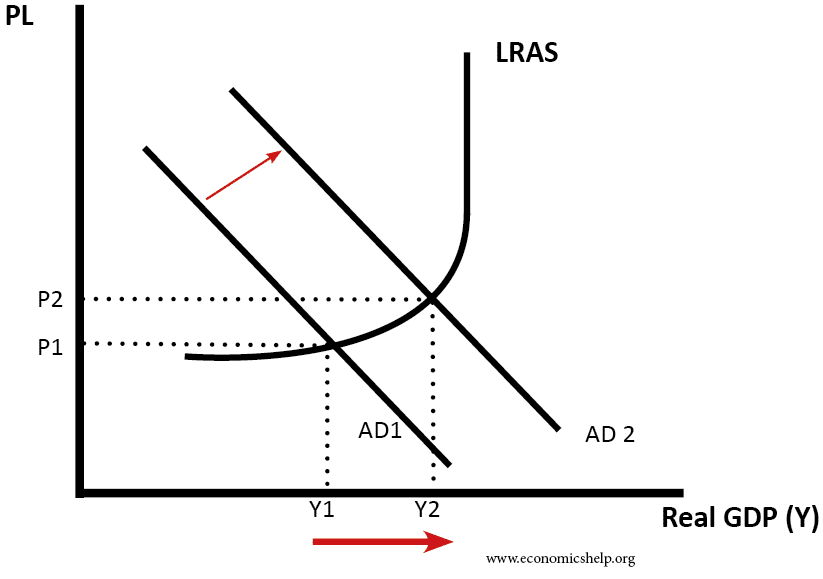
The bedrock of Keynesian economics is the concept of aggregate demand. This refers to the total demand for goods and services in an economy at a given price level and in a given period. Keynes argued that it was not the supply of goods that was the primary constraint during a recession, but rather the lack of demand. When consumers and businesses are pessimistic about the future, they cut back on spending and investment, leading to a vicious cycle of falling demand, production cuts, and further job losses.
This lack of aggregate demand, Keynes contended, could lead to an “underemployment equilibrium,” where the economy operates at a level below its full potential. Unlike classical economists who believed in the power of the “invisible hand” to guide markets back to health, Keynes argued that in situations of insufficient demand, a guiding hand – the government – was necessary.
The Multiplier Effect: How Government Spending Can Stimulate the Economy
One of the most potent tools in the Keynesian arsenal is the multiplier effect. This principle suggests that an initial injection of spending into the economy – whether from government investment, tax cuts, or increased consumer spending – can lead to a far larger increase in overall economic activity.
Imagine the government invests $1 billion in infrastructure projects. This spending directly creates jobs and income for construction workers, engineers, and suppliers. These individuals then spend a portion of their newfound income on goods and services, which in turn creates demand and jobs for others. This ripple effect continues, with each dollar of initial spending generating multiple dollars in economic output. This concept is crucial for understanding how Keynesian policies aim to break the downward spiral of recessions by boosting demand.
Keynesian Economics in the Modern Era: Tech, Brand, and Money
While Keynesian economics was forged in the crucible of the Great Depression, its core principles have proven remarkably adaptable. In our contemporary world, dominated by rapid technological change, the power of branding, and the intricate workings of global finance, understanding Keynes is still vital.
Navigating Tech-Driven Disruptions with Fiscal Policy
The rapid pace of technological advancement, from artificial intelligence and automation to the burgeoning digital economy, presents both immense opportunities and significant challenges. While technology can boost productivity and create new industries, it can also lead to job displacement and increased economic inequality.
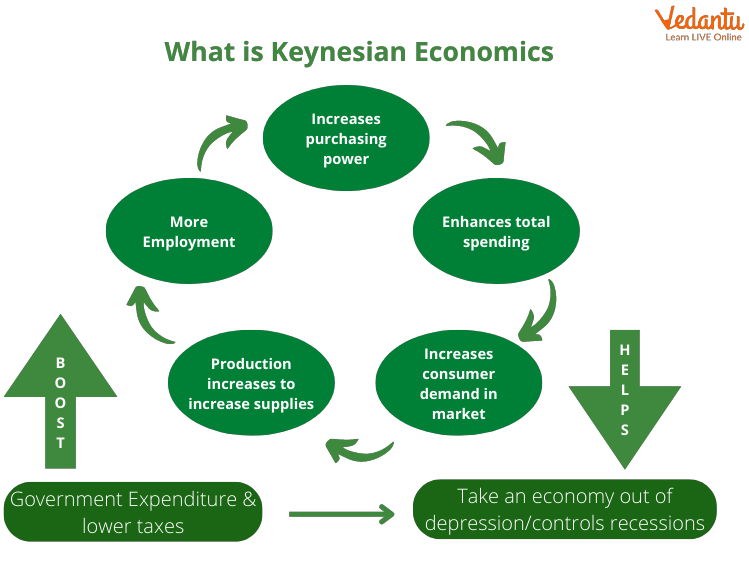
Keynesian economics offers a framework for managing these tech-driven disruptions. When automation leads to widespread job losses in certain sectors, aggregate demand can plummet. In such scenarios, Keynesian principles suggest that governments can step in to stimulate demand through fiscal policy. This could involve investing in new infrastructure that complements emerging technologies, funding retraining programs for displaced workers, or providing targeted income support to maintain consumer spending.
Consider the rise of AI. While AI can automate many tasks, it also creates demand for AI developers, data scientists, and those who can integrate AI into existing businesses. A Keynesian approach would acknowledge the potential for disruption but also advocate for policies that foster the transition. This might include public investment in education and research related to AI, as well as initiatives to support the creation of new industries that leverage AI. The goal is to ensure that the benefits of technological progress are broadly shared and that the economy can adapt without suffering a prolonged slump in aggregate demand.
Furthermore, digital security and productivity tools, while seemingly niche, directly impact business and personal finance, influencing aggregate demand. Increased efficiency through software and gadgets can lead to higher profits and potentially more investment. Conversely, breaches in digital security can lead to significant financial losses, eroding confidence and reducing spending. Keynesian thinking can inform how governments might support cybersecurity initiatives, recognizing their role in maintaining economic stability and consumer confidence.
The Brand Economy and Consumer Confidence
The modern economy is increasingly driven by branding and consumer perception. A strong brand can command premium prices, foster loyalty, and insulate companies from economic downturns. Conversely, a damaged brand can lead to a rapid loss of market share and financial distress.
Keynesian economics places a significant emphasis on consumer confidence. When consumers are optimistic about the future, they are more likely to spend, thus boosting aggregate demand. Branding plays a critical role in shaping this confidence. A well-managed brand that communicates stability, value, and positive future prospects can bolster consumer sentiment, even in uncertain times.
Governments, through Keynesian policies, can indirectly influence brand perception and consumer confidence. For instance, fiscal stimulus packages, if perceived as effective in stabilizing the economy and creating jobs, can restore faith in the future. This renewed confidence can then translate into increased consumer spending, benefiting even those brands that have successfully cultivated trust.
Moreover, the marketing and design sectors, vital for brand building, are themselves contributors to aggregate demand. Investment in these areas, often spurred by economic growth, creates jobs and further stimulates the economy. A Keynesian perspective would recognize the interconnectedness of these seemingly disparate elements, understanding how a robust economy fosters conditions where strong brands can thrive, and how strong brands, in turn, contribute to overall economic health.
Managing Personal and Business Finance in a Keynesian Framework
The realm of “Money” – personal finance, investing, online income, side hustles, business finance, and financial tools – is where Keynesian principles can be most directly applied to individual and corporate decision-making, as well as to government policy.
For businesses, Keynesian thinking can inform strategies for navigating economic cycles. During downturns, the emphasis on maintaining aggregate demand suggests that businesses should focus on retaining customers and investing in areas that can boost future sales once demand recovers. This might involve investing in customer relationship management, developing new product lines that cater to evolving needs, or leveraging digital marketing to reach a wider audience. Business finance, therefore, becomes not just about cost-cutting but about strategically positioning for recovery.
On a personal finance level, the concept of consumer confidence is paramount. While Keynes focused on macro-level demand, the principles extend to individual spending decisions. During economic uncertainty, individuals might shift from discretionary spending to saving, impacting the aggregate demand for non-essential goods and services. Keynesian policies, by aiming to stabilize the overall economy, can provide a more secure environment for individuals to plan their finances, invest, and pursue online income opportunities or side hustles with greater confidence.
Financial tools and online income platforms are modern manifestations of the desire to generate and manage wealth. Keynes would likely see the importance of ensuring access to these tools and opportunities. Government policies, guided by Keynesian principles, might aim to foster an environment where individuals and small businesses can readily access capital, develop new skills, and participate in the digital economy, thereby contributing to overall economic dynamism and demand. The stability offered by thoughtful fiscal management can create the fertile ground for innovation in online income streams and the effective utilization of financial technology.
Criticisms and Enduring Legacy
Despite its significant impact, Keynesian economics has not been without its critics. Some argue that government intervention can lead to inefficiency, misallocation of resources, and an increase in national debt. The stagflation of the 1970s, a period of high inflation and high unemployment, challenged some Keynesian models, leading to the rise of monetarism and supply-side economics.
However, even critics acknowledge the foundational contribution of Keynes in recognizing the limitations of self-regulating markets and the potential for prolonged periods of unemployment. Modern economic policy often incorporates a blend of Keynesian and other theoretical approaches, recognizing that no single economic doctrine holds all the answers.
In conclusion, “What Was Keynesian Economics?” is not just a question about a historical economic theory. It is a gateway to understanding how a revolutionary idea continues to inform our approach to economic challenges. By examining Keynes through the lenses of technology, brand, and money, we can appreciate its enduring relevance in navigating the complexities of the 21st century. His emphasis on aggregate demand, the role of government intervention, and the crucial importance of confidence remains a vital framework for policymakers, businesses, and individuals alike as they strive for economic stability and prosperity in an ever-changing world.
aViewFromTheCave is a participant in the Amazon Services LLC Associates Program, an affiliate advertising program designed to provide a means for sites to earn advertising fees by advertising and linking to Amazon.com. Amazon, the Amazon logo, AmazonSupply, and the AmazonSupply logo are trademarks of Amazon.com, Inc. or its affiliates. As an Amazon Associate we earn affiliate commissions from qualifying purchases.