
The year 1988 serves as a pivotal bridge between the analog past and the digital future. While the decade is often remembered for its neon aesthetics and burgeoning pop culture, 1988 was a powerhouse year for technological milestones. It was a period defined by the rapid scaling of computing power, the birth of foundational software architectures, and the emergence of communication tools that would eventually lay the groundwork for the modern, interconnected world. When we examine the technical landscape of 1988, we find the roots of many tools and systems that remain essential to our digital lives today.
The Birth of Distributed Systems and Internet Protocols
In 1988, the technological world was beginning to grapple with the reality of networked computing. The invention of foundational protocols and the creation of tools meant to manage data across disparate machines were critical to the development of what we now call cloud computing and global digital infrastructure.
The Morris Worm and the Security Awakening
Perhaps the most infamous “invention” of 1988 in the tech sector was not a constructive tool, but the first major computer worm to spread across the internet—the Morris Worm. While it was essentially a piece of self-replicating malware, its release forced the technological community to prioritize digital security in a way it never had before. This event led directly to the creation of the first Computer Emergency Response Team (CERT), fundamentally shifting the industry’s approach to network protection, vulnerability patching, and secure system design. It transformed cybersecurity from an academic concern into an operational necessity.
NetWare 2.15 and Local Area Networking
While the internet was still in its infancy, 1988 was a banner year for local area networking (LAN). Novell launched NetWare 2.15, which solidified the company’s dominance in enterprise networking. This software allowed businesses to connect their desktop computers to shared servers, enabling file sharing and printer resource management. This period marked the beginning of the “Connected Office,” providing the software backbone that allowed companies to move away from isolated silos of information and toward the collaborative, networked environments that define modern business technology.
Evolution of Personal Computing and Software Architectures
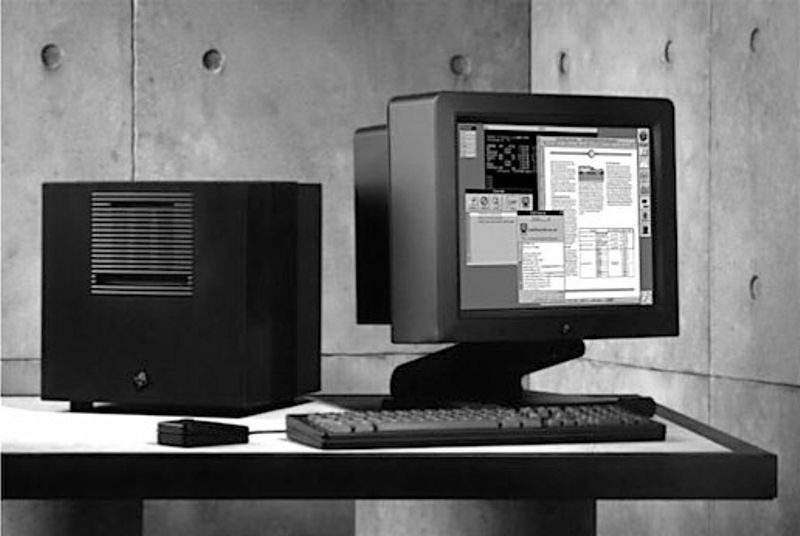
If the early 80s were about bringing the computer into the home, 1988 was about making those computers powerful, usable, and visually sophisticated. The operating systems and software tools introduced during this year bridged the gap between command-line interfaces and the graphical user experiences (GUI) we rely on today.
The Rise of OS/2 and Graphical Evolution
In 1988, IBM and Microsoft were pushing the boundaries of what a PC could do with OS/2 1.1, the first version of the operating system to feature a Graphical User Interface. This was a critical step in the transition away from the text-heavy MS-DOS environment. Although OS/2 would eventually lose the “OS wars” to Windows, its development in 1988 introduced concepts of multitasking, protected memory, and GUI-driven navigation that would heavily influence future iterations of Windows and other graphical platforms. It was a year where software developers realized that the future of computing was visual.

Mathematica and the Computational Renaissance
On the scientific and mathematical side, 1988 saw the official release of Mathematica by Wolfram Research. This was not just another application; it was a fundamental shift in how complex data could be processed, visualized, and computed. Mathematica provided an environment where symbolic mathematics, numerical analysis, and data visualization converged. It became the industry standard for researchers, engineers, and data scientists. By inventing a system that could handle the heavy lifting of complex algebra and calculus, Wolfram paved the way for the algorithmic and data-driven tools that power modern Artificial Intelligence and big data analytics today.
Multimedia and Storage Innovations
The late 1980s were a period of rapid development for hardware that could handle more than just text. As computing became more visual, the need for better storage and specialized processing hardware became apparent, leading to breakthroughs that dictated the next decade of tech development.
The QuickTime Milestone
While Apple’s QuickTime would see its public debut a few years later, the architectural development and the core “invention” of the QuickTime framework took significant strides in 1988. The push to standardize digital video formats allowed computers to begin treating motion media as a first-class citizen rather than a glitchy, unoptimized novelty. This period focused on video compression and playback, which served as the primitive ancestor to modern streaming technologies. Without these foundational efforts to normalize digital video architectures, the high-definition, low-latency streaming culture of the current era would have been impossible.
The Expansion of CD-ROM and Storage
1988 saw the commercial adoption of CD-ROM drives as a viable peripheral for PCs. Before this, software distribution was hampered by the limited capacity of floppy disks. The standardizing of the CD-ROM allowed for the distribution of massive datasets, high-quality audio, and early multimedia experiences. This shift changed the business model of software; it enabled developers to create larger, more immersive applications and games. The ability to store 650MB of data on a single disc was a technological leap that spurred the creation of the first true multimedia software industry, shifting the focus from simple data processing to content-rich, interactive experiences.
The Cultural Shift Toward Tech Ubiquity
The inventions of 1988 were not purely isolated to code and circuits; they reflected a deeper shift in how society viewed the utility of the machine. The tech of 1988 was beginning to serve the needs of the consumer, not just the systems engineer.
Human-Computer Interaction
As the industry moved toward graphical interfaces and networked resources, the field of Human-Computer Interaction (HCI) underwent a massive expansion. 1988 saw the publication of Don Norman’s “The Design of Everyday Things,” a book that, while not a piece of hardware, was an invention in thought that revolutionized the tech industry. It changed how developers and hardware engineers approached product design, emphasizing user-centricity, affordances, and intuitive feedback. This cultural shift in tech development—prioritizing the human experience over technical complexity—remains the gold standard for modern UX/UI design.
The Global Connectivity Outlook
By the end of 1988, the landscape of technology was distinctly different than it had been at the start of the year. The foundations of the World Wide Web were being quietly laid by engineers like Tim Berners-Lee, who was drafting his initial proposals for information management at CERN. The intersection of networking protocols (like those solidified in 1988), the movement toward graphical user interfaces, and the surge in processing power created the perfect environment for the internet explosion that would characterize the early 1990s.
In hindsight, 1988 was the year the tech industry stopped playing with toys and started building an empire. From the necessity of cybersecurity born of the Morris Worm to the computational sophistication of Mathematica and the architectural advancements of OS/2, the year acted as an incubator for the digital tools we rely on today. Whether it was through the democratization of data via CD-ROMs or the fundamental shift in designing interfaces for humans rather than programmers, the advancements of 1988 were the essential precursors to our modern, always-connected world. The technological legacy of 1988 is not found in a single, shiny product, but in the structural integrity of the software and networking paradigms that continue to define the digital age.
aViewFromTheCave is a participant in the Amazon Services LLC Associates Program, an affiliate advertising program designed to provide a means for sites to earn advertising fees by advertising and linking to Amazon.com. Amazon, the Amazon logo, AmazonSupply, and the AmazonSupply logo are trademarks of Amazon.com, Inc. or its affiliates. As an Amazon Associate we earn affiliate commissions from qualifying purchases.