
In the contemporary landscape of global business, few names carry as much weight, controversy, and “brand equity” as Elon Musk. While he is often discussed through the lens of his net worth or his disruptive technological ventures, the foundation of the “Musk Brand” was laid long before the first Tesla rolled off the assembly line or the first Falcon 1 reached orbit. To understand the architect of SpaceX and the owner of X, one must look at the strategic academic path he navigated.
The question “What university did Elon Musk go to?” is not merely a request for a resume highlight; it is an inquiry into the origins of a personal brand built on the pillars of polymathic expertise, Ivy League credibility, and the calculated rebellion of the “Silicon Valley Dropout.” By examining his time at Queen’s University, the University of Pennsylvania, and his brief stint at Stanford, we can decode how his educational choices served as the ultimate launchpad for a personal brand that now defines the modern era of entrepreneurship.
The Formative Years: Queen’s University and the Strategy of Geographic Positioning
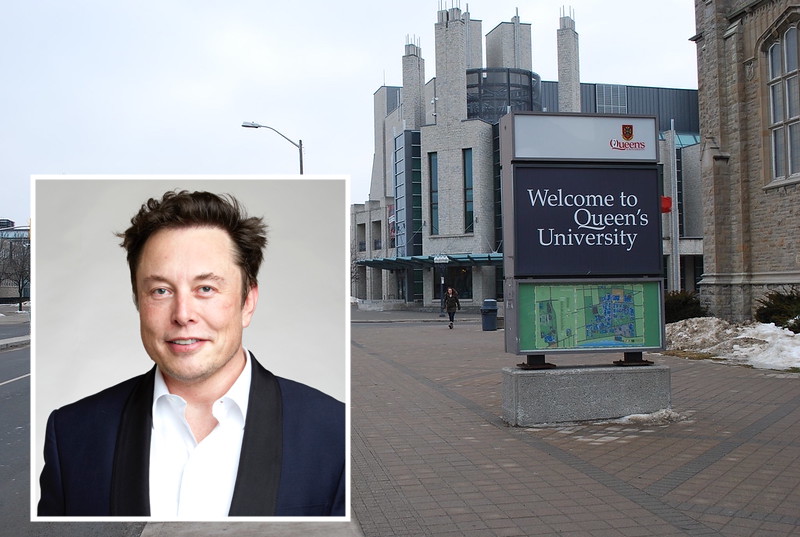
Before becoming a fixture of American industry, Elon Musk’s academic journey began in Kingston, Ontario, at Queen’s University. This move was the first major strategic pivot in his personal brand—a shift from a South African upbringing to a North American trajectory.
The Leap to Canada: More Than Just a Degree
For Musk, Queen’s University represented a bridge. Born and raised in Pretoria, South Africa, Musk realized early on that the epicenter of the world he wanted to build was the United States. However, obtaining a direct visa was difficult. By leveraging his mother’s Canadian citizenship, he secured a Canadian passport and enrolled at Queen’s in 1989.
From a branding perspective, this move signaled “global mobility.” It established Musk as an outsider willing to relocate across continents to find the right environment for growth. At Queen’s, Musk wasn’t just studying; he was immersing himself in a North American cultural context that would later allow him to pitch to Silicon Valley VCs with the fluency of a local but the grit of an immigrant.
Cultivating the Intellectual Outsider Identity
During his two years at Queen’s, Musk was known for being intensely competitive and academically focused. This period helped cement the “lone genius” aspect of his brand. He wasn’t there for the social prestige of a Canadian school; he was there to acquire the tools necessary for his next leap. The “Queen’s era” serves as the prologue to his brand story—the chapter that demonstrates his willingness to take the unconventional path to reach the ultimate goal.
The Wharton Influence: Bridging the Gap Between Physics and Finance
In 1992, Musk transferred to the University of Pennsylvania (UPenn), a move that fundamentally altered his brand trajectory. If Queen’s was the bridge, UPenn was the forge where his dual-identity as both a scientist and a businessman was hammered into shape.
The Double-Major Strategy: Economics and Physics
At UPenn, Musk didn’t settle for a singular focus. He pursued a Bachelor of Science in Physics from the College of Arts and Sciences and a Bachelor of Science in Economics from the Wharton School. This dual degree is the cornerstone of his brand authority.
In the branding world, “authority” is often built on the intersection of two disparate fields. By mastering both physics and economics, Musk positioned himself as a rare breed: an entrepreneur who understands the fundamental laws of the universe and the fundamental laws of the market. This allows the Musk brand to transcend the typical “CEO” archetype. When he speaks about rocket telemetry, his physics degree grants him “Technical Credibility.” When he speaks about manufacturing scale and market disruption, his Wharton pedigree grants him “Financial Credibility.”
Ivy League Credibility and the Power of the Alumni Network
Wharton is one of the most prestigious business schools in the world. For a young entrepreneur, this affiliation is a powerful brand signal. It tells investors, “I have been vetted by one of the most rigorous institutions on the planet.” The UPenn years provided Musk with more than just knowledge; they provided him with a “prestige shield.” In the early days of Zip2 and PayPal, having “Wharton” on his CV acted as a trust signal for venture capitalists who might otherwise have been wary of a young, eccentric founder.

The Stanford Departure: The Brand of the Visionary Dropout
Perhaps the most famous chapter of Musk’s academic career is the one that barely happened. In 1995, Musk moved to California to begin a Ph.D. program at Stanford University in materials science and applied physics. He dropped out after just two days.
Two Days at Stanford: Prioritizing Momentum Over Credentials
The decision to leave Stanford to start his first company, Zip2, is a masterclass in “Momentum Branding.” By quitting a prestigious Ph.D. program at the dawn of the internet boom, Musk aligned himself with the narrative of the “Visionary Dropout”—a trope shared by icons like Bill Gates and Steve Jobs.
This move sent a clear message: “The future is happening now, and academia is too slow to keep up.” For his personal brand, this was a pivot from “Student” to “Disruptor.” It suggested that his ideas were so urgent and his foresight so keen that even a Stanford doctorate was a distraction. This “impatient visionary” persona remains a core element of his brand today, seen in his aggressive timelines for Mars colonization and autonomous driving.
The “Silicon Valley Rebel” Narrative
Dropping out of Stanford allowed Musk to integrate himself into the burgeoning culture of Silicon Valley during the dot-com era. He traded the safety of an academic career for the high-stakes world of tech startups. This risk-taking behavior is essential to his brand identity. It creates a narrative of “Skin in the Game,” where the founder is willing to sacrifice everything—including a blue-chip education—to pursue a world-changing idea.
Education as a Brand Pillar: How Musk’s Academic Background Shapes His Corporate Identity
Elon Musk’s university choices do more than just fill space on his LinkedIn profile; they dictate the “logic” of his companies. His brands (Tesla, SpaceX, Neuralink) are all reflections of his academic foundations.
First Principles Thinking: The Physics Brand
Musk frequently cites “First Principles Thinking” as his primary tool for problem-solving. This is a direct export from his physics education. By branding his decision-making process as “Physics-based,” he differentiates himself from other CEOs who rely on “analogy” or “market trends.”
This has profound implications for his corporate brands. SpaceX is branded not just as a rocket company, but as a “physics company” solving the cost of escape velocity. Tesla is branded as an “energy and engineering company” solving the thermodynamics of battery storage. By anchoring his brand in the “hard truth” of physics, Musk makes his business goals seem like scientific inevitabilities rather than mere commercial gambles.
Attracting Top Talent Through Intellectual Authority
A leader’s brand is their most potent recruiting tool. Because Musk has the academic background to “speak the language” of the world’s best engineers, he has been able to build a brand that attracts elite talent. Engineers want to work for someone who understands the technical nuances of their work. Musk’s degrees from UPenn and his (brief) acceptance into Stanford provide him with the “Intellectual Street Cred” necessary to lead organizations where the product is deep-tech.
Conclusion: The Strategic Value of the Musk Pedigree
So, what university did Elon Musk go to? He went to the institutions that would provide him with the highest possible “Brand ROI.”
From Queen’s University, he gained a foothold in North America.
From the University of Pennsylvania and Wharton, he gained the rare “Double-Threat” credibility of a physicist-economist.
From Stanford, he gained the ultimate “Disruptor” badge by choosing the world over the classroom.
Musk’s academic journey is a reminder that in the world of personal branding, your education is not just about what you learn; it is about the story you tell. By strategically navigating these institutions, Musk built a brand that is simultaneously elite and rebellious, scientific and commercial. It is a blueprint that has allowed him to transition from a student in Ontario to a global figure who, for better or worse, is rewriting the rules of the 21st century. Through the lens of brand strategy, his university years weren’t just a time for study—they were the initial stages of building the most powerful personal brand on Earth.
aViewFromTheCave is a participant in the Amazon Services LLC Associates Program, an affiliate advertising program designed to provide a means for sites to earn advertising fees by advertising and linking to Amazon.com. Amazon, the Amazon logo, AmazonSupply, and the AmazonSupply logo are trademarks of Amazon.com, Inc. or its affiliates. As an Amazon Associate we earn affiliate commissions from qualifying purchases.