
In the realm of modern technology, gravity is no longer just a concept reserved for high school physics textbooks or celestial mechanics. It has become a critical data point that informs the development of everything from the smartphone in your pocket to the autonomous drones navigating our skies. To understand how tech developers and engineers harness this fundamental force, we must first answer a foundational question: what units is gravity measured in? More importantly, we must explore how these units are integrated into the hardware and software that define the digital age.
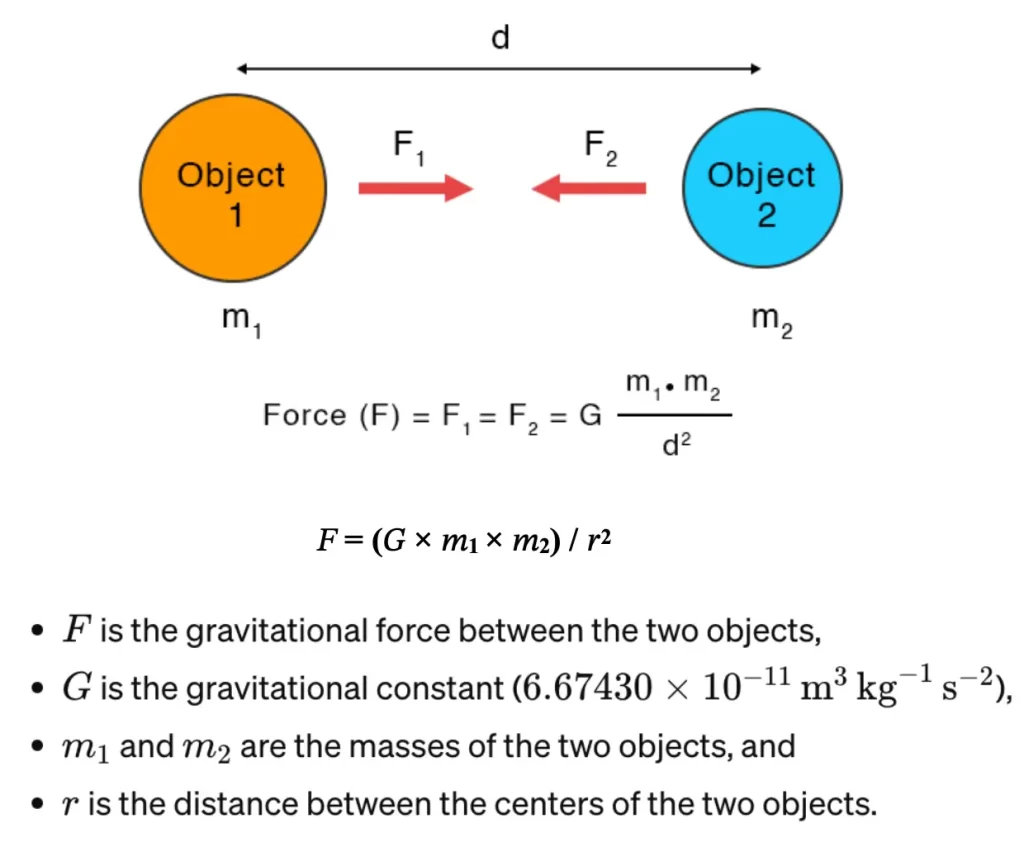
From the Micro-Electro-Mechanical Systems (MEMS) that detect a screen rotation to the sophisticated algorithms powering virtual reality, gravity measurement is a cornerstone of the tech industry. This article explores the specific units used to quantify gravity and the innovative technologies that rely on these measurements to function.
Understanding the Fundamental Units of Gravity in Engineering
Before diving into the hardware, it is essential to establish the mathematical language used by engineers and software developers. Gravity is essentially an acceleration, and the units used to measure it depend on the precision required by the specific technological application.
The SI Standard and Precise Acceleration (m/s²)
The most common unit for gravity is meters per second squared (m/s²). In the context of technology—specifically in software development for physics engines—this is the standard unit. On Earth, the standard gravity is approximately 9.80665 m/s².
In the development of apps and software, particularly those involving motion tracking, this value acts as a constant “downward” vector. Developers using engines like Unity or Unreal Engine utilize m/s² to ensure that digital objects fall with the same realism as physical ones. When tech companies calibrate sensors, they use this SI unit to ensure that the device’s software can differentiate between a user’s intentional movement and the constant pull of the Earth.
The Gal and Gravimetry in Geotech
While m/s² is common for general tech, the “Gal” (named after Galileo Galilei) is the unit of choice for high-precision gravimetry. One Gal is defined as 1 centimeter per second squared (1 cm/s²). In the tech sector, specifically within the “Geotech” or “Deep Tech” niches, gravity is often measured in milligals (mGal).
This level of precision is used in hardware designed for mineral exploration, oil and gas surveys, and even climate monitoring via satellite. Tech firms like those developing the GRACE (Gravity Recovery and Climate Experiment) satellites utilize these units to detect minute shifts in Earth’s mass, allowing AI models to predict groundwater depletion and ice sheet melting with unprecedented accuracy.
G-Force: The Tech Industry’s Metric for Performance
The “G” is perhaps the most recognizable unit in consumer electronics and automotive tech. One G represents the acceleration due to gravity at the Earth’s surface. It is a non-SI unit used to describe the magnitude of acceleration relative to standard gravity.
In the world of wearable technology and “health-tech,” G-force is a vital metric. Smartwatches and fall-detection algorithms in gadgets like the Apple Watch or Garmin devices measure rapid changes in G-force to trigger emergency SOS alerts. For instance, a sudden spike followed by a period of immobility allows the device’s software to infer a physical accident, demonstrating how a simple unit of measurement becomes a life-saving digital tool.
Sensors and Gadgets: How Tech Measures Gravity in Your Pocket
The transition from theoretical units to practical application happens through sensors. Today, gravity measurement is a silent feature of almost every mobile gadget, enabled by sophisticated hardware that bridges the gap between physics and software.
MEMS Accelerometers: The Unsung Heroes of Smartphones
If you have ever tilted your phone to play a racing game or watched your screen flip from portrait to landscape, you have interacted with a MEMS (Micro-Electro-Mechanical Systems) accelerometer. These are tiny silicon structures etched into a circuit board, measuring gravity in m/s² or G-units.
These sensors work by measuring the displacement of a microscopic mass attached to springs. When the device moves or changes orientation relative to the Earth’s gravitational field, the capacitance of the system changes. This change is converted into a digital signal that the operating system (iOS or Android) processes. The “tech” here lies in the miniaturization; what used to require a desktop-sized instrument is now a chip smaller than a grain of rice.
Inertial Measurement Units (IMUs) in Robotics and Drones
While a single accelerometer can measure gravity, advanced robotics and drones use an Inertial Measurement Unit (IMU). An IMU combines accelerometers (to measure gravity and linear motion) with gyroscopes and sometimes magnetometers.
In the drone industry, gravity measurement is critical for flight stability. A drone’s flight controller constantly monitors the “gravity vector” to maintain a level hover. If the drone tilts due to wind, the IMU detects the change in the direction of the gravitational pull relative to the drone’s body. The software then recalculates the RPM of the motors in real-time to counteract the tilt. Here, the units of gravity are processed at thousands of cycles per second to ensure stable flight.
Gravity in the Digital Realm: Physics Engines and AI Simulations
Measurement is only the first step. In the world of software development and Artificial Intelligence, gravity is a variable that must be simulated within digital environments to create “digital twins” or immersive experiences.
Modeling Gravity in Real-Time 3D Environments
For developers working in Augmented Reality (AR) and Virtual Reality (VR), gravity is a core component of the user experience. In platforms like Meta’s Horizon Worlds or specialized industrial VR training software, gravity must be defined in precise units to prevent “simulator sickness.”
If the digital gravity (measured in m/s²) does not match the user’s real-world expectation, the brain experiences a disconnect. Developers use “gravity compensation” algorithms to ensure that virtual objects interact with the environment realistically. This requires high-fidelity software that can calculate the gravitational influence on thousands of polygons simultaneously, a feat made possible by modern GPU (Graphics Processing Unit) acceleration.
AI-Driven Predictive Maintenance and Gravimetric Analysis
In the industrial IoT (Internet of Things) sector, gravity measurement units are used in AI models for predictive maintenance. High-tech machinery, such as turbines or large-scale manufacturing arms, utilize sensors to monitor their center of gravity.
If a machine begins to vibrate or tilt, the shift in gravitational force (measured in milli-Gs) is detected by sensors and sent to a cloud-based AI tool. The AI analyzes these trends to predict when a component might fail. By understanding the “normal” gravitational baseline of a machine, software can identify anomalies long before they result in a mechanical breakdown, saving companies millions in repair costs.
Precision Tech and the Future of Gravitational Wave Measurement
As we look toward the future, the technology used to measure gravity is moving beyond Earth-bound sensors and into the realm of quantum computing and space-age interferometry.
Laser Interferometry: Measuring Gravity at the Quantum Level
The most advanced “tech” for measuring gravity today is found in facilities like LIGO (Laser Interferometer Gravitational-Wave Observatory). Here, gravity isn’t just measured as a downward pull but as a wave that stretches and squeezes space-time itself.
The units here are incredibly small—measuring changes in distance a thousand times smaller than a proton. This involves high-end software capable of filtering out “noise” (like a truck driving miles away) to find the signal of a gravitational wave. The technology developed for these experiments often trickles down into consumer tech, particularly in the fields of ultra-precise optics and vibration isolation.
The Role of Gravity in Autonomous Navigation
The next frontier for gravity measurement is in the development of “Gravity Maps” for autonomous navigation. In environments where GPS signals are blocked—such as underwater or in deep urban canyons—tech companies are looking at using gravimeters to navigate.
Every point on Earth has a slightly different gravitational signature due to the density of the ground beneath it. By measuring these minute differences in “G,” an autonomous vehicle can compare its readings to a high-resolution gravity map to determine its location without needing a satellite signal. This “Quantum Positioning System” is currently a major focus for defense tech and high-end AI research labs.
Conclusion: The Weight of Innovation
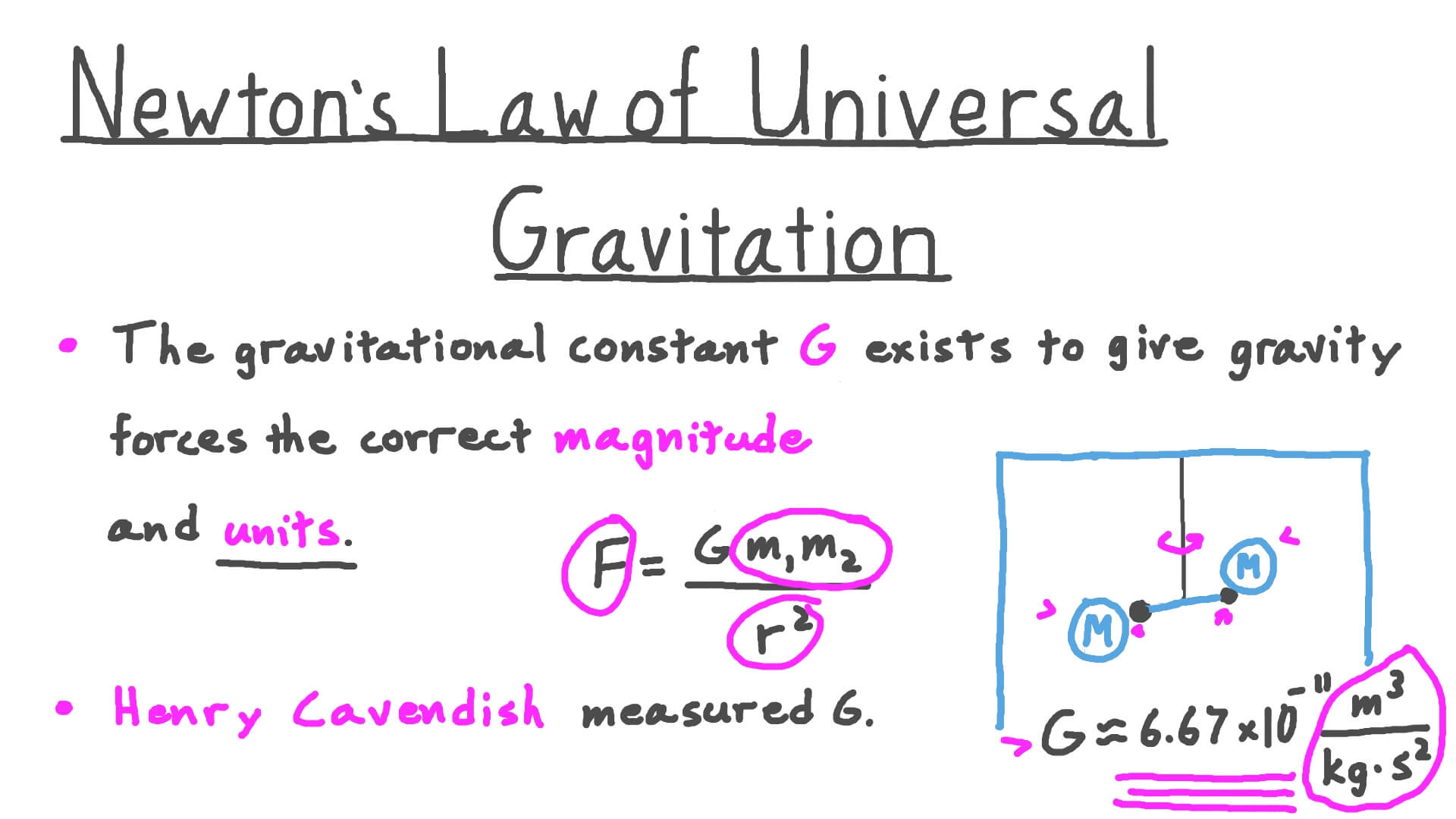
Understanding what units gravity is measured in is the first step in appreciating the complexity of the technology we use every day. Whether it is expressed in m/s² for a physics engine, G-force for a fitness tracker, or milligals for geological surveys, gravity is a vital metric that fuels innovation.
As sensors become more sensitive and AI becomes more capable of processing complex physical data, our ability to measure and manipulate our understanding of gravity will only grow. From the gadgets in our pockets to the satellites orbiting our planet, the measurement of this invisible force remains one of the most significant achievements of modern technology. By bridging the gap between classical physics and digital software, tech developers continue to prove that even a force as old as the universe can be quantified, coded, and mastered for the digital age.
aViewFromTheCave is a participant in the Amazon Services LLC Associates Program, an affiliate advertising program designed to provide a means for sites to earn advertising fees by advertising and linking to Amazon.com. Amazon, the Amazon logo, AmazonSupply, and the AmazonSupply logo are trademarks of Amazon.com, Inc. or its affiliates. As an Amazon Associate we earn affiliate commissions from qualifying purchases.