
Navigating the landscape of homeownership often begins with a fundamental understanding of mortgage loans. For many, a mortgage represents the largest financial commitment they will ever undertake, making the choice of loan type a critical decision with long-lasting implications for their financial health. Beyond simply securing a loan, selecting the right mortgage involves a careful assessment of interest rates, payment structures, eligibility requirements, and personal financial goals. This comprehensive guide will demystify the various mortgage options available, offering insights to help prospective homebuyers make informed choices.
Understanding the Fundamentals: Fixed vs. Adjustable Rates
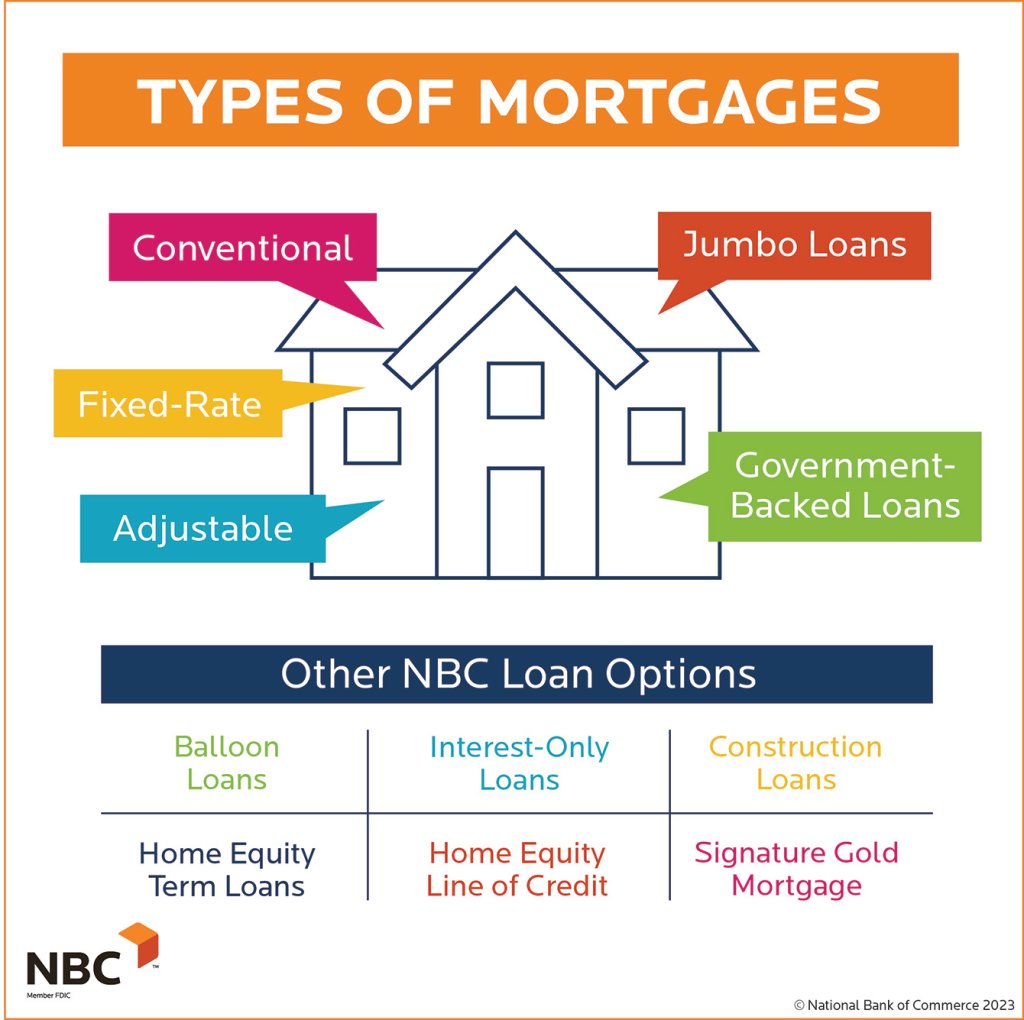
At the heart of mortgage loan differentiation lies the mechanism by which interest rates are applied: fixed or adjustable. This core distinction dictates the stability and predictability of your monthly payments over the loan’s lifetime.
Fixed-Rate Mortgages: Stability and Predictability
A fixed-rate mortgage is perhaps the most straightforward and popular loan type, renowned for its consistent interest rate throughout the entire loan term. This means your principal and interest payment remains the same from your first payment to your last, regardless of market fluctuations.
Key Characteristics:
- Predictable Payments: Borrowers benefit from knowing exactly what their principal and interest portion of their mortgage payment will be each month, making budgeting significantly easier.
- Protection from Rising Rates: If market interest rates increase, your rate remains fixed, shielding you from higher payments.
- Common Terms: Fixed-rate mortgages are most commonly offered in 15-year and 30-year terms, though other durations exist. Shorter terms typically come with lower interest rates but higher monthly payments, leading to quicker equity build-up and less interest paid over the life of the loan.
Who It’s Best For:
Fixed-rate mortgages are ideal for borrowers who value stability, plan to stay in their home for an extended period (5+ years), and prefer predictable monthly expenses. They are particularly attractive when interest rates are low, allowing borrowers to lock in a favorable rate for decades.
Adjustable-Rate Mortgages (ARMs): Flexibility with Calculated Risk
In contrast to fixed-rate options, an Adjustable-Rate Mortgage (ARM) features an interest rate that can change periodically based on a predetermined index, such as the Secured Overnight Financing Rate (SOFR) or the London Interbank Offered Rate (LIBOR – though largely phased out).
Key Characteristics:
- Initial Fixed Period: ARMs typically begin with an initial period where the interest rate is fixed (e.g., 3, 5, 7, or 10 years). This period is often referred to by the notation 5/1 ARM, 7/1 ARM, etc., where the first number denotes the fixed-rate period and the second number indicates how frequently the rate adjusts thereafter (e.g., annually).
- Rate Adjustments: After the initial fixed period, the interest rate adjusts at regular intervals, typically once a year. These adjustments are influenced by market conditions and are subject to caps (periodic caps and lifetime caps) that limit how much the rate can increase or decrease.
- Potentially Lower Initial Rates: ARMs often offer lower initial interest rates compared to fixed-rate mortgages, making them attractive for those looking for lower initial monthly payments.
Who It’s Best For:
ARMs can be suitable for borrowers who anticipate selling or refinancing their home before the fixed-rate period expires, or those who expect their income to increase significantly in the future, allowing them to absorb potential payment hikes. They can also be a strategic choice when current interest rates are high, with the expectation that rates will fall during the adjustable period. However, they carry the risk of increased monthly payments if rates rise.
Government-Backed Mortgages: Specialized Support for Homebuyers
Beyond conventional options, several government agencies offer specialized mortgage programs designed to make homeownership more accessible to specific groups or in certain circumstances. These loans come with unique benefits and eligibility criteria, often providing more lenient qualification standards than conventional loans.
FHA Loans: Making Homeownership Accessible
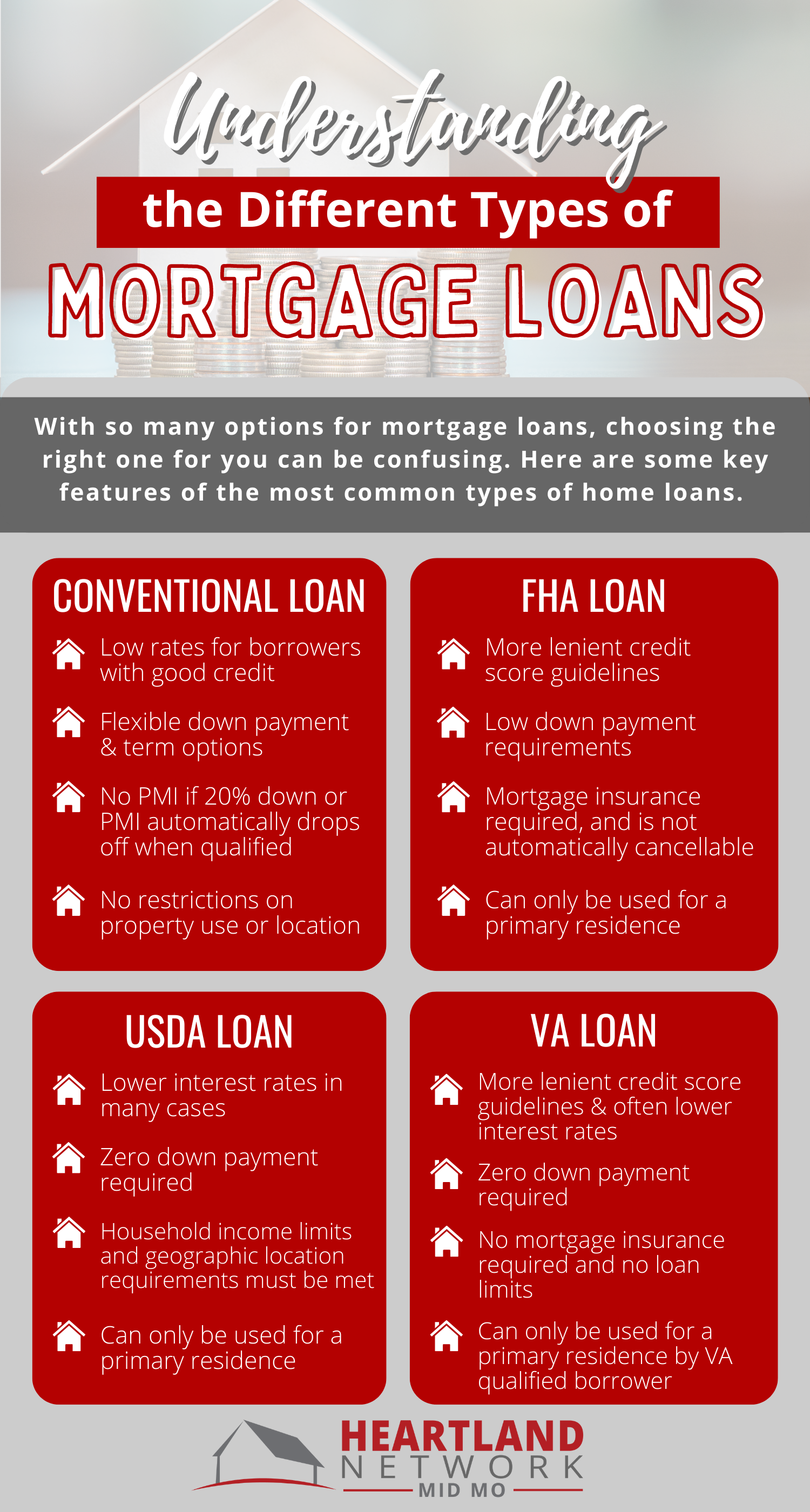
Backed by the Federal Housing Administration (FHA), these loans are popular for first-time homebuyers or those with less-than-perfect credit scores. FHA loans are insured by the government, reducing the risk for lenders and allowing them to offer more favorable terms.
Key Characteristics:
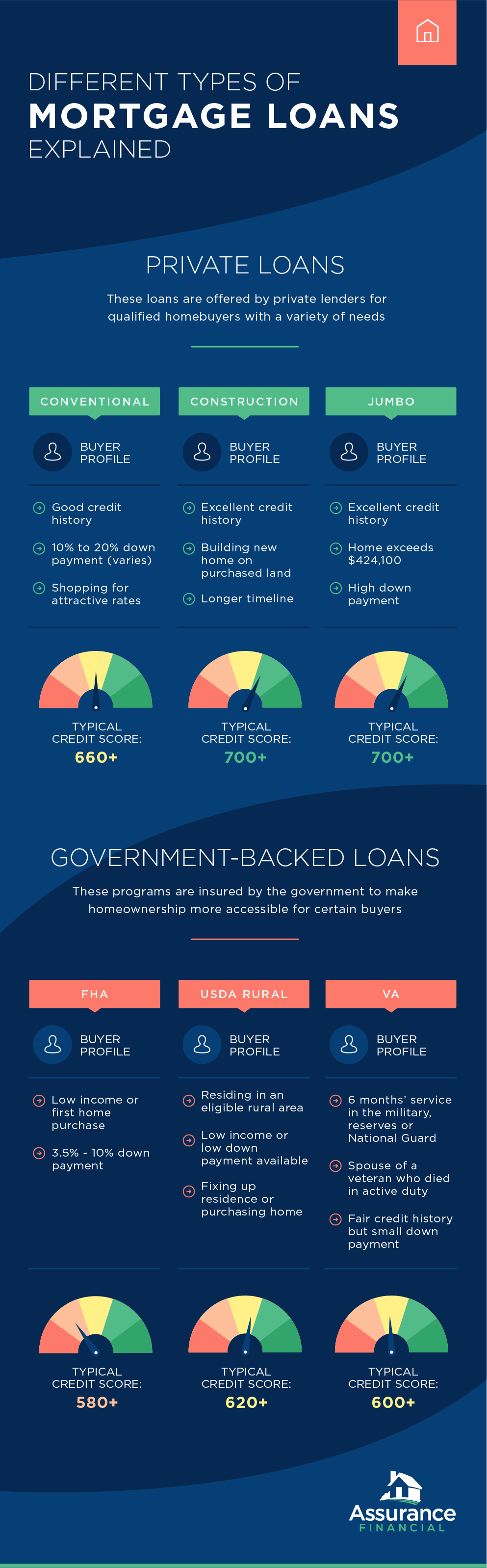
- Lower Down Payments: As little as 3.5% down payment, making them accessible for buyers with limited savings.
- Lenient Credit Requirements: FHA loans typically have more flexible credit score requirements compared to conventional loans.
- Mortgage Insurance Premium (MIP): All FHA loans require both an upfront MIP and an annual MIP (paid monthly), which adds to the overall cost but protects the lender.
- Property Requirements: Properties must meet certain FHA appraisal standards to ensure they are safe, sound, and secure.
Who It’s Best For:
FHA loans are ideal for first-time homebuyers, individuals with lower credit scores (though scores under 580 may require a higher down payment), or those with limited funds for a down payment.
VA Loans: Honoring Service Members and Veterans
Guaranteed by the U.S. Department of Veterans Affairs (VA), VA loans are an incredible benefit for eligible service members, veterans, and surviving spouses. These loans are designed to help those who have served our country achieve homeownership.
Key Characteristics:
- No Down Payment Required: One of the most significant advantages, allowing eligible borrowers to finance 100% of the home’s value.
- No Private Mortgage Insurance (PMI): Unlike FHA or conventional loans with low down payments, VA loans do not require PMI, leading to lower monthly payments.
- Competitive Interest Rates: VA loans often boast some of the lowest interest rates available.
- VA Funding Fee: Most VA loans require a funding fee, which can be financed into the loan, though some veterans with service-connected disabilities are exempt.
Who It’s Best For:
VA loans are an unparalleled benefit for eligible military personnel, veterans, and their spouses, offering substantial savings and more flexible qualification criteria than other loan types.
USDA Loans: Empowering Rural Homeownership
The U.S. Department of Agriculture (USDA) offers mortgage programs aimed at promoting homeownership in designated rural and suburban areas. These loans are designed to assist low-to-moderate-income individuals and families.
Key Characteristics:
- No Down Payment: Like VA loans, eligible borrowers can often purchase a home with no money down.
- Income Limits: Eligibility is subject to specific income limitations based on the area and family size.
- Property Location Restrictions: The property must be located in an eligible rural area as defined by the USDA.
- Guarantee Fee: USDA loans require both an upfront guarantee fee and an annual guarantee fee, similar to FHA’s MIP.
Who It’s Best For:
USDA loans are an excellent option for low-to-moderate-income homebuyers looking to purchase a home in qualifying rural or suburban areas who may have difficulty saving for a down payment.
Conventional and Non-Conforming Loans: Navigating the Broader Market
Beyond the government-backed options, the majority of mortgages fall into the conventional category, which can then be further subdivided based on the loan amount.
Conventional Loans: The Most Common Path
Conventional loans are not insured or guaranteed by the government. Instead, they are typically backed by private lenders and are compliant with the loan limits and guidelines set by government-sponsored enterprises (GSEs) like Fannie Mae and Freddie Mac.
Key Characteristics:
- Varying Down Payments: Down payment requirements can range from as low as 3% (for qualified borrowers) to 20% or more.
- Private Mortgage Insurance (PMI): If you put down less than 20% on a conventional loan, you will typically be required to pay PMI, which protects the lender. PMI can often be canceled once you reach 20% equity in your home.
- Stricter Credit Requirements: Generally, conventional loans require higher credit scores and lower debt-to-income ratios compared to government-backed options.
- Loan Limits: There are annual “conforming loan limits” that determine the maximum loan amount for a conventional loan. Loans above these limits are considered “non-conforming.”
Who It’s Best For:
Conventional loans are suitable for borrowers with strong credit scores, stable income, and sufficient funds for a down payment. They offer flexibility in terms and are often preferred by those who can meet the 20% down payment threshold to avoid PMI.
Jumbo Loans: Financing High-Value Properties
Jumbo loans are a type of conventional loan that exceeds the conforming loan limits set by Fannie Mae and Freddie Mac. These are used to finance luxury homes or properties in high-cost real estate markets.
Key Characteristics:
- Higher Loan Amounts: Designed for loans that are above the conventional loan limit in a particular area.
- Stricter Qualification: Lenders typically impose more rigorous qualification standards due to the larger loan amount. This often includes higher credit score requirements, lower debt-to-income ratios, and larger cash reserves.
- Larger Down Payments: Often require higher down payments, typically 10-20% or more.
- Potentially Higher Interest Rates: Interest rates for jumbo loans can sometimes be slightly higher than conforming loans due to the increased risk for lenders, though this can fluctuate with market conditions.
Who It’s Best For:
Jumbo loans are for affluent borrowers with excellent credit and substantial assets who are looking to purchase high-value properties that exceed conventional loan limits.
Less Common and Specialized Mortgage Options
While the aforementioned categories cover the vast majority of mortgage transactions, there are several other specialized options designed for niche financial situations.
Interest-Only Mortgages: Short-Term Lower Payments
An interest-only mortgage allows borrowers to pay only the interest on the loan for an initial period (e.g., 5-10 years). During this time, the principal balance does not decrease. After the interest-only period, payments increase significantly to cover both principal and interest, amortizing the remaining loan balance over the remaining term.
Key Characteristics:
- Lower Initial Payments: The primary appeal is significantly lower monthly payments during the interest-only phase.
- Principal Remains Untouched: No equity is built through payments during the interest-only period; equity growth relies solely on property appreciation.
- Payment Shock Risk: Payments can dramatically increase after the interest-only period, potentially leading to financial strain if not carefully planned.
Who It’s Best For:
These loans are typically suited for sophisticated borrowers with fluctuating incomes (e.g., commission-based), those who anticipate a large influx of cash in the near future, or real estate investors looking to maximize cash flow on a property for a short period before selling or refinancing. They carry significant risk if not managed prudently.
Balloon Mortgages: A Lump Sum Payment at the End
A balloon mortgage is characterized by smaller monthly payments for a fixed period (e.g., 5-7 years), followed by a single, large lump-sum payment (the “balloon” payment) for the remaining principal at the end of the term.
Key Characteristics:
- Short Term, Large Final Payment: Offers low initial payments but requires a substantial payment at the loan’s maturity.
- Refinancing Expectation: Borrowers typically plan to sell the home or refinance the loan before the balloon payment is due.
- Risk of Non-Payment: If a borrower cannot make the balloon payment or refinance, they risk foreclosure.
Who It’s Best For:
Balloon mortgages are niche products, often used by real estate investors or those who are absolutely certain they will sell or refinance the property within the short loan term. They are generally considered high-risk for primary residences.
Reverse Mortgages: Unlocking Home Equity for Seniors
A reverse mortgage allows homeowners aged 62 or older to convert a portion of their home equity into cash without having to sell their home or make monthly mortgage payments. The loan becomes due when the last borrower leaves the home permanently (e.g., sells, moves, or passes away).
Key Characteristics:
- No Monthly Payments: Borrowers receive payments from the lender (or take a lump sum) and do not make monthly mortgage payments (though they are still responsible for property taxes, homeowner’s insurance, and home maintenance).
- Age Requirement: All borrowers must be at least 62 years old.
- Equity Conversion: Converts home equity into tax-free cash, which can be used for any purpose.
- Non-Recourse Loan: The borrower or their heirs will never owe more than the home’s value, even if the loan balance exceeds it.
Who It’s Best For:
Reverse mortgages are designed for seniors who own their homes outright or have significant equity and wish to supplement their income, cover living expenses, or pay off existing debts without selling their primary residence.
Choosing the Right Mortgage for Your Financial Journey
The sheer variety of mortgage loans available can seem daunting, but it also means there’s likely an option perfectly suited to your unique financial situation and homeownership goals. The key is to approach the decision strategically and thoughtfully.
Assessing Your Financial Health and Risk Tolerance
Before diving into specific loan products, take an honest inventory of your financial standing. Consider:
- Credit Score: A higher credit score generally opens doors to more favorable interest rates and loan terms.
- Income Stability: Do you have a steady, predictable income, or is it variable? This impacts your ability to manage different payment structures.
- Savings for Down Payment and Closing Costs: The amount you can put down significantly affects your loan options and whether you’ll pay PMI.
- Debt-to-Income Ratio (DTI): Your total monthly debt obligations relative to your gross monthly income is a critical factor lenders assess.
- Long-Term Plans: How long do you plan to stay in the home? This is crucial for deciding between fixed and adjustable rates.
- Risk Tolerance: Are you comfortable with the uncertainty of an ARM, or do you prioritize the predictability of a fixed-rate loan?
The Importance of Comparison Shopping and Professional Advice
Once you have a clear picture of your financial profile, it’s essential to:
- Shop Around: Obtain quotes from multiple lenders (banks, credit unions, mortgage brokers) for various loan types. Rates and fees can vary significantly.
- Understand the Full Cost: Look beyond just the interest rate. Consider the Annual Percentage Rate (APR), which includes fees and other costs, to get a more accurate picture of the total cost of the loan.
- Read the Fine Print: Pay close attention to loan terms, prepayment penalties, escrow requirements, and any other clauses.
- Consult a Financial Advisor: A qualified financial advisor or mortgage professional can provide personalized guidance, helping you weigh the pros and cons of each loan type in the context of your specific financial situation and long-term objectives.
Choosing a mortgage is not merely about finding the lowest interest rate; it’s about securing a financial product that aligns with your present capabilities and future aspirations. By understanding the diverse landscape of mortgage loans and engaging in thorough due diligence, you can confidently select the path that leads to a stable and fulfilling homeownership experience.
aViewFromTheCave is a participant in the Amazon Services LLC Associates Program, an affiliate advertising program designed to provide a means for sites to earn advertising fees by advertising and linking to Amazon.com. Amazon, the Amazon logo, AmazonSupply, and the AmazonSupply logo are trademarks of Amazon.com, Inc. or its affiliates. As an Amazon Associate we earn affiliate commissions from qualifying purchases.