
Wind energy is fundamentally the transformation of kinetic energy—the energy of motion—into a usable form of power. While humans have captured this energy for millennia via simple sails and windmills, the modern technological era has redefined wind as a cornerstone of the global “Clean Tech” revolution. To understand what type of energy wind is in a technical context, one must look beyond the moving air and analyze the sophisticated hardware and software systems that capture, convert, and distribute this atmospheric force.
The Physics of Motion: Understanding Wind as Kinetic Energy
At its most basic level, wind is a form of solar energy. It is created by the uneven heating of the Earth’s atmosphere by the sun, the irregularities of the Earth’s surface, and the rotation of the planet. From a technological perspective, engineers view wind as a stream of kinetic energy that must be harvested with maximum efficiency.
From Atmospheric Pressure to Rotational Force
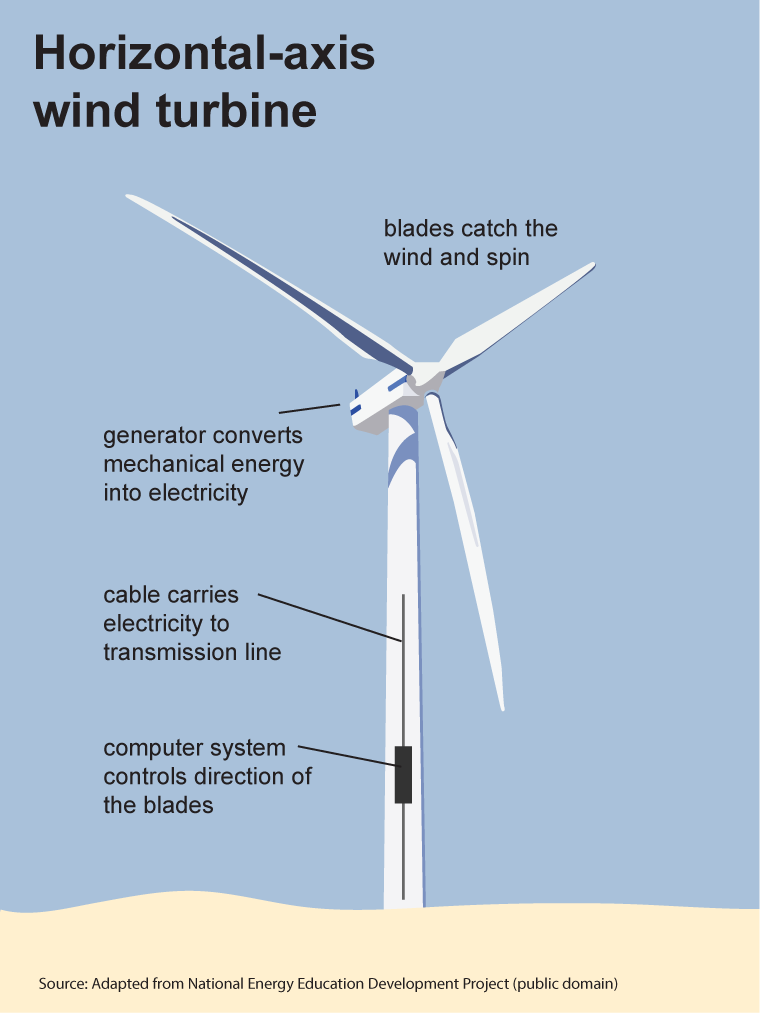
The conversion process begins when the kinetic energy of the wind hits the rotor blades of a turbine. This is where fluid dynamics and aerospace engineering take center stage. Modern turbine blades are designed using the same principles of lift that allow airplanes to fly. As wind flows over the curved surface of the blade, it creates a pocket of low-pressure air on one side. This pressure differential pulls the blade toward the low-pressure area, creating lift. This lift is then converted into a rotational force (torque) that turns the main shaft of the turbine.
The Role of Aerodynamics in Energy Capture
Technological advancements in computational fluid dynamics (CFD) have allowed engineers to optimize blade geometry to an extreme degree. It isn’t just about “catching” the wind anymore; it is about managing the boundary layer of air and reducing turbulence. Innovations such as “winglets”—small upturned tips on the end of blades—reduce drag and increase the energy yield. By understanding wind as a dynamic fluid, technology allows us to capture energy even at low wind speeds, a feat that was impossible just two decades ago.
Smart Turbines and AI: Maximizing Output through Precision Engineering
The “Tech” in wind energy is increasingly moving away from the physical blades and toward the silicon chips and algorithms that control them. A modern wind turbine is essentially a massive, internet-connected computer that can make thousands of micro-adjustments per second to optimize performance.
IoT Sensors and Predictive Maintenance
Each turbine in a modern wind farm is equipped with hundreds of sensors that monitor everything from blade pitch and gearbox temperature to wind speed and vibration levels. This data is fed into Industrial Internet of Things (IIoT) platforms. Through “Condition Monitoring Systems,” technicians can detect a failing bearing or a microscopic crack in a blade months before it becomes a critical failure. This predictive maintenance technology reduces downtime and ensures that the kinetic energy of the wind is never wasted due to mechanical inefficiency.
AI-Driven Grid Integration
One of the greatest technological challenges of wind energy is its intermittency—the wind doesn’t always blow when demand is high. To solve this, Artificial Intelligence (AI) and machine learning models are now used to predict wind patterns with startling accuracy. By analyzing vast amounts of meteorological data, AI can forecast energy production 48 to 72 hours in advance. This allows grid operators to balance the load, ramping up other energy sources or storage systems in anticipation of a “wind drop,” thereby making wind a reliable part of the digital energy infrastructure.
Breakthroughs in Hardware: Materials and Structural Innovations
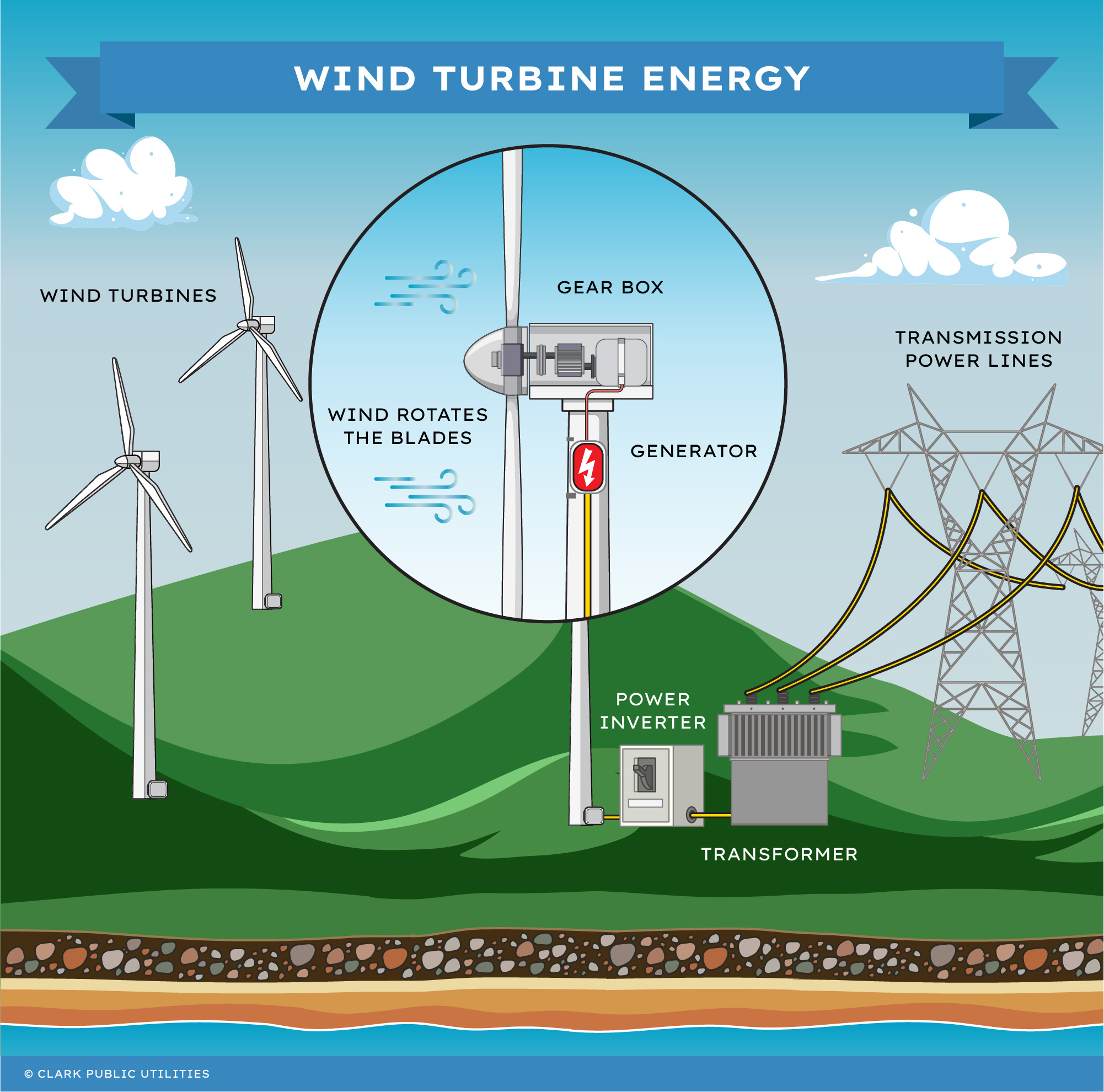
To capture more kinetic energy, turbines have grown significantly in size. However, building larger structures requires a fundamental shift in material science and structural engineering to ensure they don’t collapse under their own weight or the force of the wind.
Carbon Fiber and Modular Blade Design
Traditional wind blades were made primarily of fiberglass. However, as blades have surpassed 100 meters in length, the industry has turned to carbon fiber composites. Carbon fiber offers a much higher strength-to-weight ratio, allowing for longer, stiffer blades that can capture more energy without adding excessive weight to the nacelle. Furthermore, modular blade technology—where blades are manufactured in sections and assembled on-site—is a growing tech trend that solves the logistical nightmare of transporting massive components across continents.
The Rise of Floating Offshore Platforms
Some of the most consistent kinetic energy on the planet is found far out at sea, where the water is too deep for traditional fixed-bottom turbines. This has led to the development of floating offshore wind technology. These structures use complex mooring systems and semi-submersible platforms, borrowing technology from the deep-sea oil and gas industry. These floating “islands” of tech are equipped with advanced stabilization software that uses active ballast systems to keep the turbine upright even in 30-foot swells, opening up vast new frontiers for energy harvesting.
Energy Storage and the Digital Grid: Solving the Intermittency Problem
The kinetic energy of the wind is “use it or lose it” unless it can be stored. The tech industry is currently in a race to develop storage solutions that can hold wind-generated electricity for hours, days, or even weeks.
Advanced Battery Systems and Green Hydrogen
Lithium-ion batteries are the current standard for short-term storage, but the tech sector is exploring long-duration alternatives like flow batteries and solid-state designs. Another massive technological trend is the “Power-to-X” movement, specifically Green Hydrogen. When wind turbines produce more energy than the grid needs, the excess electricity is used to power electrolyzers that split water into oxygen and hydrogen. This hydrogen can then be stored as a gas or liquid, serving as a chemical battery that can be burned for heat or used in fuel cells months later.
Digital Twins for Wind Farm Management
A “Digital Twin” is a virtual replica of a physical wind farm. By using real-time data from the site, engineers can run simulations in the digital world to see how a turbine would react to a hurricane or a specific change in wind direction. This allows for “Yaw Optimization,” where the software coordinates an entire fleet of turbines to ensure that the wake (the “dirty” air) from one turbine doesn’t interfere with the intake of the one behind it. This digital coordination can increase the total energy output of a wind farm by up to 5% without changing a single piece of hardware.
The Future of Clean Tech: Small-Scale and Urban Wind Solutions
While massive horizontal-axis turbines dominate the landscape, new tech is emerging to capture wind energy in unconventional environments, such as cities or residential rooftops.
Bladeless Technology and Vertical Axis Turbines
Innovative startups are experimenting with “bladeless” wind tech, which uses aeroelasticity. Instead of rotating, these poles vibrate or “wobble” in the wind, converting that kinetic vibration into electricity via a linear alternator. Additionally, Vertical Axis Wind Turbines (VAWTs) are seeing a resurgence in tech circles. Unlike traditional turbines, VAWTs can capture wind coming from any direction without needing a complex yaw mechanism, making them ideal for the turbulent, unpredictable wind flows found in urban environments.

Decentralized Energy and Smart Cities
The future of wind energy is not just about giant utilities; it is about decentralization. Software platforms are being developed to create “Virtual Power Plants” (VPPs). In this model, a smart city could have thousands of small, tech-integrated wind turbines on buildings, all linked by a blockchain-based smart grid. When a gust of wind hits the city, these devices collectively generate power that is distributed locally, reducing transmission losses and increasing the resilience of the urban tech infrastructure.
In conclusion, while wind is physically categorized as kinetic energy, its role in the modern world is defined by the technology used to harness it. From the AI that predicts its arrival to the carbon-fiber blades that catch its breath, wind energy is a high-tech discipline that sits at the intersection of physics, digital intelligence, and advanced manufacturing. As these technologies continue to mature, the efficiency of wind energy will only increase, solidifying its place as the primary engine of the global energy transition.
aViewFromTheCave is a participant in the Amazon Services LLC Associates Program, an affiliate advertising program designed to provide a means for sites to earn advertising fees by advertising and linking to Amazon.com. Amazon, the Amazon logo, AmazonSupply, and the AmazonSupply logo are trademarks of Amazon.com, Inc. or its affiliates. As an Amazon Associate we earn affiliate commissions from qualifying purchases.