
For most people, a home is not just a place to live; it’s their single largest financial investment. Protecting this asset from unforeseen events – be it natural disasters, theft, or accidents – is paramount. This is where homeowners insurance steps in, offering a crucial safety net that shields you from potentially catastrophic financial losses. However, simply having a policy isn’t enough. The true financial savviness lies in understanding how to effectively compare homeowners insurance policies to ensure you’re getting the right coverage at the best possible price.
Navigating the labyrinth of insurance options can feel daunting. With countless providers, policy types, coverage limits, and a multitude of confusing jargon, it’s easy to feel overwhelmed. Yet, taking the time to thoroughly compare your options can result in significant annual savings, better protection, and greater peace of mind. This guide will demystify the process, providing you with a strategic framework to compare homeowners insurance policies like a seasoned financial expert, ensuring your most valuable asset is safeguarded without overspending.
Understanding the Fundamentals of Homeowners Insurance
Before you can effectively compare policies, you must first grasp the foundational elements of homeowners insurance. Knowing what you’re looking at will empower you to make informed decisions rather than simply choosing the cheapest option, which may leave you dangerously underinsured.
What Homeowners Insurance Covers (and Doesn’t Cover)
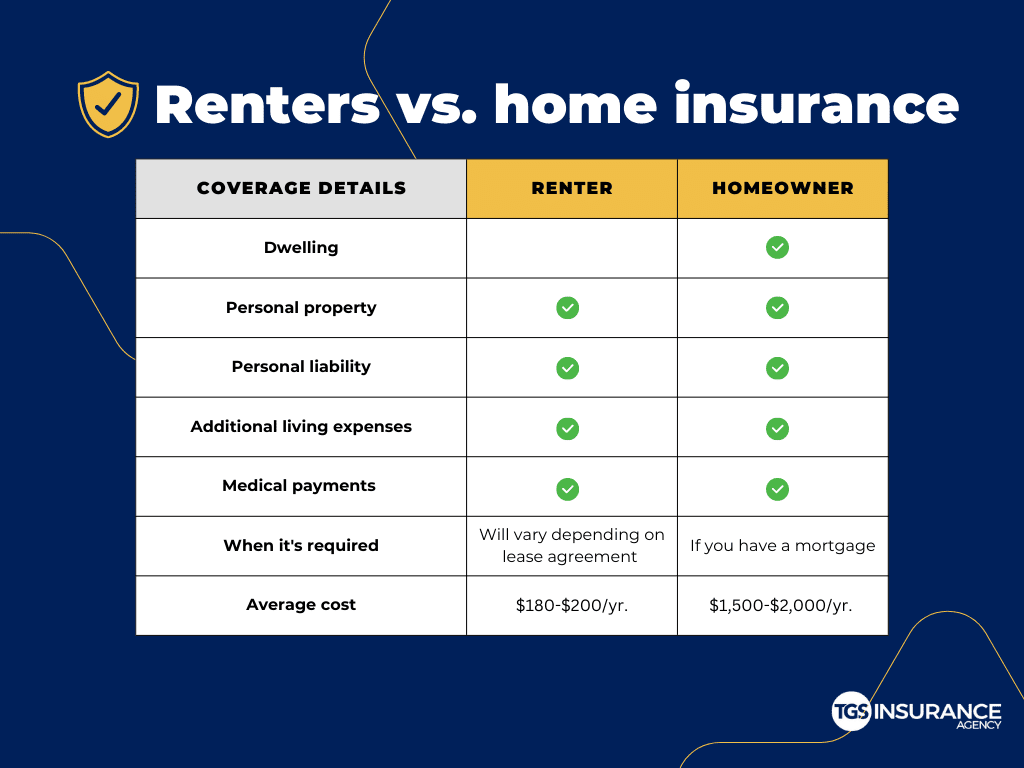
Standard homeowners insurance policies are designed to cover damage to your property and liability for injuries and property damage you or members of your household cause to others. Most policies typically cover:
-
Dwelling Coverage: Protects the physical structure of your home (e.g., roof, walls, foundation) against perils like fire, windstorms, hail, and vandalism.
-
Other Structures Coverage: Covers structures on your property that are not attached to your main home, such as detached garages, sheds, or fences.
-
Personal Property Coverage: Protects your belongings (furniture, electronics, clothing) inside and outside your home from covered perils.
-
Loss of Use (Additional Living Expenses): If your home becomes uninhabitable due to a covered loss, this coverage pays for temporary housing, food, and other necessary expenses.
-
Personal Liability Coverage: Protects you if someone is injured on your property and you are found legally responsible, or if you accidentally cause damage to someone else’s property. It also covers legal defense costs.
-
Medical Payments Coverage: Pays for medical expenses for people injured on your property, regardless of who is at fault, up to a certain limit.
It’s equally important to understand what standard policies typically don’t cover. Common exclusions include floods, earthquakes, power outages, pest infestations, and damage due to lack of maintenance. For these specific risks, you usually need to purchase separate policies or endorsements.
Key Types of Policies: HO-3, HO-5, and Others
Homeowners insurance policies are often categorized by “HO” forms, each offering varying levels of coverage:
-
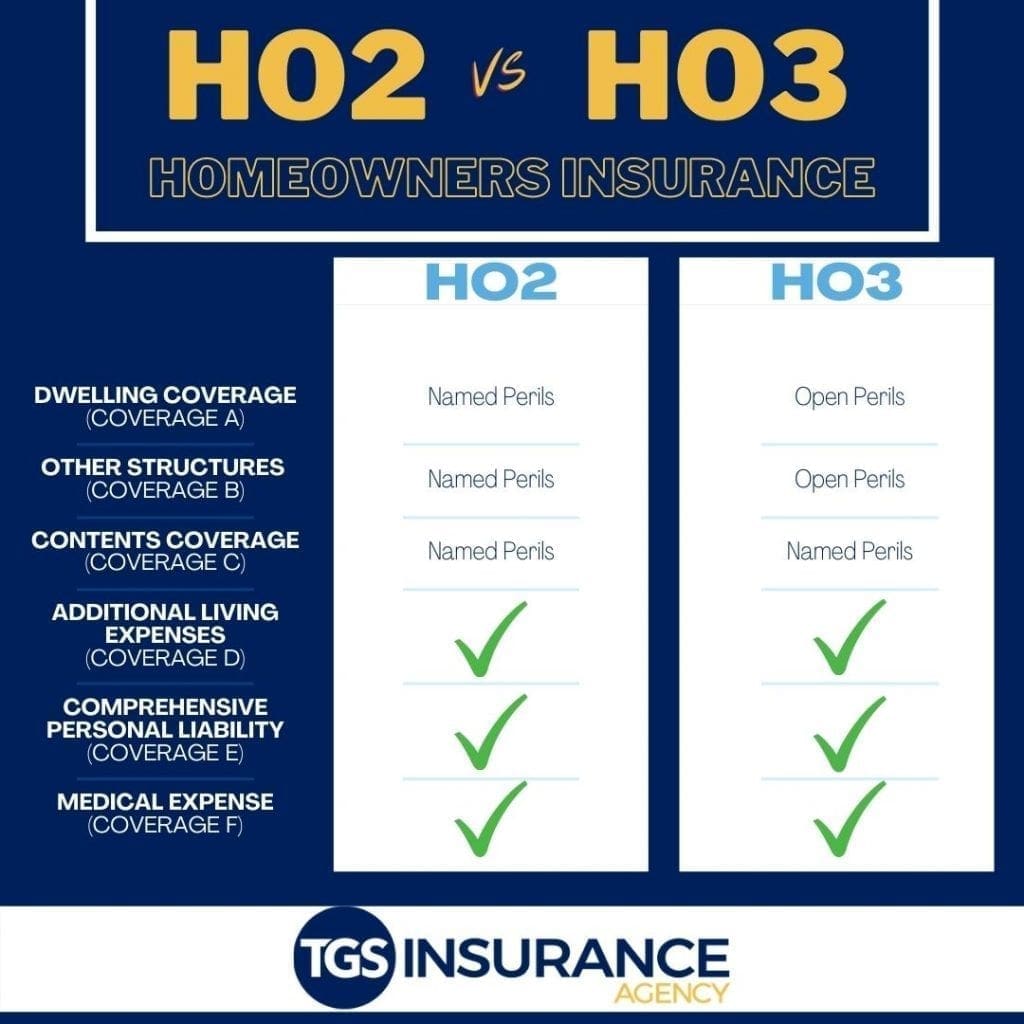
HO-3 (Special Form): This is the most common type. It provides “open peril” coverage for your dwelling, meaning it covers all perils except those specifically excluded. For personal property, it typically offers “named peril” coverage, meaning it only covers losses caused by perils explicitly listed in the policy.
-
HO-5 (Comprehensive Form): This offers the broadest protection. It provides “open peril” coverage for both your dwelling and your personal property, meaning both are covered against all perils unless specifically excluded. This offers superior protection but comes at a higher premium.
-
HO-1 (Basic Form) & HO-2 (Broad Form): These offer more limited, “named peril” coverage for both dwelling and personal property, meaning they only cover specific risks listed. They are less common today due to their limited scope.
-
HO-4 (Renters Insurance): Specifically for renters, covering personal property and liability.
-
HO-6 (Condo Insurance): For condominium owners, covering interior dwelling components, personal property, and liability.
Understanding these distinctions is crucial because the “type” of policy profoundly impacts your financial exposure. An HO-5 provides more robust protection against a wider array of risks for your personal belongings than an HO-3, which can be a critical difference in the event of an extensive claim.
Factors Influencing Your Premium
Many elements contribute to the cost of your homeowners insurance premium. Recognizing these factors can help you understand price variations and potentially lower your rates:
-
Location: High-risk areas (e.g., prone to hurricanes, wildfires, or high crime rates) will have higher premiums.
-
Home Characteristics: The age, construction type, size, and condition of your home all play a role. Newer homes with updated systems (plumbing, electrical) often receive lower rates.
-
Deductible: This is the amount you pay out-of-pocket before your insurance kicks in. A higher deductible generally leads to a lower premium, and vice-versa.
-
Coverage Amounts: The more coverage you purchase (dwelling, personal property, liability), the higher your premium will be.
-
Claims History: A history of previous claims can increase your rates.
-
Credit Score: In many states, insurers use credit-based insurance scores as a factor, as studies suggest a correlation between creditworthiness and likelihood of filing claims.
-
Safety Features: Homes with security systems, smoke detectors, fire extinguishers, and reinforced roofs may qualify for discounts.
The Strategic Approach to Comparison
Comparing homeowners insurance isn’t just about getting multiple quotes; it’s about a strategic process to find the best value – the optimal balance of coverage, service, and cost.
Gathering Essential Information Before You Start
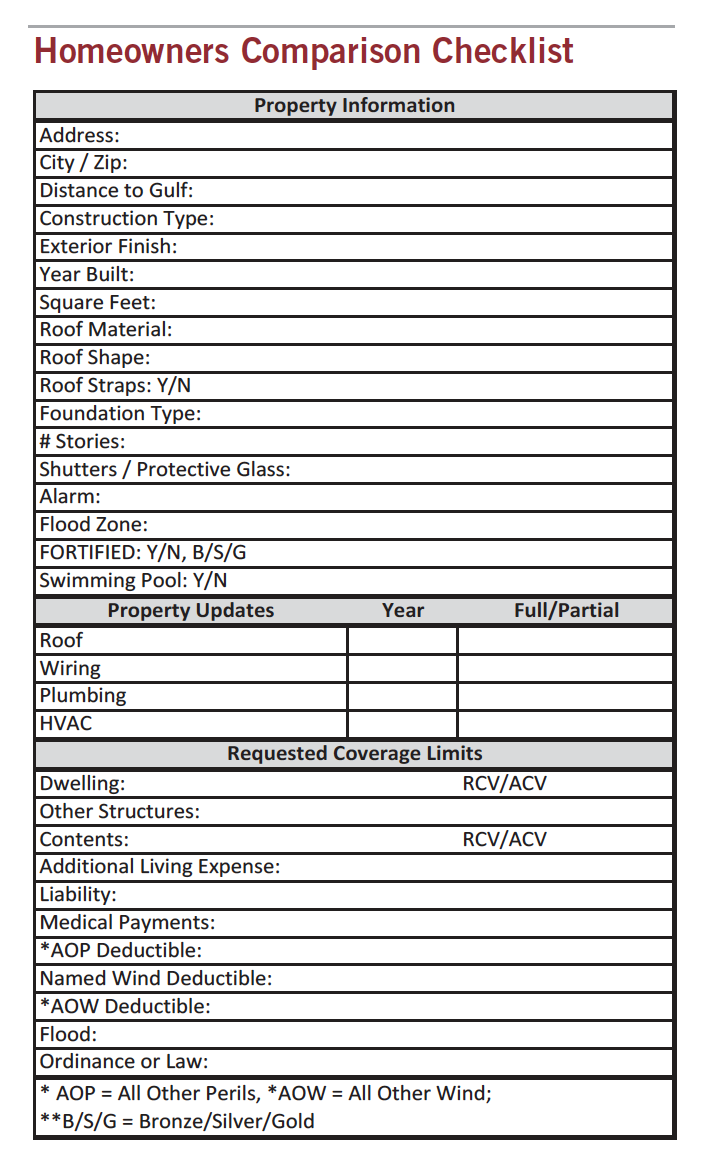
Before you even request a single quote, prepare a comprehensive file of information. This proactive step will streamline the process and ensure accuracy, preventing discrepancies that could lead to claim denials later. You’ll need:
-
Property Details: Address, year built, square footage, construction materials (e.g., brick, wood frame), type of roof, and any recent major renovations (e.g., new roof, updated electrical, plumbing).
-
Home Features: Presence of a garage, pool, trampoline, security system, smoke detectors, or other safety devices.
-
Personal Information: Names of all residents, their birth dates, and your Social Security number (for credit score checks).
-
Previous Claims History: Dates and details of any past homeowners insurance claims you’ve filed.
-
Desired Coverage Limits: An estimate of your home’s replacement cost, the value of your personal belongings, and the liability coverage you desire. A professional appraisal can help determine replacement cost accurately.
Identifying Your Specific Needs and Risk Profile
Every home and homeowner is unique, as is their risk profile. Tailoring your coverage to your specific situation is crucial.
-
Assess Local Risks: Do you live in an earthquake zone, a flood plain, or an area prone to hurricanes or wildfires? If so, you’ll need specific endorsements or separate policies (e.g., flood insurance through the NFIP).
-
Evaluate Personal Property: Conduct a home inventory (photos, videos, receipts) to accurately estimate the value of your personal belongings. Don’t forget high-value items like jewelry, art, or collectibles, which may require separate riders.
-
Consider Liability Needs: Do you host many guests? Do you have a dog? Do you operate a home-based business? These factors can increase your liability risk, warranting higher liability coverage. Aim for at least $300,000 to $500,000 in liability coverage, or consider an umbrella policy for additional protection.
-
Determine Your Deductible Comfort Level: Can you comfortably afford a $1,000, $2,500, or even $5,000 deductible out-of-pocket? A higher deductible means a lower premium, but ensure it’s an amount you can readily access in an emergency without causing financial hardship.
Leveraging Online Comparison Tools and Resources
The digital age has made comparing insurance significantly easier. Numerous online platforms allow you to input your information once and receive multiple quotes from various insurers. Websites like Policygenius, EverQuote, or independent insurer aggregators can be invaluable. However, remember that these tools don’t always capture every nuance or insurer. They are a good starting point but shouldn’t be your only resource.
The Role of Independent Agents vs. Captive Agents
When seeking quotes, you generally have two main avenues:
-
Captive Agents: These agents work for a single insurance company (e.g., State Farm, Allstate) and can only offer that company’s products. They are highly knowledgeable about their specific offerings but have limited comparison capabilities.
-
Independent Agents: These agents work with multiple insurance companies. They can shop around on your behalf, providing quotes from several different insurers, potentially saving you time and money. They often have a broader perspective on the market.
For a comprehensive comparison, it’s wise to get quotes from both an independent agent and a few captive agents from major insurers.
Key Metrics and Features to Evaluate
Beyond the raw premium cost, a truly effective comparison delves into the specifics of coverage and the insurer’s reliability.
Coverage Limits and Deductibles
These are the most critical financial parameters.
-
Dwelling Coverage: This should ideally be enough to rebuild your home from the ground up, not just its market value. Construction costs vary by region, so ensure the coverage reflects current rebuilding expenses. Consider “extended replacement cost” or “guaranteed replacement cost” endorsements, which provide an extra percentage (e.g., 20-25%) beyond your dwelling limit if rebuilding costs unexpectedly soar.
-
Personal Property Coverage: Often set as a percentage of your dwelling coverage (e.g., 50-70%). Ensure this is adequate for your inventory. Decide between “actual cash value” (depreciated value) and “replacement cost value” (cost to replace new) for your personal property. Replacement cost coverage is almost always preferable, as actual cash value can leave you with a significant financial shortfall after a loss.
-
Deductibles: Evaluate both your standard deductible and any special deductibles, such as those for wind/hail or hurricane damage, which can be a separate percentage of your dwelling coverage in high-risk areas.
Understanding Endorsements and Riders
These are add-ons that modify or extend your standard policy. They are critical for tailoring coverage to your unique risks. Common endorsements include:
-
Guaranteed or Extended Replacement Cost: As mentioned, provides extra dwelling coverage.
-
Water Backup and Sump Pump Overflow: Crucial for protecting against sewer backups.
-
Scheduled Personal Property: For high-value items like jewelry, art, or firearms that exceed standard personal property limits.
-
Identity Theft Protection: Covers expenses related to identity recovery.
-
Service Line Coverage: Protects utility lines (water, sewer, electrical) running from your property line to your house.
Always discuss potential endorsements with your agent to ensure all your specific risks are adequately covered.
Assessing Customer Service and Claims Handling Reputation
A low premium is meaningless if your insurer is difficult to deal with when you need them most. Research their reputation for customer service and claims processing:
-
Online Reviews: Check consumer review sites (e.g., J.D. Power, Consumer Reports, BBB).
-
State Insurance Departments: These often publish consumer complaint ratios.
-
Financial Strength Ratings: Agencies like A.M. Best, Standard & Poor’s, Moody’s, and Fitch rate insurers’ financial stability. Choose insurers with strong ratings (A- or better) to ensure they can pay out claims.
Financial Strength and Stability of Insurers
This is a non-negotiable factor. An insurance policy is only as good as the company backing it. A financially stable insurer ensures they will be able to pay out your claim, even in the event of a widespread disaster affecting many policyholders. Always check the financial strength ratings from independent agencies.
Beyond the Premium: Uncovering Hidden Value and Savings
While the bottom line premium is important, smart financial planning involves looking for long-term value and maximizing legitimate savings opportunities.
Bundling Discounts and Other Cost-Saving Opportunities
One of the most common and effective ways to reduce your premium is to bundle your homeowners and auto insurance with the same carrier. Many insurers offer significant multi-policy discounts. Other common discounts include:
-
Multi-Policy Discount: (Bundling)
-
Security System Discount: For monitored alarm systems.
-
Fire Safety Discount: For smoke detectors, sprinklers, or fire extinguishers.
-
New Home Discount: For newly constructed homes.
-
Renovation/Upgrade Discount: For recent updates to plumbing, electrical, or roofing.
-
Non-Smoker Discount: If no one in the household smokes.
-
Claim-Free Discount: For remaining claim-free for a certain period.
-
Good Credit Discount: (Where allowed by law).
-
Loyalty Discount: For long-term customers.
Always ask your agent to list all available discounts for which you might qualify.
Improving Home Security and Maintenance for Lower Rates
Proactive measures not only protect your home but can also lead to lower premiums:
-
Install a Monitored Alarm System: Connects to a central monitoring station.
-
Update Electrical and Plumbing Systems: Reduces fire and water damage risks.
-
Reinforce Roofs: Especially against wind and hail in storm-prone areas.
-
Install Impact-Resistant Windows/Doors: Reduces forced entry and storm damage.
-
Maintain Your Property: Regularly clear gutters, trim trees, and address minor repairs before they become major issues. This also demonstrates to insurers that you are a responsible homeowner.
Regular Review and Re-evaluation of Your Policy
Your homeowners insurance needs aren’t static. Life changes, and so should your policy.
-
Annual Review: Set a reminder to review your policy at least once a year, ideally before renewal.
-
Life Events: Review your coverage after major life events such as renovations, purchasing expensive new items, getting married, or if your income significantly changes.
-
Market Changes: Insurance markets fluctuate. What was the best deal last year might not be this year. Re-comparison periodically can yield better rates or coverage.
The Impact of Credit Score on Premiums
As mentioned, in many states, insurers use credit-based insurance scores. These scores are different from credit scores used by lenders but are derived from similar financial data. A higher insurance score typically indicates a lower risk of filing claims, resulting in lower premiums. Maintaining a good credit history by paying bills on time, managing debt responsibly, and avoiding excessive new credit applications can indirectly benefit your insurance rates.
Making Your Final Decision with Confidence
After gathering quotes, comparing coverages, and assessing insurers, the final step is to confidently choose the policy that best fits your financial protection strategy.
Asking the Right Questions
Don’t hesitate to engage your agents or customer service representatives with detailed questions:
-
“What perils are excluded from this policy?”
-
“What are the specific deductibles for wind/hail or hurricane damage?”
-
“Does this policy offer actual cash value or replacement cost for my personal property and dwelling?”
-
“Are there any additional endorsements you recommend for my specific location/home type?”
-
“What is your company’s average claims processing time?”
-
“How does your financial strength rating compare to others?”
Clear answers to these questions will provide clarity and ensure no critical details are overlooked.
Reviewing Policy Documents Meticulously
Before signing on the dotted line, carefully read the entire policy document. It is a legally binding contract. Pay close attention to:
-
Declarations Page: This summarizes your coverage limits, deductibles, and premium.
-
Conditions Section: Outlines your responsibilities as a policyholder.
-
Exclusions: Clearly lists what is NOT covered.
If anything is unclear, ask for clarification. Do not assume or guess.
When to Seek Professional Advice
While this guide provides a solid framework, some situations might warrant professional advice:
-
High-Value Homes: Complex properties with unique features may benefit from an insurance broker specializing in high-net-worth clients.
-
Unusual Risks: If you have unique exposures (e.g., a home-based business with significant inventory, a historic home, or live in a highly volatile natural disaster zone), a specialist can provide tailored solutions.
-
Confusing Scenarios: If you feel overwhelmed or unsure about specific clauses, consulting a fee-only financial planner or an experienced independent insurance advisor can provide unbiased guidance.
In conclusion, comparing homeowners insurance is more than just a chore; it’s a vital component of sound personal financial management. By understanding the basics, adopting a strategic comparison approach, evaluating key metrics, and diligently seeking savings, you can secure robust protection for your home and assets without overpaying. The peace of mind that comes from knowing your most valuable investment is well-protected is, after all, priceless.
aViewFromTheCave is a participant in the Amazon Services LLC Associates Program, an affiliate advertising program designed to provide a means for sites to earn advertising fees by advertising and linking to Amazon.com. Amazon, the Amazon logo, AmazonSupply, and the AmazonSupply logo are trademarks of Amazon.com, Inc. or its affiliates. As an Amazon Associate we earn affiliate commissions from qualifying purchases.