
London stands as one of the world’s premier financial capitals, serving as a global hub for banking, investment, and trade. For anyone planning a visit, a business trip, or a move to the United Kingdom’s capital, understanding the local currency is not merely a matter of knowing what the notes look like; it is about navigating a sophisticated financial ecosystem that is rapidly transitioning toward a fully digital future.
The official currency used in London, and throughout the United Kingdom, is the British Pound Sterling. Often referred to as “the pound,” “sterling,” or by its ISO code “GBP,” it is symbolized by the “£” sign. As one of the oldest currencies still in use and the fourth most-traded currency in the foreign exchange market, the pound carries significant weight in the global economy. However, the way money is spent in London has changed dramatically over the last decade, with digital infrastructure now dictating the pace of commerce.
The Foundations of the British Pound Sterling (GBP)
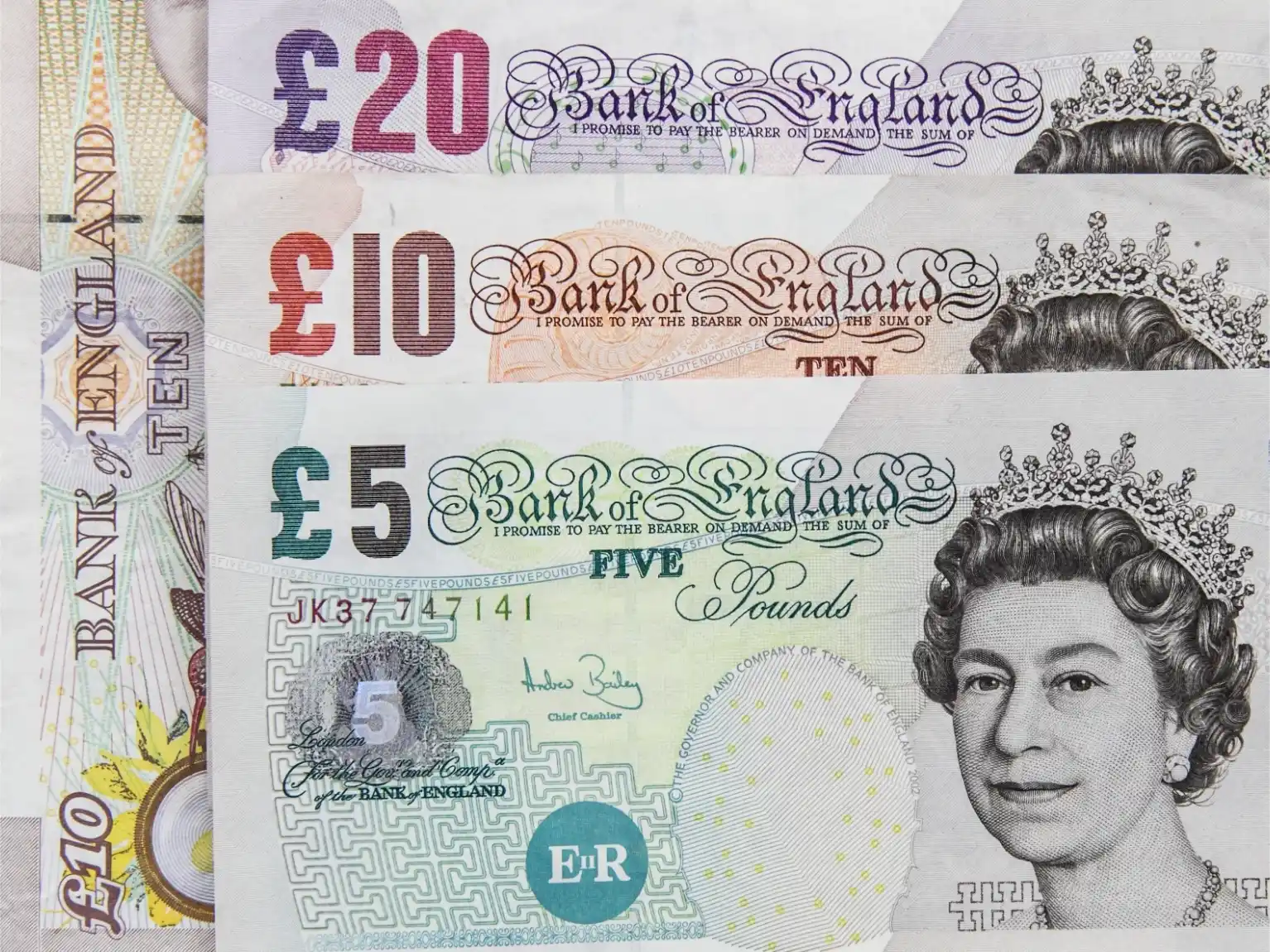
The British Pound is issued by the Bank of England, the UK’s central bank. While Scotland and Northern Ireland have their own banks that issue distinct banknotes, the notes issued by the Bank of England are the standard and most widely accepted form of physical currency in London.
Denominations and Security Features
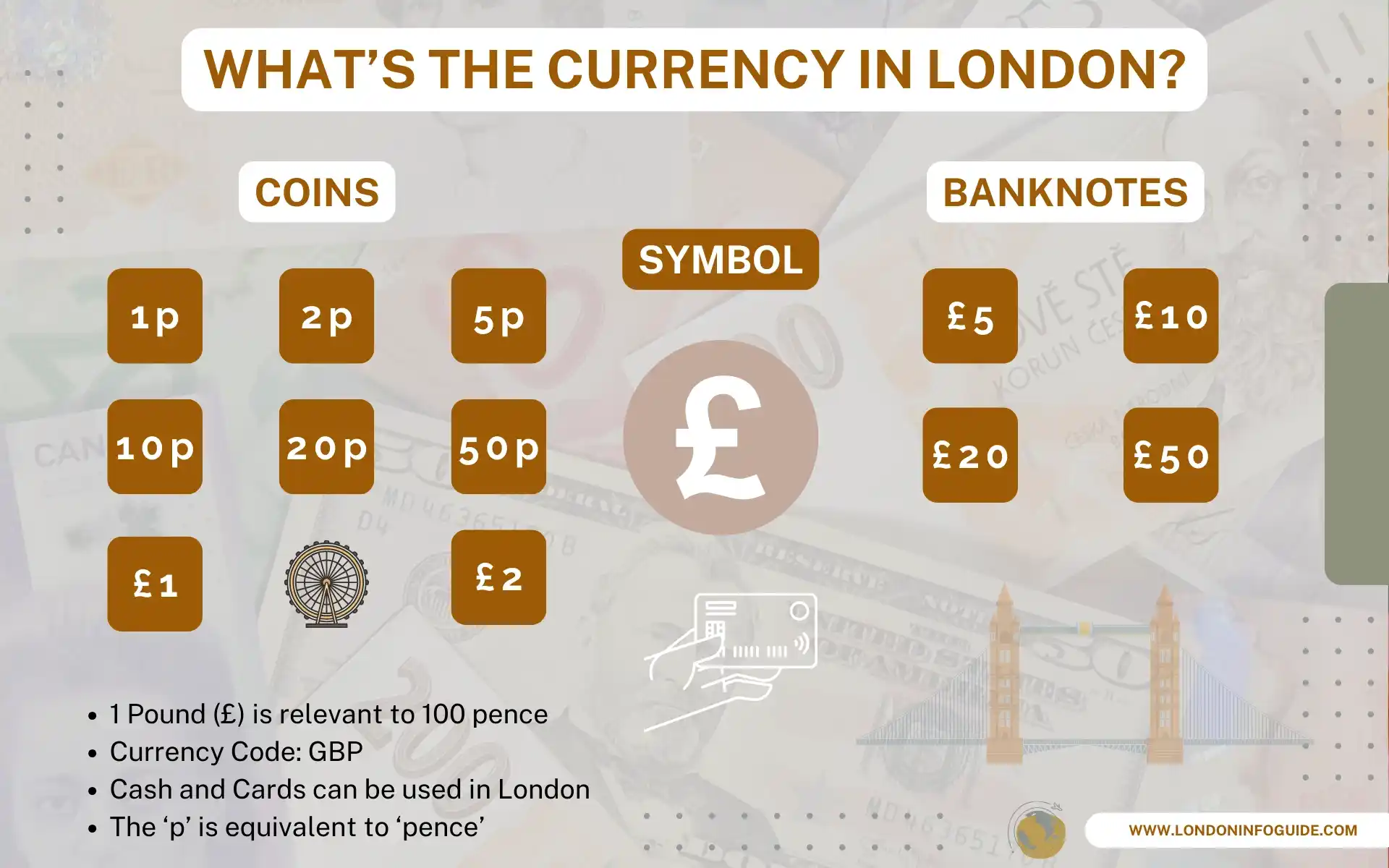
The pound is subdivided into 100 pence (symbolized by “p”). In circulation, you will find coins in denominations of 1p, 2p, 5p, 10p, 20p, 50p, £1, and £2. The banknotes currently in circulation are the £5, £10, £20, and £50 denominations.
In recent years, the Bank of England completed a total transition from paper banknotes to polymer. These polymer notes are made from a thin, flexible plastic film, making them more durable and significantly harder to counterfeit. They feature advanced security elements, such as see-through windows, holograms, and raised print. For the modern traveler or investor, it is essential to ensure you are carrying these polymer versions, as the older paper notes are no longer legal tender in shops, though they can often still be exchanged at the Bank of England or certain high-street banks.
The Role of the “London Premium”
When dealing with the pound in London, one must account for the “London Premium.” Economically, London exists in a different sphere than much of the rest of the UK. Prices for services, dining, and transport are notably higher than in northern cities or rural areas. Understanding the currency also means understanding its purchasing power within the city limits. A pound in London does not go as far as a pound in Manchester or Cardiff, a factor that should be central to any personal finance or corporate budgeting strategy.
The Digital Shift: A Cashless Capital
London is arguably the most cashless city in the world. The transition toward digital payments was accelerated by the global pandemic, but the infrastructure was already well-ingrained through the city’s transport and retail sectors. Today, it is entirely possible—and often more convenient—to live and work in London without ever touching a physical coin or banknote.
Contactless Payments and Mobile Wallets
Virtually every merchant in London, from high-end boutiques in Bond Street to small market stalls in Borough Market, accepts contactless payments. This includes traditional credit and debit cards equipped with Near Field Communication (NFC) technology, as well as mobile wallets like Apple Pay, Google Pay, and Samsung Pay.
For the consumer, the financial advantage of using digital payments lies in speed and record-keeping. Most modern banking apps provide real-time notifications and categorization of spending, which is vital for maintaining a budget in an expensive city. Furthermore, many UK merchants have introduced “cashless only” policies, particularly in fast-casual dining and bars, making digital currency tools a necessity rather than a luxury.
Transport for London (TfL) and Financial Efficiency
One of the most significant areas where currency and technology intersect is London’s transport system. The London Underground (the Tube), buses, and overground trains no longer accept cash. To travel, commuters must use either an Oyster card (a pre-paid smartcard) or a contactless payment method.
From a financial planning perspective, using a contactless debit or credit card is often the most efficient choice. Transport for London (TfL) employs “daily capping,” ensuring that once you have spent a certain amount on travel within a 24-hour period, any subsequent journeys are free. This system automatically calculates the cheapest fare, removing the need to analyze complicated zone pricing manually. However, international travelers should be wary of foreign transaction fees that their home bank might apply to each individual “tap” at a ticket barrier.
Optimizing Your Foreign Exchange Strategy
When moving between different currency zones, the greatest risk to your capital is not the price of goods, but the erosion of value through unfavorable exchange rates and hidden fees. Navigating the London financial landscape requires a strategic approach to currency conversion.
Avoiding the “Dynamic Currency Conversion” Trap
When using a non-UK card in London, many card terminals will offer you the choice to pay in your “home currency” (e.g., USD or EUR) instead of GBP. This is known as Dynamic Currency Conversion (DCC). While it may seem convenient to see the price in a familiar currency, it is almost always a poor financial decision.
In a DCC transaction, the merchant—rather than your bank—sets the exchange rate. These rates are typically 3% to 7% worse than the mid-market rate. By choosing to pay in the local currency (GBP), you allow your own bank to handle the conversion, which is almost universally more cost-effective.
The Rise of Neobanks and Travel Cards
For those looking to maximize their financial utility in London, traditional high-street banks are often being bypassed in favor of “neobanks” or “challenger banks” such as Revolut, Monzo, or Wise. These platforms allow users to hold balances in multiple currencies and convert them at the interbank rate—the same rate banks use to trade with one another.
Using these tools in London eliminates foreign transaction fees and provides a transparent view of the exchange process. For business travelers, these platforms offer the ability to manage expenses in GBP while keeping their primary capital in another currency, providing a hedge against currency volatility.
Why You Should Avoid Airport Currency Desks
A common mistake for those arriving in London is to use the currency exchange kiosks at Heathrow, Gatwick, or Stansted airports. These locations often have high overheads and capitalize on the convenience factor, offering some of the worst exchange rates available. If you must have physical cash, it is far better to use an ATM (known as a “cash point” in the UK) once you reach the city, or to exchange money at a reputable provider in the city center.
Practical Money Management in the UK
While London is a leader in digital finance, there are still practical nuances to managing money that every visitor or resident should be aware of to protect their personal finances.
Finding Fee-Free ATMs
Most ATMs in London are free to use, provided you are using a UK-issued card. However, for those with international cards, your home bank may charge a fee. Additionally, you should avoid “independent” ATMs often found in small convenience stores or nightclubs, which frequently charge a flat fee (typically £2 to £5) per withdrawal. Look for ATMs branded by major banks like Barclays, HSBC, Lloyds, or NatWest, as these are the most reliable and generally do not charge additional usage fees on the UK side.
When Cash is Still King (or Queen)
Despite the digital push, there are rare occasions where physical currency is still useful. Some very small “mom-and-pop” shops may have a minimum spend requirement (often £5 or £10) for card transactions to cover their processing fees. Additionally, while most tipping in London is handled via the card machine (a discretionary service charge is often added to restaurant bills), having small denominations of cash is useful for tipping tour guides or for small purchases in some of the city’s traditional outdoor markets.
Security and Fraud Prevention
London is a safe city, but as a major financial hub, it is a target for sophisticated financial scams. Always be mindful of “skimming” devices on ATMs—look for anything that appears loose or out of place on the card slot. When using contactless payments, be aware of your surroundings, though the encrypted nature of these transactions makes them much safer than traditional magnetic stripe cards. Most UK banks and fintech apps allow you to “freeze” your card instantly from your phone, a feature that provides significant peace of mind in a busy urban environment.
Budgeting for the London Experience
To successfully manage your finances in London, you must go beyond the mechanics of the currency and look at the broader economic picture. London is a city of extremes; you can find a world-class meal for £15 in a vibrant street food market or spend £500 at a Michelin-starred restaurant in Mayfair.
Understanding VAT (Value Added Tax)
In the UK, a Value Added Tax (VAT) of 20% is included in the price of most goods and services. Unlike in some countries where tax is added at the checkout, the price you see on the tag in a London shop is the price you pay. For business travelers, it is important to keep receipts, as corporations can often reclaim this VAT on business-related expenses.
Tipping Culture and Service Charges
The financial etiquette of tipping in London is different from that of North America. In most restaurants, a discretionary service charge of 12.5% is added to the bill. If this is included, no further tip is expected. If it is not included, a tip of 10% to 15% is standard for good service. For taxis and bars, tipping is less formal; “rounding up” the fare or leaving small change is common but not strictly required.
By understanding that the currency of London is more than just the British Pound—it is an integrated system of polymer notes, contactless technology, and strategic exchange—you can ensure that your financial health remains robust while navigating one of the world’s most dynamic cities. Whether you are investing, traveling, or relocating, mastering the local money is the first step toward a successful London experience.
aViewFromTheCave is a participant in the Amazon Services LLC Associates Program, an affiliate advertising program designed to provide a means for sites to earn advertising fees by advertising and linking to Amazon.com. Amazon, the Amazon logo, AmazonSupply, and the AmazonSupply logo are trademarks of Amazon.com, Inc. or its affiliates. As an Amazon Associate we earn affiliate commissions from qualifying purchases.