
In the realm of biology, mitosis is the process of cell division that results in two genetically identical daughter cells. It is the fundamental mechanism for growth, tissue repair, and asexual reproduction. However, in the rapidly evolving landscape of information technology, “mitosis” has become a powerful metaphor for one of the most critical trends in software development: the shift toward cellular architecture, microservices, and containerized replication.
When we ask “what type of cells are produced by mitosis” in a technological context, we are looking at the creation of “Digital Cells”—modular, self-contained, and identical units of software that allow global platforms to scale to billions of users. This article explores how the biological principles of replication have been synthesized into the tech industry to create resilient, scalable, and highly efficient digital ecosystems.

The Biological Blueprint: Reimagining Mitosis in a Digital Landscape
To understand how modern tech stacks function, we must first look at the “Digital Cell.” Just as biological mitosis ensures that daughter cells carry the exact genetic blueprint of the parent, modern DevOps practices ensure that every software instance is a perfect clone of the master image.
Defining Digital Cells: Microservices and Containers
In traditional software development, applications were “monolithic”—a single, massive organism where every function was interconnected. If one part failed, the whole system died. In the “cellular” model, applications are broken down into microservices. These are the “cells” of the tech world. Each microservice performs a specific function (like processing a payment or sending an email) and operates independently.
Containers, such as those created via Docker, serve as the cell membrane. They encapsulate the code, libraries, and dependencies required to run the application, ensuring that the “cell” can survive in any environment, whether it is a local developer’s laptop or a massive cloud server in the Arctic.
The Replication Process: From Source Code to Distributed Instances
The process of “Digital Mitosis” begins in the CI/CD (Continuous Integration/Continuous Deployment) pipeline. When a developer pushes new code, the system triggers a replication event. The “DNA” (source code) is copied, tested, and packaged into a container image.
This image then undergoes a division process where it is deployed across multiple “nodes” (servers). Much like biological mitosis produces identical daughter cells to replace worn-out tissue, automated deployment tools produce identical software instances to handle increased traffic or replace failing components. This ensures that the user experience remains consistent regardless of which “cell” handles the request.
Scaling Through Replication: The Infrastructure Behind Digital Cells
If microservices are the cells, then the cloud is the body that sustains them. The ability to produce “identical cells” on demand is what allows companies like Netflix, Amazon, and Google to maintain 99.99% uptime.
Virtual Machines vs. Containers: Choosing the Right Division Method
Before the rise of containerization, the tech industry relied on Virtual Machines (VMs). In biological terms, a VM is like an entire organ being replicated—it is heavy, resource-intensive, and slow to “divide.” Each VM requires its own Operating System (OS).
Containers changed the game by allowing for “Mitosis at Scale.” Because containers share the host OS kernel, they are lightweight and can be spawned in milliseconds. This allows a system to produce thousands of “daughter cells” almost instantaneously in response to a spike in user demand. This rapid replication is the hallmark of modern high-performance tech architecture.
Kubernetes and Orchestration: The Biological Clock of Tech Scalability
In a living organism, cell division is not chaotic; it is highly regulated by biological signals. In technology, this regulation is handled by orchestrators, most notably Kubernetes. Kubernetes acts as the “brain” or the “biological clock” of the infrastructure.

If a “cell” (container) becomes corrupted or stops responding, Kubernetes detects the failure and triggers a replication event to produce a healthy replacement. It manages the lifecycle of these cells—scheduling their birth (deployment), monitoring their health, and managing their death (termination). This automated orchestration ensures that the “digital organism” remains healthy and functional without human intervention.
Security and Mutation: Managing the Integrity of Replicated Data
In biology, a mutation during mitosis can lead to cancer—uncontrolled growth of abnormal cells. In technology, a “mutation” in the code or a configuration error during replication can lead to security vulnerabilities or system-wide outages.
Preventing Code Decay: Maintaining Genetic Fidelity in Software
In the tech world, maintaining “genetic fidelity” means ensuring that the code running in production is exactly what was intended by the engineers. This is achieved through “Immutable Infrastructure.” Once a digital cell is produced, it is never modified. If a change is needed, the old cell is destroyed and a new one is created from a fresh, updated blueprint.
By treating infrastructure as immutable, organizations prevent “Configuration Drift”—the digital equivalent of a harmful mutation. This ensures that every “daughter cell” produced by the system is a perfect, secure, and predictable copy of the original.
Sandbox Isolation: Protecting the Digital Organism
Just as cell walls protect the internal components of a biological cell from external threats, “Sandboxing” and “Zero Trust Networking” protect digital cells. Even if one cell is compromised by a cyberattack, the “infection” is contained within that specific container. Because these cells are produced through standardized mitosis-like processes, the security team can simply “kill” the infected cell and spawn a new, clean instance from the master image, effectively neutralizing the threat.
The Future of Biologically-Inspired Computing
As we look toward the future, the parallels between biological mitosis and technology are becoming even more profound. We are moving beyond simple replication toward “intelligent” and “autonomous” systems.
Edge Computing: Localized Mitosis for Low Latency
Traditional cloud computing relies on a centralized “heart” (data center). However, the rise of 5G and the Internet of Things (IoT) is driving the need for Edge Computing. This is similar to how a lizard can regenerate its tail—the cells are produced locally where they are needed most.
In Edge Computing, the “mitosis” of software occurs at the periphery of the network—on localized servers or even on the devices themselves. By producing “cells” closer to the user, tech companies can reduce latency and provide real-time processing for applications like autonomous vehicles and augmented reality.
Self-Healing Systems: How Software Repairs Itself Like Tissue
We are entering the era of “Autonomic Computing,” where software systems are designed to mimic the self-healing properties of living organisms. When you cut your skin, mitosis produces new cells to bridge the gap. In a self-healing tech stack, the system monitors its own “vitals.”
If an AI-driven monitoring tool detects a performance bottleneck, it can autonomously trigger the production of more cells to handle the load. If it detects a breach, it can isolate and replace the affected components. This level of autonomy represents the pinnacle of tech “mitosis”—a system that can grow, adapt, and repair itself without manual oversight.
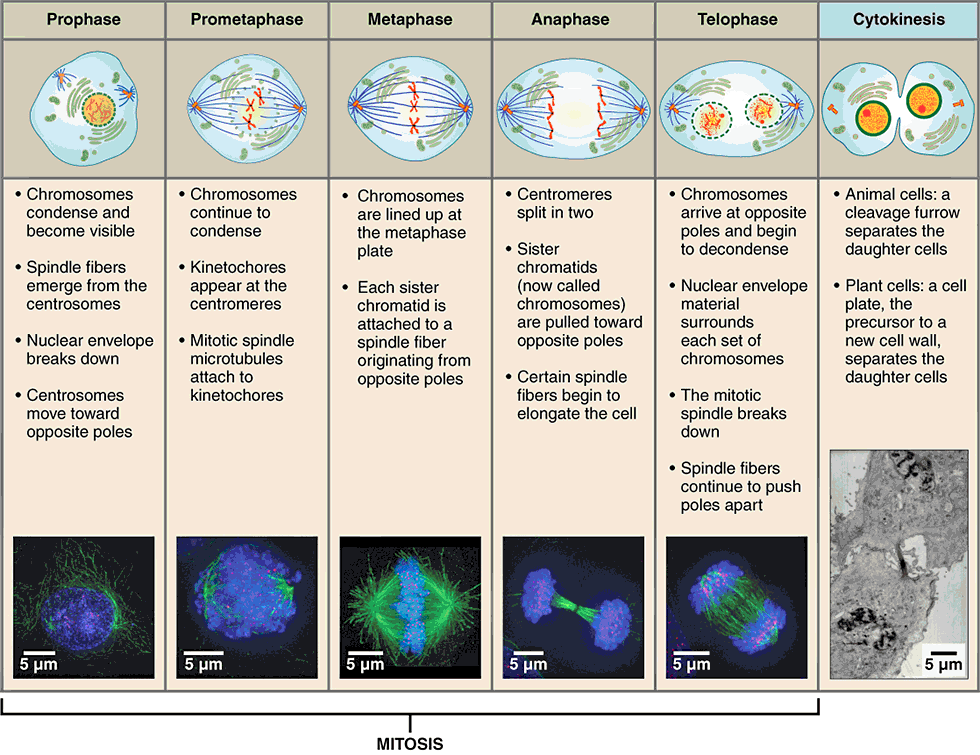
Conclusion: The Evolution of Digital Biology
To answer the question “what type of cells are produced by mitosis” in the context of 21st-century technology, we must look at the highly specialized, containerized, and orchestrated units of software that power our digital world. These “Digital Cells” are the building blocks of the modern internet.
By adopting the principles of biological replication—speed, identity, and modularity—the tech industry has created a framework for infinite scalability. Just as mitosis allowed for the evolution of complex multi-cellular life, “digital mitosis” is allowing for the evolution of complex, global software ecosystems that are more resilient and capable than ever before. As AI and edge computing continue to mature, the line between biological processes and technological systems will only continue to blur, leading us toward a future where our software is as dynamic and adaptive as life itself.
aViewFromTheCave is a participant in the Amazon Services LLC Associates Program, an affiliate advertising program designed to provide a means for sites to earn advertising fees by advertising and linking to Amazon.com. Amazon, the Amazon logo, AmazonSupply, and the AmazonSupply logo are trademarks of Amazon.com, Inc. or its affiliates. As an Amazon Associate we earn affiliate commissions from qualifying purchases.