
Sound. It’s an omnipresent force, the soundtrack to our lives, and a fundamental aspect of how we interact with the world. From the subtle hum of our computers to the roar of a concert, sound waves are constantly bombarding our senses. But what exactly is sound, and what type of wave does it represent? For those who navigate the ever-evolving landscapes of technology, brand building, and financial strategy, understanding the nature of sound waves is more than just a scientific curiosity; it’s a powerful tool that can inform product design, marketing campaigns, and even our understanding of economic signals.

This exploration will delve into the physics of sound, categorizing it within the broader spectrum of wave phenomena. We’ll then connect these fundamental principles to practical applications and implications relevant to our core website topics, showcasing how a grasp of sound’s wave nature can offer a distinct advantage in the domains of tech, brand, and money.
Understanding the Anatomy of a Wave
Before we specifically address sound, it’s crucial to establish a baseline understanding of what a wave is. In physics, a wave is a disturbance that propagates through space and time, transferring energy from one point to another without the net transport of matter. Think of ripples on a pond – the water molecules themselves don’t travel across the pond; it’s the energy of the disturbance that moves.
Waves can be broadly classified into two main categories: transverse waves and longitudinal waves. The distinction lies in the direction of particle motion relative to the direction of wave propagation.
Transverse Waves: The Up-and-Down Dance
In a transverse wave, the particles of the medium oscillate perpendicular to the direction in which the wave is traveling. Imagine pulling on a rope and flicking it up and down. The wave travels horizontally along the rope, but each individual segment of the rope moves vertically. Light waves are a prime example of transverse waves, consisting of oscillating electric and magnetic fields. Other examples include waves on a string and some types of seismic waves (S-waves).
Key characteristics of transverse waves include:
- Crest and Trough: The highest point of the wave is called the crest, and the lowest point is called the trough.
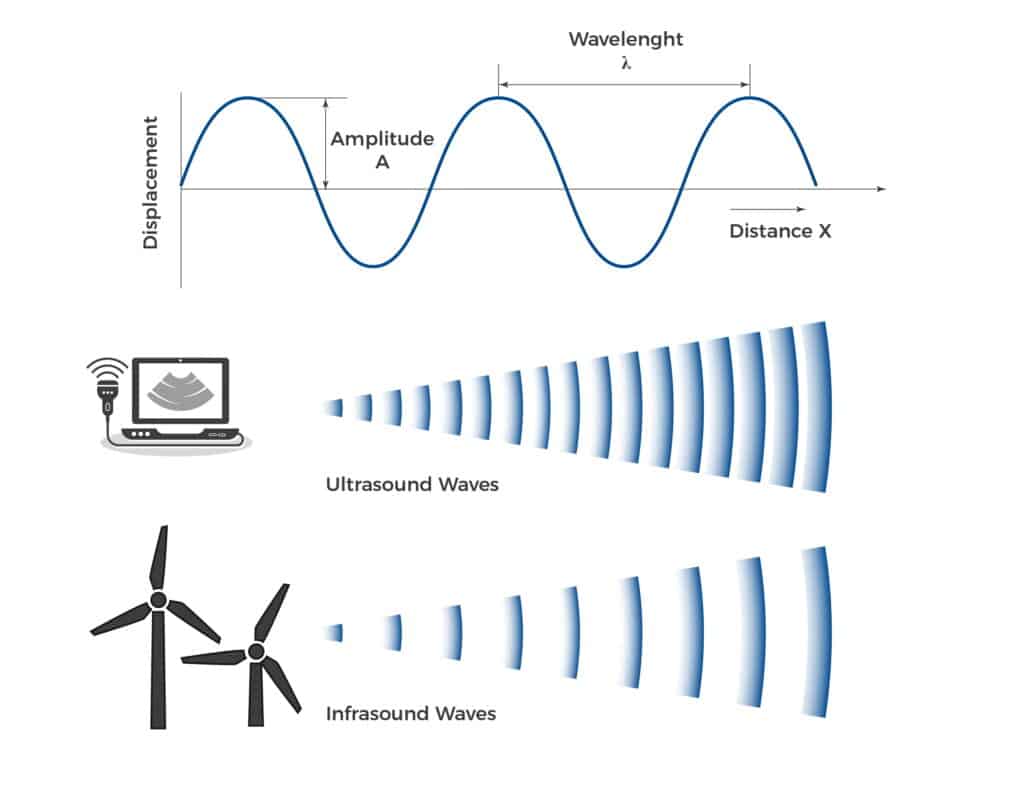
- Amplitude: This measures the maximum displacement of a particle from its resting position.
- Wavelength: The distance between two consecutive crests or troughs.
- Frequency: The number of complete oscillations that occur in one second, measured in Hertz (Hz).
Longitudinal Waves: The Push-and-Pull Symphony
In contrast, longitudinal waves involve oscillations that are parallel to the direction of wave propagation. Consider a slinky spring. If you push and pull one end, a compression will travel along the spring. In a longitudinal wave, the particles of the medium are compressed and then rarefied (spread apart) as the wave passes. Sound waves are the quintessential example of longitudinal waves.
Key characteristics of longitudinal waves include:
- Compression: The region where particles are squeezed together, resulting in higher density and pressure.
- Rarefaction: The region where particles are spread apart, resulting in lower density and pressure.
- Wavelength: The distance between two consecutive compressions or rarefactions.
- Amplitude: In longitudinal waves, amplitude is often associated with the maximum change in pressure or density.
Sound: The Archetypal Longitudinal Wave
Now, let’s bring it all together and definitively answer the question: what type of a wave is sound?
Sound is a longitudinal wave. When a sound source vibrates – whether it’s a guitar string, a human vocal cord, or a speaker cone – it disturbs the surrounding medium, typically air. This disturbance causes the air molecules to be pushed together (compression) and then pulled apart (rarefaction). These compressions and rarefactions then propagate outwards from the source as a series of pressure variations.
Imagine hitting a tuning fork. The prongs vibrate back and forth. As they move outwards, they push against the air molecules, creating a region of high pressure (compression). As they move back inwards, they leave a region of lower pressure (rarefaction). This chain reaction of compressions and rarefactions travels through the air, and when these pressure variations reach our ears, our eardrums vibrate, and our brain interprets these vibrations as sound.
Crucially, sound requires a medium to travel. It cannot propagate through a vacuum, such as outer space. This is because there are no particles to vibrate and transmit the disturbance. This distinction is vital and separates sound from electromagnetic waves like light, which can travel through a vacuum.
The Physical Characteristics of Sound Waves
The characteristics of sound waves are what define their perceived qualities:
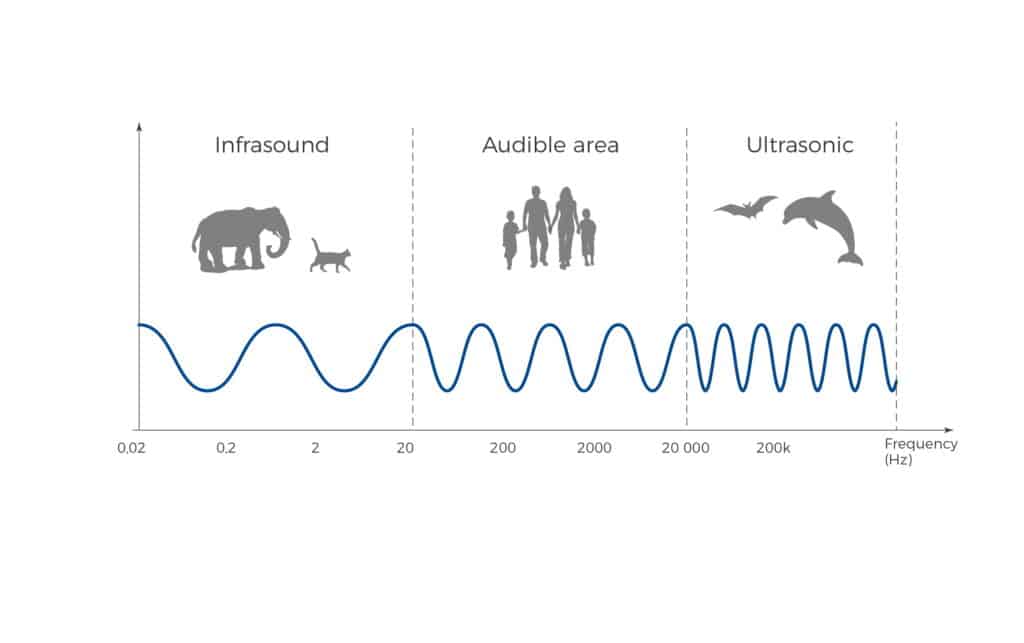
- Frequency and Pitch: The frequency of a sound wave directly corresponds to its pitch. Higher frequencies result in higher-pitched sounds (like a soprano’s voice or a whistle), while lower frequencies produce lower-pitched sounds (like a bass guitar or a rumble). Our ears can typically detect frequencies ranging from about 20 Hz to 20,000 Hz, though this range can decrease with age.
- Amplitude and Loudness: The amplitude of a sound wave, related to the pressure variations, determines its loudness or intensity. Larger amplitudes mean more energy is being transferred, resulting in a louder sound. Loudness is typically measured in decibels (dB).
- Timbre (Tone Color): While frequency and amplitude define pitch and loudness, timbre is what distinguishes different instruments or voices producing the same note at the same loudness. Timbre is determined by the complex mixture of fundamental frequencies and overtones (harmonics) present in the sound wave. It’s the unique “flavor” of a sound.
- Wavelength: The wavelength of a sound wave is related to its frequency and the speed of sound in the medium. In air at room temperature, the speed of sound is approximately 343 meters per second. So, a 100 Hz sound wave would have a wavelength of about 3.43 meters, while a 1000 Hz sound wave would have a wavelength of about 0.343 meters.
Implications for Technology: Engineering with Sound
Understanding sound as a longitudinal wave has profound implications for the technology we design and use daily. From the microphones in our smartphones to the intricate audio systems in our cars and homes, the principles of sound wave propagation are paramount.
Audio Recording and Playback
The very act of recording and playing back sound relies on capturing and recreating these pressure variations.
- Microphones: These devices convert the mechanical energy of sound waves (pressure variations) into electrical signals. Different types of microphones utilize various principles, but at their core, they are designed to be sensitive to these subtle compressions and rarefactions.
- Speakers and Transducers: Conversely, speakers convert electrical signals back into mechanical vibrations, generating sound waves. This is often achieved through electromagnetic principles where an electrical current in a coil interacts with a magnetic field, causing a diaphragm to move and create pressure waves in the air.
- Digital Audio: Modern digital audio technologies, like MP3 and WAV files, represent sound as a series of numerical values. These values are derived from sampling the amplitude of the sound wave at very high frequencies. The higher the sampling rate and bit depth, the more accurately the original sound can be reconstructed.
Acoustics and Room Design
The way sound waves interact with their environment is a critical consideration in acoustics and architectural design.
- Reflection and Absorption: Sound waves can reflect off hard surfaces, creating echoes and reverberation, or be absorbed by soft materials, reducing these effects. Understanding this behavior allows acousticians to design concert halls, recording studios, and even quiet office spaces. For example, the placement of sound-absorbing panels in a recording studio is crucial to prevent unwanted reflections that can muddy the audio.
- Diffraction: Sound waves can bend around obstacles, a phenomenon known as diffraction. This is why you can often hear someone talking around a corner, even if you can’t see them. This property is important when considering the placement of speakers to ensure even sound distribution in a room.
Ultrasound and Infrasound Technologies
Beyond the audible range, the principles of sound waves extend into specialized technological applications.
- Ultrasound: Frequencies above 20,000 Hz are in the ultrasonic range. These waves have shorter wavelengths, allowing for higher resolution imaging. This is famously used in medical ultrasound to visualize internal organs and in sonar systems for navigation and object detection. The ability of ultrasound waves to penetrate tissue and reflect off boundaries is a direct consequence of their wave nature.
- Infrasound: Frequencies below 20 Hz are in the infrasonic range. While inaudible to humans, these low-frequency waves can travel long distances and penetrate obstacles. They are generated by natural phenomena like earthquakes and volcanic eruptions, and are also used in some industrial monitoring applications.
Brand Perception: The Sonic Identity
In the realm of branding, sound is no longer an afterthought; it’s a powerful tool for creating memorable experiences and reinforcing brand identity. Understanding sound as a wave allows brands to strategically leverage audio elements to connect with their audience on a deeper, often subconscious level.
Sonic Branding and Audio Logos
A sonic brand is the collection of all sounds associated with a brand. This goes beyond just a jingle; it encompasses the overall soundscape a brand creates.
- Audio Logos: Short, distinctive sonic elements that serve as an audible signature for a brand. Think of the MGM lion’s roar or the Intel inside jingle. These are meticulously crafted to be recognizable and evocative, representing the brand’s essence. The underlying principles of frequency, rhythm, and timbre are crucial in designing these memorable audio cues.
- Brand Voice and Tone: The way a brand communicates vocally, whether in advertisements, customer service interactions, or on social media, contributes to its sonic identity. Is the voice warm and comforting, or authoritative and direct? These vocal qualities are shaped by pitch, cadence, and the choice of words, all of which are manifestations of sound waves.
- Sound Design in Marketing: The use of sound effects and background music in advertisements and videos can significantly influence audience perception and emotional response. A suspenseful soundtrack can build tension, while uplifting music can evoke happiness and optimism. The amplitude, frequency, and timbre of these sounds are carefully chosen to achieve specific marketing objectives.
Customer Experience and Product Design
For tech companies, the sound design of their products is an integral part of the user experience.
- User Interface (UI) Sounds: The subtle chimes, clicks, and alerts produced by our devices play a crucial role in providing feedback and guiding user interaction. Well-designed UI sounds can enhance usability and create a more intuitive experience. Conversely, poorly designed or intrusive sounds can be irritating and detract from the product’s appeal.
- Product Sound Signatures: The unique acoustic profile of a product can become a recognizable identifier. The satisfying “thunk” of a car door closing, the distinct hum of a premium appliance, or the subtle startup sound of a laptop can all contribute to a brand’s perceived quality and reliability.
- Auditory Accessibility: For individuals with visual impairments, sound becomes an even more critical channel for information. Designing products with robust auditory feedback mechanisms and screen reader compatibility ensures a more inclusive user experience, leveraging the principles of sound wave communication.
The Financial Echo: Sound as a Signal
While less direct, the concept of sound waves and their propagation can offer insightful analogies and applications within the world of finance and business.
Market Signals and Information Flow
Just as sound waves carry information through a medium, market signals transmit crucial data that informs financial decisions.
- The “Noise” vs. “Signal” Dilemma: In both acoustics and finance, distinguishing between meaningful information (the signal) and extraneous interference (the noise) is critical. A financial analyst needs to identify the genuine trends and indicators amidst the daily fluctuations and speculative chatter that can obscure true market direction. This requires understanding how signals propagate and how they can be distorted.
- Speed of Information: The speed at which financial news and analysis travel can be likened to the speed of sound. In today’s interconnected world, information spreads almost instantaneously. High-frequency trading, for example, relies on processing market data at speeds that are measured in fractions of a second, akin to how sound travels through a dense medium.
- The “Buzz” and Sentiment Analysis: The collective sentiment of investors and consumers can be viewed as a form of auditory feedback. Social media trends, news headlines, and expert opinions create a “buzz” that can influence market movements. Understanding the propagation and amplification of this sentiment, much like how sound waves can resonate, is key to anticipating market shifts.
Economic Indicators as “Soundings”
Economic indicators, such as inflation rates, employment figures, and GDP growth, act as “soundings” that provide crucial insights into the health of an economy.
- Frequency and Amplitude of Economic Waves: Economic cycles can be viewed as analogous to waves, with periods of expansion (high amplitude) and contraction (low amplitude). The frequency of these cycles, or how often they occur, is a subject of much economic study.
- The Impact of Economic “Noise”: Unexpected events, like global pandemics or geopolitical crises, can act as sudden bursts of “noise” that disrupt the smooth propagation of economic trends, creating volatility and uncertainty.
- Financial “Resonance” and Market Bubbles: When certain economic factors or investment sentiments gain momentum, they can create a form of “resonance” within the market. This can lead to speculative bubbles, where asset prices rise far beyond their intrinsic value, driven by a self-reinforcing cycle of optimism, much like a sound wave can amplify in a resonant cavity.
Conclusion: Listening to the Waves
From the fundamental physics of particle vibration to the sophisticated applications in technology, brand building, and financial analysis, understanding the nature of sound as a longitudinal wave is a valuable endeavor. It allows us to appreciate the intricate mechanisms that shape our auditory experience and to leverage these principles for innovation and strategic advantage.
Whether you are designing the next groundbreaking app, crafting a compelling brand narrative, or navigating the complexities of the financial markets, the ability to “listen” to the underlying waves of information – be they auditory, digital, or economic – will undoubtedly equip you with a sharper, more insightful perspective. By recognizing sound for the dynamic, propagating force it is, we unlock a deeper understanding of the world and our place within it.
aViewFromTheCave is a participant in the Amazon Services LLC Associates Program, an affiliate advertising program designed to provide a means for sites to earn advertising fees by advertising and linking to Amazon.com. Amazon, the Amazon logo, AmazonSupply, and the AmazonSupply logo are trademarks of Amazon.com, Inc. or its affiliates. As an Amazon Associate we earn affiliate commissions from qualifying purchases.