
For decades, the American pickup truck was viewed through a single lens: utility. Performance was measured in towing capacity and payload, while fuel economy was often a secondary concern—a “tax” paid for the necessity of a rugged vehicle. However, in today’s volatile economic climate, the narrative has shifted. With fluctuating energy prices and a heightened focus on personal finance and business overhead, the question of “what trucks are good on gas” has become a core financial strategy for individuals and corporations alike.
Choosing a fuel-efficient truck is no longer just about environmental consciousness; it is about protecting your bottom line. Whether you are a small business owner looking to reduce operational costs or an individual managing a household budget, the delta between 15 MPG and 25 MPG represents thousands of dollars in annual savings. This article explores the intersection of automotive engineering and financial planning, identifying the trucks that offer the best return on investment through superior fuel efficiency.

The ROI of Fuel Efficiency: Beyond the Sticker Price
When purchasing a vehicle, most consumers focus on the MSRP. However, from a financial perspective, the purchase price is only one component of the Total Cost of Ownership (TCO). For high-utilization vehicles like trucks, fuel costs often represent the second-largest expense after depreciation.
Total Cost of Ownership (TCO) Analysis
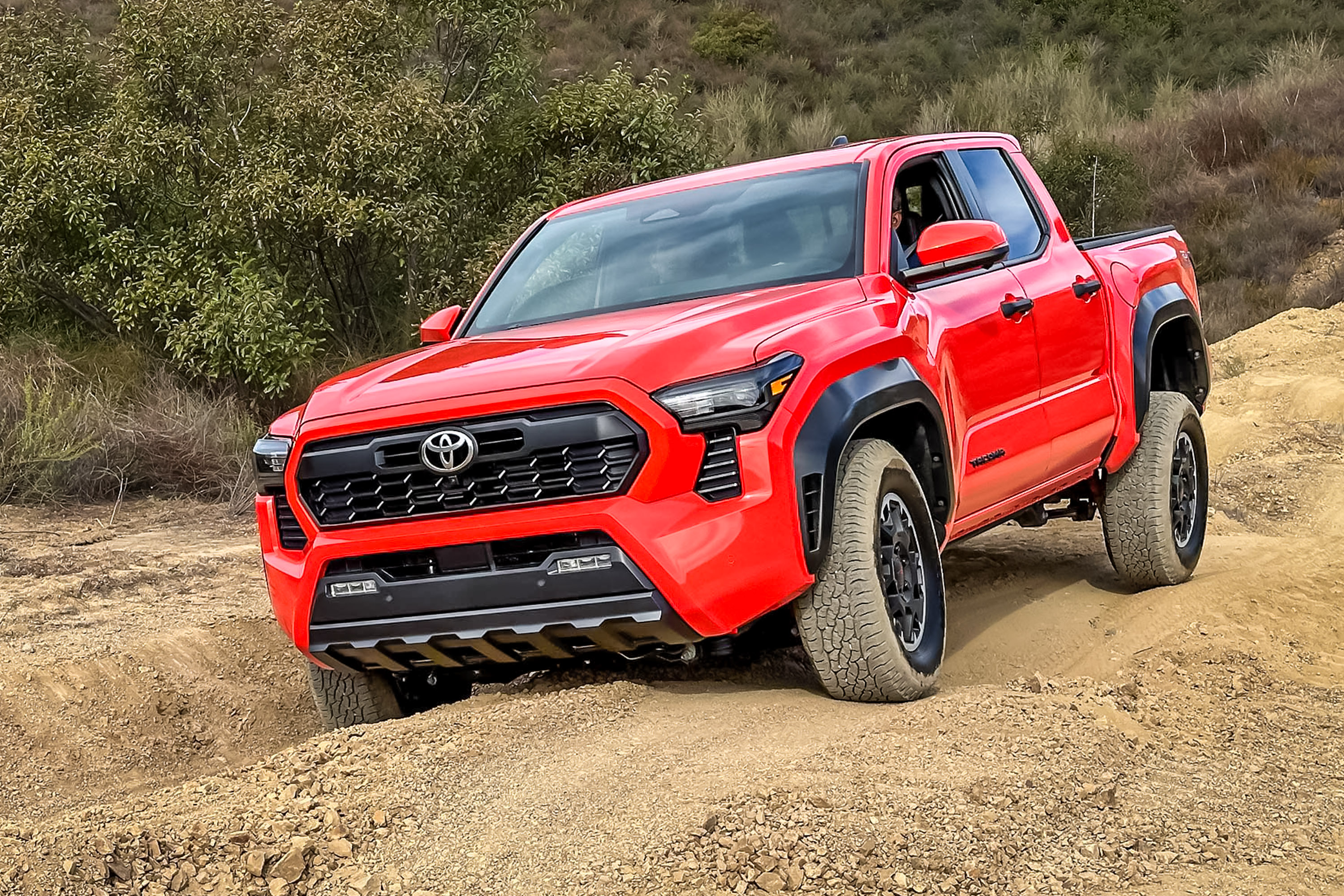
A truck that costs $5,000 more upfront but saves $1,500 a year in fuel pays for itself in just over three years. Given that the average truck owner keeps their vehicle for six to eight years, the more efficient model becomes the superior financial asset. When evaluating trucks, it is essential to run a “break-even” analysis. By calculating your estimated annual mileage against the average price of fuel, you can determine if a hybrid or high-efficiency diesel engine justifies its premium. In the current market, vehicles like the Ford Maverick or the Toyota Tundra i-FORCE MAX are demonstrating that the “efficiency premium” is shrinking, making the financial case for gas-sipping trucks stronger than ever.
Depreciation Trends of Hybrid vs. Traditional Trucks
Resale value is a critical pillar of personal finance. Historically, “specialty” engines were feared for their complexity, hurting their resale value. Today, the trend has reversed. As fuel prices remain unpredictable, the secondary market for fuel-efficient trucks has become incredibly robust. A hybrid truck often retains a higher percentage of its value compared to a V8 counterpart because the next buyer is also looking to hedge against rising gas prices. Investing in an efficient truck today is, in many ways, an insurance policy for your future resale value.
Top-Tier Contenders: High-Efficiency Trucks That Save You Money
The market has responded to the demand for efficiency with three distinct tiers of vehicles: compact hybrids, full-size hybrids, and advanced internal combustion engines. Identifying which of these fits your budget depends on your specific utility needs.
The Rise of Hybrid Powerhouses
The Ford F-150 PowerBoost and the Toyota Tundra Hybrid have redefined the full-size segment. These are not the underpowered hybrids of the past; they are high-torque machines that happen to be efficient. For the business professional, the F-150 PowerBoost offers an additional financial perk: the Pro Power Onboard system. This allows the truck to function as a mobile generator, potentially saving a contractor thousands in separate equipment costs while maintaining a combined 24-25 MPG. From a money-management perspective, these vehicles serve as multi-functional tools that reduce both fuel spend and equipment capital expenditures.
Small Trucks, Big Savings: The Mid-Size and Compact Renaissance
For those whose “truck needs” involve light hauling and urban commuting, the Ford Maverick has become the gold standard of financial sensibility. With an EPA-estimated 42 MPG in the city for the hybrid variant, it challenges the fuel economy of compact sedans. For a side-hustle entrepreneur—perhaps someone in property management or landscaping—the Maverick represents a paradigm shift. It offers the utility of a truck bed with the fuel overhead of a commuter car, allowing for significantly higher profit margins on every job.
The Electric Transition: Analyzing Upfront Cost vs. Long-Term Energy Savings
We cannot discuss fuel efficiency without mentioning the “infinite MPG” of Electric Vehicles (EVs) like the Ford F-150 Lightning, Rivian R1T, and the Chevrolet Silverado EV. While the initial investment is higher, the “fuel” cost per mile is dramatically lower. Depending on local electricity rates, charging an EV can cost the equivalent of $1.00 to $1.50 per gallon of gasoline. For a fleet manager or a high-mileage driver, the long-term savings on energy and the near-elimination of traditional maintenance (oil changes, spark plugs, transmission flushes) can result in a net gain of tens of thousands of dollars over the vehicle’s lifespan.
Strategic Purchasing: Financing, Incentives, and Tax Advantages
Selecting the right truck is only half the battle; the other half is leveraging financial tools to minimize the impact on your net worth. The government and many financial institutions provide “green” incentives that can drastically alter the economics of your purchase.
Leveraging Federal and State Tax Credits
The Inflation Reduction Act has introduced significant tax credits for “clean” trucks. For individuals, this can mean up to $7,500 off a qualifying EV or PHEV. For business owners, the “Commercial Clean Vehicle Credit” can be even more lucrative. When you subtract these credits from the purchase price, the “payback period” for an efficient truck is often slashed by 50% or more. Before purchasing, it is vital to consult with a tax professional to ensure the specific Gross Vehicle Weight Rating (GVWR) of the truck aligns with the most aggressive tax incentives available.
Section 179 Deductions and Business Finance
For those using a truck for business, the IRS Section 179 deduction is a powerful wealth-building tool. It allows businesses to deduct the full purchase price of qualifying equipment—including many heavy-duty trucks—from their gross income in the year it was purchased. By choosing a fuel-efficient truck that meets the weight requirements, a business owner can simultaneously lower their tax liability and reduce their ongoing monthly operational expenses. This “double-dip” into savings is a cornerstone of smart business finance.
Fuel Economy as a Competitive Business Strategy
In a world of thin margins, the cost of moving goods and personnel is a variable that can make or break a company. Treating fuel efficiency as a strategic asset rather than a lucky break is what separates profitable enterprises from those that struggle.
Lowering Overhead for Small Business Owners
For a tradesperson, every dollar spent at the pump is a dollar taken directly from their take-home pay. If a contractor switches from a truck getting 13 MPG to one getting 23 MPG, and they drive 20,000 miles a year, they are looking at an annual savings of roughly $2,000 to $3,000 (depending on local fuel prices). Over five years, that is $15,000 in additional profit. In the world of personal finance, this is the equivalent of a significant annual raise, achieved simply by making a more informed asset selection.
Fleet Management and Scalable Savings
For larger organizations, the impact of “what trucks are good on gas” is multiplied across dozens or hundreds of units. Efficient fleet management now involves telematics to track idle time and fuel consumption, but it starts with the hardware. By standardizing a fleet around high-MPG platforms, corporations can report better earnings to shareholders by cutting “cost of goods sold.” Furthermore, as more cities implement low-emission zones or carbon taxes, having an efficient fleet acts as a hedge against future regulatory costs that could penalize less efficient vehicles.

Conclusion: The New Metric of Power
The modern truck market has proven that you no longer have to sacrifice financial health for capability. The most powerful truck on the market today isn’t necessarily the one with the most horsepower; it’s the one that empowers your bank account. By focusing on TCO, leveraging tax incentives, and choosing platforms like the Maverick, F-150 PowerBoost, or the new wave of EVs, you are making a sophisticated financial decision.
In the final analysis, a truck is an investment. Like any investment, its value is determined by the wealth it helps you generate and the capital it allows you to retain. When you ask, “What trucks are good on gas?” you are really asking, “Which vehicle will help me build a more secure financial future?” By prioritizing efficiency, you ensure that your vehicle remains a tool for prosperity rather than a drain on your resources.
aViewFromTheCave is a participant in the Amazon Services LLC Associates Program, an affiliate advertising program designed to provide a means for sites to earn advertising fees by advertising and linking to Amazon.com. Amazon, the Amazon logo, AmazonSupply, and the AmazonSupply logo are trademarks of Amazon.com, Inc. or its affiliates. As an Amazon Associate we earn affiliate commissions from qualifying purchases.