
In the modern technological landscape, the concept of “reusability” has transitioned from a sustainability buzzword to a fundamental engineering requirement. Whether we are discussing software architecture, hardware engineering, or wireless communication, the ability to repurpose components without introducing “interference”—be it electromagnetic, logical, or functional—is the hallmark of sophisticated design.
As systems become more complex and interconnected, “interference problems” have evolved. They are no longer just static on a radio line; they represent broken dependencies in code, cross-talk in high-frequency circuits, and data collisions in massive IoT networks. To build efficient, scalable systems, we must identify which assets can be safely reused and the conditions required to ensure they operate without friction.
Software Development: Code Reusability and the Challenge of Dependency Interference
In software engineering, the dream of “write once, use everywhere” is often hampered by logical interference. When a developer reuses a module or a library in a new environment, they often encounter “Dependency Hell,” where the reused component conflicts with existing system versions or creates unintended side effects.
Modular Architecture and Decoupling
To reuse software components without interference, the primary strategy is decoupling. A truly reusable component should be “black-boxed,” meaning its internal logic is hidden, and it communicates only through clearly defined interfaces or APIs.
Microservices architecture is the pinnacle of this approach. By containerizing applications, developers can reuse entire services across different platforms without worrying about the underlying operating system or library conflicts. Because each service runs in its own isolated environment, the “interference” of shared memory or conflicting global variables is eliminated.
Managing Library Versioning and Namespace Clashes
One of the most common interference problems in software is the namespace collision. This occurs when two different parts of a program attempt to use the same name for different variables or functions. Modern languages like Python (with virtual environments), Node.js (with npm scoping), and C# (with namespaces) have built-in mechanisms to prevent this.
For a piece of code to be reused safely, it must be version-controlled and immutable. When we reuse a “stable” version of a library, we ensure that subsequent updates to that library do not “interfere” with the legacy functionality of our current project.
Transfer Learning and AI Model Reuse
In the realm of Artificial Intelligence, “Transfer Learning” allows developers to reuse pre-trained models for new tasks. For instance, a model trained to recognize cars can be reused to recognize trucks with minimal additional training.
The interference problem here is “catastrophic forgetting,” where the new training overrides the original knowledge. To prevent this, developers use “frozen layers”—parts of the neural network that are kept static. This allows the reuse of the model’s core “intelligence” (like edge detection or pattern recognition) without the new data interfering with the foundational logic.
Hardware and Electronics: Avoiding Electromagnetic Interference (EMI)
When we move from the virtual to the physical, the concept of interference becomes a matter of physics. Reusing electronic components—such as power supplies, sensors, or microcontrollers—requires a deep understanding of Electromagnetic Interference (EMI) and Radio Frequency Interference (RFI).
Shielding and Component Isolation
The most significant barrier to reusing hardware components in new configurations is “crosstalk.” This happens when an electronic signal transmitted on one circuit or channel creates an undesired effect in another. If you reuse a high-speed processor in a compact chassis, its electromagnetic field might interfere with sensitive analog sensors nearby.
To reuse components without these problems, engineers employ physical shielding (Faraday cages) and galvanic isolation. By using optoisolators, for example, a designer can reuse a control circuit to manage a high-voltage motor without the electrical noise from the motor “leaking” back into and damaging the delicate controller.
The Role of Standardized Interfaces in Hardware Reuse
Standardization is the enemy of interference. The reason we can reuse a USB-C cable or a PCIe graphics card across different systems without interference is the strict adherence to physical and electrical protocols.

When hardware is designed to a standard (like I2C, SPI, or CAN bus), the “handshake” between components is predetermined. This prevents signal “interference” caused by mismatched voltages or timing errors. If a component is built to a modular standard, it can be swapped or reused in any system that supports that standard, ensuring that the new environment doesn’t “clash” with the component’s original specifications.
Thermal Interference and Heat Dissipation
A frequently overlooked type of interference in hardware reuse is thermal. If a component like a GPU is reused in a smaller, more enclosed case, the heat it generates can interfere with the performance of adjacent components, leading to thermal throttling or hardware failure. Successful reuse requires a reassessment of the “thermal envelope.” Just because a component works electrically doesn’t mean it won’t interfere with the system’s overall stability due to heat displacement.
Wireless Networking: Frequency Reuse and Signal Integrity
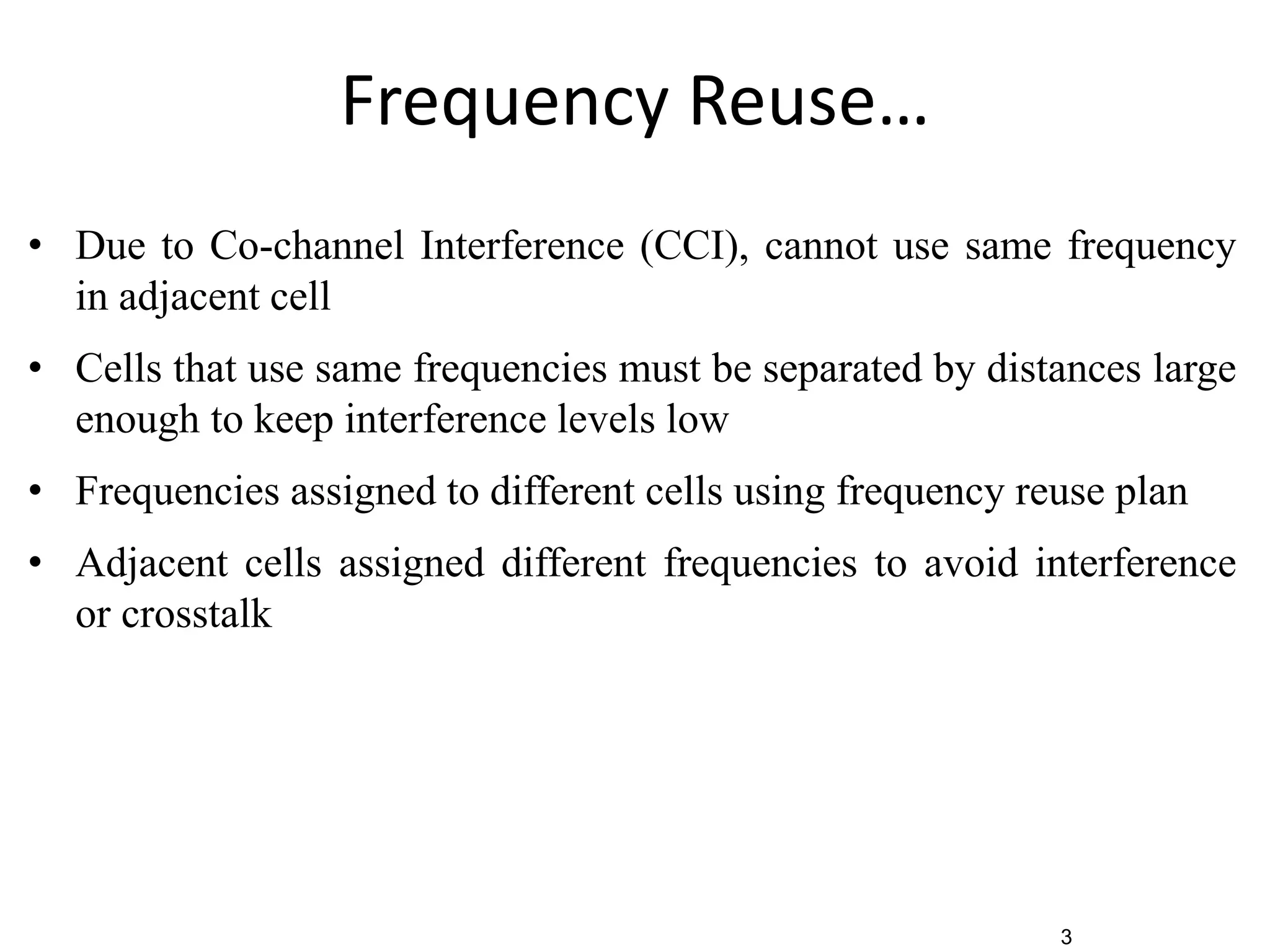
In the world of telecommunications, “interference” is a constant battle. Frequency reuse is the practice of using the same radio frequencies within a network to increase capacity. This is the foundation of cellular networks, Wi-Fi, and satellite communication.
Orthogonal Frequency-Division Multiplexing (OFDM)
How can we reuse the same frequency band without signals overlapping and becoming unreadable? The answer lies in OFDM. This technology breaks a single high-speed signal into many slower signals on different sub-carrier frequencies. These sub-carriers are “orthogonal” to each other, meaning they are mathematically arranged so they do not interfere with one another, even if their frequencies overlap slightly. This allows for massive reuse of spectrum, which is a finite and expensive resource, without the “interference problems” that plagued older analog radio systems.
Spatial Reuse in IoT and 5G Networks
With the rise of 5G and the Internet of Things (IoT), we are seeing the implementation of “Spatial Reuse.” In dense urban environments, thousands of devices may be using the same frequency. 5G solves the interference problem through “Beamforming.”
Instead of broadcasting a signal in all directions (like a lightbulb), beamforming directs the signal toward a specific user (like a laser). This allows the network to reuse the same frequency for a different user just a few meters away without the two signals interfering. This spatial isolation is what allows modern smart cities to function despite the incredible density of wireless signals.
Guard Bands and Spectrum Etiquette
For different wireless technologies to be reused in the same geographic area—such as Bluetooth and Wi-Fi, both of which operate on the 2.4GHz band—they must follow specific “etiquette.” Bluetooth uses “Frequency Hopping,” rapidly switching channels to avoid staying on a frequency where Wi-Fi might be active. This form of “temporal reuse” ensures that even though they share the same space, they don’t interfere with each other’s data streams.
Best Practices for Future-Proofing Reusable Assets
To ensure that any technical asset—be it a line of code, a circuit board, or a frequency band—can be reused without interference problems, certain best practices must be followed during the initial design phase.
Documentation as a Buffer Against Logic Interference
In software and systems engineering, the greatest “interference” often comes from a lack of information. If a developer doesn’t know why a specific parameter was set in a reused module, they might change it, causing the system to crash.
Comprehensive documentation, including clear “ReadMe” files and API schemas (like Swagger/OpenAPI), acts as a protective layer. It defines the boundaries of the component, telling the next user exactly what can be modified and what must remain untouched to avoid functional interference.
Rigorous Testing Protocols for Reused Modules
Before any component is integrated into a new system, it must undergo “Integration Testing.” This is specifically designed to identify interference. In software, this means checking how the new module interacts with the existing database and UI. In hardware, it involves “Burn-in” testing and EMI scans to ensure the reused part doesn’t degrade the system’s overall performance.
The Principle of Least Privilege and Encapsulation
Whether in digital security or system design, the principle of least privilege is vital. A reused component should only have access to the resources it absolutely needs. By “encapsulating” the component and limiting its permissions, you reduce the “blast radius” of any potential interference. If a reused script only has read-only access to a database, it cannot “interfere” with the data integrity of the rest of the system.

Conclusion: The Future of Interference-Free Innovation
The ability to reuse technical components without interference is the key to accelerating innovation. By moving away from monolithic, bespoke designs toward modular, standardized, and isolated components, we can build more resilient systems.
In software, containerization and microservices are solving the logic clash. In hardware, advanced shielding and standardized interfaces are managing the physical noise. In networking, beamforming and multiplexing are allowing us to share the airwaves more efficiently than ever before. As long as we design with the “boundaries” of our components in mind, we can continue to build on the foundations of the past without the interference problems of the present.
aViewFromTheCave is a participant in the Amazon Services LLC Associates Program, an affiliate advertising program designed to provide a means for sites to earn advertising fees by advertising and linking to Amazon.com. Amazon, the Amazon logo, AmazonSupply, and the AmazonSupply logo are trademarks of Amazon.com, Inc. or its affiliates. As an Amazon Associate we earn affiliate commissions from qualifying purchases.