
Houston, Texas, a city synonymous with space exploration and a burgeoning energy capital, is increasingly defining itself as a nexus of technological innovation. While often celebrated for its cultural diversity and culinary scene, a deeper look reveals Houston as a vibrant ecosystem where cutting-edge technology is not just developed but also seamlessly integrated into the urban fabric, shaping experiences and defining its future. For the tech enthusiast, the digital native, or anyone curious about the intersection of urban life and advanced engineering, Houston offers a fascinating array of sights and insights that extend far beyond traditional tourist attractions. This article explores Houston through a technological lens, uncovering the digital transformations, scientific breakthroughs, and smart city initiatives that make it a compelling destination for those with an eye on the future.

Houston’s Pioneering Role in Space Exploration and Innovation
No discussion of technology in Houston can begin without acknowledging its profound connection to space. The city’s indelible link to NASA has cemented its reputation as a global leader in aerospace engineering and scientific discovery, constantly pushing the boundaries of human capability.
Space Center Houston: Gateway to NASA’s Digital Frontier
Space Center Houston, the official visitor center for NASA Johnson Space Center, is not merely a museum; it’s an immersive journey into the digital frontier of space exploration. Visitors aren’t just observing artifacts; they are engaging with the digital tools and simulations that power modern space missions. Exhibits leverage advanced virtual reality (VR) and augmented reality (AR) technologies to transport you to the International Space Station, walk on the moon, or experience the launch of a rocket. Interactive displays allow you to manipulate rover arms, practice docking spacecraft, and analyze real-time data from ongoing missions. The Mission Control Center, a historic landmark, now uses sophisticated data visualization techniques to recount epic moments in space history, demonstrating how crucial digital systems and real-time communication have always been to NASA’s triumphs. The center continually updates its offerings, reflecting the latest advancements in space tech, from AI-driven mission planning tools to the development of autonomous systems for deep-space travel.
The Future of Space Tech: Commercial Ventures and AI Integration
Beyond the historic missions, Houston is at the forefront of the commercialization of space and the integration of artificial intelligence (AI) into future endeavors. The Johnson Space Center itself is a hotbed for research into advanced robotics, materials science, and propulsion systems that will enable humanity’s return to the Moon and subsequent journey to Mars. Companies in and around Houston are actively developing private spacecraft, satellite technologies, and innovative solutions for space tourism and resource extraction. AI plays an increasingly critical role, from optimizing spacecraft design and trajectory calculations to analyzing vast amounts of cosmic data and even assisting astronauts with complex tasks. For the technologically curious, understanding these developments offers a glimpse into how Houston is shaping the next era of space exploration, making it a “must-see” from a perspective of future technology.
Smart City Initiatives and Urban Tech Integration
Houston, like many global metropolises, is embracing the smart city paradigm, using technology to enhance urban living, improve infrastructure, and create more interactive public spaces. These initiatives transform the way residents and visitors experience the city.
Digital Transformation in Public Spaces
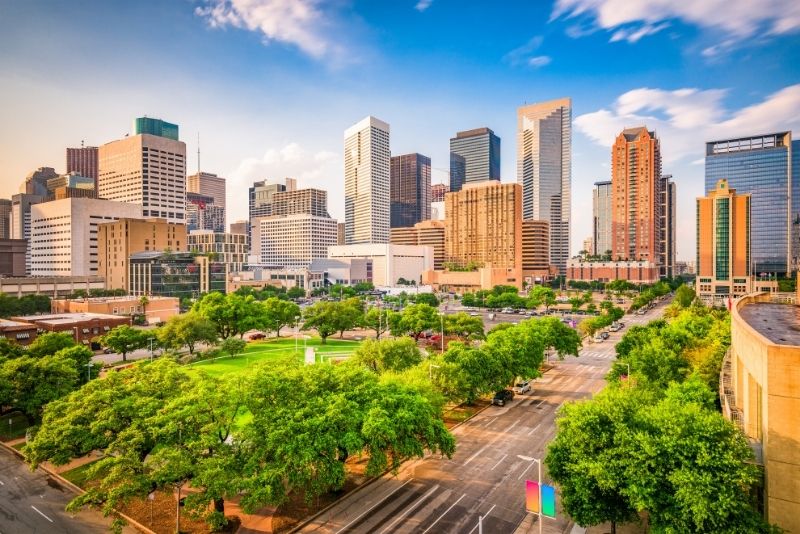
Public spaces across Houston are being reimagined with technology at their core. Discovery Green, a sprawling urban park downtown, exemplifies this trend. While seemingly a green oasis, it incorporates advanced digital infrastructure, offering free Wi-Fi, interactive art installations that respond to user input, and intelligent lighting systems. Events held here often leverage large digital screens for projections and live feeds, turning the park into a dynamic, tech-enhanced venue. Similarly, newer developments and renovated areas are integrating smart sensors for waste management, traffic flow optimization, and environmental monitoring, contributing to a more efficient and sustainable urban environment. These subtle yet impactful technological integrations redefine what it means to “see” and interact with a modern city, moving beyond passive observation to active engagement.
Leveraging AI and IoT for Urban Management and Visitor Experience
Houston’s commitment to smart city concepts extends to its deeper infrastructure, leveraging the Internet of Things (IoT) and artificial intelligence (AI) for improved urban management. Intelligent transportation systems use real-time data from sensors and cameras to manage traffic signals, reduce congestion, and inform public transit routes. Predictive analytics, powered by AI, are employed for everything from emergency response planning to optimizing utility consumption. For visitors, this translates into more efficient navigation, real-time public transport updates via mobile apps, and enhanced safety measures. The goal is to create a seamless, responsive urban environment where technology serves to improve quality of life and visitor satisfaction, making the invisible infrastructure of Houston’s smart city efforts a fascinating “sight” for those interested in urban tech.
The Digital Pulse of Houston’s Cultural Institutions
Houston’s renowned Museum District, a collective of 19 museums, is not merely a repository of history and art; it’s a dynamic hub where cultural preservation meets digital innovation, offering immersive and interactive experiences.
Interactive Exhibits and Immersive Technologies in the Museum District
Within the Museum District, many institutions are pushing the boundaries of traditional exhibitions with interactive digital components. The Houston Museum of Natural Science, for instance, frequently updates its dinosaur exhibits with cutting-edge animatronics and virtual reality experiences that bring prehistoric life to astonishing reality. Its planetarium utilizes advanced projection technology to offer stunning celestial journeys, while its halls often feature augmented reality overlays accessible via visitors’ smartphones, adding layers of information and engagement to artifacts. The Children’s Museum of Houston is a pioneer in educational tech, with numerous interactive digital displays designed to teach STEM concepts through play. Even art museums, such as the Museum of Fine Arts, Houston, are experimenting with digital archives, interactive touchscreens providing deeper context for artworks, and digital art installations that challenge conventional viewing experiences. These technological integrations transform passive viewing into active participation, making the “seeing” of culture a deeply engaging digital encounter.
Preserving Heritage Through Digital Archiving and Virtual Access
Beyond engaging visitors, Houston’s cultural institutions are leveraging technology for the critical task of heritage preservation. Extensive digital archiving projects are underway to catalog and digitize vast collections, ensuring their longevity and accessibility. High-resolution scanning, 3D modeling, and virtual reality reconstructions are used to document fragile artifacts and historical sites, creating digital twins that can be studied and explored without risk to the originals. This not only safeguards irreplaceable cultural assets but also opens up new avenues for global access. Researchers and enthusiasts from anywhere in the world can virtually “see” and interact with Houston’s collections, transcending geographical limitations. This digital commitment to heritage underscores a modern approach to cultural stewardship, showcasing Houston’s role in the global effort to make history and art universally accessible through technology.
Houston’s Emerging Tech Ecosystem: Beyond Aerospace
While aerospace remains a cornerstone, Houston’s tech landscape is remarkably diverse, with significant advancements in other critical sectors. These areas represent not just economic drivers but also fascinating “sights” for those interested in the application of technology to real-world challenges.
Biotech and Medical Innovations: The Texas Medical Center’s Digital Edge
The Texas Medical Center (TMC) in Houston is the largest medical complex in the world, a colossal hub of healthcare and biomedical research. Here, technology isn’t just integrated; it’s fundamental to saving lives and pushing the frontiers of medicine. Visitors (or those observing from a distance through public reports and available data) can glimpse a future shaped by AI-powered diagnostics, robotic surgery, personalized medicine driven by genomic sequencing, and the development of advanced medical devices. The TMC is a living laboratory where doctors and researchers collaborate with tech companies to develop wearable health tech, telehealth platforms, and digital health solutions that are transforming patient care. Its innovation campuses actively foster startups focused on biotech, medtech, and digital health, making the TMC a powerful magnet for technological talent and a beacon for the future of healthcare. This massive ecosystem represents a unique “sight” into the confluence of medicine and technology.
Energy Transition Technologies: Houston’s Green Tech Ambition
Historically the world’s energy capital, Houston is strategically pivoting towards the future of energy, with a strong focus on sustainable and transition technologies. This shift presents a compelling tech narrative. The city is becoming a hub for the development of carbon capture technologies, advanced battery storage solutions, hydrogen fuel production, and smart grid systems. Energy companies headquartered here are investing heavily in digital twins for industrial assets, AI for optimizing energy consumption, and drones for infrastructure inspection. Research centers are exploring breakthroughs in renewable energy sources and energy efficiency. For those interested in the practical application of technology to address global challenges like climate change, Houston offers a unique vantage point, showcasing the significant investment and innovation in green tech that will define the planet’s energy future. These corporate campuses and research facilities, while not always open to the public in the same way as museums, represent a vital part of “what to see” when exploring Houston’s technological identity.
Navigating Houston: Apps, Gadgets, and Digital Security for Visitors
Experiencing Houston’s tech landscape also involves leveraging modern tools for seamless exploration and ensuring digital safety in an interconnected city.
Essential Apps for Seamless Exploration
To truly “see” Houston from a technological perspective, visitors can harness a suite of digital tools designed to enhance their journey. Ride-sharing apps (Uber, Lyft) are ubiquitous, providing efficient transportation across the sprawling city. Public transit apps offer real-time tracking for METRORail and bus services. Dining apps (e.g., OpenTable, Yelp) leverage geolocation and user reviews to guide culinary explorations. Event discovery apps keep visitors informed about the latest tech meetups, conferences, and cultural happenings that might appeal to a tech-savvy audience. Many attractions, like Space Center Houston, offer their own dedicated apps for navigation, interactive guides, and augmented reality overlays, turning your smartphone into a personalized digital concierge. Embracing these applications allows for a smoother, more informed, and ultimately richer technological experience of Houston.

Staying Connected and Secure in a Smart City
In a city increasingly reliant on digital infrastructure, maintaining connectivity and ensuring digital security are paramount for visitors. Houston offers widespread Wi-Fi access in public spaces, hotels, and cafes, but prudent use of VPNs is advisable for securing personal data on public networks. Portable power banks are essential for keeping devices charged through a day of extensive digital exploration. Awareness of common cybersecurity practices, such as strong passwords and two-factor authentication, is crucial, especially when accessing personal information or making transactions via public Wi-Fi. Houston’s commitment to smart city development also implies an ongoing effort to secure its digital infrastructure, which indirectly benefits visitors by aiming for a robust and resilient network. Understanding and utilizing these digital tools and security practices completes the technological immersion, making the act of visiting Houston itself a testament to modern digital living.
In conclusion, “what to see in Houston, Texas” extends far beyond its traditional landmarks when viewed through a technological lens. From the awe-inspiring innovations at Space Center Houston and the digital transformation of its cultural institutions to the smart city initiatives improving urban life and the pioneering work in medical and energy tech, Houston is a city where technology is not just present but actively shaping its identity and future. For those who seek to understand how innovation fuels urban growth, preserves culture, and propels humanity forward, Houston offers a rich, insightful, and profoundly engaging technological journey.
aViewFromTheCave is a participant in the Amazon Services LLC Associates Program, an affiliate advertising program designed to provide a means for sites to earn advertising fees by advertising and linking to Amazon.com. Amazon, the Amazon logo, AmazonSupply, and the AmazonSupply logo are trademarks of Amazon.com, Inc. or its affiliates. As an Amazon Associate we earn affiliate commissions from qualifying purchases.