
In the modern professional landscape, a career is no longer a linear ascent within a single organization. It is a collection of chapters, some ending by choice and others by the cold calculus of corporate restructuring. When the latter occurs, the immediate impact is often viewed through a financial or emotional lens. However, from a strategic perspective, a layoff is a critical juncture for a “Personal Brand.”
What we say to someone who has been laid off—and what they, in turn, say to the world—dictates the trajectory of their professional identity. In a world where your reputation is your most valuable currency, navigating the communication of a layoff requires a blend of empathy, strategic positioning, and brand advocacy.
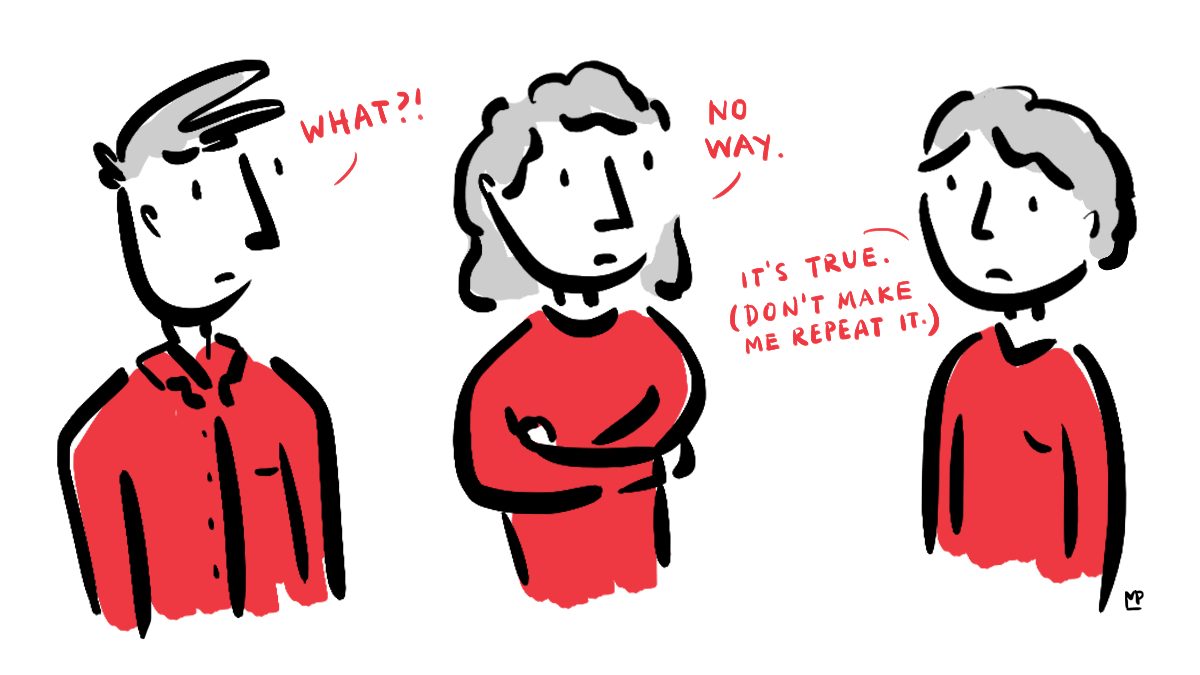
1. The Communication Crisis: Why Words Matter for Professional Identity
When a professional loses their role due to downsizing or restructuring, the primary damage is often to their sense of “brand authority.” For years, their identity may have been intertwined with a specific title or a prestigious company. A layoff disrupts this association, creating a vacuum that must be filled with a new, resilient narrative.
The Psychology of Brand Displacement
A layoff often triggers a “brand identity crisis.” The individual may feel that their value has diminished because their previous “employer brand” has detached from them. As a peer, mentor, or friend, what you say in the first 48 hours is vital. If your response focuses solely on the loss, you inadvertently reinforce the idea that the person is defined by their unemployment. If your response focuses on their inherent value, you help them maintain their brand equity.
How Language Shapes Market Perception
In professional circles, “what people say about you when you aren’t in the room” is the textbook definition of a brand. If the narrative surrounding a person’s exit is hushed, awkward, or pitying, it signals to the market that the exit was a failure of the individual. Conversely, if the narrative is framed as a “strategic transition” or a “market-driven shift,” the individual’s professional brand remains intact. Effective communication ensures that the layoff is seen as a footnote, not the final chapter.
2. The Supporter’s Guide: Mastering Brand-Positive Empathy
Most people mean well, but their words often miss the mark. Phrases like “everything happens for a reason” or “you’ll find something better” are platitudes that offer little tactical value. To truly support someone’s personal brand, your communication should be designed to validate their expertise and mobilize your shared network.
Moving from Sympathy to Advocacy
Sympathy is feeling for someone; advocacy is acting for someone. When someone tells you they have been laid off, the most brand-supportive response involves three components: Validation, Perspective, and Commitment.
- Validation: “The work you did on [Project X] was industry-leading. This shift doesn’t change that.”
- Perspective: “The market is currently recalibrating, and talent like yours is exactly what companies will be looking for in the next cycle.”
- Commitment: “I am going to keep my ears open for roles that match your specific expertise in [Niche Area].”
By focusing on their specific skills, you help the individual remember their “Unique Selling Proposition” (USP) at a time when they are most likely to forget it.
Actionable Brand Support: The “Public Endorsement”
One of the most powerful things you can say to someone who has been laid off is: “I’d like to write you a recommendation on LinkedIn today. What key strengths should I highlight?”
In the world of personal branding, a third-party endorsement is significantly more credible than self-promotion. By offering to publicly vouch for their skills immediately following a layoff, you provide them with “social proof” that counteracts any perceived stigma of being let-back into the job market. This is a strategic move that helps maintain their brand’s “premium” status in the eyes of recruiters.
3. The Individual’s Response: Reclaiming the Narrative
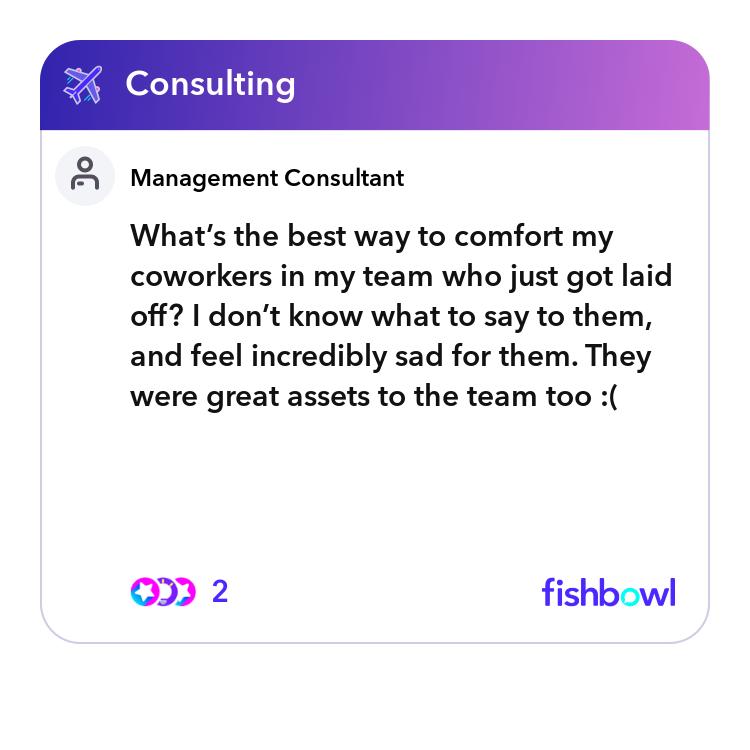
For the person who has been laid off, the most important “what to say” is what they say to themselves and their professional community. This is the moment of “Rebranding.” It is not about hiding the layoff, but about framing it within a larger story of growth and adaptability.
Drafting the “Why” and “What’s Next”
The most common question a displaced professional will face is: “What happened?” The brand-centric answer should be concise, objective, and forward-looking.
- The Wrong Way (Damages Brand): “The company was a mess, management didn’t know what they were doing, and I got caught in the crossfire. I’m just looking for anything right now.” (This projects bitterness and desperation.)
- The Brand-Strategic Way: “Due to a broader corporate restructuring, my role was eliminated. While I’m disappointed to leave the team, I’m proud of the [Specific Achievement] we reached, and I’m now focusing on taking my expertise in [Skillset] to a growth-stage company in the [Industry] sector.”
This response anchors the listener in the individual’s past successes and future goals, effectively bypassing the “victim” narrative.
Consistency Across Digital Platforms
A personal brand must be consistent to be believable. Once the “what to say” script is finalized, it must be reflected across all touchpoints. This includes the LinkedIn “About” section, the resume summary, and even casual networking conversations.
A key debate in personal branding is the “Open to Work” banner on LinkedIn. From a brand strategy perspective, if used, it should be paired with a headline that screams “Expertise” rather than “Availability.” Instead of “Looking for a new role,” the brand-first approach is “Senior Product Strategist | Specializing in SaaS Growth | Open to New Opportunities.” This keeps the focus on the value provided, not the employment status.
4. Networking After a Layoff: Leveraging Brand Advocacy
A layoff provides a unique, albeit forced, opportunity to audit one’s professional network. Networking isn’t about asking for a job; it’s about reminding your brand community of your existence and your value.
The “Information Interview” as a Brand Tool
When reaching out to contacts, the “what to say” should center on curiosity and market intelligence. A message like, “I’m currently exploring the next chapter of my career and would love to get your perspective on how the [Industry] is evolving,” is much more brand-positive than a request for a referral. It positions the individual as a high-level professional who is making a calculated, strategic move, rather than someone who is reacting to a crisis.
Strategic Transparency: To Post or Not to Post?
Many professionals now choose to announce their layoff publicly on platforms like LinkedIn. This can be a brilliant brand move if executed correctly. A “vulnerability post” that highlights gratitude for former colleagues, lists key achievements, and clearly states what the person is looking for next can go viral.
However, the “what to say” here must be carefully curated. It should avoid “venting” at all costs. A brand is built on trust and professionalism; airing corporate grievances, no matter how justified, creates a “brand risk” for future employers. The most successful layoff posts are those that serve as a “Professional Press Release”—informative, gracious, and strategically targeted toward the next objective.
5. Long-term Brand Resilience: Turning a Setback into a Pivot
Ultimately, the goal of navigating a layoff is to come out the other side with a brand that is stronger, more defined, and more resilient. The conversations had during this period are the building blocks of that new identity.
Defining Your New Professional Narrative
A layoff often allows a professional to shed parts of their brand that no longer serve them. Perhaps they were pigeonholed in a specific department or industry. What they say next can signal a pivot. By intentionally choosing to highlight different skills or interests in their post-layoff conversations, they can successfully rebrand themselves for an entirely different market.

The Power of “Giving Back” to the Brand Community
One of the most overlooked aspects of “what to say” after a layoff is what the individual says to others in the same boat. By becoming a source of encouragement and a connector for other displaced colleagues, an individual builds a reputation as a leader and a “culture-builder.” This altruistic branding pays dividends; it demonstrates high emotional intelligence (EQ) and a collaborative spirit—traits that are highly sought after in executive and leadership roles.
In conclusion, a layoff is a test of a personal brand’s durability. By choosing words that emphasize value over loss, strategy over emotion, and advocacy over sympathy, both the supporter and the individual can navigate the transition with professional grace. Remember: A job is what you do, but your brand is who you are. The former can be taken away in a meeting; the latter is built and sustained by every word you choose to say.
aViewFromTheCave is a participant in the Amazon Services LLC Associates Program, an affiliate advertising program designed to provide a means for sites to earn advertising fees by advertising and linking to Amazon.com. Amazon, the Amazon logo, AmazonSupply, and the AmazonSupply logo are trademarks of Amazon.com, Inc. or its affiliates. As an Amazon Associate we earn affiliate commissions from qualifying purchases.