
In an age dominated by instant messaging, email, and social media, the humble voicemail might seem like an relic, a forgotten corner of our digital communication landscape. Yet, overlooking its potential is a significant branding misstep. For many, your voicemail greeting is not just a placeholder; it’s an extension of your personal or corporate brand, a crucial touchpoint that shapes perception, communicates professionalism, and reinforces your identity. When a caller reaches your voicemail, they are greeted by your digital receptionist, and the message they hear can either solidify their trust and confidence or leave them questioning your attention to detail and professional commitment. This article delves into the art and science of crafting a voicemail message that doesn’t just inform but brands – leaving a lasting, positive impression that resonates with your professional image and strategic objectives.
The Voicemail as a Brand Touchpoint
Every interaction a client, colleague, or prospective employer has with you or your company contributes to their overall perception – your brand. From the aesthetics of your website to the tone of your emails, each element is a building block. The voicemail, often an overlooked element, holds surprising power as a brand touchpoint, silently shaping perceptions even before direct conversation begins.
The First Impression, Redefined
Consider the scenario: someone calls you or your business for the first time. Perhaps they’ve heard good things, seen your marketing, or received a referral. They dial with a certain expectation. If they encounter a generic, garbled, or unprofessional voicemail, that initial positive impression can quickly erode. Conversely, a clear, articulate, and thoughtfully constructed greeting can instantly reinforce professionalism, efficiency, and attention to detail. It’s an opportunity to reiterate who you are, what you stand for, and that you value their communication, setting a positive tone for future interactions. This is particularly critical for individuals in client-facing roles, freelancers building their personal brand, and businesses striving for a consistent corporate identity.
Consistency Across Channels
A strong brand is a consistent brand. Whether through your social media presence, your email signature, your website’s “About Us” page, or your in-person demeanor, a cohesive message instills trust and recognition. Your voicemail should be no exception. The tone, language, and information provided in your voicemail ought to align seamlessly with your broader communication strategy. If your brand voice is friendly and approachable, your voicemail should reflect that warmth. If it’s authoritative and efficient, the message should convey competence and clarity. Inconsistency, such as a casual voicemail for a corporate brand, can create confusion and dilute the carefully cultivated brand image you’ve worked to establish across other marketing and communication channels.
Professionalism and Perception
At its core, branding is about managing perception. A professional voicemail message conveys that you are organized, accessible (even when unavailable), and respectful of others’ time. It subtly communicates that you are serious about your work and that you prioritize effective communication. For businesses, a polished voicemail suggests a well-run operation with clear communication protocols, which directly impacts customer confidence and loyalty. For individuals, it signals reliability and a meticulous approach to personal and professional responsibilities, crucial for building a robust personal brand and career progression.
Core Elements of a Branded Voicemail Message
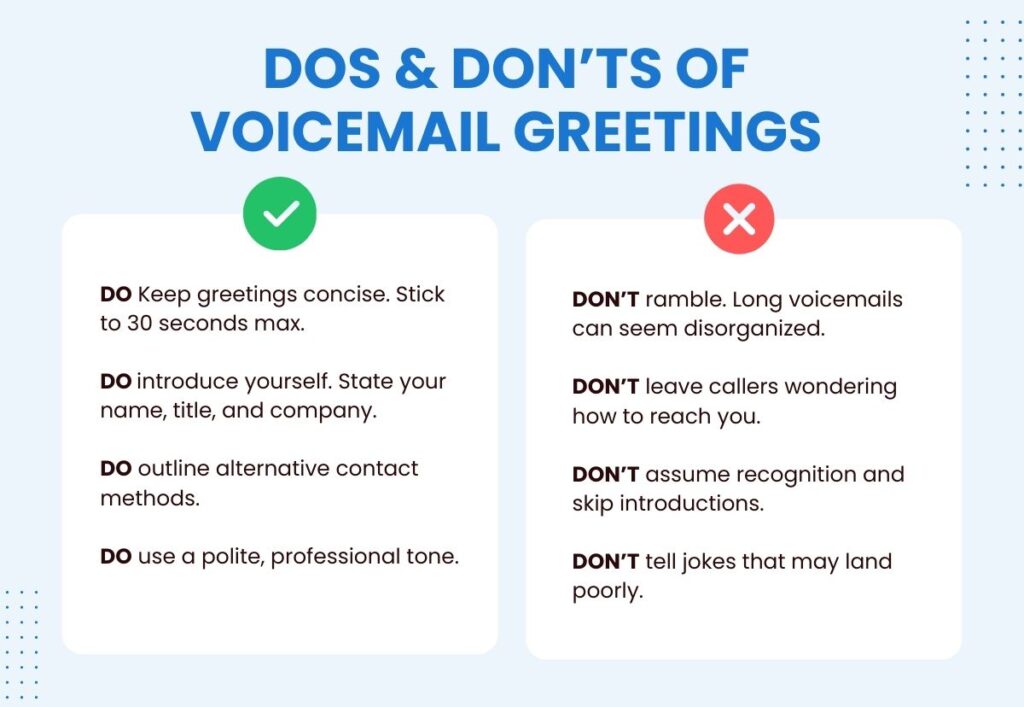
Crafting an effective voicemail isn’t about lengthy monologues; it’s about strategic brevity. Each word should serve a purpose, contributing to the overall brand message you wish to convey.
The Power of a Clear Introduction
The very first words set the stage. Begin by clearly stating your name and, if applicable, your company name. This immediate identification reassures the caller that they’ve reached the right person or entity. For a personal brand, “You’ve reached [Your Name]” is sufficient. For a corporate identity, “You’ve reached [Your Name] at [Company Name]” adds an extra layer of professionalism. If you’re managing a shared inbox or department line, clearly state, “You’ve reached the [Department Name] at [Company Name].” Clarity here is paramount – avoid mumbling or speaking too quickly.
Managing Expectations with Availability
One of the primary functions of a voicemail is to manage expectations. Callers want to know when they can anticipate a return call or what alternative contact methods are available. State your typical response time (e.g., “I typically return calls within one business day,” or “We aim to respond to all inquiries within 24 hours”). If you’re out of the office for an extended period, mention that and provide a specific return date. This transparency reduces caller frustration and reinforces your brand’s commitment to efficiency and customer service. Providing an alternative contact, such as an email address or a colleague’s number for urgent matters, is also a highly effective way to maintain brand accessibility.
A Concise Call to Action
Don’t leave the caller guessing. A well-structured voicemail includes a clear, concise call to action. What do you want them to do? Most commonly, it’s “Please leave your name, number, and a brief message after the tone.” However, depending on your brand and purpose, it could be more specific: “Please state your account number and the nature of your query,” or “Visit our website at [website.com] for more information.” For marketing or sales lines, you might direct them to a specific landing page or promotional offer. The call to action guides the caller, making their next step effortless and productive.
The Professional Sign-Off
End your message politely and professionally. A simple “Thank you for your call” or “We look forward to connecting with you” reinforces courtesy and appreciation for their time. This polite closing leaves a positive final impression, aligning with a brand that values its relationships.
Tailoring Your Voicemail for Specific Branding Goals
While the core elements remain consistent, the nuances of your voicemail message should be tailored to your specific branding objectives, whether personal or corporate.
Personal Branding: Establishing Your Professional Identity
For individuals – job seekers, freelancers, entrepreneurs, or executives – your voicemail is a direct reflection of your personal brand. Use it to project competence, availability, and a professional demeanor.
- Job Seekers: Maintain a highly professional and enthusiastic tone. “You’ve reached [Your Name]. I’m currently unavailable, but your call is important to me. Please leave your name, number, and a detailed message, and I’ll return your call as soon as possible.” Avoid any casualness.
- Freelancers/Consultants: Emphasize responsiveness and client focus. “Hello, this is [Your Name] of [Your Business Name]. I’m currently assisting other clients, but I’m keen to connect with you. Please leave your details and a brief overview of your project, and I’ll get back to you within [X] hours.” You might also mention a specific service or expertise if it’s a core part of your brand.
- Executives/Leaders: Project authority and efficiency. “You’ve reached [Your Name]. I’m unable to take your call at the moment. Please leave your name, number, and a brief message, and I will respond as soon as my schedule permits. For urgent matters, please contact [Assistant’s Name] at [Assistant’s Number].”

Corporate Branding: Projecting Company Values
For businesses, the voicemail is a critical component of your corporate identity and customer service strategy. It should embody your brand’s values, whether that’s efficiency, warmth, innovation, or reliability.
- Customer Service Lines: Focus on helpfulness and managing expectations. “Thank you for calling [Company Name] Customer Service. All our agents are currently assisting other customers. Please leave your name, account number, and a detailed message, and we’ll return your call within [X] business hours. You can also find answers to common questions on our website at [website.com].”
- Sales Departments: Project enthusiasm and direct callers to relevant information. “You’ve reached the Sales Department at [Company Name]. We’re excited to help you! Please leave your contact information and details about your inquiry, and one of our sales representatives will call you back shortly. To learn more about our products, visit [website.com/products].”
- General Inquiries: Maintain a broad, welcoming tone. “Thank you for calling [Company Name]. We appreciate your interest. Please leave your name, number, and the nature of your inquiry after the tone, and we’ll direct your message to the appropriate department. Our office hours are [Hours] [Time Zone], Monday through Friday.”
Out-of-Office and Holiday Messages: Maintaining Professionalism During Absence
Absence is inevitable, but professionalism should not be. These messages are crucial for managing client and colleague expectations during your unavailability.
- Vacation/Leave: Clearly state your absence, return date, and emergency contact. “Hello, you’ve reached [Your Name]. I am currently out of the office on vacation and will return on [Date]. I will have limited access to emails and phone calls during this time. For urgent matters, please contact [Colleague’s Name] at [Colleague’s Email/Number]. Otherwise, I will respond to your message upon my return.”
- Holidays: Acknowledge the holiday and state when operations will resume. “Happy Holidays! You’ve reached [Company Name]. Our offices are closed in observance of [Holiday] and will reopen on [Date]. Please leave a message, and we will respond promptly upon our return.”
Best Practices for Voicemail Branding
Beyond the content, the delivery and maintenance of your voicemail message are equally vital for effective branding.
Keep it Concise and Clear
Time is precious. A voicemail greeting should be no longer than 20-30 seconds. Get straight to the point, deliver your message clearly, and avoid unnecessary jargon or lengthy explanations. Brevity demonstrates respect for the caller’s time and reflects an efficient brand.
Injecting Personality (Appropriately)
While professionalism is key, a touch of personality can make your brand more relatable and memorable. This doesn’t mean telling jokes, but rather allowing your natural voice and enthusiasm to shine through, provided it aligns with your brand identity. A warm, friendly tone for a personal brand, or a confident, reassuring tone for a corporate brand, can make a significant difference. Record your message with a smile – it genuinely comes across in your voice!
Regular Review and Updates
Your voicemail isn’t a “set it and forget it” item. Your availability, role, or company information might change. Make it a practice to review and update your greeting quarterly, or whenever there’s a significant change in your schedule, role, or company offerings. An outdated message immediately detracts from your brand’s professionalism and can cause frustration.
Technical Quality Matters
A perfectly crafted message delivered with poor audio quality is a wasted effort. Record your message in a quiet environment, free from background noise. Speak clearly and at a moderate pace. Ensure your voice is audible and not distorted. Consider using a good quality microphone if you regularly record messages for a professional line. Your voice quality reflects your attention to detail – a crucial aspect of any strong brand.
Common Voicemail Branding Pitfalls to Avoid
Even with the best intentions, some common mistakes can undermine your voicemail branding efforts.
The Generic, Uninspired Message
The default voicemail message provided by your phone carrier (“Your call has been forwarded to an automatic voice message system…”) is the epitome of uninspired. It communicates nothing about your brand, often sounds unprofessional, and wastes an opportunity to engage the caller. Always customize your greeting.
Outdated Information
Providing incorrect or outdated information – a wrong return date, a discontinued promotion, or a colleague’s number who no longer works there – is not only unhelpful but actively damaging to your brand’s credibility. It suggests a lack of oversight and attention to detail.
Poor Audio Quality or Mumbling
Muffled sounds, heavy breathing, background chatter, or speaking too fast make it difficult for the caller to understand your message. This frustration reflects poorly on your brand, making you seem disorganized or uncaring. Clear articulation and good audio are non-negotiable.

Sounding Rushed or Unprofessional
Recording your message in a hurry, sounding exasperated, or using overly casual language (unless it’s a deliberate part of a very specific, informal brand identity) can leave a negative impression. Your voicemail should convey composure, professionalism, and a respectful attitude towards the caller.
In conclusion, the voicemail is far more than just a place for callers to leave a message. It is a powerful, yet frequently underestimated, tool in your branding arsenal. By thoughtfully crafting your digital greeting with clear introductions, managed expectations, concise calls to action, and professional sign-offs, you can transform this small interaction into a significant opportunity. Adhering to best practices like conciseness, appropriate personality, regular updates, and high technical quality ensures that your voicemail consistently reinforces your personal or corporate brand identity. In an increasingly competitive landscape, every touchpoint matters. Don’t let your voicemail be an afterthought; empower it to be an active, impactful voice for your brand.
aViewFromTheCave is a participant in the Amazon Services LLC Associates Program, an affiliate advertising program designed to provide a means for sites to earn advertising fees by advertising and linking to Amazon.com. Amazon, the Amazon logo, AmazonSupply, and the AmazonSupply logo are trademarks of Amazon.com, Inc. or its affiliates. As an Amazon Associate we earn affiliate commissions from qualifying purchases.