
Navigating the intricate world of Elden Ring, an expansive software environment, requires a deep understanding of its core character progression mechanics. Optimizing your character’s attributes is paramount to survival and success, shaping your offensive capabilities, defensive resilience, and utility within the game’s challenging landscape. This guide delves into the strategic allocation of Runes to enhance your Tarnished, ensuring an efficient and powerful journey through the Lands Between.
Understanding Elden Ring’s Core Stats and Their Impact
Elden Ring features eight primary attributes, each governing distinct aspects of your character’s performance. A balanced or specialized approach to leveling these stats is crucial, directly influencing your viability against the formidable adversaries and environmental hazards encountered.

Vigor: The Foundation of Survival
Vigor directly dictates your character’s maximum HP (Hit Points). In a game where even basic enemies can inflict substantial damage, investing heavily in Vigor is arguably the single most critical early-game decision for almost any build. Higher HP provides a larger buffer against incoming attacks, reducing the frequency of one-shot deaths and allowing for more mistakes in combat. While its effectiveness tapers off slightly after certain soft caps (typically around 40 and 60), neglecting Vigor will invariably lead to a significantly more frustrating experience, regardless of your offensive prowess. Prioritizing Vigor ensures you have the necessary resilience to learn combat patterns and survive prolonged encounters.
Mind: Fueling Your Arts and Spells
Mind governs your FP (Focus Points), which are consumed when using Skills (Weapon Arts), Sorceries, and Incantations. For builds heavily reliant on magical attacks, ranged combat, or frequent use of powerful weapon arts, Mind becomes a critical resource. A higher Mind stat allows for sustained offensive pressure without constantly needing to consume Cerulean Flasks, enhancing combat flow and resource management. While pure melee builds might find less immediate value in Mind, even they benefit from increased FP for powerful Weapon Arts, making it a universal consideration to some extent. The optimal Mind level often correlates with the FP cost of your primary offensive or utility skills.
Endurance: Stamina, Equip Load, and Poise
Endurance is a multifaceted attribute, impacting three vital aspects: Stamina, Equip Load, and Poise. Stamina is consumed by actions such as attacking, dodging, blocking, and sprinting. More Stamina allows for longer attack sequences, more evasive maneuvers, and greater mobility, directly enhancing combat agility and defensive options. Equip Load determines how much weight your character can carry from armor and weapons without incurring penalties to dodge roll speed and distance. Maintaining a “Medium Load” is often desirable for maneuverability, making Endurance essential for wearing heavier armor sets or wielding multiple powerful weapons. Poise, a hidden stat also influenced by Endurance, affects your resistance to stagger, allowing you to absorb hits without being interrupted during your own attacks. A higher Poise value means fewer interruptions, enabling more aggressive play.
Strength and Dexterity: The Martial Mainstays
Strength and Dexterity are the primary scaling attributes for most physical weapons.
- Strength primarily enhances the damage of heavy, large weapons and allows you to wield them effectively (meeting their stat requirements). Many colossal weapons, greatshields, and certain weapon arts scale predominantly with Strength. It also slightly increases your physical defense.
- Dexterity boosts the damage of lighter, faster weapons, bows, and some katanas. It also speeds up spellcasting slightly, reduces fall damage, and makes certain weapon arts execute faster. Weapons with “keen” or “quality” affinities often benefit significantly from Dexterity.
Choosing between Strength, Dexterity, or a balanced “Quality” build (investing in both) depends entirely on your preferred weapon type and playstyle. Carefully examine the scaling grades (S, A, B, C, D, E) on your chosen armaments to optimize your damage output.
Intelligence, Faith, and Arcane: The Spellcasting and Status Enablers
These three attributes form the backbone of magical and status-effect-based builds.
- Intelligence is the primary stat for Sorceries, which typically involve glintstone magic, gravity spells, and cold damage. It also scales with certain magical weapons and staffs. Characters focusing on long-range magical offense will heavily invest in Intelligence.
- Faith is the core stat for Incantations, covering a vast array of divine, draconic, fire, lightning, and healing spells. It also scales with Sacred Seals and certain holy weapons. Faith builds offer immense versatility, ranging from powerful offensive spells to critical support and healing.
- Arcane is a more niche but powerful attribute. It increases Item Discovery (the chance for enemies to drop loot), scales with certain unique weapons, and is essential for particular Sorceries and Incantations. Crucially, Arcane also boosts the effectiveness of passive status effects like Bleed, Frostbite, and Poison on weapons that have “Arcane” scaling. For builds focused on status effect accumulation, Arcane is indispensable.
Strategic Stat Allocation for Different Playstyles
Effective leveling in Elden Ring isn’t about universally maximizing all stats; it’s about crafting a character whose attributes synergize with their chosen equipment and combat strategy.
The Melee Warrior: Prioritizing Vigor, Endurance, Strength/Dexterity
A character focused on direct physical combat will primarily funnel Runes into Vigor for survivability, Endurance for sustained combat and equip load, and either Strength or Dexterity (or both for a Quality build) to maximize weapon damage.
- Early Focus: Vigor to 20-30, then enough Strength/Dexterity to comfortably wield your chosen primary weapon.
- Mid-Game: Continue pushing Vigor towards 40-50, increase Endurance to maintain a medium equip load with desired armor, and cap your primary damage stat (Str/Dex) at its first soft cap (typically 40 or 50).
- Late-Game: Vigor to 50-60, Endurance to 30-40 (or higher for heavier armor), and further invest in your damage stats towards their second soft cap (usually 60-80). Mind can be raised slightly to enable a few powerful Weapon Arts.
The Spellcaster: Balancing Mind, Vigor, and Your Chosen Spell Stat
Spellcasters must carefully balance the resources to cast spells (Mind), the power of their spells (Intelligence or Faith), and their ability to survive attacks (Vigor).
- Early Focus: Vigor to 20-25, and your chosen spell stat (Int or Faith) to 20-25 to unlock early powerful spells. Mind should be raised to provide a comfortable FP pool.
- Mid-Game: Continue pushing your primary spell stat towards 40-50, while raising Vigor to 30-40 and Mind to 25-35. Dexterity can be minimally raised (around 12-18) to slightly speed up cast times and wield basic utility weapons.
- Late-Game: Maximize your primary spell stat towards 60-80, Vigor to 40-50, and Mind to 35-45. Consider investing in a secondary spell stat for hybrid utility (e.g., Faith for buffs if primarily Intelligence).
The Hybrid Build: Synergizing Physical and Magical Attributes
Hybrid builds combine melee combat with spellcasting, offering immense versatility but often requiring more careful stat distribution and a higher overall character level.
- Common Hybrids: Strength/Faith (Paladin), Dexterity/Intelligence (Spellblade), Arcane/Faith (Dragon Communion).
- Early Focus: Prioritize Vigor (20-25) and ensure you meet the minimum requirements for your desired primary weapon and initial spells.
- Mid-Game: Raise your primary physical damage stat (Str/Dex) and your primary spell damage stat (Int/Fth/Arc) in tandem, aiming for around 30-40 in each. Vigor should be pushed to 30-40, and Mind/Endurance moderately increased based on resource needs.
- Late-Game: Aim for Vigor 40-50, and push your two primary damage stats towards 40-50 each. Higher levels will allow you to push one or both closer to their 60-80 soft caps. The key is to find weapons and catalysts that scale well with both your chosen attributes.
The Arcane Specialist: Leveraging Discovery and Status Effects
Arcane builds often focus on weapons with inherent Bleed/Frostbite/Poison scaling or specific Arcane-scaling Sorceries/Incantations.
- Early Focus: Vigor to 20-25, Arcane to 20-25 to meet weapon requirements (e.g., Mohgwyn’s Sacred Spear, Rivers of Blood) or certain spell catalysts.
- Mid-Game: Increase Arcane towards 40-50, as this directly boosts status effect buildup and scales certain powerful weapons. Vigor to 30-40. Consider modest investment in Dexterity or Strength to meet weapon requirements, or Faith for Dragon Communion Incantations.
- Late-Game: Push Arcane to 60-80 for maximum status effect potency and spell damage from Arcane-scaling catalysts. Vigor to 40-50. Endurance and Mind should be raised as needed for your specific weapon and spell repertoire.
Early Game Leveling: Building a Strong Foundation
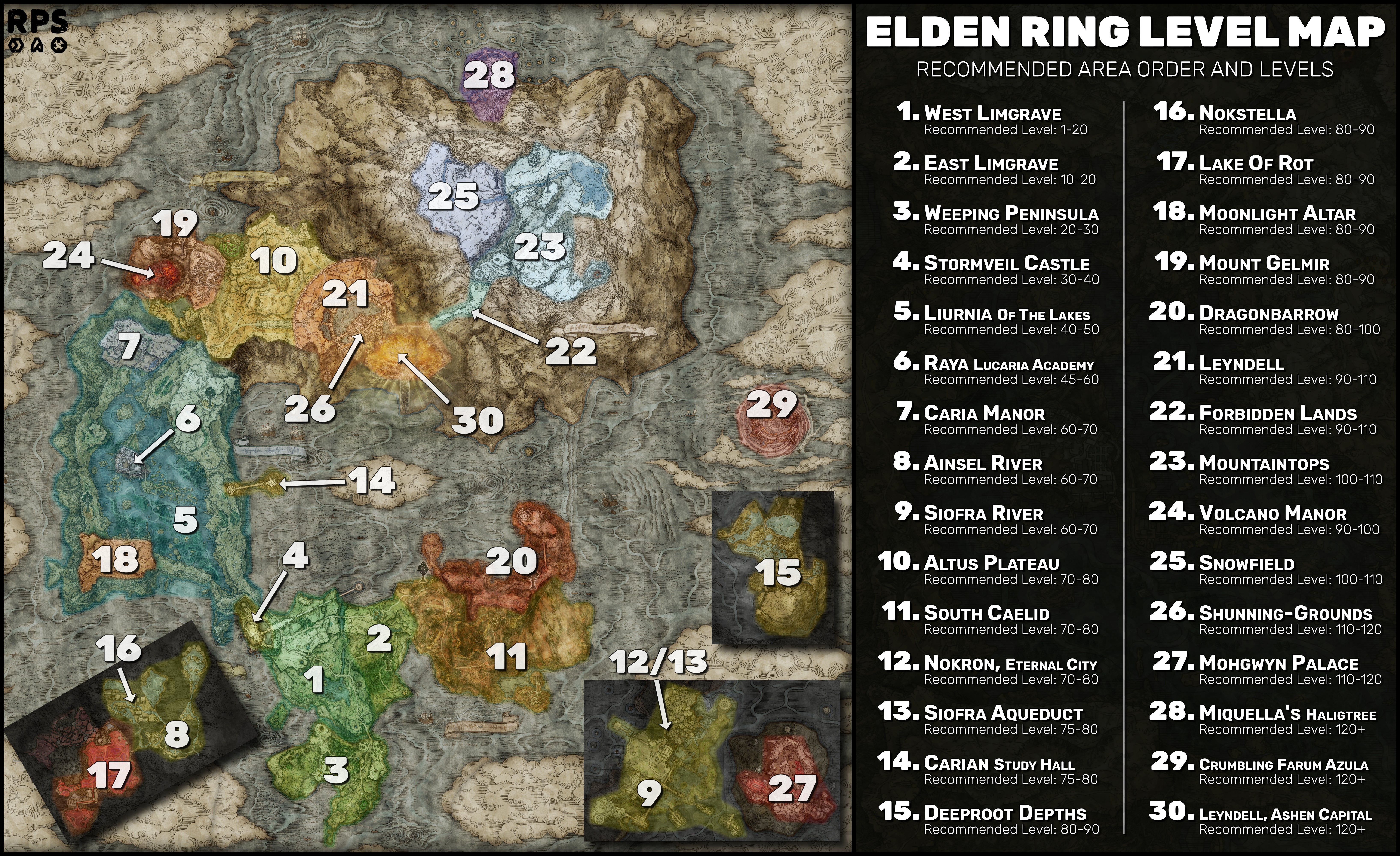
The initial hours in Elden Ring are critical for setting your character on a viable path. Misallocation of Runes early on can significantly increase the difficulty.
Initial Vigor Push: Survivability First
Regardless of your intended build, the first 10-15 levels should almost always see a substantial investment in Vigor. Reaching 20-25 Vigor as quickly as possible provides a crucial survivability buffer that allows you to explore, learn enemy attack patterns, and make mistakes without instant death. This resilience is far more valuable than a slight increase in damage during the early stages.
Meeting Weapon Requirements: Early Damage Spikes
Once a comfortable Vigor level is achieved, identify your preferred early-game weapon(s) and raise Strength and/or Dexterity just enough to wield them effectively. Prioritizing minimum requirements allows you to access better damage and move sets, making combat more manageable. Avoid over-investing beyond the requirements until Vigor is sufficient.
Unlocking Key Spells/Incantations: Expanding Your Toolkit
For magic-focused builds, after securing initial Vigor, invest in Intelligence or Faith (and possibly Mind) just enough to cast a few fundamental offensive or utility spells. These early spells can dramatically expand your combat options and help clear groups of enemies or defeat challenging foes from a distance.
Mid-to-Late Game Optimization: Refining Your Build
As you progress through the Lands Between, your leveling strategy will shift from foundational building to fine-tuning and optimization.
Soft Caps and Diminishing Returns: Efficient Stat Distribution
Elden Ring’s attributes have “soft caps,” points at which further investment yields significantly fewer benefits. For Vigor, the first soft cap is around 40, and a second at 60. For damage-scaling stats (Str, Dex, Int, Fth, Arc), primary soft caps are often around 40-50, with further diminishing returns up to 60-80. Understanding these caps is vital for efficient Rune expenditure. Beyond these points, a single level-up provides less overall power, encouraging players to diversify stat investment or respect to a different build.
Tailoring to Bosses and Areas: Adaptability is Key
While maintaining your core build, consider minor adjustments based on the challenges ahead. For instance, if you’re entering an area with many magical enemies, perhaps invest slightly more into a defensive stat or an elemental resistance talisman. Against a physically imposing boss, maximizing physical defense and Vigor becomes paramount. The ability to pivot slightly within your framework can be the difference between victory and defeat.
Leveraging Talismans and Great Runes: Further Customization
Leveling isn’t the only way to boost your stats. Talismans offer significant passive bonuses, often increasing attributes, damage, or defensive capabilities. Similarly, activating Great Runes after defeating certain Demigods provides powerful, temporary stat boosts. Incorporate these into your build planning, as they can free up valuable Rune investment from stats to other areas. For example, a talisman that grants +5 Vigor allows you to invest those five levels elsewhere without sacrificing HP.

The Importance of Respecing: Adapting to New Challenges
Elden Ring offers the valuable option to “respec” your character, reallocating all your accumulated levels at certain points in the game. After defeating Rennala, Queen of the Full Moon, you gain the ability to undergo “Rebirth” using a Larval Tear. This mechanism is incredibly forgiving and encourages experimentation. Don’t be afraid to try different builds if your current one feels suboptimal or if you discover a new weapon/spell that dramatically changes your preferred playstyle. The ability to respec allows players to adapt to new content, experiment with different strategies, and fine-tune their character without the need to restart the entire game, ensuring long-term engagement with the software.
aViewFromTheCave is a participant in the Amazon Services LLC Associates Program, an affiliate advertising program designed to provide a means for sites to earn advertising fees by advertising and linking to Amazon.com. Amazon, the Amazon logo, AmazonSupply, and the AmazonSupply logo are trademarks of Amazon.com, Inc. or its affiliates. As an Amazon Associate we earn affiliate commissions from qualifying purchases.