
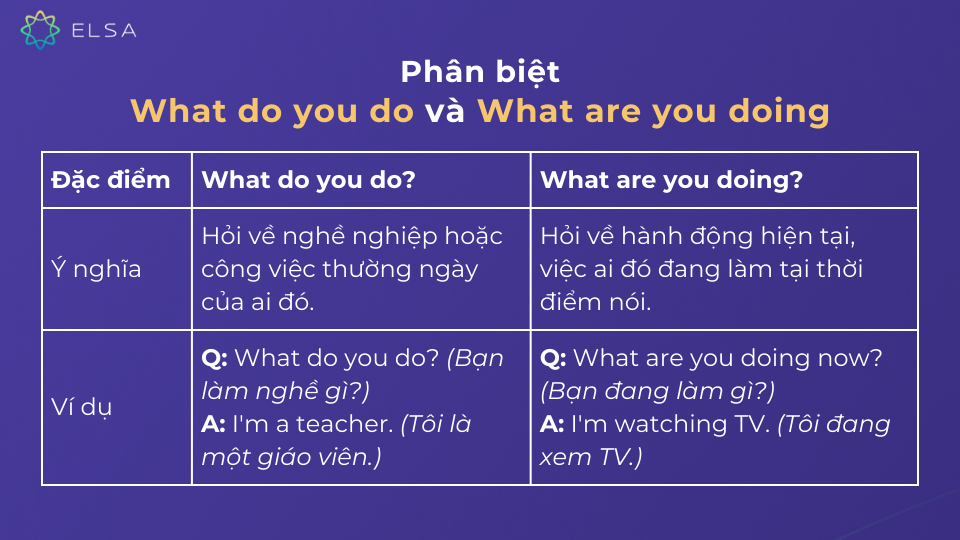
The question is inevitable. Whether you are at a high-stakes networking event, a casual dinner party, or a formal boardroom presentation, someone will eventually lean in and ask: “So, what do you do?”
For most, the response is a reflex—a job title, a company name, or a brief list of responsibilities. However, in the realm of brand strategy, this question is not an inquiry about your daily schedule; it is an invitation to define your value. In a world saturated with noise, how you answer “What do you do?” determines whether you are perceived as a commodity or a category of one. To master this answer is to master the core of personal and corporate branding.

The Psychology of the Elevator Pitch: Why Your Answer Matters
The “elevator pitch” is a concept as old as modern business, yet its importance has only grown in the digital age. When you answer the question of what you do, you are performing an act of brand positioning. You are telling the listener where to “file” you in their mental cabinet. If your answer is vague, you are filed under “unimportant.” If it is too complex, you are filed under “confusing.”
Defining the Value Proposition
A brand is not what you say it is; it is what they say it is. Therefore, your answer must focus on the transformation you provide rather than the tasks you perform. Instead of stating, “I am a graphic designer,” a brand-focused professional might say, “I help tech startups visualize their future to attract Tier-1 investors.”
The first response is a role; the second is a value proposition. By identifying the pain point (attracting investors) and the solution (visualizing the future), you create a brand narrative that resonates emotionally and logically.
Moving Beyond Job Titles
Job titles are often the enemies of brand clarity. Titles like “Project Manager” or “Consultant” are generic and fail to capture the unique essence of a brand. To build a powerful identity, you must look for the “verb” of your career. Are you an accelerator? Are you a simplifier? Are you a protector?
When you shift from a noun (the title) to a verb (the action), your brand becomes dynamic. It suggests movement and results. This shift is the first step in moving from a corporate cog to a personal brand that commands attention.
Building a Personal Brand Strategy Around Your Purpose
Personal branding has evolved from a niche concept for celebrities to a requirement for every professional. At its heart, personal branding is about consistency. It is the alignment of your skills, your values, and how the world perceives you. When you know “what you do” at a foundational level, every other branding decision—from your LinkedIn headshot to the tone of your emails—becomes easier to manage.
The Narrative Arc of Your Career
Every great brand has a story. In brand strategy, we look for the “Origin Story,” the “Challenge,” and the “Resolution.” When someone asks what you do, they are often looking for the thread that connects your past experiences to your current expertise.
A compelling brand narrative doesn’t just list achievements; it explains the “Why.” Simon Sinek’s famous “Start With Why” framework is essential here. People don’t buy what you do; they buy why you do it. If your brand is built on the purpose of making information accessible, that purpose should shine through whether you are working in education, tech, or journalism.
Visual Identity vs. Verbal Messaging
While “what you do” is a verbal question, the answer is reinforced by visual branding. If you claim to be a high-end luxury consultant but your digital touchpoints—your website, your business cards, or your social media profiles—look dated or cluttered, there is a brand fracture.
Brand strategy requires “congruence.” Your verbal messaging (your pitch) must match your visual identity. This means choosing a color palette, typography, and imagery that evoke the same feelings as your spoken words. If your brand is “Innovation,” your aesthetic should be modern and forward-thinking. If it is “Trust,” your aesthetic should be stable and classic.
Corporate Identity: How Organizations Answer the Question
The question “What do you do?” is just as vital for a multinational corporation as it is for an individual. For a business, the answer is found in its corporate identity and market positioning. When a brand loses sight of what it does, it suffers from “brand creep”—a dangerous expansion into areas where it has no authority, leading to a diluted reputation and lost revenue.

Mission Statements That Actually Work
Most corporate mission statements are buried in employee handbooks, filled with jargon like “synergy” and “best-in-class.” However, a truly effective brand knows that its mission statement is the definitive answer to “What do you do?”
Take, for example, a company like Patagonia. What do they do? They don’t just “sell outdoor clothing.” Their brand identity is built on the mission: “We’re in business to save our home planet.” This clarity allows them to make decisions about product lines, marketing campaigns, and political activism with total consistency. A strong corporate brand uses its mission as a filter for every business opportunity.
Brand Positioning in a Competitive Market
In a crowded marketplace, answering “what you do” requires a deep understanding of the competitive landscape. This is where “Positioning” comes into play. Positioning is the act of designing a company’s offering and image to occupy a distinctive place in the mind of the target market.
Are you the low-cost leader? The premium innovator? The customer-centric boutique? You cannot be all things to all people. A brand that tries to do everything ends up doing nothing well. Effective brand strategy involves making “hard trades”—deciding what you don’t do is often more important than deciding what you do.
Digital Presence: Translating Your Brand to the Online World
In the modern era, the first time someone asks “what do you do,” they probably won’t be looking at your face; they’ll be looking at a screen. Your digital presence is your brand’s 24/7 ambassador. If your online identity is fragmented or silent, you are letting others define what you do for you.
Optimizing LinkedIn and Professional Profiles
LinkedIn has become the “front page” of professional branding. Your headline is the literal answer to the prompt of this article. Instead of a default headline like “Sales Manager at XYZ Corp,” an optimized brand uses that space for a “hook.”
“Driving 40% YoY Growth for SaaS Startups through Human-Centric Sales Strategies” is a headline that tells a story. It uses data, specifies a niche, and highlights a methodology. This is how you use digital tools to scale your brand identity beyond a physical room.
Content Consistency and Thought Leadership
To reinforce your brand, you must move from a passive participant to a thought leader. This involves creating or curating content that aligns with what you do. If your brand is centered on “The Future of Marketing,” your digital output should reflect that.
Consistency is the bedrock of trust. If you post about marketing one day, your pet the next, and political grievances the third, your brand becomes “noisy.” A professional brand strategy involves a content calendar that ensures every post, comment, and share reinforces the core answer to the question: “What do you do?”
Future-Proofing Your Brand in a Changing Economy
The world is changing at an unprecedented rate. Industries are being disrupted, and roles are being redefined by technology. In this environment, the answer to “What do you do?” cannot be static. It must be adaptable while remaining rooted in a core identity.
Adaptability as a Brand Pillar
A common mistake in branding is being too specific about how you do things, rather than what you achieve. If your brand was “The Best Newspaper Printer in the State,” you were in trouble twenty years ago. If your brand was “The Premier Provider of Local Information,” you had a path to digital transformation.
Future-proofing your brand requires focusing on “evergreen” value. Skills may become obsolete, but the ability to solve a specific type of problem is timeless. A brand that views itself as a “Problem Solver” for a specific demographic will always find a way to answer the question, regardless of the tools they use.
Measuring Brand Equity
Finally, how do you know if your answer is working? In the world of branding, we call this “Brand Equity.” This is the commercial value that derives from consumer perception of the brand name of a particular product or person, rather than from the product or service itself.
If people seek you out specifically because of your reputation, if you can charge a premium for your services, or if you find that “doors open” before you even speak—your brand equity is high. You have successfully communicated what you do. You are no longer just a worker or a vendor; you are a recognized authority.
In conclusion, “What do you do?” is the most powerful question in business. It is the foundation of your strategy, the heart of your marketing, and the key to your professional legacy. By answering it with clarity, purpose, and a focus on value, you don’t just describe your job—you build a brand that lasts.
aViewFromTheCave is a participant in the Amazon Services LLC Associates Program, an affiliate advertising program designed to provide a means for sites to earn advertising fees by advertising and linking to Amazon.com. Amazon, the Amazon logo, AmazonSupply, and the AmazonSupply logo are trademarks of Amazon.com, Inc. or its affiliates. As an Amazon Associate we earn affiliate commissions from qualifying purchases.