
Wheat is arguably the most foundational resource in the Minecraft ecosystem. While more advanced materials like Netherite or Redstone often capture the attention of veteran players, the humble wheat stalk remains the backbone of survival, technical automation, and economic progression. Within the software’s framework, wheat serves as a multi-purpose tool that bridges the gap between early-game survival and late-game industrialization. Understanding how to maximize its utility requires a deep dive into the game’s mechanics, from growth algorithms to villager trade tables.
The Fundamentals of Agricultural Resource Management
At its core, wheat production is a lesson in managing the internal logic of Minecraft’s “Random Tick” system. To use wheat effectively, one must first understand how to produce it at scale, which involves optimizing the digital environment to ensure the highest possible yield per hour.

Understanding the Growth Cycle and Tick Mechanics
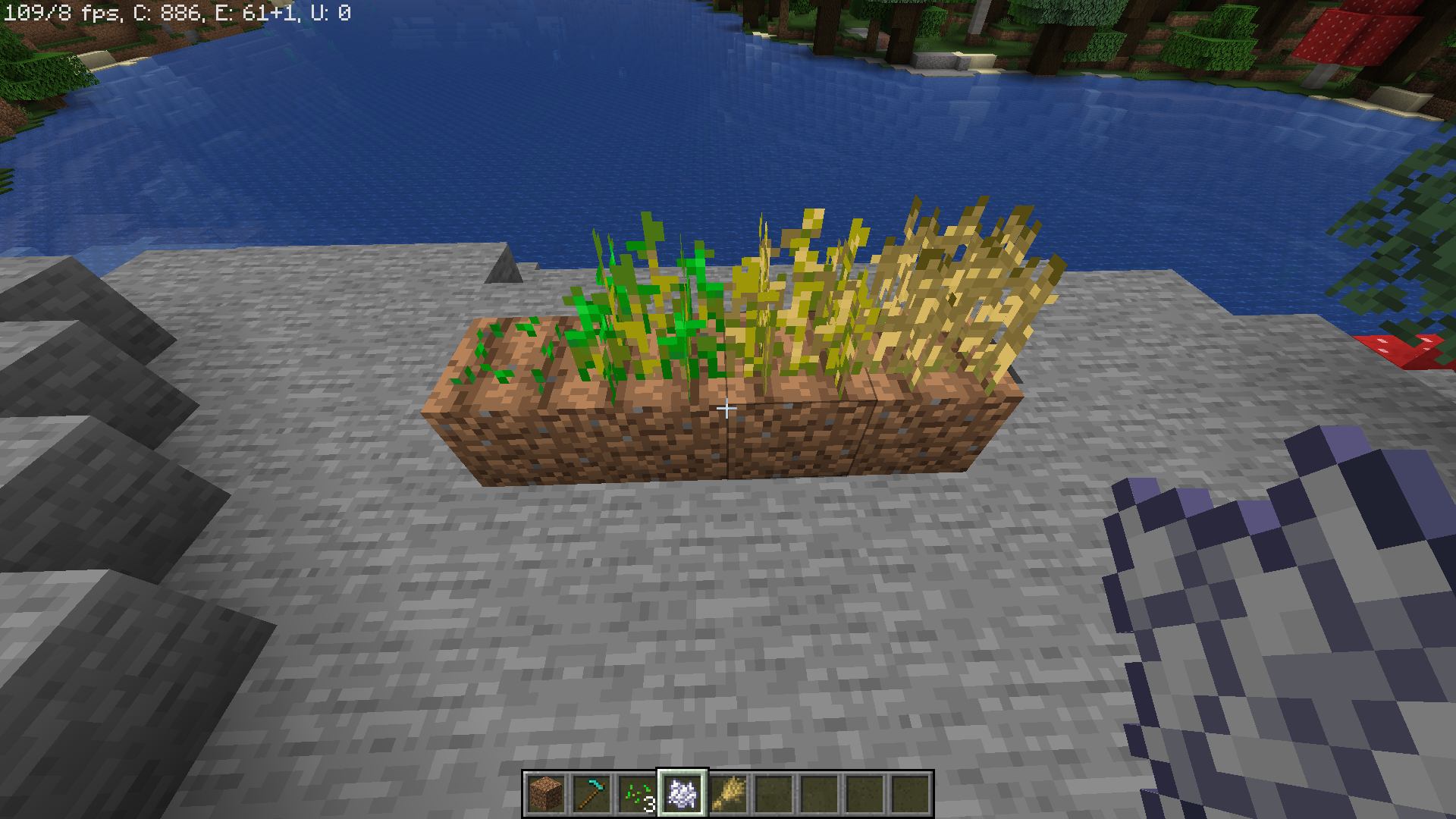
Wheat growth is governed by block ticks. Every few seconds, the game engine selects blocks within a certain radius of the player to update. For wheat, this update results in one of eight growth stages. By default, growth is accelerated when the soil is hydrated and the light level is 9 or higher. However, technical players can optimize this by utilizing specific block patterns. For instance, planting wheat in long, alternating rows (wheat-empty-wheat) rather than a solid field actually increases the growth speed because the game’s code checks for neighboring crops of the same type; if it finds them, it slows the growth of the individual plant to simulate competition for resources.
Optimizing Soil Hydration and Lighting for Peak Yield
A single water source block can hydrate a 9×9 square of farmland. To achieve a professional-grade farm layout, players should focus on maximizing surface area while minimizing the footprint of water blocks. Using a single water block hidden beneath a compost bin or a slab prevents the player from falling into the water while harvesting and provides a light source if a lantern is placed on top. This ensures the crops continue to grow through the night cycle, maintaining a 24/7 production loop that is essential for fueling larger technical projects.
Engineering Automated Harvesting Systems
Manual harvesting is inefficient in a high-level technical environment. To truly leverage wheat, a player must transition from manual labor to automated systems. These systems utilize Redstone logic and mob AI to collect resources without player intervention.
Semi-Automated Water Flush Systems
The simplest technical upgrade to a wheat farm is the water-flush system. By utilizing dispensers filled with water buckets and a basic Redstone clock or a simple lever, players can instantly harvest an entire field. The water flows over the farmland, breaking the mature wheat and seeds and pushing them toward a central collection point. This collection point usually consists of a line of hoppers leading into a chest. While this requires manual replanting, it reduces the harvesting time from minutes to seconds, allowing for a higher throughput of raw materials.
Fully Automated Villager-Operated Farms
For a truly hands-off approach, players can exploit the AI of the Farmer Villager. When a Farmer Villager has an inventory full of seeds, its internal code compels it to plant those seeds on any available farmland. When the wheat reaches stage seven (maturity), the villager will harvest it. By placing a “collector” minecart with a hopper underneath the farmland, or by filling the villager’s inventory with seeds so it cannot pick up the harvested wheat, the player can intercept the wheat. This turns the software’s NPC logic into a persistent resource generator. This is the pinnacle of wheat utility, providing a constant stream of items that can be used for secondary and tertiary industrial processes.
Strategic Breeding and Livestock Optimization

Once a steady supply of wheat is established, its primary technical use shifts toward mob manipulation. Wheat is the specific item used to interact with the AI of several passive mobs, primarily cows and sheep.
Maximizing Protein Production: Cows and Sheep
In the Minecraft hunger mechanic, “saturation” is just as important as the hunger bar itself. Steak, obtained from cows, provides one of the highest saturation values in the game. By using wheat to breed cows, players are essentially converting a renewable plant resource into a high-tier energy source for their character. Technically, this is managed through “entity cramming” or “manual culling.” By maintaining a breeding chamber where wheat is fed to a dense population of cows, players can generate not only food but also leather, which is a critical component for high-level enchantment setups (bookshelves).
Manipulation of Passive Mob Pathfinding
Wheat also acts as a specialized tool for mob pathfinding. When a player holds wheat in their hand, the AI for cows, sheep, goats, and mooshrooms switches to a “follow” state. This allows for the precise movement of digital assets across the map. In a technical context, this is used to lead animals into automated “crushers” or sorting systems. Understanding the range and limitations of this follow-AI is crucial for building efficient farms that require specific entity placement.
The Economic Integration of Wheat in Trade Networks
In the mid-to-late game, wheat ceases to be a food source and becomes a form of currency. Through the Villager Trading system, players can integrate their agricultural output into a broader economic framework.
The Farmer Villager: Converting Crops to Emeralds
The Farmer Villager profession offers a direct trade of wheat for emeralds. Emeralds are the primary currency in Minecraft, used to purchase high-level gear, enchanted books (such as Mending), and rare building blocks. By utilizing the automated villager farms mentioned previously, a player can generate stacks of wheat that are then traded to a fleet of Farmers. This creates a “Green Energy” economy where sunlight and water are effectively converted into the most powerful items in the software.
Scalability and Supply Chain Management
To optimize this trade, players often utilize “Zombification” and subsequent curing of the Villager NPCs. This process lowers the trade prices to a 1:1 ratio—one piece of wheat for one emerald. At this scale, the utility of wheat becomes exponential. A massive field of wheat, managed by Redstone and AI, becomes a literal emerald mine. This transition from survival resource to economic asset is a key milestone in technical Minecraft gameplay.
Structural and Nutritional Utility
Beyond its use in biological and economic systems, wheat has specific structural properties when crafted into Hay Bales. This is where wheat interacts with the game’s physics engine in unique ways.
Bread Production and Saturation Efficiency
While steak is superior, bread remains a vital resource for early-game exploration due to its stackability and ease of production. Three units of wheat in a horizontal line on a crafting table yield one loaf of bread. For players who prefer a “vegan” run or those who haven’t yet established a cow farm, bread is the most reliable way to manage the exhaustion mechanics. It allows the player to maintain their sprint and health regeneration without the overhead of animal husbandry.
Hay Bales: Storage Solutions and Damage Mitigation
Nine units of wheat can be compacted into a Hay Bale. This is primarily an exercise in data and space management; storing wheat in bale form allows a player to keep 576 units of wheat in a single inventory slot (64 bales). However, Hay Bales also possess a unique physical property: they reduce fall damage by 80%. In technical parkour or high-altitude construction, Hay Bales serve as a safety mechanism. Placing them at the base of a build allows the player to quickly descend without the risk of a “Game Over” screen. This niche utility highlights how even a basic item like wheat can be used to bypass standard game constraints when applied with technical knowledge.
In conclusion, wheat is not merely a crop; it is a versatile tool within the Minecraft software. Whether it is being used to manipulate mob AI, fuel a Redstone-driven economy, or mitigate physics-based damage, its applications are deep and varied. For the player who views the game through a technical lens, mastering the production and distribution of wheat is the first step toward total mastery of the digital environment. From the initial planting of a seed to the construction of a multi-level automated industrial complex, wheat remains an indispensable component of the Minecraft experience.
aViewFromTheCave is a participant in the Amazon Services LLC Associates Program, an affiliate advertising program designed to provide a means for sites to earn advertising fees by advertising and linking to Amazon.com. Amazon, the Amazon logo, AmazonSupply, and the AmazonSupply logo are trademarks of Amazon.com, Inc. or its affiliates. As an Amazon Associate we earn affiliate commissions from qualifying purchases.