
For decades, an environmental science degree was often viewed through the lens of altruism—a path for those more concerned with conservation than compensation. However, the global economic landscape has undergone a seismic shift. As climate change, resource scarcity, and regulatory pressures become central to corporate risk management, the environmental science degree has emerged as one of the most financially potent credentials in the modern job market.
Today, the “Green Economy” is no longer a niche sector; it is a multi-trillion dollar engine driving global investment. For graduates, the question is no longer just how to help the planet, but how to strategically position themselves within the high-paying intersections of science, finance, and corporate strategy.
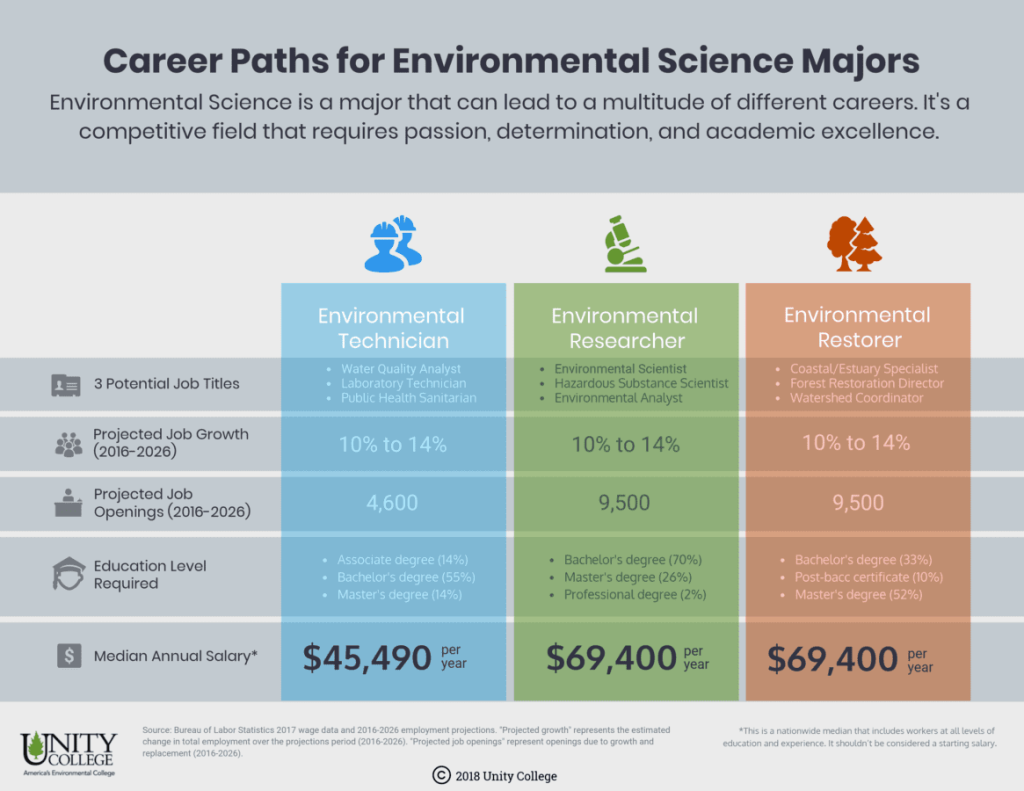
The Financial Landscape of Environmental Careers
The shift from public sector field work to high-stakes corporate advisory has fundamentally changed the earning potential for environmental science graduates. Understanding the economic drivers behind this change is essential for maximizing the return on investment (ROI) of your education.
The Rise of ESG (Environmental, Social, and Governance) Investing
The most significant financial driver for environmental professionals is the explosion of ESG investing. Institutional investors, including massive hedge funds and pension boards, now use ESG criteria to screen potential investments. This has created a massive demand for professionals who can quantify environmental impact.
Companies are no longer just reporting their profits; they are reporting their carbon footprints, water usage, and waste management strategies. This requires a level of technical expertise that only a science background can provide. Roles in ESG analysis or corporate sustainability reporting often command six-figure salaries, particularly in the financial services and tech sectors, where “greenwashing” carries significant legal and financial risk.
Transitioning from Non-Profit to High-Finance
Historically, environmental science graduates looked toward government agencies or non-profit organizations for employment. While these roles offer stability and purpose, they often come with a lower salary ceiling. The modern graduate, however, can leverage the same skill set—data analysis, regulatory knowledge, and ecological modeling—within the private sector.
By positioning yourself as a “Risk Mitigation Specialist” rather than a “Conservationist,” you move from the cost-center side of a business to the value-preservation side. Corporations are willing to pay a premium for experts who can prevent environmental litigation, manage remediation costs, or ensure compliance with increasingly stringent international laws.
High-Yield Career Paths for Environmental Science Graduates
To achieve maximum financial growth, environmental science graduates should target sectors where technical expertise intersects with large-scale capital expenditure.
Environmental Consulting and Corporate Strategy
Environmental consulting is perhaps the most direct application of the degree with a high income ceiling. Consultants work with private developers, industrial firms, and government bodies to solve complex environmental challenges.
A junior consultant may start with site assessments and soil sampling, but the true wealth in this field is found in specialization. Senior consultants specializing in Brownfield redevelopment, hazardous waste management, or environmental impact statements (EIS) for large infrastructure projects can command high billable rates. As you move into a partner or principal role within a firm, your income becomes tied to business development and project oversight, often reaching the $150,000 to $250,000 range.
Sustainability Officers and C-Suite Integration
The Chief Sustainability Officer (CSO) is one of the newest and fastest-growing roles in the corporate C-suite. Large-cap companies across the S&P 500 now recognize that environmental performance is inextricably linked to brand value and operational efficiency.
A graduate with an environmental science degree, particularly when paired with a minor in business or an MBA, is perfectly positioned for this trajectory. These roles involve overseeing a company’s entire environmental footprint, from supply chain logistics to energy procurement. Because these positions are tied to corporate strategy and long-term viability, they offer executive-level compensation packages, including stock options and performance bonuses.
Renewable Energy Project Finance and Development
The transition to a low-carbon economy requires a massive build-out of wind, solar, and battery storage infrastructure. This sector offers a unique blend of fieldwork and financial modeling.
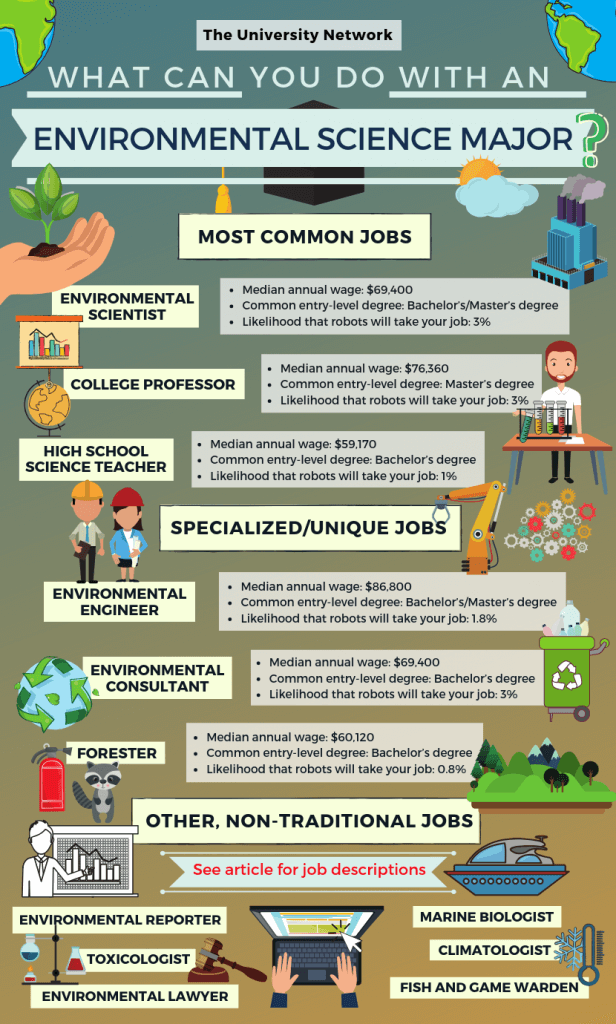
Environmental scientists in this space are responsible for site selection, permitting, and ecological impact mitigation. However, the real “money move” in this sector is moving into project development. By understanding the scientific constraints of a project—such as land use restrictions or grid interconnection issues—you can lead the development process for multi-million dollar energy installations. Compensation in project development is often tied to the successful commissioning of projects, providing a path to significant wealth through performance-based incentives.
Building a Profitable Environmental Business or Side Hustle
The environmental sector is ripe for entrepreneurship. For those looking to move beyond the traditional 9-to-5, an environmental science degree provides the technical foundation to launch high-margin service businesses or tech-driven startups.
Launching a Technical Compliance Consultancy
Small to mid-sized businesses (SMBs) are often overwhelmed by environmental regulations but cannot afford a full-time in-house specialist. This creates a lucrative gap for independent consultants.
By focusing on a specific niche—such as stormwater compliance for construction firms, air quality permits for dry cleaners, or waste management audits for manufacturing plants—you can build a stable book of recurring monthly revenue. The overhead for a consulting business is low, and the specialized nature of the work allows for high hourly rates. Furthermore, as regulatory frameworks change (such as new PFAS regulations), your expertise becomes even more essential, allowing for “surge pricing” for urgent compliance audits.
Developing Proprietary Green Technology
The “Climate Tech” space is currently a magnet for venture capital. If your environmental science degree involved a focus on chemistry, biology, or engineering, you have the tools to develop proprietary solutions to environmental problems.
This could range from developing new bio-plastics to creating specialized sensors for methane leak detection. While high-risk, the “Money” potential here is astronomical. Even if you do not want to manufacture products yourself, patenting a specific process or technology and licensing it to larger corporations can provide a passive income stream that far exceeds a standard salary.
The Creator Economy and Environmental Education for Professionals
There is a massive, underserved market for high-level environmental education aimed at professionals in other fields—such as real estate agents, architects, and investors.
An environmental scientist can build a profitable online business by creating specialized courses or certification programs. For example, a course on “Evaluating Environmental Risk for Real Estate Investors” or “Navigating Carbon Credits for Business Owners” can be sold at a premium price point. In the age of digital leverage, packaging your expertise into a scalable product allows you to decouple your income from your hours worked.
Maximizing Lifetime Earnings and Financial Security
Sustaining a high-income career in the environmental sector requires a proactive approach to professional development and financial planning.
Certifications That Boost Salary Potential
Not all credentials are created equal. To maximize your earning power, you must identify the certifications that the market values most. The “Professional Geologist” (PG) or “Professional Engineer” (PE) designations are gold standards in many states and can lead to immediate salary bumps of 15-20%.
Beyond those, consider the LEED Accredited Professional (LEED AP) for those in the built environment, or the Certified Professional in Erosion and Sediment Control (CPESC). In the financial realm, the SASB (Sustainability Accounting Standards Board) credential is becoming highly valued for those moving into ESG and financial analysis. Each of these certifications acts as a “proof of work” that justifies higher billable rates and more senior roles.
Strategic Networking in the Energy and Infrastructure Sectors
In the professional world, your network is often your net worth. To move into the highest-paying environmental roles, you must network outside of purely scientific circles. Attend conferences for the American Wind Energy Association (AWEA), the Urban Land Institute (ULI), or the Global Impact Investing Network (GIIN).
By positioning yourself among the people who control the capital—developers, bankers, and investors—you become the “scientific bridge” they need to execute their projects. This cross-disciplinary networking is how you find the most lucrative opportunities that are never posted on traditional job boards.

Future-Proofing Your Income
The environmental sector is subject to political and regulatory cycles. To ensure long-term financial security, it is vital to diversify your skill set. A professional who understands both the technical science of groundwater contamination and the financial implications of environmental insurance is much harder to lay off during a recession than a pure technician.
Furthermore, invest in your ability to communicate complex data to non-experts. The ability to sit in a boardroom and explain to a CFO why a specific environmental investment will save the company $2 million over five years is a rare and highly compensated skill. In the green economy, the highest earners are those who can translate environmental data into the language of the bottom line.
aViewFromTheCave is a participant in the Amazon Services LLC Associates Program, an affiliate advertising program designed to provide a means for sites to earn advertising fees by advertising and linking to Amazon.com. Amazon, the Amazon logo, AmazonSupply, and the AmazonSupply logo are trademarks of Amazon.com, Inc. or its affiliates. As an Amazon Associate we earn affiliate commissions from qualifying purchases.