
The days of a simple, serrated piece of metal serving as the sole gateway to your vehicle are long gone. In the modern era, a car key is less of a physical tool and more of a sophisticated piece of hardware—a digital credential that communicates with a complex network of onboard computers. Consequently, when you lose your car key today, you haven’t just lost a piece of hardware; you have experienced a breach in your personal digital ecosystem.
Navigating the loss of a modern car key requires an understanding of Radio Frequency Identification (RFID), encryption protocols, and synchronized software ecosystems. This guide explores the technical steps necessary to restore access to your vehicle and the security measures required to ensure your car’s digital integrity remains intact.
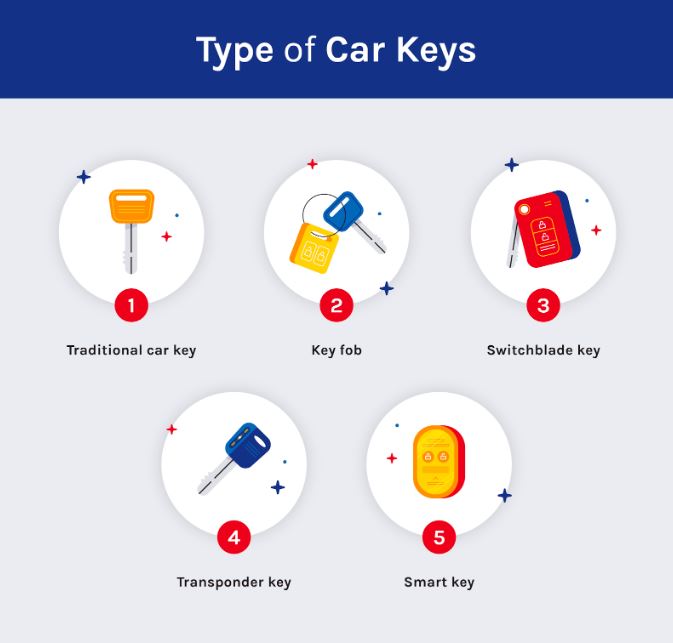
Understanding Your Key’s Hardware: From Transponders to Smart Fobs
To understand what to do when a key goes missing, one must first identify the generation of technology they are dealing with. The “key” is no longer a static object; it is an active or passive electronic device that undergoes a multi-stage authentication process with the vehicle’s Engine Control Unit (ECU).
Transponder Keys and RFID Handshakes
Since the late 1990s, most vehicles have utilized transponder keys. These contain a small RFID chip embedded in the plastic head of the key. When the key is inserted into the ignition, the induction coil around the ignition lock sends an electromagnetic pulse to the chip. The chip then broadcasts a unique identification code back to the car. If the code doesn’t match the one stored in the car’s immobilizer system, the fuel pump will not engage, and the engine will not start. If you lose this type of key, a simple mechanical cut will not suffice; the new chip must be programmed into the car’s whitelist.
Keyless Entry and Proximity Sensors
Modern “Smart Keys” or Proximity Fobs represent a shift toward seamless user experience. These devices use Low Frequency (LF) and Ultra-High Frequency (UHF) radio waves to communicate with the car. The car periodically sends out a ping; when the fob is within range (usually 1–5 meters), it responds with an encrypted “handshake.” This allows for features like “walk-away locking” and push-button starts. Losing one of these involves a more complex replacement process because the vehicle must “forget” the old signal to prevent unauthorized access by whoever finds the lost fob.
Immediate Technical Response: Diagnostics and Security Protocols
Once you have confirmed the key is lost, the situation shifts from a search mission to a systems administration task. Because modern keys are digital credentials, the “lost” key remains a live security threat until its specific ID is purged from the vehicle’s memory.
Deactivating Lost Credentials and Software Overwrites
The first step in a professional recovery process is connecting the vehicle to a specialized diagnostic tool via the On-Board Diagnostics (OBD-II) port. A technician or a specialized locksmith uses software to access the immobilizer’s memory. In many modern security architectures, you have the option to “erase” all known keys. This is the safest route. By wiping the memory, the lost key becomes a “brick”—even if found, its electronic signature will no longer be recognized by the car’s ECU.
Syncing New Rolling Codes
Modern automotive security relies on “rolling codes” (often using the KeeLoq algorithm or similar proprietary encryption). Every time you press the button on your fob, the code changes based on a pseudo-random number generator synchronized between the fob and the car. When a replacement key is introduced, the technician must synchronize the “seed” of this generator. This ensures that the new key and the car are “in step.” Without this synchronization, even a correctly cut key will fail to bypass the security layers of the vehicle.

The Rise of Digital Keys and Smartphone Integration
As we move toward the “Software-Defined Vehicle” (SDV), the physical fob itself is becoming optional. If you lose your keys in 2024, you may already have the technology in your pocket to circumvent the problem entirely, provided you have configured your digital ecosystem correctly.
Apple CarKey and Android Digital Key Ecosystems
Industry standards like the Car Connectivity Consortium (CCC) have allowed manufacturers like BMW, Hyundai, and Tesla to integrate digital keys into smartphone “wallets.” These systems use Near Field Communication (NFC) and Bluetooth Low Energy (BLE). If you lose your physical fob, you can often use your smartphone to unlock and start the vehicle. Furthermore, these digital keys can be revoked or shared via encrypted cloud messages, offering a layer of flexibility that physical hardware cannot match.
Ultra-Wideband (UWB) Technology
The latest frontier in key technology is Ultra-Wideband. Unlike standard Bluetooth, UWB measures the “time of flight” of the radio signal to calculate the exact distance between the phone and the car with centimeter-level accuracy. This is a massive leap in security. It prevents “Relay Attacks”—where thieves boost the signal of a key sitting inside a house to unlock a car in the driveway. If you are using a UWB-enabled digital key, losing your physical fob is less of a crisis, as the digital twin on your phone provides a highly secure, non-replicable alternative.
Cybersecurity Risks: Preventing Signal Boosting and Relay Attacks
When a key is lost, the primary concern is that it might have been stolen or found by someone with malicious intent. Understanding the technical vulnerabilities of your car’s wireless signals is essential for long-term security.
Protecting Your Digital Perimeter
If you are down to your last key, or while you are waiting for a replacement, it is vital to understand the “Relay Attack.” This is a method where hackers use a bridge device to pick up the low-frequency signal of your remaining key (even from inside your home) and relay it to the vehicle. While you are in the process of replacing a lost key, it is a sound technical practice to store your spare in a Faraday bag—a pouch lined with conductive material that blocks all electromagnetic signals. This creates a “digital air gap” between your key and the outside world.
Software Updates and Vulnerability Management
Manufacturers frequently release firmware updates for a vehicle’s body control module (BCM) to patch security loopholes. When you visit a dealership to replace a lost key, ensure they also check for “Technical Service Bulletins” (TSBs) related to the vehicle’s security software. Often, the process of programming a new key is an ideal time to update the encryption protocols on the vehicle, making it more resilient against the brute-force attacks or signal-sniffing tools used by modern car thieves.

Conclusion: The Future of Biometric and Cloud-Based Access
Losing a car key in the modern age is a transitionary problem. We are rapidly moving toward a future where “the key” is no longer a tangible object, but a biological or cloud-based identity. Biometric sensors—such as fingerprint scanners on the door pillar or facial recognition cameras in the cabin—are already appearing in high-end models. In these systems, “losing your key” becomes impossible, as the authentication is tied to your physical person.
Until that future becomes the standard, the loss of a key remains a technical challenge that requires a swift response. By understanding the RFID mechanics, the necessity of OBD-II reprogramming, and the power of digital key backups, car owners can transform a stressful event into a controlled security procedure. The goal is no longer just to get back into the driver’s seat; it is to ensure that the digital handshake between you and your machine remains exclusive and secure.
aViewFromTheCave is a participant in the Amazon Services LLC Associates Program, an affiliate advertising program designed to provide a means for sites to earn advertising fees by advertising and linking to Amazon.com. Amazon, the Amazon logo, AmazonSupply, and the AmazonSupply logo are trademarks of Amazon.com, Inc. or its affiliates. As an Amazon Associate we earn affiliate commissions from qualifying purchases.