
Navigating the car buying process can be one of the most significant financial decisions many individuals make. Beyond the excitement of choosing a new vehicle, lies a complex landscape of budgeting, financing, negotiation, and paperwork. Approaching a car dealership prepared, especially with your financial toolkit in hand, can dramatically influence the outcome, saving you potentially thousands of dollars and countless hours of frustration. This guide focuses exclusively on the financial aspects and essential documentation to ensure a smooth, transparent, and financially advantageous purchase.
The Financial Foundation: Pre-Approved Financing and Budgeting
Before you even step foot onto a dealership lot, the most critical preparation involves understanding your financial standing and securing your financing. This proactive approach empowers you, shifting control from the dealer’s finance department to your own informed position.
Understanding Your Budget Limits
The first step in any major purchase is defining your budget. This isn’t just about the sticker price of the car; it encompasses a holistic view of your finances. Consider your debt-to-income ratio—a key metric lenders use to assess your ability to manage monthly payments. Ideally, your total debt payments, including the new car payment, should not exceed 36% of your gross monthly income. Calculate not only a comfortable monthly payment but also the total cost of ownership, including insurance, fuel, maintenance, and potential depreciation. Having a clear, non-negotiable budget for both the total vehicle price and the monthly payment acts as your financial anchor throughout the process.
The Power of Pre-Approval
Securing pre-approved financing from a bank, credit union, or online lender before visiting a dealership is perhaps the most potent financial tool you can bring. A pre-approval letter provides you with a concrete interest rate and loan amount, effectively separating the car purchase from the financing negotiation. This transforms you from a buyer who needs financing into a buyer who has financing, allowing you to focus purely on the vehicle’s price. It also provides a benchmark: if the dealership offers a higher rate, you have leverage. If they offer a lower rate, it’s a bonus. Always compare the annual percentage rate (APR), term length, and any associated fees.
Proof of Funds and Income
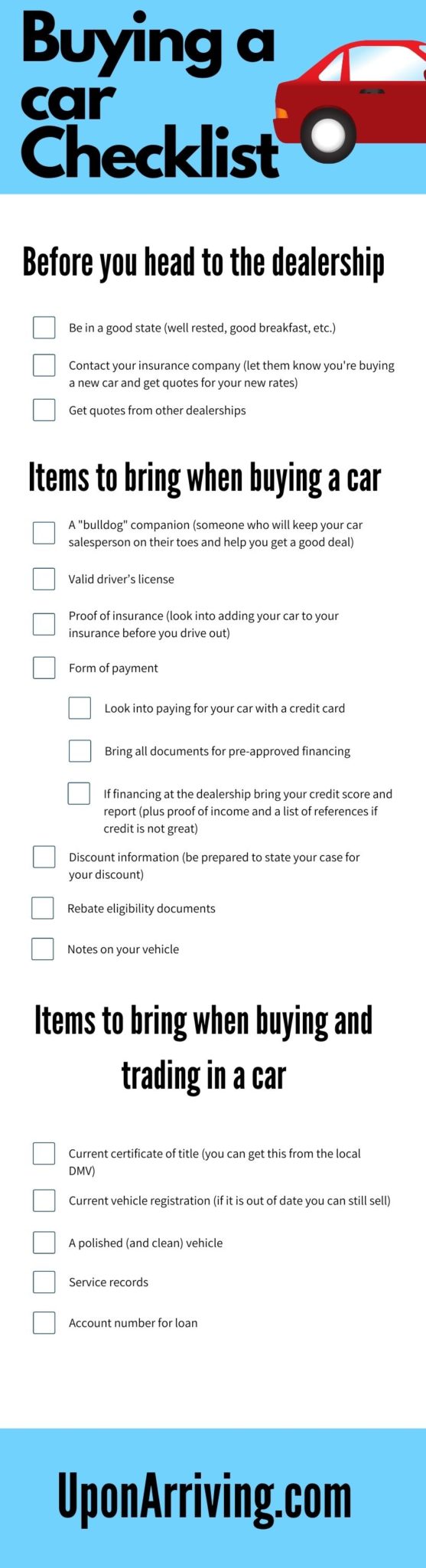
Even with pre-approval, dealerships will need to verify your financial stability, especially if you plan to finance through them or make a substantial down payment. Bring recent pay stubs (typically for the last 30-60 days), W-2 forms or tax returns (for self-employed individuals), and recent bank statements. These documents prove your income, employment stability, and the availability of funds for a down payment, accelerating the finance application process and potentially securing better terms.
Essential Documents for a Smooth Transaction
Beyond proving your financial capability, a set of key personal and vehicle-related documents are indispensable for completing a car purchase efficiently and legally.
Personal Identification
This might seem obvious, but forgetting critical identification can halt your transaction. You will need your valid driver’s license for test drives and to finalize the sale. Most dealerships also require a secondary form of identification, such as a passport, state ID card, or a major credit card, to verify your identity and prevent fraud. Ensure these are current and match the information on your financing documents.
Proof of Insurance
You cannot legally drive a new vehicle off the lot without proof of insurance. While you don’t necessarily need a policy for the new car before buying it, you will need a binder or declaration page showing that you have active coverage that will extend to the new vehicle, even temporarily. It’s wise to contact your insurance provider beforehand to get quotes for your desired new vehicle. Have your current policy information readily available, including your policy number and agent’s contact details. This allows for quick updates or new policy generation right at the dealership.
Trade-In Vehicle Documentation
If you plan to trade in your current vehicle, meticulous preparation of its documents is crucial for receiving an accurate valuation and a seamless transaction. Bring the vehicle’s title (or lien release if paid off), current registration, and comprehensive service records. The title proves ownership, while the registration confirms its current legal status. Service records demonstrate a history of regular maintenance, which can positively influence the trade-in value by showing the vehicle has been well-cared for. If you still owe money on the trade-in, bring your loan payoff information, including the account number and the lender’s contact details. This information will be vital for the dealership to calculate the equity in your trade and manage the payoff process.
Tools for Informed Financial Decision-Making
Making an informed financial decision at a dealership requires more than just documents; it demands research and tools to analyze offers in real-time.

Car Comparison and Research Notes
Prior research is paramount. Bring printouts or digital notes detailing the specific models, trim levels, optional packages, and features you are interested in. Crucially, include your research on the Manufacturer’s Suggested Retail Price (MSRP), invoice price estimates, and recent transaction prices for similar vehicles in your area. Websites like Edmunds, Kelley Blue Book (KBB), and Consumer Reports offer excellent pricing guides. Having these figures on hand helps you gauge the fairness of the dealer’s asking price and negotiate effectively, preventing emotional decisions from overriding financial prudence.
Online Valuation Reports
For your trade-in vehicle, bring printouts of online valuation reports from reputable sources like KBB, Edmunds, or the National Automobile Dealers Association (NADA) guide. These reports provide an objective estimate of your vehicle’s market value based on its condition, mileage, and features. This information serves as a strong baseline during trade-in negotiations, ensuring you receive a fair offer rather than accepting whatever the dealership initially proposes. Be honest with yourself about your vehicle’s condition when pulling these reports.
A Financial Calculator or Spreadsheet
A simple financial calculator or a spreadsheet on your smartphone/laptop can be an invaluable tool. Use it to verify payment calculations on the spot. Input the loan amount, interest rate (APR), and term to confirm the monthly payment. Experiment with different down payment amounts to see their impact. Use it to calculate total interest paid over the life of the loan. This real-time analysis helps you avoid costly errors and ensures full transparency regarding the financial terms being offered. It allows you to quickly assess how changes in price, interest rate, or loan term affect your overall cost.
Pen and Notebook
While seemingly old-fashioned, a pen and notebook are essential for documenting everything discussed. Jot down names of sales associates, finance managers, specific offers, terms, conditions, and any promises made. This record serves as a crucial reference point, especially if any discrepancies arise later. It also helps you keep track of multiple offers if you are cross-shopping.
Protecting Your Financial Interests: Questions and Contingencies
A prepared buyer anticipates potential financial pitfalls and arms themselves with knowledge and a strategy to mitigate risks.
A List of Prepared Questions
Come armed with a comprehensive list of questions covering all financial aspects of the deal. Beyond the price of the car and the interest rate, inquire about any hidden fees, documentation fees, dealer preparation fees, and taxes. Ask about the total out-the-door price, as this is the actual cost you’ll pay. Understand the terms of any warranties, service plans, or extended contracts. Question every line item you don’t fully comprehend before signing. This proactive questioning protects your financial bottom line.
Understanding Dealer Add-ons and F&I Products
The finance and insurance (F&I) office is where many buyers encounter additional products and services. These can include extended warranties, GAP (Guaranteed Asset Protection) insurance, paint protection packages, fabric protection, VIN etching, and roadside assistance plans. While some of these might offer value, many are highly profitable for dealerships and may be unnecessary or overpriced. Research these products beforehand. Understand what your current auto insurance covers (e.g., if you need GAP). Evaluate if the cost of an extended warranty outweighs its potential benefits, considering the car’s reliability ratings. Be prepared to politely decline items that don’t align with your financial goals or needs.
Negotiation Strategy Outline
Having a clear negotiation strategy is a financial safeguard. Know your target price for the vehicle and your “walk-away” price. Decide beforehand whether you will negotiate the car’s price first, then the trade-in value, and finally the financing, or if you prefer a different approach. Being firm on your terms and having the confidence to walk away if the deal isn’t financially sound are your strongest negotiation assets. Remember that the “four-square” worksheet often presented by dealers can be confusing; focus on the total out-the-door price.
The Final Steps: Payment and Future Planning
Once the negotiations conclude, the final stages involve payment and setting up your financial future with your new vehicle.
Down Payment Options
If you are making a down payment, be prepared with your preferred method. A personal check or cashier’s check is common. Some dealerships accept debit cards for a portion of the down payment, while others may require a wire transfer for larger sums. Confirm acceptable payment methods and any limits with the dealership beforehand to avoid delays. Having your checkbook or bank details readily available ensures a smooth final transaction.
Reviewing the Purchase Agreement
This is arguably the most critical financial step. Before signing, meticulously review every single line item on the purchase agreement. Ensure the agreed-upon vehicle price, trade-in value, interest rate, loan term, and all fees are accurately reflected. Look for any charges you didn’t agree to or understand. Check that the Vehicle Identification Number (VIN) matches the car you are buying. Any discrepancies, no matter how minor, should be addressed and corrected before your signature commits you to the purchase. This final review prevents costly errors and ensures you understand exactly what you are paying for.

Post-Purchase Financial Checklist
The financial implications of owning a car extend beyond the purchase. Once the deal is done, immediately update your auto insurance policy with the details of your new vehicle. Budget for ongoing expenses such as fuel, routine maintenance (oil changes, tire rotations), and potential repairs. Set aside an emergency fund specifically for unexpected car troubles. Understanding these long-term financial commitments ensures your new car remains a joy, not a financial burden.
By bringing these financial tools and documents to a car dealership, you empower yourself to make a well-informed decision, negotiate from a position of strength, and secure a vehicle purchase that aligns with your financial well-being.
aViewFromTheCave is a participant in the Amazon Services LLC Associates Program, an affiliate advertising program designed to provide a means for sites to earn advertising fees by advertising and linking to Amazon.com. Amazon, the Amazon logo, AmazonSupply, and the AmazonSupply logo are trademarks of Amazon.com, Inc. or its affiliates. As an Amazon Associate we earn affiliate commissions from qualifying purchases.