
For both seasoned traders and aspiring investors, understanding the operational hours of financial markets is fundamental. It’s not merely a trivial detail but a critical piece of information that dictates strategy, risk management, and the very execution of investment decisions. The question “What time does the stock market open?” is far more nuanced than it appears at first glance, encompassing various exchanges, time zones, and extended trading sessions that define the modern investment landscape. Delving into these specifics reveals a complex yet structured environment designed to facilitate global capital flow.
The primary focus for many individual investors in North America typically revolves around the major U.S. stock exchanges. However, a comprehensive understanding requires looking beyond these core hours to include pre-market and after-hours trading, as well as the diverse schedules of international markets. This guide aims to demystify these timings, providing a professional, insightful, and engaging overview that empowers investors to make informed choices. By grasping the intricacies of market hours, participants can better position themselves to capitalize on opportunities, manage risks, and engage effectively with the dynamic world of finance.
Understanding Standard U.S. Stock Market Hours
The backbone of U.S. equity trading is anchored by two prominent exchanges: the New York Stock Exchange (NYSE) and the Nasdaq Stock Market. While distinct in their histories, listing requirements, and trading mechanisms, they largely share the same standard trading hours for their core sessions. These hours represent the period of highest liquidity and, consequently, the most robust price discovery.
NYSE and Nasdaq: The Core Trading Session
Both the New York Stock Exchange (NYSE) and the Nasdaq Stock Market operate their regular trading sessions from 9:30 AM Eastern Time (ET) to 4:00 PM ET on weekdays. This seven-and-a-half-hour window is often referred to as “market hours” or “the bell-to-bell session.” During this period, the vast majority of trading volume occurs, driven by institutional investors, professional traders, and individual participants.
The NYSE, known for its iconic opening and closing bells, lists many of the world’s largest and oldest companies, often recognized as “blue-chips.” Its trading floor, though largely symbolic in the age of electronic trading, still plays a role in certain transactions. Nasdaq, on the other hand, is an entirely electronic exchange that lists a significant number of technology and growth companies. Despite their operational differences, their synchronized trading hours ensure a unified and consistent environment for trading U.S.-listed securities during the standard day. Understanding this core window is the first step for any investor looking to participate in the American stock market.
The Significance of Eastern Time
The reliance on Eastern Time (ET) as the standard for U.S. stock market hours is not arbitrary. Both New York City, where the NYSE is headquartered, and the greater financial hub of the East Coast, operate on this time zone. Consequently, all official market open and close times, as well as economic data releases and corporate announcements tied to trading, are referenced in ET.
For investors located in different time zones across the U.S. or internationally, converting these hours is crucial. For example, an investor in California (Pacific Time) would see the market open at 6:30 AM PT and close at 1:00 PM PT. Similarly, someone in London (Greenwich Mean Time) would experience the market opening at 2:30 PM GMT and closing at 9:00 PM GMT, adjusted for Daylight Saving Time variations. Failing to account for these time differences can lead to missed opportunities, poor execution, or an inability to react promptly to market-moving news. Therefore, always confirming the local equivalent of 9:30 AM ET and 4:00 PM ET is a fundamental practice for geographically dispersed investors.
Weekends and Public Holidays: When Markets Are Closed
While the stock market operates with diligent regularity on weekdays, it observes specific closures on weekends and official U.S. public holidays. The market is always closed on Saturdays and Sundays. This provides a necessary pause for market participants and allows for the settlement of trades.
Beyond weekends, U.S. stock exchanges also close for approximately nine federal holidays each year. These typically include:
- New Year’s Day
- Martin Luther King, Jr. Day
- Washington’s Birthday (Presidents’ Day)
- Good Friday
- Memorial Day
- Juneteenth National Independence Day
- Independence Day (July 4th)
- Labor Day
- Thanksgiving Day
- Christmas Day
Occasionally, if a holiday falls on a weekend, the market may observe it on the preceding Friday or the following Monday. Furthermore, the market may close early on certain days, such as the day before Independence Day or Christmas Eve, if they fall on a weekday. The specific holiday schedule is published well in advance by the exchanges, and investors should always consult these official calendars to avoid any miscalculations regarding trading availability. Understanding these closures is vital for planning trading activities and managing portfolio exposure during non-trading periods.
Beyond the Bell: Pre-Market and After-Hours Trading
The traditional 9:30 AM to 4:00 PM ET window doesn’t represent the entirety of stock trading activity. Modern electronic communication networks (ECNs) and alternative trading systems (ATSs) allow for significant trading to occur outside these standard hours, commonly referred to as pre-market and after-hours trading. These extended sessions offer both unique opportunities and heightened risks for investors.
Exploring Pre-Market Trading
Pre-market trading typically begins as early as 4:00 AM ET and extends until 9:30 AM ET. During this period, investors can place buy and sell orders before the official market open. This session is often characterized by lower liquidity compared to regular market hours. Activity in the pre-market is frequently driven by news releases that occur overnight or early in the morning, such as quarterly earnings reports, mergers and acquisitions announcements, or significant economic data.
Savvy investors use pre-market trading to react quickly to breaking news, positioning themselves ahead of the wider market’s response at the opening bell. For instance, a company announcing better-than-expected earnings before the market opens might see its stock price surge in pre-market trading as demand outstrips supply. However, the reduced liquidity means that bid-ask spreads can be wider, and price movements can be more volatile and less predictable. Large orders can have a disproportionate impact on share prices, and it can be challenging to execute trades at desired prices.
Navigating After-Hours Trading
After-hours trading commences immediately after the close of the regular session at 4:00 PM ET and can continue until 8:00 PM ET. Similar to pre-market trading, this session is facilitated by ECNs and ATSs. It serves as a window for investors to react to news that breaks after the market closes, such as corporate guidance updates, analyst rating changes, or late-day economic reports.
For example, if a company releases disappointing earnings after 4:00 PM ET, its stock might experience a significant drop in after-hours trading as investors rush to sell. Conversely, positive news can drive prices higher. Like pre-market trading, after-hours trading is generally less liquid, leading to wider spreads and increased volatility. Institutional investors often dominate these sessions, but retail investors with access to brokerage platforms offering extended-hours trading can participate. It’s crucial for investors to understand that prices in after-hours trading may not necessarily reflect where the stock will open the next day, as liquidity and market sentiment can shift overnight.
Advantages and Risks of Extended Hours Trading
Extended-hours trading offers several compelling advantages, primarily the ability to react immediately to new information, regardless of whether it falls within standard market hours. This can be particularly beneficial for investors seeking to capitalize on short-term price movements driven by breaking news or to adjust their positions quickly in response to market-moving events. It also provides flexibility for individuals whose schedules may not align with the standard 9:30 AM to 4:00 PM ET window.
However, these benefits come with significant risks. The most prominent is lower liquidity, which means there are fewer buyers and sellers, leading to wider bid-ask spreads and potentially larger price swings on smaller trade volumes. This can make it difficult to get your order filled at the desired price and increases the risk of price manipulation. Increased volatility is another concern; without the depth of regular market hours, stocks can experience rapid and exaggerated price movements. Furthermore, there’s less information transparency during these times, as not all news sources and market participants are fully active, potentially leading to incomplete information. Finally, competition from professional traders is fierce, as they often have sophisticated tools and strategies to leverage extended hours, putting individual investors at a disadvantage. Investors participating in extended-hours trading should do so with a clear understanding of these heightened risks.
Global Markets: A World of Diverse Trading Schedules
While the U.S. market holds significant sway, it operates within a vast global financial ecosystem. Stock markets around the world operate on their own distinct schedules, creating a near 24-hour cycle of equity trading when viewed collectively. Understanding these diverse timetables is crucial for international investors, those trading global ETFs, or simply comprehending the broader economic forces at play.
Key International Stock Exchanges and Their Hours
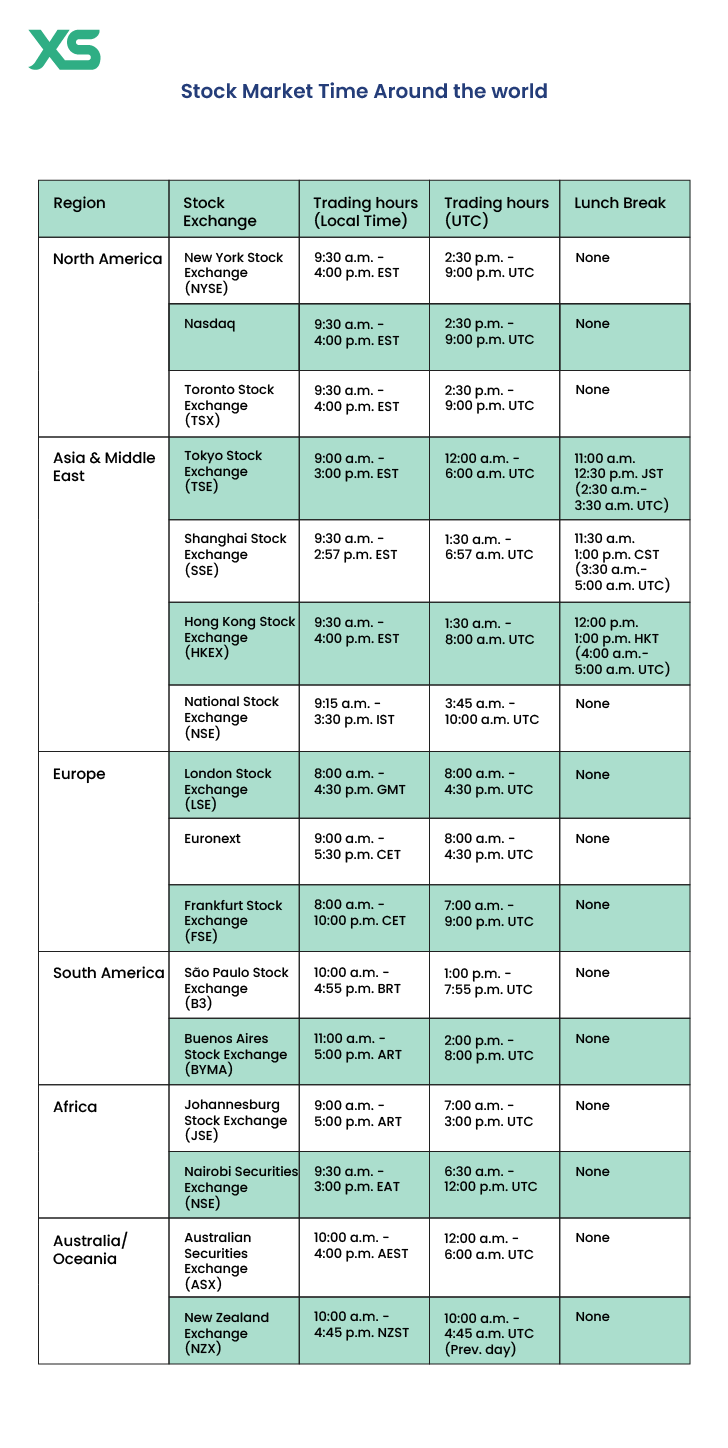
Major stock exchanges across the globe adhere to local business hours, reflecting their respective time zones and cultural practices. Here’s a snapshot of some key international markets and their typical trading hours (local time, subject to change and daylight saving adjustments):
- London Stock Exchange (LSE): 8:00 AM – 4:30 PM GMT/BST (British Summer Time). The LSE is one of the oldest and largest stock exchanges in Europe, vital for global financial services.
- Tokyo Stock Exchange (TSE): 9:00 AM – 11:30 AM JST (Japan Standard Time) for the morning session, and 12:30 PM – 3:00 PM JST for the afternoon session. The TSE is the largest exchange in Asia.
- Shanghai Stock Exchange (SSE): 9:30 AM – 11:30 AM CST (China Standard Time) for the morning session, and 1:00 PM – 3:00 PM CST for the afternoon session. The SSE is a crucial gateway to China’s rapidly growing economy.
- Hong Kong Stock Exchange (HKEX): 9:30 AM – 12:00 PM HKT (Hong Kong Time) for the morning session, and 1:00 PM – 4:00 PM HKT for the afternoon session. HKEX serves as a primary hub for international companies accessing Asian capital.
- Euronext (e.g., Paris, Amsterdam, Brussels): 9:00 AM – 5:30 PM CET/CEST (Central European Time/Summer Time). Euronext is a pan-European exchange group.
- Australian Securities Exchange (ASX): 10:00 AM – 4:00 PM AEST/AEDT (Australian Eastern Standard/Daylight Time). The ASX is a major exchange in the Asia-Pacific region.
These examples illustrate the wide variation in trading schedules, influenced by geographical location, local holidays, and regulatory frameworks.
Time Zone Differences and Their Impact
The most significant challenge and opportunity presented by global markets are the inherent time zone differences. When one major market is closing, another is typically opening, creating a continuous flow of trading activity around the clock. For instance, as the U.S. market closes in the late afternoon ET, Asian markets are already well into their next trading day, and European markets are preparing for their morning open.
This continuous cycle means that news and economic events originating in one part of the world can significantly influence market sentiment and prices in another, even before its local market opens. For example, a major economic announcement from China during U.S. night hours can set the tone for European and then U.S. futures markets before their respective opening bells. Investors monitoring global portfolios or engaged in international trading must meticulously track these time zone shifts to anticipate market reactions and manage risk effectively across different geographical exposures.
The Concept of 24/7 Global Trading (Forex vs. Equities)
While the combined operating hours of global stock exchanges create a near 24-hour window for equity trading somewhere in the world, the concept of true 24/7 trading is more characteristic of the foreign exchange (forex) market. The forex market, where currencies are traded, operates continuously from Sunday evening (ET) through Friday afternoon (ET), as it is a decentralized, over-the-counter market with participants across all time zones.
In contrast, equity markets, while globally distributed, are still tied to specific exchanges with defined opening and closing bells. While instruments like ETFs or futures based on equity indices can offer extended trading hours, direct trading of individual stocks on their primary exchanges is restricted to their respective operating schedules, including pre-market and after-hours sessions. This distinction is crucial: equities still have “down time,” whereas currencies are in constant flux, reflecting the differing structures and liquidity characteristics of these two major asset classes. Understanding this difference helps investors manage expectations regarding continuous access and liquidity for their chosen investment vehicles.
Factors Influencing Market Hours and Trading Decisions
Beyond the fixed schedules, various dynamic factors influence how investors interact with market hours. These elements often drive volatility, create opportunities, or necessitate strategic adjustments to trading plans. Understanding them is key to making informed decisions within the defined trading windows.
Economic Announcements and Market Volatility
Economic data releases are potent market movers, and their timing relative to market hours is critical. Announcements such as inflation reports (e.g., CPI), employment figures (e.g., Non-Farm Payrolls), interest rate decisions from central banks (e.g., Federal Reserve’s FOMC meetings), and GDP growth data are often scheduled for specific times, typically before the market opens (e.g., 8:30 AM ET) or mid-day.
When significant economic news is released, it can trigger immediate and substantial volatility, particularly if the data deviates from market expectations. Traders often position themselves before these announcements, and a surprise can lead to rapid price swings, increased trading volume, and wider bid-ask spreads. For example, an unexpected hike in interest rates can send shockwaves through bond and equity markets, prompting swift selling or buying activity. Investors must be aware of the economic calendar and consider how upcoming announcements might impact their holdings or trading strategies within the market’s operational hours.
Corporate Earnings Reports and Trading Strategies
Corporate earnings reports are another major catalyst for stock price movements. Publicly traded companies are required to release their financial results periodically (quarterly, semi-annually), providing insights into their performance, profitability, and future outlook. These reports are strategically timed by companies, often either before the market opens or after the market closes.
The timing is deliberate: by releasing news outside of regular trading hours, companies aim to allow investors time to digest the information before the next trading session begins, theoretically reducing immediate knee-jerk reactions and enabling more orderly price discovery. However, as discussed with extended-hours trading, this is where pre-market and after-hours sessions become highly active. A strong earnings beat or miss can lead to dramatic price movements in these extended sessions, influencing the opening price of the stock the following day. Investors frequently adjust their positions, initiate new trades, or manage options strategies around these pivotal announcements, making understanding the timing of such reports a cornerstone of many equity trading strategies.
The Role of Market Participants and Liquidity
The nature of market participants and the resulting liquidity are integral to understanding market dynamics within and outside standard hours. During regular market hours, liquidity is at its highest, with a broad range of participants: institutional investors (pension funds, mutual funds, hedge funds), high-frequency trading firms, market makers, and millions of individual retail investors. This diverse participation ensures deep order books, tighter bid-ask spreads, and generally more efficient price discovery.
In contrast, during pre-market and after-hours sessions, the pool of participants is typically smaller and often dominated by institutional players and professional traders with access to sophisticated tools. This reduced participation leads to lower liquidity, which, as noted, contributes to wider spreads, increased volatility, and potentially less efficient pricing. The actions of large institutional players or a few significant orders can disproportionately influence prices during these thinner trading periods. Understanding who is active and the level of liquidity at different times of the day helps investors gauge the risk and potential impact of their own trades, particularly when venturing into extended trading hours.
Strategic Implications for Investors
Beyond merely knowing “what time the market opens,” a deep understanding of market hours, global schedules, and influencing factors has profound strategic implications for investors. Integrating this knowledge into an overall investment approach can significantly enhance decision-making, risk management, and overall portfolio performance.
Why Understanding Market Hours Matters
For investors, market hours are not just about when one can trade; they’re about when one should trade, when to observe, and when to act.
Firstly, optimal execution: Trading during peak liquidity (regular market hours) generally ensures better prices and tighter spreads, reducing transaction costs.
Secondly, risk management: Being aware of holiday closures or early market closes prevents unforeseen exposure during non-trading periods. Knowing when earnings reports or economic data are due helps in managing event-driven risk.
Thirdly, information flow: Most critical news breaks either before or after regular hours, triggering activity in extended sessions. Understanding these timings allows investors to react appropriately, whether by participating in extended-hours trading or planning their strategy for the next day’s open.
Finally, for those with international holdings, comprehending global market hours is essential for understanding cross-market influences and maintaining a coherent worldwide investment strategy.
Developing a Personalized Trading Schedule
Every investor’s situation is unique, influenced by their time zone, daily commitments, risk tolerance, and investment goals. Therefore, developing a personalized trading schedule that aligns with these factors is crucial.
- Identify your available windows: Do you have time before work? During a lunch break? Or only in the evenings?
- Match your strategy to the hours: If you’re a day trader, you’ll need to be active during regular market hours. If you’re a long-term investor, you might focus more on understanding market closes and major news events, with less need for constant real-time monitoring.
- Consider time zone adjustments: If you’re not in ET, calculate your local market open and close times and integrate them into your daily routine.
- Leverage technology: Use alerts and notifications to stay informed without being glued to the screen (discussed below).
A well-thought-out trading schedule ensures that you are engaging with the market when it best suits your needs and goals, minimizing stress and maximizing efficiency.

Leveraging Technology for Market Access and Alerts
Modern financial technology plays an indispensable role in helping investors navigate complex market hours and stay informed. Brokerage platforms, financial news websites, and dedicated market data providers offer a suite of tools that can be leveraged effectively:
- Real-time quotes and charts: Essential for monitoring price movements during regular and extended hours.
- Pre-market and after-hours trading access: Many online brokers now offer the ability to place trades during these sessions, though often with specific order types (e.g., limit orders only).
- Customizable alerts and notifications: Set up alerts for specific stock prices, news headlines, or economic data releases. This allows investors to be notified of critical events regardless of the time, without needing to constantly monitor the market.
- Economic calendars and earnings calendars: These tools provide a clear schedule of upcoming market-moving events, allowing investors to anticipate potential volatility and plan their trading around them.
- Mobile trading apps: Provide convenient access to market information and trading capabilities from anywhere, at any time, respecting different market hours.
By effectively utilizing these technological resources, investors can maintain a vigilant eye on the markets, react strategically to developments across various time zones and trading sessions, and ultimately make more informed and timely decisions in their financial journey. The knowledge of “what time the stock market opens” is just the beginning; the intelligent application of that knowledge, augmented by technology, is where true investment prowess lies.
aViewFromTheCave is a participant in the Amazon Services LLC Associates Program, an affiliate advertising program designed to provide a means for sites to earn advertising fees by advertising and linking to Amazon.com. Amazon, the Amazon logo, AmazonSupply, and the AmazonSupply logo are trademarks of Amazon.com, Inc. or its affiliates. As an Amazon Associate we earn affiliate commissions from qualifying purchases.