
In the modern financial landscape, few events command as much gravity as the quarterly earnings announcement from Nvidia Corporation. For investors, day traders, and institutional fund managers, the question of “what time is the Nvidia earnings call” is not merely a matter of scheduling—it is the synchronization of global market expectations. Nvidia has transitioned from a specialized manufacturer of graphics processing units (GPUs) to the primary engine of the artificial intelligence revolution, making its financial disclosures a litmus test for the health of the entire technology sector and the broader equity markets.

Typically, Nvidia reports its fiscal results approximately 20 to 30 minutes after the closing bell of the Nasdaq Stock Market, which concludes its regular session at 4:00 PM Eastern Time (ET). This places the press release distribution around 4:20 PM ET, followed by the formal conference call at 5:00 PM ET. However, understanding the clock is only the first step. To truly capitalize on the information released during this window, one must understand the financial mechanics at play and the strategic importance of this specific corporate event.
Understanding the Significance of Nvidia’s Fiscal Calendar
Nvidia operates on a fiscal year that typically ends in late January, which means its quarterly reporting cycle often lags behind other “Magnificent Seven” companies. This delay gives Nvidia’s earnings call a unique position: it often serves as the “final word” on a particular quarter’s tech spending trends, providing a retrospective look at the industry while setting the tone for the upcoming months.
How Earnings Timing Affects Global Liquidity
The timing of the call—after the market closes—is a deliberate choice designed to allow all market participants to digest the financial data without the immediate, frenetic volatility of the regular trading session. When the press release hits the wire at 4:20 PM ET, “after-hours” trading begins. During this period, liquidity is often lower than during regular hours, meaning price swings can be much more dramatic.
For the serious investor, the gap between the release of the numbers and the start of the verbal conference call is a critical window for analysis. It is during this time that high-frequency trading algorithms parse the “headline numbers”—Earnings Per Share (EPS) and Revenue—comparing them against the consensus estimates provided by Wall Street analysts. If Nvidia beats these estimates, the stock often surges immediately; if it misses, or even if it beats but fails to meet “whisper numbers” (the unofficial, higher expectations of the market), the stock can retreat sharply before a single executive has spoken.
The Role of the Post-Call Q&A Session
While the press release provides the “what,” the earnings call at 5:00 PM ET provides the “why.” Led by CEO Jensen Huang and CFO Colette Kress, the call begins with prepared remarks that contextualize the numbers. However, the most vital portion for financial analysts is the Question and Answer (Q&A) session.
This is where institutional investors probe for details on supply chain constraints, lead times for Blackwell chips, and the sustainability of capital expenditure from major cloud service providers (CSPs). The nuance in an executive’s voice or the specificity of their guidance can move the stock price as much as the revenue figures themselves. For those tracking the call, the “time” of the event extends into these late-evening hours of deep financial inquiry.
Key Financial Metrics to Watch Beyond the Clock
When the call begins, the market shifts its focus from the “when” to the “how much.” Nvidia’s balance sheet and income statement have become complex documents that require a sophisticated eye to decode. To understand the investment value of Nvidia, one must look past the top-line revenue and focus on the drivers of long-term profitability.
Data Center Revenue as a Barometer for Global AI Spend
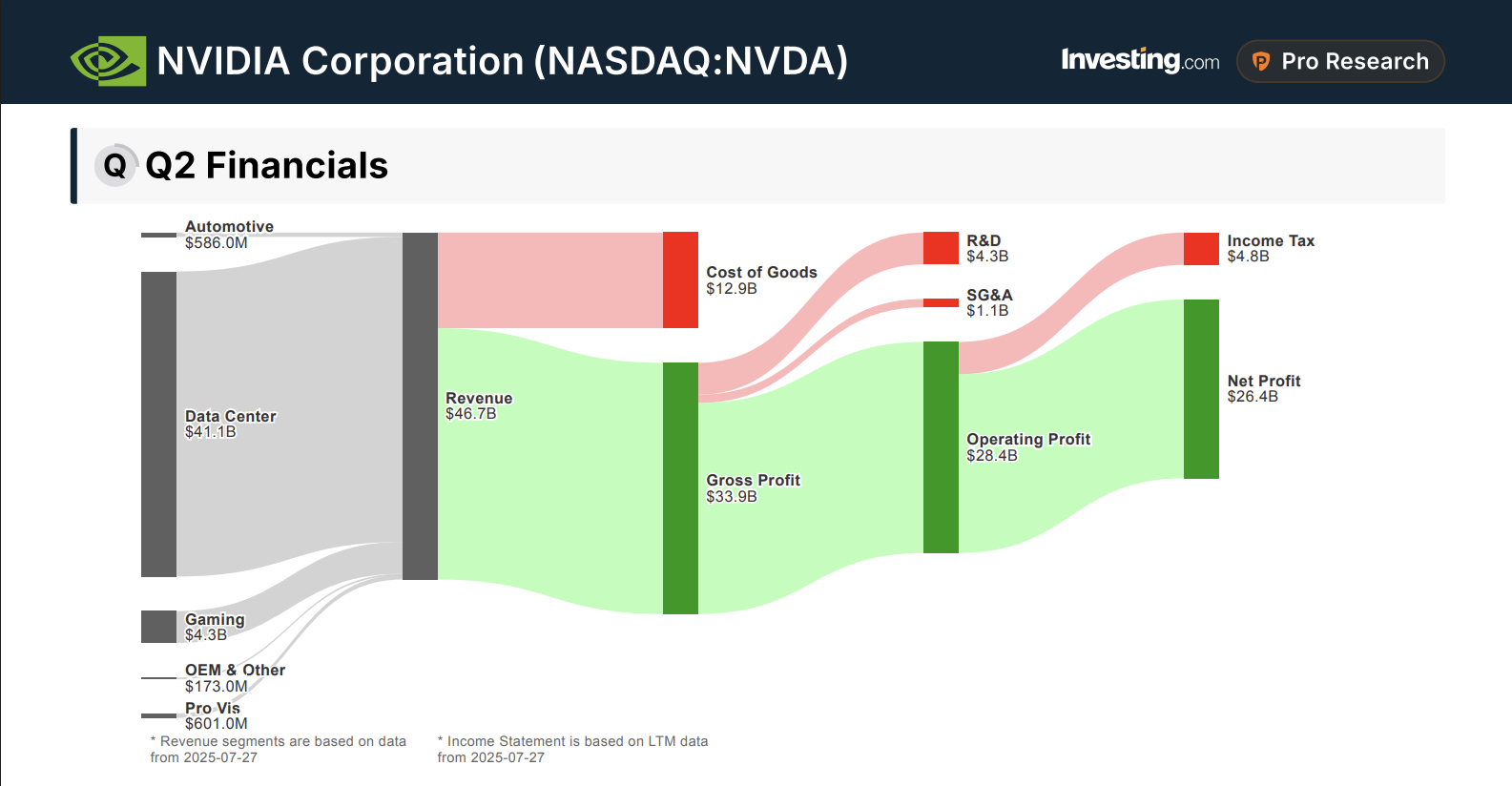
In recent years, Nvidia’s Data Center segment has dwarfed its traditional gaming roots. This metric is now the most critical figure in the entire report. Analysts look at Data Center revenue not just to see how many H100 or B200 chips were sold, but to gauge the “intensity” of the AI build-out.
Financial analysts use this data to perform a “read-through” to other companies. If Nvidia’s data center growth is robust, it suggests that companies like Microsoft, Alphabet, and Meta are continuing to invest heavily in infrastructure. Conversely, any deceleration in this segment could signal a “cooling off” period for AI investment, which would have a cascading effect on the valuations of dozens of other tech stocks.
Gross Margins and Supply Chain Efficiency
Another pillar of Nvidia’s financial health is its gross margin. Maintaining gross margins above 70% is a feat rarely seen in hardware manufacturing. For investors, this percentage represents Nvidia’s “moat”—its ability to command premium pricing due to a lack of viable competition.

During the earnings call, the CFO will often discuss the costs associated with transitioning to new architectures. If margins compress, it may indicate that the cost of manufacturing complex new chips is rising or that Nvidia is having to spend more to secure limited fabrication capacity from partners like TSMC. In the realm of business finance, the health of the margin is often a better indicator of long-term stock performance than a simple revenue beat.
Investment Strategies Surrounding the Earnings Announcement
Given the massive volatility often associated with Nvidia’s earnings, many investors develop specific strategies to navigate the event. Whether you are a long-term “HODLer” or a short-term trader, the earnings call represents a moment of high risk and high reward.
Managing Volatility Through Options and Hedging
Professional traders often use the options market to “price in” the expected move of Nvidia stock following the call. This is known as “implied volatility.” It is not uncommon for the options market to suggest a potential 8% to 10% move in either direction.
Conservative investors might use “covered calls” to generate income during this period or “protective puts” to floor their potential losses if the earnings call yields disappointing news. Understanding the timing of the call is essential here, as the “theta” (time decay) of options accelerates rapidly leading up to the announcement.
Long-term Valuation vs. Short-term Price Action
For the value-oriented investor, the earnings call is a time to ignore the “noise” of the after-hours price action and focus on the Price-to-Earnings (P/E) ratio and future guidance. Nvidia often trades at a high multiple, which critics argue is a sign of a bubble. However, proponents point to the “Forward P/E”—the valuation based on next year’s expected earnings.
If the earnings call reveals that Nvidia is growing its bottom line faster than its stock price is rising, the “expensive” stock might actually be getting “cheaper” on a relative basis. This fundamental analysis is what separates successful long-term investors from those who are merely reacting to the headlines.
The Macroeconomic Context of Nvidia’s Financial Performance
No company exists in a vacuum, and Nvidia’s earnings call often touches upon broader economic themes that affect the entire financial world. From interest rates to international trade policy, the call is a window into the macro-economy.
Interest Rates and the Cost of Capital for Tech Giants
While Nvidia has a massive cash pile and little debt, its customers are sensitive to interest rates. During the earnings call, analysts often look for clues regarding how the Federal Reserve’s monetary policy is affecting the “CapEx” (capital expenditure) budgets of Nvidia’s clients. High interest rates make it more expensive for startups and mid-sized firms to borrow money to purchase AI clusters, which could theoretically cap Nvidia’s growth.
Geopolitical Factors and Revenue Diversification
As a leader in high-performance computing, Nvidia is at the center of the “chip wars” between the U.S. and China. Past earnings calls have been dominated by questions regarding export controls and how Nvidia is navigating the loss of revenue from the Chinese market.
Investors listen closely for how Nvidia is diversifying its revenue streams—expanding into automotive AI, healthcare, and “sovereign AI” (nation-states building their own data centers). A diversified revenue base is a hallmark of a mature, stable corporation, and the earnings call is the primary venue for the company to prove it is not a “one-trick pony.”
Conclusion: Preparing for the Call
In conclusion, “what time is the Nvidia earnings call” is the starting point for a complex financial ritual. The event typically unfolds at 4:20 PM ET for the data and 5:00 PM ET for the narrative. To participate effectively, one must look beyond the clock and prepare for a deep dive into data center metrics, gross margins, and forward-looking guidance.
Nvidia has become the heartbeat of the modern market. Its earnings calls are no longer just about selling chips; they are about the financial health of the digital age. By understanding the structure of these announcements and the key financial levers that drive the company’s valuation, investors can move past the hype and make informed, strategic decisions in an increasingly volatile financial world. Whether the news is a resounding “beat and raise” or a cautionary tale of supply constraints, being present for the call ensures you are witnessing the direct shaping of the future of global finance.
aViewFromTheCave is a participant in the Amazon Services LLC Associates Program, an affiliate advertising program designed to provide a means for sites to earn advertising fees by advertising and linking to Amazon.com. Amazon, the Amazon logo, AmazonSupply, and the AmazonSupply logo are trademarks of Amazon.com, Inc. or its affiliates. As an Amazon Associate we earn affiliate commissions from qualifying purchases.