
As the final seconds of December 31st tick away, billions of people across the globe fixate on their screens, wristwatches, and public displays to witness the transition into a new year. To the casual observer, the question “What time is New Year’s?” has a simple answer: midnight. However, from a technological standpoint, the answer is a complex tapestry of distributed systems, atomic precision, and network protocols that ensure the entire world transitions in a coordinated, synchronized fashion.
The seamless transition of our digital lives into a new calendar year is not a matter of chance. It is the result of a sophisticated global infrastructure that manages time with microsecond accuracy. For engineers, software developers, and IT architects, New Year’s represents more than a celebration; it is the ultimate stress test for the systems that govern our global economy and communication networks.
The Foundation of Digital Time: NTP and Atomic Synchronization
At the heart of the question “What time is it?” lies the Network Time Protocol (NTP). Developed in the 1980s, NTP is one of the oldest Internet protocols still in widespread use. Its purpose is to synchronize the clocks of computers and digital devices over packet-switched, variable-latency data networks. Without NTP, the global transition to the New Year would be a chaotic mess of fragmented timestamps, leading to failures in everything from financial transactions to social media posts.
The Hierarchy of Time: Stratum Levels
Time synchronization follows a hierarchical system known as “strata.” At the very top, Stratum 0 devices are the high-precision timekeeping instruments, such as atomic clocks (typically cesium or rubidium based) or Global Positioning System (GPS) clocks. These devices do not sit on the internet; they are connected directly to Stratum 1 servers.
- Stratum 0: The source of truth. These devices utilize the vibrations of atoms to maintain a level of accuracy that loses only one second every few hundred million years.
- Stratum 1: Primary network servers that act as a bridge between the atomic source and the digital network.
- Stratum 2 and Below: Your smartphone, laptop, and IoT devices typically reside at Stratum 3 or 4. They request time data from Stratum 2 servers, which in turn sync with Stratum 1.
When you look at your phone to see if it is midnight, your device has likely performed an “NTP poll” recently, adjusting its internal quartz oscillator to match the atomic truth provided by the stratum hierarchy. This ensures that when the “New Year” arrives, it does so simultaneously for every device on a particular carrier network.
Precision and Latency
The challenge for technology is not just knowing the time, but accounting for the “trip” the data takes. When a server sends a time packet to your phone, that packet takes several milliseconds to travel through fiber optic cables and cellular towers. Advanced algorithms within your device’s operating system calculate this “round-trip delay” and adjust the displayed time accordingly. On New Year’s Eve, this hidden calculation is what allows a “synchronized” countdown across millions of disparate devices.
The Developer’s Nightmare: Time Zones, Leap Seconds, and ISO 8601
While the hardware handles the pulse of time, software must handle the logic of the calendar. For developers, “What time is New Year’s?” is a question fraught with edge cases. The transition from 23:59:59 to 00:00:00 involves navigating the complexities of the Olson Database (also known as the TZ database), which tracks the historical and current time zone rules for every location on Earth.
The Complexity of Time Zones
Time is not linear across the globe; it is political. Different jurisdictions change their offsets from Coordinated Universal Time (UTC) based on legislative whims. A country might decide to move its New Year’s celebration by an hour by abolishing or adopting Daylight Savings Time (DST) just weeks before the event.
Software systems must be resilient enough to handle these shifts. Most modern applications utilize the ISO 8601 standard, which represents time in a string format (e.g., 2023-12-31T23:59:59Z). By storing and calculating time in UTC and only converting to local time at the “presentation layer” (the screen the user sees), developers prevent the massive database corruption that would occur if every server operated on local time.

The Leap Second and “Time Smearing”
One of the most fascinating technological hurdles in timekeeping is the “leap second.” Because the Earth’s rotation is slightly irregular, UTC is occasionally adjusted by one second to stay in sync with solar time. These adjustments usually occur on June 30th or December 31st.
For a high-frequency trading platform or a distributed database, a leap second is a catastrophic event. If a system sees the same second twice (23:59:60), it may crash or record transactions in the wrong order. To combat this, tech giants like Google and Amazon employ “leap smearing.” Instead of adding a whole second at midnight, they slightly slow down their system clocks over a 24-hour period. By the time New Year’s officially arrives, the “smeared” clocks are perfectly in sync with the atomic world without ever having to repeat a second.
New Year’s Eve as a Network Stress Test
As the clock strikes midnight in each time zone, there is a predictable and massive surge in digital activity. This phenomenon provides a unique look at the scalability of modern cloud infrastructure.
The Peak of Global Messaging
Platforms like WhatsApp, iMessage, and Instagram see their highest traffic volumes of the year during the first ten minutes of the New Year. In years past, these surges frequently crashed cellular networks—a phenomenon known as “network congestion.” Today, the move toward 5G and elastic cloud computing allows networks to scale up instantly.
Load balancers and auto-scaling groups in data centers across the world detect the rising tide of “Happy New Year” messages and spin up thousands of virtual machines in seconds to handle the throughput. This “bursty” traffic profile is the ultimate validation of the “Serverless” and “Cloud Native” architectures developed over the last decade.
Content Delivery Networks (CDNs) and Live Streaming
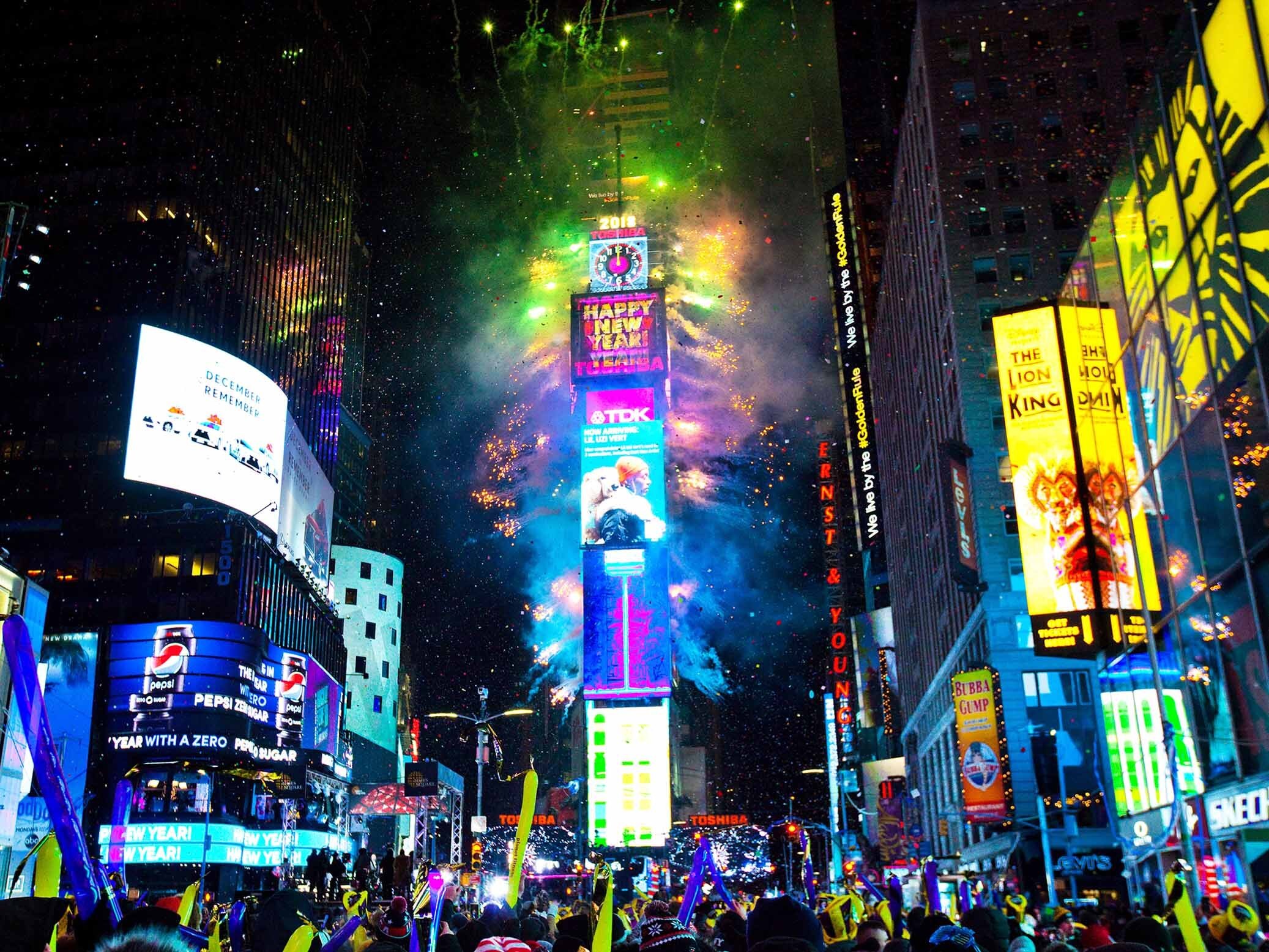
For those watching the ball drop in Times Square via a streaming service, the challenge is “latency.” If a video stream is 30 seconds behind the actual event, the “New Year” arrives late for the viewer. CDNs like Akamai and Cloudflare utilize “edge computing” to bring the video data as close to the user as possible. By caching the stream at local nodes, they reduce the distance the data must travel, ensuring that the digital “Midnight” is as close to the physical “Midnight” as physics allows.
The Future of Time: Quantum Clocks and Decentralized Synchronization
As we move further into the 21st century, the technology behind “What time is New Year’s” is evolving from traditional atomic clocks to even more exotic solutions.
Quantum Logic Clocks
The next generation of timekeeping involves quantum logic clocks, which use individual ions trapped by electric fields. These clocks are orders of magnitude more precise than the cesium clocks used today. For the average consumer, this level of precision may seem unnecessary, but for the future of autonomous vehicles, deep-space navigation, and high-speed telecommunications, it is essential. As these technologies become integrated into our global grid, the “time” of New Year’s will be synchronized to a degree that accounts for even the slightest gravitational time dilation.
Blockchain and Decentralized Time
There is also a growing movement toward decentralized time synchronization. In a world increasingly reliant on decentralized finance (DeFi) and blockchain, relying on a centralized NTP server is seen by some as a vulnerability. “Proof of History” and other cryptographic time-stamping methods aim to create a verifiable, unalterable record of when events occur without needing a central authority. While we are not yet at the point where your phone syncs its clock via a blockchain, the foundational tech is being laid to ensure that time—the most fundamental unit of our digital existence—is transparent and immutable.

Conclusion: The Quiet Triumph of Technology
When the countdown begins and the world asks “What time is New Year’s?”, the answer is provided by a silent, invisible orchestra of technology. It is an answer provided by atoms vibrating in a lab, by satellites orbiting thousands of miles above the Earth, and by millions of lines of code designed to handle the messiness of human geography and planetary rotation.
The fact that billions of people can celebrate the same moment simultaneously across different continents is a testament to the robustness of our digital infrastructure. As we continue to refine the tools of synchronization—moving from quartz to atoms, and from atoms to quantum states—the “New Year” becomes not just a calendar event, but a celebration of our ability to measure and master the very fabric of time. The transition into the next year is the one moment where the entire world’s tech stack works in perfect unison to mark the passage of human history.
aViewFromTheCave is a participant in the Amazon Services LLC Associates Program, an affiliate advertising program designed to provide a means for sites to earn advertising fees by advertising and linking to Amazon.com. Amazon, the Amazon logo, AmazonSupply, and the AmazonSupply logo are trademarks of Amazon.com, Inc. or its affiliates. As an Amazon Associate we earn affiliate commissions from qualifying purchases.