
Navigating the world of high-stakes finance requires more than just a keen eye for undervalued stocks or a robust understanding of macroeconomic trends; it requires a precise mastery of the clock. For the modern investor, the question “what time is market closed today?” is often the first step in a daily ritual of risk management and strategic execution. While the digital age has made trading feel like a 24/7 endeavor, the reality is that the core of global liquidity still revolves around strictly regulated exchange hours. Understanding these schedules is not merely a matter of logistics; it is a fundamental component of a professional investment strategy.
Understanding Standard Trading Hours in the United States
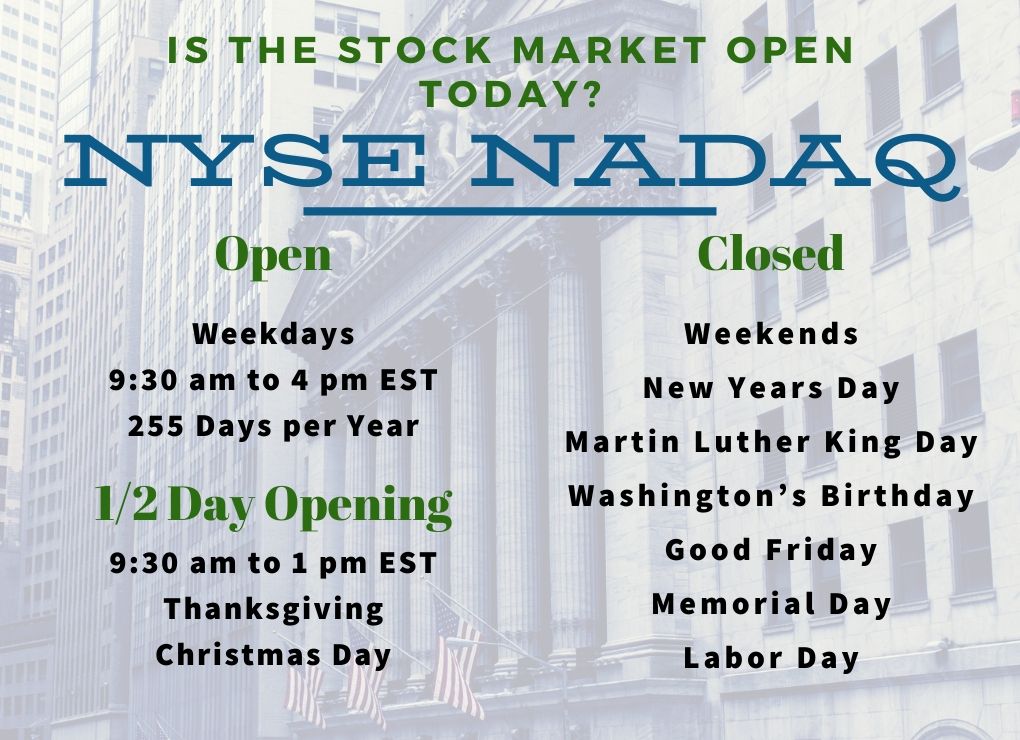
The epicenter of global equity trading lies within the United States, primarily through the New York Stock Exchange (NYSE) and the NASDAQ. For most domestic investors, “market hours” refer specifically to the period when these two giants are open for business. Standard trading hours for both the NYSE and the NASDAQ are from 9:30 AM to 4:00 PM Eastern Time (ET), Monday through Friday.
These hours are the “Regular Trading Session.” During this window, liquidity is at its highest, bid-ask spreads are generally at their narrowest, and the majority of retail and institutional volume is processed. The opening bell at 9:30 AM signals the beginning of the price discovery process, often characterized by a burst of volatility as the market reacts to overnight news, earnings reports, or international developments. Conversely, the closing bell at 4:00 PM represents the finality of the day’s valuation, establishing the official closing price used by mutual funds to calculate Net Asset Value (NAV) and by analysts to chart long-term performance.
The Role of the Bond Market
It is important for diversified investors to note that the bond market operates on a slightly different cadence than the equity market. While stocks close at 4:00 PM ET, the U.S. bond market (often tracked via the Securities Industry and Financial Markets Association, or SIFMA) typically recommends a 5:00 PM ET close for cash trading. However, on days preceding major holidays, the bond market often closes early at 2:00 PM ET, even if the stock market remains open for a full session. Keeping track of this discrepancy is vital for those managing fixed-income portfolios or balanced funds.
Holiday Schedules and the Logistics of Market Closures
While the 9:30 AM to 4:00 PM window is the standard, the financial calendar is punctuated by federal holidays and special observances that alter this routine. Knowing whether the market is closed today requires a look at the annual schedule set by the exchange boards.
In the United States, the stock markets are closed on the following major holidays:
-
New Year’s Day
-
Martin Luther King, Jr. Day
-
Presidents’ Day
-
Good Friday
-
Memorial Day
-
Juneteenth National Independence Day
-
Independence Day (July 4th)
-
Labor Day
-
Thanksgiving Day
-
Christmas Day
Early Closures and “Bridge” Days
Beyond full-day closures, the market frequently observes “early close” days. On these dates—most notably the Friday after Thanksgiving (Black Friday) and occasionally Christmas Eve or the day before Independence Day—the market closes at 1:00 PM ET. These shortened sessions often see significantly lower volume, which can lead to erratic price movements. For the professional trader, these days are often treated with caution, as the lack of liquidity can exacerbate volatility, making it difficult to exit large positions without significant slippage.
Weather and Emergency Closures
While rare, the question of “what time is market closed” can sometimes be answered by “immediately.” History has shown that extraordinary events, such as extreme weather (e.g., Hurricane Sandy in 2012) or national emergencies (e.g., the events of September 11, 2001), can force the NYSE and NASDAQ to suspend operations. The exchanges maintain rigorous disaster recovery protocols to ensure that even if the physical trading floor in Lower Manhattan is inaccessible, electronic trading can continue; however, total market halts remain a tool of last resort to maintain fair and orderly markets.
Beyond the Bell: The World of Extended-Hours Trading
For the modern investor, the 4:00 PM closing bell is not the end of the opportunity set. The advent of Electronic Communication Networks (ECNs) has birthed the era of extended-hours trading, which allows for the buying and selling of securities outside the traditional 9:30 AM to 4:00 PM window.
Pre-Market Trading
Pre-market trading typically occurs from 4:00 AM to 9:30 AM ET. While this allows investors to react to early morning news or European market moves, it is a landscape fraught with risk. Volume is a fraction of what it is during the regular session, meaning that a single large order can move a stock’s price disproportionately. Retail platforms often restrict pre-market access until 7:00 AM or 8:00 AM ET, while institutional players utilize the full window.
After-Hours Trading
After-hours trading begins immediately at 4:00 PM ET and can run as late as 8:00 PM ET. This session is particularly critical during “earnings season.” When a major corporation like Apple or Microsoft releases its quarterly results at 4:01 PM, the after-hours market provides the first venue for price discovery. Investors who wait until the next morning to trade may find that the stock has already “gapped” up or down by 10% or more, missing the initial move entirely.
The Risks of the Extended Session
Despite the convenience, extended-hours trading is not for the faint of heart. The primary risks include:
-
Lower Liquidity: Fewer participants mean it is harder to find a counterparty for your trade.
-
Wide Spreads: The difference between the bid and the ask price can be significantly larger, increasing the “cost” of the trade.
-
Increased Volatility: Prices can swing wildly on low volume, often leading to “fake-outs” where a stock moves one way after hours only to reverse completely when the regular market opens.
Global Connectivity: The Sun Never Sets on the Market
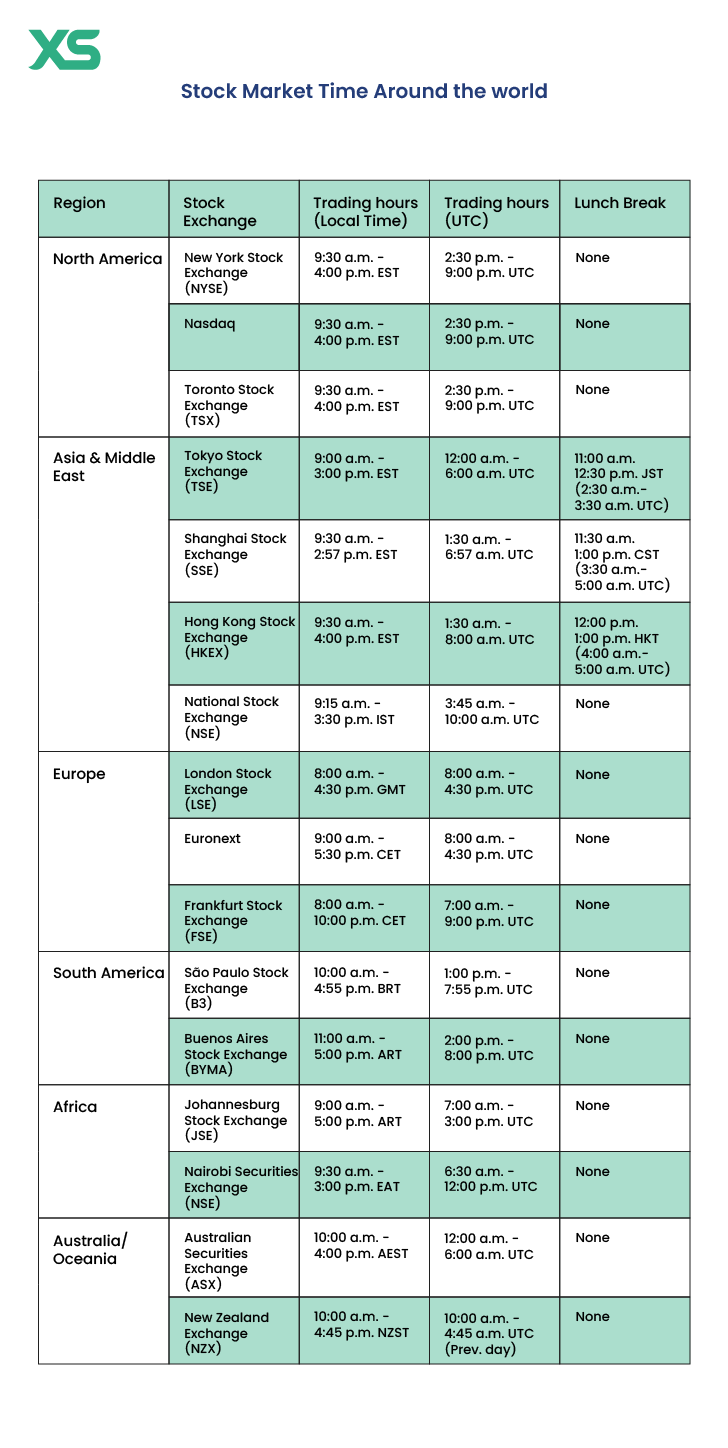
Investing is a global endeavor, and for those holding international assets or tracking global macro trends, the closing time of the local market is only one piece of the puzzle. The global financial system operates on a “follow-the-sun” model, beginning in Asia and moving through Europe before ending in the United States.
The Asian-Pacific Session
The trading day effectively begins in Tokyo (Tokyo Stock Exchange), followed by Hong Kong (HKEX) and Sydney (ASX). These markets typically operate during the late evening and early morning hours of U.S. Eastern Time. Many professional traders monitor the “Nikkei 225” or the “Hang Seng” indices overnight to gauge global sentiment before the U.S. markets open.
The European Session
As Asia winds down, the European markets open. The London Stock Exchange (LSE), Euronext Paris, and the Frankfurt Stock Exchange (DAX) are the major players here. The “overlap” between the London close and the New York open (roughly 9:30 AM to 11:30 AM ET) is historically the most liquid period in the entire 24-hour global cycle. During these two hours, the sheer volume of capital moving across the Atlantic creates the ideal environment for high-frequency trading and institutional rebalancing.
Cryptocurrency: The 24/7 Exception
In any discussion of market hours, the digital asset space must be mentioned as the exception to the rule. Unlike stocks, bonds, or commodities, the cryptocurrency market never closes. It operates 24 hours a day, 7 days a week, 365 days a year. This “always-on” nature has forced a shift in the psychology of the modern investor, as there is no “closing bell” to provide a reprieve from market movements.
Strategic Considerations for the Market Close
The final hour of trading, often referred to as the “Power Hour” (3:00 PM to 4:00 PM ET), is one of the most critical periods for any investor. As the market approaches its close, several technical and psychological factors converge.
The Closing Auction
At 4:00 PM, the exchanges execute a “Closing Auction.” This is a specialized process designed to consolidate all remaining buy and sell interest into a single, final price. Many institutional investors and index-tracking funds (like those that follow the S&P 500) execute their trades during this auction to ensure they receive the official closing price. This often results in a massive spike in volume in the literal final seconds of the day.
Risk Management into the Weekend
When the market is closed “today” or for a weekend, investors lose the ability to liquidate positions in response to news. This “gap risk” is why many traders choose to reduce their leverage or hedge their positions before the Friday close. If a geopolitical event occurs on Saturday, an investor cannot react until the pre-market opens on Monday (or Sunday night in the futures market), at which point the price may have already moved significantly against them.
Market Breadth and Sentiment
The way a market closes can often predict how it will open the following day. A “strong close,” where major indices finish at the high of the day, suggests that buying pressure is sustained and may carry over into the next session. Conversely, a “weak close,” where prices fall into the bell, can indicate that investors are hesitant to hold positions overnight, signaling potential weakness ahead.
In conclusion, knowing “what time is market closed today” is the baseline for professional financial participation. However, the true student of the markets understands that the closing bell is less an ending and more a transition point in a continuous, global flow of capital. Whether managing a personal retirement account or executing high-frequency institutional trades, respecting the clock is the first step toward mastering the market.
aViewFromTheCave is a participant in the Amazon Services LLC Associates Program, an affiliate advertising program designed to provide a means for sites to earn advertising fees by advertising and linking to Amazon.com. Amazon, the Amazon logo, AmazonSupply, and the AmazonSupply logo are trademarks of Amazon.com, Inc. or its affiliates. As an Amazon Associate we earn affiliate commissions from qualifying purchases.