
For investors, traders, and anyone keen on the ebb and flow of global finance, knowing the exact operating hours of the stock market is far more than a logistical detail—it’s a critical piece of information that can significantly influence trading decisions, risk management, and overall investment strategy. The seemingly simple question, “What time does the stock market close tomorrow?” opens a gateway to understanding the intricate rhythm of financial markets, their historical underpinnings, and the modern complexities that extend trading beyond conventional hours.
This article will delve into the standard closing times for major U.S. stock exchanges, explore the nuances of pre-market and after-hours trading, discuss the impact of holidays and early closures, and offer strategic insights for navigating these crucial periods. Understanding these dynamics is essential for anyone looking to optimize their market engagement and make informed financial decisions.

Understanding Standard U.S. Stock Market Hours
The core of the U.S. equity market revolves around two primary exchanges: the New York Stock Exchange (NYSE) and the Nasdaq Stock Market (Nasdaq). While often discussed interchangeably, both exchanges follow a highly standardized schedule that forms the backbone of daily trading activity.
NYSE and Nasdaq: The Core Operating Schedule
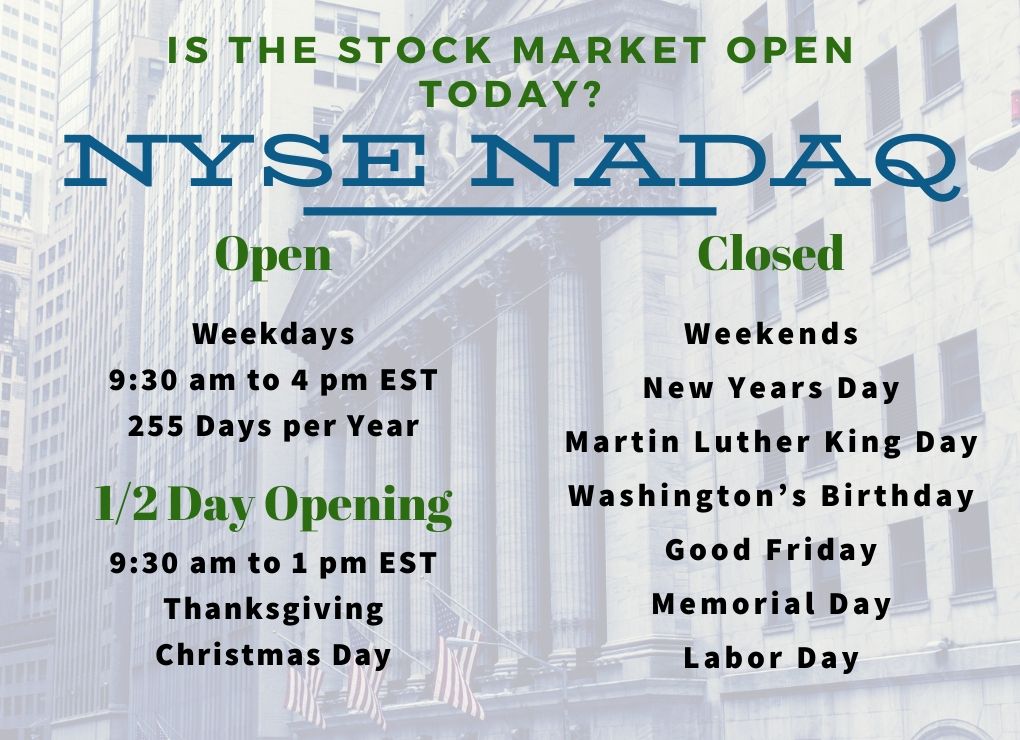
For most of the year, the regular trading session for both the NYSE and Nasdaq runs from 9:30 AM Eastern Time (ET) to 4:00 PM ET on weekdays. This seven-and-a-half-hour window is considered the “market open” period, during which the vast majority of trading volume and price discovery occurs. These hours are designed to strike a balance, allowing sufficient time for transactions while also providing periods for market participants to research, analyze, and strategize without the pressure of live trading.
This standard schedule has evolved over decades, largely dictated by institutional workflows, global time zones, and the need for a definitive closing bell to settle trades and prepare for the next day. The 4:00 PM ET close is particularly significant, as it often marks the calculation point for daily closing prices, which are used as benchmarks for portfolios, indices, and various financial products.
Pre-Market and After-Hours Trading: Extending the Day
While 9:30 AM to 4:00 PM ET defines the regular trading session, the reality of modern finance is that market activity extends well beyond these traditional boundaries. Thanks to electronic trading networks (ECNs) and alternative trading systems (ATS), investors can participate in pre-market and after-hours sessions.
- Pre-Market Trading: This period typically begins as early as 4:00 AM ET and runs until the regular market open at 9:30 AM ET. It allows investors to react to news released overnight, such as earnings reports, economic data, or geopolitical developments, before the main market opens.
- After-Hours Trading: Following the regular market close at 4:00 PM ET, after-hours trading can continue until 8:00 PM ET. This session provides an opportunity to react to news released immediately after the market closes or to adjust positions based on late-breaking information.
It’s crucial to understand that trading in these extended hours often comes with different characteristics than the regular session. Liquidity can be lower, leading to wider bid-ask spreads and potentially greater price volatility. This makes pre-market and after-hours trading generally more suitable for experienced traders who understand these dynamics and the associated risks. The ability to trade outside of regular hours offers flexibility but demands a heightened awareness of market conditions.
The Rationale Behind Fixed Trading Hours
The existence of fixed trading hours, despite the technological capability for 24/7 equity markets (as seen in forex or crypto), serves several practical and historical purposes. Firstly, it consolidates liquidity into a specific window, ensuring tighter spreads and more efficient price discovery for the majority of participants. Secondly, it allows market professionals—analysts, portfolio managers, and exchange operators—defined periods for rest, research, and operational maintenance. This helps maintain market integrity and reduces the potential for fatigue-induced errors. Finally, a clear closing time provides a definitive end-point for daily valuations, allowing for the accurate calculation of closing prices, settlement of trades, and preparation of financial statements.
Navigating Market Holidays and Early Closures
While the 9:30 AM to 4:00 PM ET schedule is standard, it’s not immutable. The stock market observes a number of holidays throughout the year, during which it remains completely closed. Additionally, certain days may see early closures, impacting the market’s operational rhythm.
Major U.S. Federal Holidays Affecting Trading
The NYSE and Nasdaq typically observe the same set of holidays, mostly aligning with U.S. federal holidays. These include:
- New Year’s Day
- Martin Luther King, Jr. Day
- Presidents’ Day
- Good Friday
- Memorial Day
- Juneteenth National Independence Day
- Independence Day
- Labor Day
- Thanksgiving Day
- Christmas Day
On these days, the markets are fully closed, meaning no regular, pre-market, or after-hours trading for equities. Bond markets may have different holiday schedules or shortened hours, so investors dealing with fixed income should verify those independently. These closures are publicly announced well in advance by the exchanges, allowing investors and financial institutions to plan accordingly.
The Impact of Half-Day Trading Sessions
In addition to full holidays, there are specific days when the market operates on a shortened schedule, closing early. The most common early closures occur on:
- The day after Thanksgiving (Black Friday): The market typically closes at 1:00 PM ET.
- Christmas Eve: If Christmas Eve falls on a weekday, the market often closes at 1:00 PM ET.
- Sometimes on other days preceding a major holiday: This can vary year to year, but the 1:00 PM ET early close is standard for these half-day sessions.
These early closures significantly shorten the regular trading window, compressing daily activity and potentially leading to heightened volatility in the hours leading up to the abbreviated close. Traders need to be particularly mindful of these shorter sessions when planning entries, exits, and risk management strategies, as they provide less time for positions to play out.
How to Stay Informed About Upcoming Schedule Changes
Given the critical nature of market hours, staying informed about upcoming holidays and early closures is paramount. Reliable sources include:
- Official Exchange Websites: Both the NYSE (www.nyse.com) and Nasdaq (www.nasdaq.com) publish their annual holiday and early closure schedules.
- Reputable Financial News Outlets: Major financial news providers (e.g., Bloomberg, Wall Street Journal, Reuters, CNBC) frequently report on upcoming market schedule changes.
- Brokerage Platforms: Most online brokerage platforms will display alerts or provide calendars indicating market holidays and adjusted hours.
- Financial Calendars and Apps: Many financial tools and apps offer integrated market calendars that track these dates.
Proactive checking of these resources ensures that investors are never caught off guard by an unexpected market closure or shortened trading day, which could otherwise disrupt trading plans or portfolio management.
International Markets: A Global Perspective on Trading Hours
While the focus has been on U.S. markets, the global nature of finance means that stock exchanges around the world operate on their own distinct schedules, creating an almost continuous cycle of trading activity across different time zones.
Key Global Exchanges and Their Operating Times
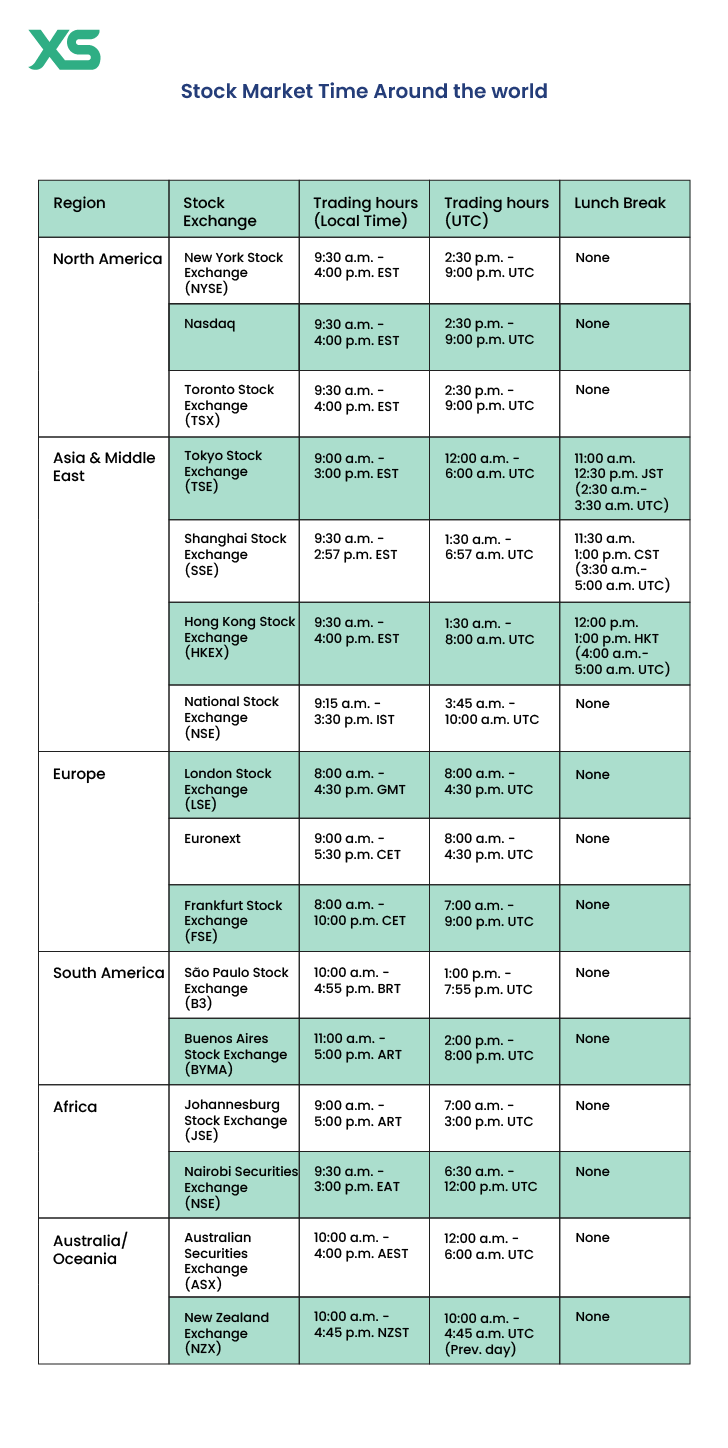
Major international exchanges have operating hours that reflect their local business days and time zones. For example:
- London Stock Exchange (LSE): Generally 8:00 AM to 4:30 PM GMT (or BST during daylight saving).
- Tokyo Stock Exchange (TSE): Typically 9:00 AM to 3:00 PM JST, with a lunch break.
- Shanghai Stock Exchange (SSE): Generally 9:30 AM to 3:00 PM CST, also with a lunch break.
- Euronext (Paris, Amsterdam, Brussels, Lisbon): Usually 9:00 AM to 5:30 PM CET (or CEST).
These variations mean that when the U.S. market is closing, another major market is just opening or in full swing. This global interconnectedness allows investors with diversified portfolios to potentially react to events at almost any time, though direct access to these foreign exchanges requires specific brokerage services.
The 24/7 Nature of Forex and Cryptocurrency Markets
In stark contrast to equity markets, certain asset classes operate virtually 24 hours a day, seven days a week.
- Forex (Foreign Exchange) Market: The forex market is truly global and decentralized, meaning it never really closes from Sunday evening ET to Friday evening ET. Trading follows the sun, moving from the Sydney/Tokyo session to the London session and then to the New York session. This continuous operation is due to the inherent need for currency exchange across different time zones for international trade and finance.
- Cryptocurrency Markets: Similarly, cryptocurrency exchanges operate 24/7, 365 days a year. The decentralized and digital nature of cryptocurrencies means there are no physical exchanges or national holidays to observe. This constant accessibility is a defining characteristic of crypto trading but also means investors must be prepared for continuous price movements and volatility.
Understanding these differences is crucial for investors who diversify across various asset classes, as the rules of engagement regarding market hours are vastly different.
Implications for Global Investors and Diversification
For investors with international holdings or those considering global diversification, the varying market hours have significant implications. News or events occurring during U.S. market off-hours might immediately impact European or Asian markets, and those effects can then ripple back to the U.S. when it reopens. This interconnectedness necessitates a broader perspective on market monitoring and risk management, as global events can lead to significant gaps in price or heightened volatility at the U.S. market open. Moreover, managing currency risk and understanding foreign exchange market hours becomes vital when investing internationally.
Strategic Considerations for Investors Around Closing Times
The periods around the market open and close are often characterized by heightened activity and unique dynamics that investors should understand and strategically leverage or mitigate.
Volatility and Price Action at the Open and Close
The first and last 30-60 minutes of the regular trading session are typically the most volatile. At the open (9:30 AM ET), pent-up orders from overnight, reactions to pre-market news, and institutional adjustments often lead to rapid price movements and high trading volumes. Similarly, the “closing auction” or the final minutes before 4:00 PM ET can see a surge in activity as institutional traders execute large orders (often to rebalance portfolios or meet specific benchmarks), which can cause significant price swings.
Understanding these volatile periods is critical. Day traders might seek to capitalize on these movements, while longer-term investors might opt to avoid placing orders during these times to ensure better execution prices, preferring the calmer middle hours of the day.
Order Placement Strategies: Market vs. Limit Orders
The choice between market orders and limit orders becomes particularly important around the market close.
- Market Orders: A market order instructs your broker to buy or sell a stock immediately at the best available price. While ensuring execution, in volatile periods, the “best available price” could be significantly different from what you anticipated, leading to slippage.
- Limit Orders: A limit order specifies the maximum price you’re willing to pay to buy or the minimum price you’re willing to accept to sell. While a limit order doesn’t guarantee execution, it protects you from unfavorable price movements.
Around closing times, especially during early closures or after significant news, using limit orders is often a safer strategy to control your execution price and mitigate the risk of adverse price swings due to thinning liquidity or increased volatility.
Risk Management and Position Sizing Near the Close
Prudent risk management dictates careful consideration of position sizing and exposure, particularly as the market approaches its close. Holding significant open positions overnight, especially after an early close or before a holiday weekend, exposes investors to “gap risk”—the risk that a stock’s price will open significantly higher or lower the next trading day due to news or events that occurred while the market was closed.
Traders often reduce their exposure or close out positions entirely before the market closes to avoid overnight risk. Long-term investors, while less concerned with daily price fluctuations, should still be aware that major events unfolding during off-hours can impact their portfolio when the market reopens. This emphasizes the importance of continuous global news monitoring, even when the local market is shut.
The Role of Financial Tools and Platforms
Modern financial tools and platforms are indispensable for navigating market hours and making informed decisions.
- Real-time Data and News Feeds: Access to live market data and breaking news helps investors react promptly to events, even during pre-market and after-hours sessions.
- Advanced Order Types: Many platforms offer advanced order types (e.g., “Good-Till-Canceled” (GTC), “Fill-or-Kill” (FOK), “After-Hours” (AHO) options) that provide greater control over when and how orders are executed.
- Alerts and Notifications: Setting up price alerts or news notifications can keep investors informed without constant manual monitoring, ensuring they are aware of significant developments even outside of regular trading hours.
- Market Calendars: Integrated market calendars within brokerage platforms or dedicated financial apps provide a clear view of upcoming holidays and early closures.
Leveraging these tools can significantly enhance an investor’s ability to operate efficiently and manage risk effectively around market closing times.
Beyond Tomorrow: Planning Your Investment Strategy
The question of market closing times extends beyond a single day, touching upon broader aspects of investment planning and strategy.
Long-Term vs. Short-Term Investment Horizons
For long-term investors focused on growth over years or decades, the precise closing time of the market on any given day is less critical. Their strategy often involves buying and holding quality assets, and daily market noise, including pre-market or after-hours volatility, is largely irrelevant. They are more concerned with fundamental company performance, economic trends, and long-term market cycles.
For short-term traders (day traders, swing traders), however, knowing exactly when the market opens and closes, and understanding the dynamics of extended hours, is fundamental to their strategy. Their profits are often derived from exploiting short-term price movements, making precise timing and liquidity crucial.
Leveraging Technology for Market Monitoring
Technology has democratized access to market information and trading capabilities, allowing investors to monitor their portfolios and market conditions around the clock. Mobile trading apps, desktop platforms with customizable dashboards, and automated news aggregators empower investors to stay connected. This doesn’t mean constant active trading, but rather having the ability to check on positions or react to significant overnight news should the need arise. Passive monitoring tools can be particularly useful for long-term investors who want to stay informed without being glued to the screen.
The Importance of Continuous Learning
The financial markets are dynamic, constantly evolving with new technologies, regulations, and global events. Understanding market hours, the nuances of different trading sessions, and the impact of holidays is part of a broader commitment to continuous learning in finance. Staying updated on market rules, economic calendars, and global developments is essential for making well-informed decisions, adapting strategies, and ultimately achieving financial goals. The answer to “what time does the stock market close tomorrow” is a gateway to a deeper understanding of market mechanics, risk, and opportunity, underpinning sound investment practices for everyone from novice investors to seasoned professionals.
aViewFromTheCave is a participant in the Amazon Services LLC Associates Program, an affiliate advertising program designed to provide a means for sites to earn advertising fees by advertising and linking to Amazon.com. Amazon, the Amazon logo, AmazonSupply, and the AmazonSupply logo are trademarks of Amazon.com, Inc. or its affiliates. As an Amazon Associate we earn affiliate commissions from qualifying purchases.