
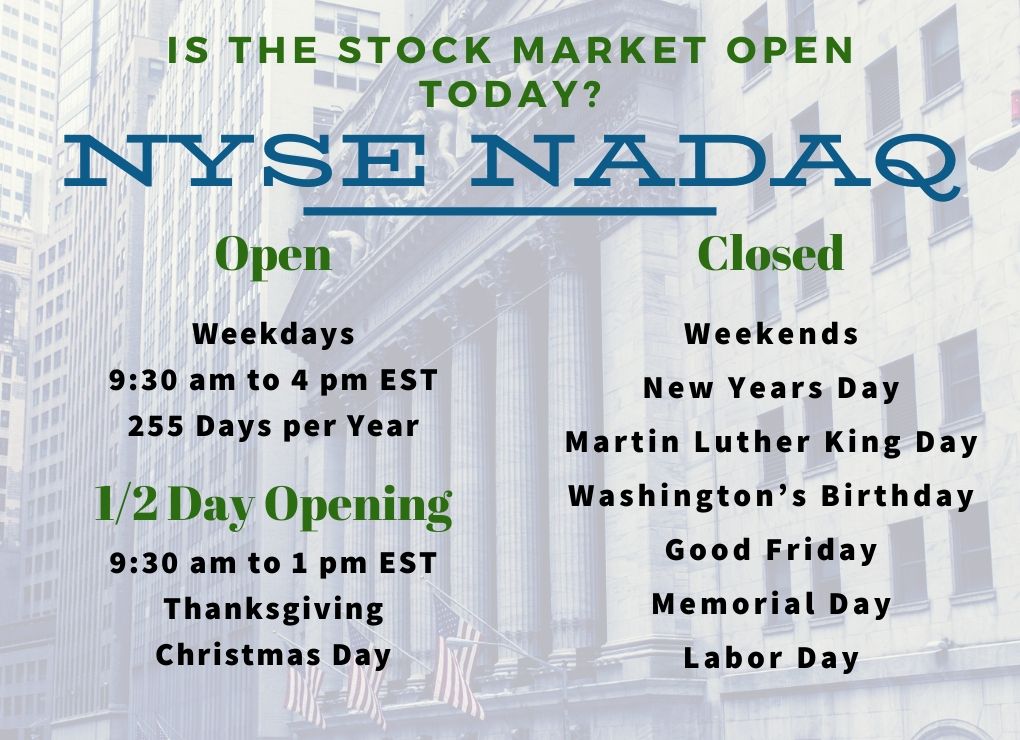
The New York Stock Exchange (NYSE), a cornerstone of global finance, operates with a clear and consistent schedule that dictates when investors can actively buy and sell shares. Understanding these trading hours is fundamental for anyone participating in the financial markets, from seasoned institutional traders to individual retail investors. On a standard trading day, the NYSE opens its doors, metaphorically speaking, at 9:30 AM Eastern Time (ET) and concludes its regular session at 4:00 PM ET. This seven-and-a-half-hour window is when the vast majority of price discovery and order execution occurs, characterized by high liquidity and broad market participation.
Understanding NYSE Trading Hours
The regularity of the NYSE’s trading schedule provides a structured environment for capital allocation and market efficiency. However, the nuances of market accessibility extend beyond these core hours, encompassing pre-market and after-hours sessions that offer different opportunities and challenges for investors.
Standard Operating Hours
The period between 9:30 AM ET and 4:00 PM ET is considered the regular trading session for the NYSE. During these hours, all listed securities are actively traded, orders are executed, and prices fluctuate based on supply and demand dynamics, news, and economic data. This is when market makers are most active, providing liquidity and narrowing bid-ask spreads, which are crucial for efficient trading. For most individual investors, this is the primary window for executing trades, as it typically offers the best execution prices due to the depth of the market. Trading volume is usually highest at the open (the “opening bell”) and close (the “closing bell”) as traders react to overnight news, economic reports, and position themselves for the next trading day.
Pre-Market and After-Hours Trading
While the regular session defines the core market day, electronic trading platforms extend the accessibility of the NYSE much earlier and later. These extended-hours sessions are divided into pre-market and after-hours trading.
Pre-market trading typically begins as early as 4:00 AM ET and runs until the regular market open at 9:30 AM ET. After-hours trading commences immediately after the regular market close at 4:00 PM ET and can extend until 8:00 PM ET. These sessions utilize electronic communication networks (ECNs) rather than the traditional trading floor.
The characteristics of extended-hours trading differ significantly from the regular session:
- Lower Liquidity: Fewer participants trade during these times, leading to lower trading volumes and potentially wider bid-ask spreads. This means it might be harder to execute large orders without impacting the price, and the price you see might not be the price you get.
- Higher Volatility: Due to lower liquidity, a relatively small number of trades can lead to significant price swings. Major news announcements, especially earnings reports or corporate mergers, are frequently released during these periods, causing rapid price adjustments before the regular session begins.
- Limited Order Types: Not all order types available during regular hours may be accessible in extended sessions. Limit orders are generally preferred over market orders to mitigate the risk of adverse price execution due to low liquidity.
For investors, understanding these differences is critical. Institutional investors and professional traders often use extended hours to react quickly to news or to execute large block trades. Retail investors need to be aware of the increased risks, including potential for larger price discrepancies and less favorable execution.
Impact of Time Zones and Market Holidays
The NYSE’s schedule is fixed in Eastern Time, a critical detail for investors around the globe. Furthermore, the market observes a series of holidays that can disrupt typical trading patterns.
Eastern Time Zone (ET) Significance
All official NYSE opening and closing times are specified in Eastern Time (ET), which can be either Eastern Standard Time (EST) or Eastern Daylight Time (EDT) depending on the time of year. For investors located outside this time zone, it is imperative to convert these hours to their local time. For instance, an investor on the West Coast of the United States (Pacific Time) would see the NYSE open at 6:30 AM PT and close at 1:00 PM PT. Similarly, traders in Europe or Asia must adjust significantly, which often means trading outside of typical business hours in their local time zones. This necessitates careful planning for those wishing to participate actively during the NYSE’s standard session.
Recognized Market Holidays
The NYSE, like most major financial exchanges, observes a number of public holidays throughout the year during which the market is closed. These closures are designed to align with federal holidays in the United States, providing a consistent schedule. Common market holidays include:
- New Year’s Day
- Martin Luther King, Jr. Day
- Presidents’ Day
- Good Friday
- Memorial Day
- Juneteenth National Independence Day
- Independence Day
- Labor Day
- Thanksgiving Day
- Christmas Day
Additionally, the NYSE occasionally has early closures on days preceding or following certain holidays, such as the day after Thanksgiving (Black Friday), when trading may conclude at 1:00 PM ET. It is crucial for investors to consult the official NYSE calendar or their brokerage’s schedule well in advance to avoid missing trading opportunities or encountering unexpected market closures. These holidays can impact trading strategies, particularly for those holding positions over a long weekend, as market-moving news can occur while the market is closed, leading to significant gaps at the next open.
Why Trading Hours Matter for Investors
The timing of market operations has profound implications for investment strategies, risk management, and overall market participation. The characteristics of different trading periods directly influence how investors should approach their financial decisions.
Liquidity and Volatility
The relationship between trading hours, liquidity, and volatility is a cornerstone of market dynamics.
- During Standard Hours: The regular trading session is characterized by the highest levels of liquidity. Millions of shares change hands, and a vast number of buyers and sellers contribute to a deep market. This typically results in tighter bid-ask spreads, making it easier for investors to enter and exit positions closer to the prevailing market price. While volatility still exists, it is generally absorbed by the sheer volume of trades, leading to more stable price discovery.
- Outside Standard Hours: Extended hours, by contrast, are marked by significantly lower liquidity. With fewer market participants, bid-ask spreads tend to widen, and even small orders can have a disproportionate impact on a stock’s price. This can lead to increased volatility and the risk of less favorable execution prices, making it a more challenging environment for inexperienced traders.
Information Flow and Market Reaction
The timing of corporate and economic news releases often dictates when and how the market reacts. Many significant announcements, such as quarterly earnings reports, mergers and acquisitions, or FDA approvals for pharmaceutical companies, are strategically released either before the market opens (pre-market) or after it closes (after-hours).
- Companies do this to allow investors and analysts time to digest the information before trading resumes, theoretically promoting a more orderly market open.
- However, this also means that much of the initial price reaction to critical news can occur during extended hours, often creating significant price gaps at the next market open. Investors who are not monitoring pre-market or after-hours news may find their positions opening at a dramatically different price than where they closed the previous day.
Strategy and Risk Management
Different trading hours lend themselves to different investment strategies and require specific risk management considerations.
- Day Traders: These investors often focus on the regular trading session, leveraging high liquidity and tight spreads for quick entries and exits. They are acutely aware of the opening and closing bell volatility and often seek to capitalize on intraday price movements.
- Long-Term Investors: While long-term investors may not actively trade daily, understanding market hours is still crucial. They need to be aware of how overnight news or extended-hours trading can affect their portfolio’s value at the next open. Placing limit orders during regular hours is generally safer than market orders in extended sessions, especially for larger positions.
- Extended-Hours Trading Risks: Trading outside regular hours carries elevated risks. Slippage (the difference between the expected price of a trade and the price at which the trade is actually executed) can be more pronounced. Due to lower liquidity, a sudden news event can cause rapid and extreme price movements, making it difficult to exit a position at a desired price. Using limit orders during extended hours is a common risk mitigation strategy.
Beyond the Opening Bell: What Drives the Market Day
While the opening and closing times provide the framework, the market’s daily trajectory is influenced by a complex interplay of scheduled data releases, corporate news, and global events.
Economic Data Releases
Key economic indicators are often released at specific times, usually 8:30 AM ET or 10:00 AM ET, before or shortly after the NYSE opens. These reports can significantly impact market sentiment and dictate the tone for the trading day. Examples include:
- Consumer Price Index (CPI): Inflation data.
- Employment Situation Report: Non-farm payrolls, unemployment rate.
- Gross Domestic Product (GDP): Measure of economic growth.
- Federal Reserve Announcements: Interest rate decisions, FOMC meeting minutes.
Traders and algorithms closely watch these releases, and their impact can cause immediate and pronounced shifts in stock, bond, and currency markets, affecting everything from individual stock prices to broader market indices like the S&P 500.
Corporate Earnings and News
The quarterly earnings season is a particularly active period for the market. Companies typically announce their financial results and hold conference calls with analysts before market open or after market close. These announcements, along with other corporate news such as product launches, management changes, or regulatory approvals, can trigger significant stock price movements. The market often “front-runs” these announcements based on speculation, leading to volatility even before the news breaks.
Global Market Influence
The NYSE doesn’t operate in a vacuum. The performance of major markets in Asia (e.g., Tokyo, Shanghai) and Europe (e.g., London, Frankfurt) overnight can set the initial tone for U.S. trading. Positive or negative sentiment from global markets, coupled with international geopolitical events or macroeconomic trends, can influence how the NYSE opens and performs throughout its trading session. For instance, a strong rally in European markets might give a bullish bias to the NYSE open, while a sharp decline could lead to a weaker start.
Navigating the Modern Trading Landscape
The traditional image of a bustling trading floor has evolved dramatically, with technology now playing a dominant role in how trades are executed and how information is disseminated.
The Rise of Electronic Trading and Algorithms
The modern NYSE environment is heavily influenced by electronic trading and sophisticated algorithms. While the physical trading floor still exists, the vast majority of trades are executed electronically through high-speed computer networks. High-frequency trading (HFT) firms utilize algorithms to execute millions of trades in fractions of a second, capitalizing on tiny price discrepancies. This technological shift has increased market efficiency and liquidity but also adds layers of complexity for individual investors, who are now competing with advanced systems.
Tools for Monitoring Market Open and News
Staying informed is paramount for navigating the market effectively. Investors rely on a suite of tools to monitor market activity, especially around the opening bell:
- Financial News Outlets: Real-time news feeds from sources like Bloomberg, Reuters, The Wall Street Journal, and CNBC provide instant updates on economic data, corporate announcements, and global events.
- Trading Platforms: Modern brokerage platforms offer real-time quotes, customizable charts, news feeds, and pre-market/after-hours trading capabilities. Many also provide tools for setting price alerts and analyzing order flow.
- Market Data Providers: Services that offer in-depth market data, including level II quotes, time and sales data, and advanced charting, can provide a deeper understanding of market dynamics, particularly for active traders.

Developing an Informed Trading Routine
For any investor, establishing a disciplined routine is crucial. This often involves:
- Pre-Market Analysis: Reviewing overnight news, global market performance, and economic calendars before the 9:30 AM ET open.
- Monitoring Key News: Keeping an eye on scheduled data releases and corporate announcements throughout the day.
- Setting Alerts: Utilizing brokerage tools to set price alerts or news alerts for specific stocks or market movements.
- Disciplined Execution: Sticking to a predefined trading plan and risk management strategy, especially when volatility is high around market open or close.
Understanding the NYSE’s opening hours is more than just knowing when to trade; it’s about grasping the underlying mechanisms that drive market behavior, informing strategic decisions, and managing risk effectively in a complex and ever-evolving financial landscape.
aViewFromTheCave is a participant in the Amazon Services LLC Associates Program, an affiliate advertising program designed to provide a means for sites to earn advertising fees by advertising and linking to Amazon.com. Amazon, the Amazon logo, AmazonSupply, and the AmazonSupply logo are trademarks of Amazon.com, Inc. or its affiliates. As an Amazon Associate we earn affiliate commissions from qualifying purchases.